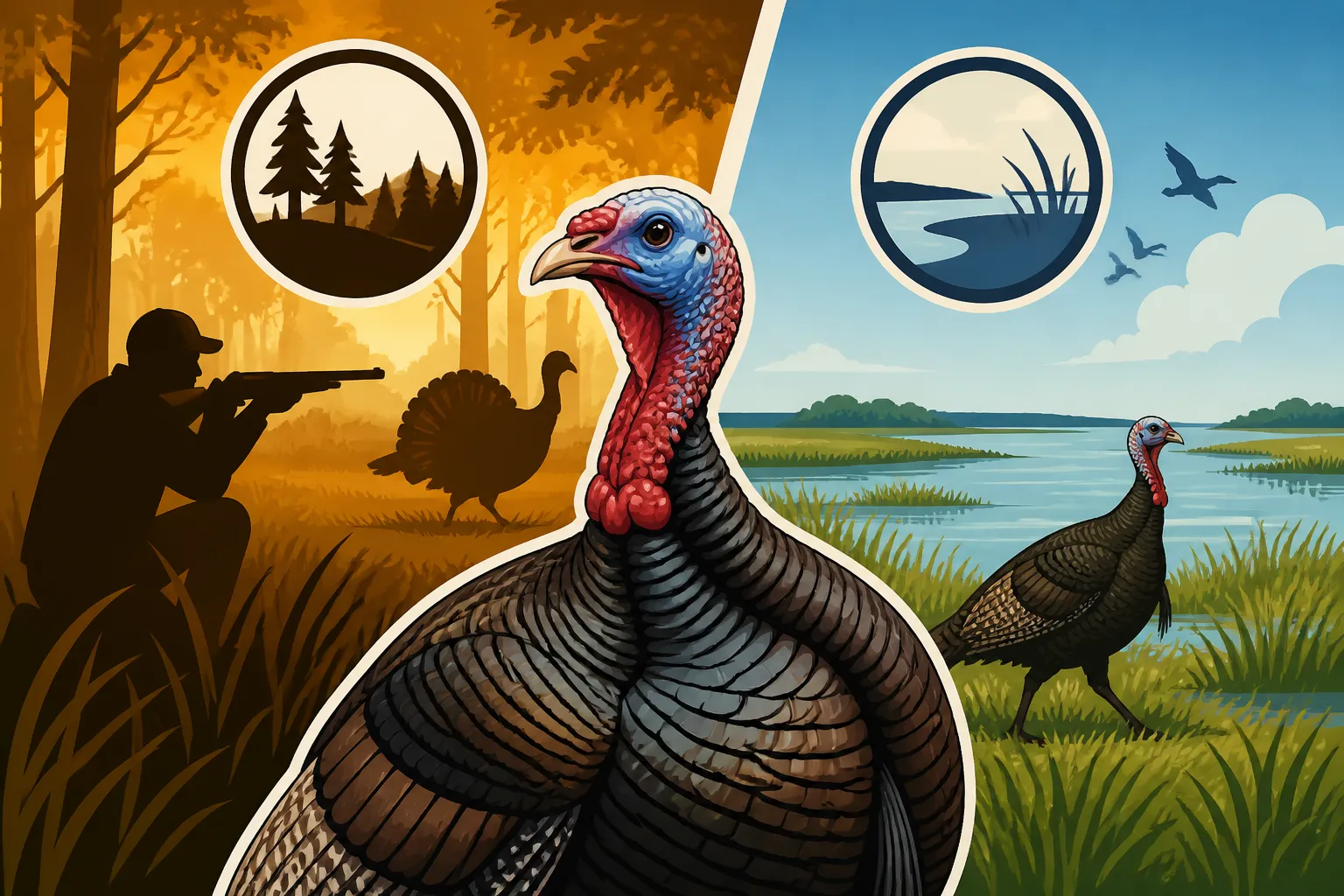
Why Eastern Shore Turkeys Act Differently
If you've spent any time chasing turkeys in Maryland, especially if you've hunted both the rolling hills of Western Maryland and the flat, fertile plains of the Eastern Shore, you've probably noticed it: those gobblers on the Eastern Shore just seem to operate on a different wavelength. It's not your imagination, and it's certainly not a reflection of your calling skills (though those can always use a tune-up!). This guide is here to unravel the mysteries of the Eastern Shore gobbler, explaining why these birds are a unique challenge and what you can do to adapt your strategy for success.
The Eastern Shore Landscape: A Different Stage for Turkeys
When you think of prime turkey habitat, often your mind conjures images of vast, mature hardwoods, steep ridges, and thick timber. While Maryland certainly has those areas, particularly out west, the Eastern Shore paints a dramatically different picture. This isn't just a scenic change; it fundamentally alters how wild turkeys live, move, and react to hunters.
Flat Terrain and Fragmented Cover
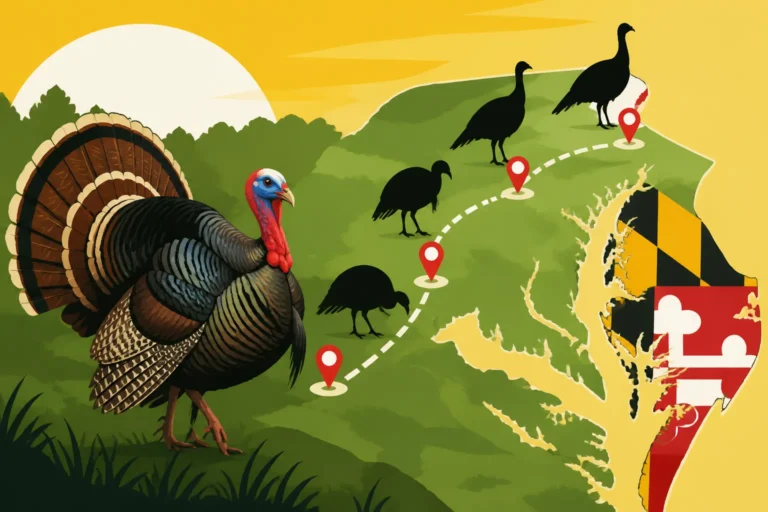
The Eastern Shore is, for the most part, incredibly flat. We're talking about vast expanses of agricultural fields interspersed with woodlots, creek bottoms, and tidal marshes. This lack of elevation means no high ridges for strutting gobblers to command a view, and no deep hollows for them to slip away unseen. Instead, turkeys rely on the edges of fields, the thick cover of pine plantations, and the meandering lines of hedgerows and creek beds for security and travel. This open landscape makes birds incredibly visible, which can be a blessing and a curse. You might spot a distant gobbler easily, but he's just as likely to spot you from a long way off. It forces you to be meticulous about your approach and concealment. It also means that when a bird gobbles, you might hear him from a mile away, but getting within striking distance without being seen becomes a strategic chess match. Where Maryland Turkeys Live Best often highlights areas with diverse habitat, but the Eastern Shore variety requires a different set of scouting eyes.
Proximity to Agriculture and Human Activity
One of the defining characteristics of the Eastern Shore is its rich agricultural heritage. Corn, soybeans, and winter wheat dominate the landscape. This means turkeys are constantly living on the fringe of human activity. They see tractors, hear vehicles, and often encounter people going about their daily lives. This isn't to say they're tame, far from it. It actually makes them incredibly wary of anything out of the ordinary. A hunter in full camo, sitting perfectly still, might still be perceived as a threat because they are so accustomed to observing and evaluating potential dangers from afar. Their entire lives are lived in close proximity to human influence, which hones their senses and makes them less forgiving of mistakes compared to birds in more remote, undisturbed areas. This constant exposure breeds a certain level of suspicion that you just don't find as acutely in more wild settings.
Food Abundance and Its Impact on Turkey Behavior
Another significant factor shaping Eastern Shore turkeys is the sheer abundance of food, particularly agricultural crops. Unlike turkeys in solely forested environments who might spend more time foraging for acorns or wild berries, these birds have a buffet at their disposal. This changes their daily routines and their responsiveness to calls.
The Allure of Grain Fields
Think about it: miles of corn and soybean fields offer an endless supply of high-energy food. Turkeys will often spend significant portions of their day feeding in these fields, especially after harvest when scattered grains are readily available. In the spring, fresh greens in winter wheat or alfalfa fields are irresistible. This constant, easy access to food means they don't have to work as hard or travel as far to fill their crops. A gobbler might wake up, fly down into a field where he knows there's food, and stay there for hours, gobbling occasionally but with no real urgency to seek out a hen, because he's perfectly content. They might also be using these fields as strutting grounds, especially if they have good visibility. This can be frustrating for a hunter trying to call a bird out of a field edge when he has everything he needs right there. What Maryland Turkeys Eat in Spring on the Eastern Shore often includes significant agricultural components.
Reduced Urgency to Roam
When food is abundant and easily accessible, turkeys don't feel the same pressure to cover vast amounts of ground. Their core areas might be smaller, centered around a specific woodlot that offers roosting cover, surrounded by fields for feeding. This can make them predictable, in a way, but also incredibly stubborn. If a gobbler is comfortable in his chosen field or woodlot, a hen call might not be enough to pull him away. He's already got hens nearby, or he knows they'll eventually come to him because the food is so good. This means your setup needs to be even more strategic, ideally intercepting them along their natural travel corridors between roosting areas and feeding grounds. Sometimes, knowing their routine and setting up where they want to be is far more effective than trying to force them to break that routine with aggressive calling.
Hunter Pressure and Learned Wariness
Let's be real: Maryland's Eastern Shore is a popular place to hunt, and turkeys in many areas experience significant hunter pressure. This isn't a criticism; it's just a fact of life for hunters and the birds they pursue. This pressure makes turkeys smarter, more cautious, and far less likely to fall for common tactics.
Frequent Encounters with Hunters
Unlike some remote wilderness areas where a turkey might only see a handful of hunters in its lifetime, Eastern Shore turkeys often encounter hunters frequently throughout the season. They learn quickly. They learn that a loud, repetitive call might mean trouble. They learn that certain field edges are dangerous. They learn to gobble from the roost, gauge the response, and then often fly down silently in the opposite direction, or simply walk away from a setup they perceive as suspicious. This learned wariness means that a gobbler that responded enthusiastically one day might ignore you completely the next, having had a close call in the interim. This makes Decoy Placement for Pressured Maryland Gobblers absolutely critical; they'll scrutinize anything that looks out of place.
The "Silent Treatment" and Breaking Roost Patterns
A common frustration for Eastern Shore turkey hunters is the "silent treatment." You scout, you roost a bird, you set up perfectly before daylight, and he gobbles his head off on the limb. You make a few soft tree yelps, and then… silence. He flies down, and you never hear him again. This isn't uncommon. Pressure teaches gobblers that the safest route is often the quietest. They might gobble to establish dominance or attract hens, but they become adept at flying down and sneaking away without giving away their position. This is why Calling a Gobbler Off a Maryland Farm Roost requires a nuanced approach, often less aggressive than you might use elsewhere. They might also change their roost trees frequently, moving from one woodlot to another to avoid consistent pressure. This means your scouting needs to be ongoing, and you can't assume a bird will be in the same roost tree night after night.
Roosting Habits and Daytime Movement
The Eastern Shore's unique blend of habitat influences where turkeys choose to roost and how they move throughout the day, often diverging from the classic turkey hunting playbook.
Unique Roosting Choices
Given the lack of towering hardwood ridges, Eastern Shore turkeys adapt their roosting strategies. They'll still seek out the tallest trees available, but these might be scattered mature oaks along a creek bank, a stand of tall loblolly pines, or even isolated trees within a dense swamp. These roost sites often provide good visibility in all directions, allowing them to spot predators or approaching hunters from a distance. However, the limited options for large, contiguous roosting habitat can also concentrate birds, making these areas hotter with hunter activity. You might find several gobblers using the same small patch of timber to roost, making it challenging to approach one without alerting the others. Roost Hunting Gobblers on Maryland Farmland involves understanding these specific roosting habits.
Field Edges and Corridors as Travel Routes
Once on the ground, Eastern Shore turkeys become masters of utilizing field edges, fencerows, and overgrown ditches as their primary travel corridors. These linear features offer just enough cover to move unseen while staying close to food sources. Instead of traversing vast blocks of timber, they'll often "walk the line," following the perimeter of a cornfield or slipping along a wooded creek bottom. Understanding these preferred travel routes is paramount. Setting up on one of these lines, especially at a pinch point or a natural funnel, can be incredibly effective. Imagine a small strip of timber connecting two larger woodlots, bordered by agricultural fields on either side. That's a highway for turkeys. Your ability to read the terrain and identify these subtle funnels, perhaps using a detailed mapping app like GoHunt, will be your biggest asset. This differs greatly from strategies like Still-Hunting Western Maryland Mountain Timber where birds might move across vast, unbroken forest.
Adapting Your Strategy for Eastern Shore Success
So, what does all this mean for you, the hunter trying to bag a savvy Eastern Shore gobbler? It means adjusting your expectations and tactics to meet the unique challenges these birds present.
Stealth and Patience are Paramount
Given the open nature of the landscape and the learned wariness of the birds, stealth becomes your most valuable tool. Forget crashing through the woods; every step needs to be deliberate and quiet. Use the available cover – hedgerows, ditches, the backside of a grain bin – to your advantage when approaching a gobbling bird. If you've spotted a bird strutting in a field, a slow, methodical crawl might be your only option. Once you're set up, patience is key. These birds aren't always in a hurry. You might have to sit for hours, making soft, infrequent calls, waiting for a bird to work its way to you on its own terms. Don't rush the shot, and certainly don't rush the setup. Using a mapping tool like GoHunt to mark your exact location and planned approach can make a huge difference in staying quiet and concealed.
Strategic Calling and Decoy Use
Your calling needs to be realistic and often less aggressive. Instead of a rapid-fire series of yelps, try soft tree yelps and clucks from the roost, then switch to subtle clucks and purrs once on the ground. Let the gobbler feel like he's doing the work to find you. When using decoys, focus on realism and placement. Often, a single hen or a jake/hen combination is all you need. Place them where the gobbler will see them from a distance, but also where they draw him into a clear shooting lane, keeping in mind the open terrain. They don't have to be top-of-the-line, but realism helps. Sometimes, a B-Mobile or similar full-strut gobbler decoy can challenge an aggressive bird enough to pull him into range, especially if he thinks a rival is encroaching on his turf. Just be aware of other hunters in high-pressure areas.
Prioritizing Scouting and Adaptability
Effective scouting is non-negotiable on the Eastern Shore. You need to know where the birds are roosting, where they're feeding, and their preferred travel corridors. Look for fresh tracks along field edges, droppings in open areas, and strut marks where they've been displaying. Use aerial maps to identify potential funnels and cover. Being adaptable is also crucial. If a gobbler flies down silently and walks away from your setup, don't just pack up. Try to circle around, using cover, and get ahead of him. If he's hung up in a field, try a different approach or adjust your decoy setup. There are many days where a gobbler won't come to you, but with smart repositioning, you can often go to him. Remember, Maryland's Spring Turkey Season Dates offer a good window, but the birds' behavior changes throughout, so adapt accordingly.
The GoHunt Advantage in Eastern Shore Turkey Hunting
When you're trying to outwit these notoriously wary Eastern Shore gobblers, having the right tools can make a significant difference. A reliable mapping platform like GoHunt can provide a distinct advantage by giving you critical insights into the landscape and helping you plan your hunts with precision.
Detailed Topography and Satellite Imagery
With the Eastern Shore's flat terrain and scattered woodlots, understanding every subtle topographical feature and every patch of cover is crucial. GoHunt's detailed satellite imagery allows you to zoom in and identify specific roost trees along creek banks, pinpoint those narrow fencerows that act as travel corridors, and mark the exact locations of potential strut zones in open fields. You can see the transitions between different crop fields, where turkeys might be feeding, and locate those small, isolated coverts that provide daytime sanctuary. This level of detail helps you visualize the turkey's world from above, enabling you to plan stealthy approaches and strategic setups long before you even step foot in the woods.
Property Boundaries and Public vs. Private Land
A huge challenge on the Eastern Shore is navigating the patchwork of private farms and smaller public land parcels. GoHunt’s property boundary layers are invaluable here. They allow you to clearly see where private land begins and ends, preventing accidental trespassing and ensuring you're always hunting legally. For hunters seeking permission on private ground, these maps can help you identify specific landowners or understand the layout of the property you're inquiring about. If you're hunting public access areas, GoHunt can help you find those often-overlooked corners or less-pressured sections that are just a little harder to reach, giving you an edge over other hunters who might stick to the more obvious spots. Being able to clearly define your hunting area and understand its relation to surrounding properties is a huge stress reliever and a major asset for success.
Tracking Activity and Planning Movement
GoHunt isn't just for pre-hunt scouting; it's a powerful tool during the hunt itself. You can mark gobbling locations, pinpoint where you saw a hen, or drop pins to denote fresh tracks or strut signs. Over time, this creates a valuable database of turkey activity, helping you identify patterns and preferred areas. When a gobbler sounds off, you can quickly check your map to see the best approach route, accounting for wind, cover, and potential sightlines. If a bird moves off, you can use the mapping features to plan a strategic repositioning, identifying the next piece of cover or natural funnel he might use. This dynamic planning, often done discreetly on your phone, helps you adapt to real-time turkey behavior and stay one step ahead of these notoriously wary birds.
Conclusion: Understanding the Eastern Shore Gobbler
Hunting Eastern Shore turkeys is a unique experience, full of its own rewards and frustrations. They are not the same birds you'll find in the mountains of Western Maryland, and expecting them to behave identically will likely lead to disappointment. Their behavior is a direct result of their environment: the flat, agricultural landscape, abundant food sources, and consistent hunter pressure have shaped them into incredibly wary and intelligent game animals. By understanding these differences and adapting your approach with stealth, strategic calling, and meticulous scouting, you can absolutely find success. It takes patience, a keen eye for detail, and a willingness to learn from every encounter, but outwitting an Eastern Shore gobbler is a truly satisfying accomplishment.
Disclaimer
This article is for general informational purposes only and does not constitute professional advice. Laws, prices and regulations vary by location and change over time. Consult a qualified professional for guidance on your specific situation.