Epizootic Hemorrhagic Disease in Maryland Deer
Few things are more disheartening for a Maryland hunter than finding a beautiful whitetail deer that has seemingly just dropped dead, often near water, with no visible wound. This sudden, inexplicable loss can be incredibly confusing and frustrating, leaving you wondering what happened to the deer and what it means for the local herd. This guide will walk you through Epizootic Hemorrhagic Disease (EHD), a naturally occurring viral illness that can periodically impact Maryland's deer population, helping you understand its signs, effects, and what you should do if you encounter it.
Understanding Epizootic Hemorrhagic Disease (EHD) in Maryland Deer
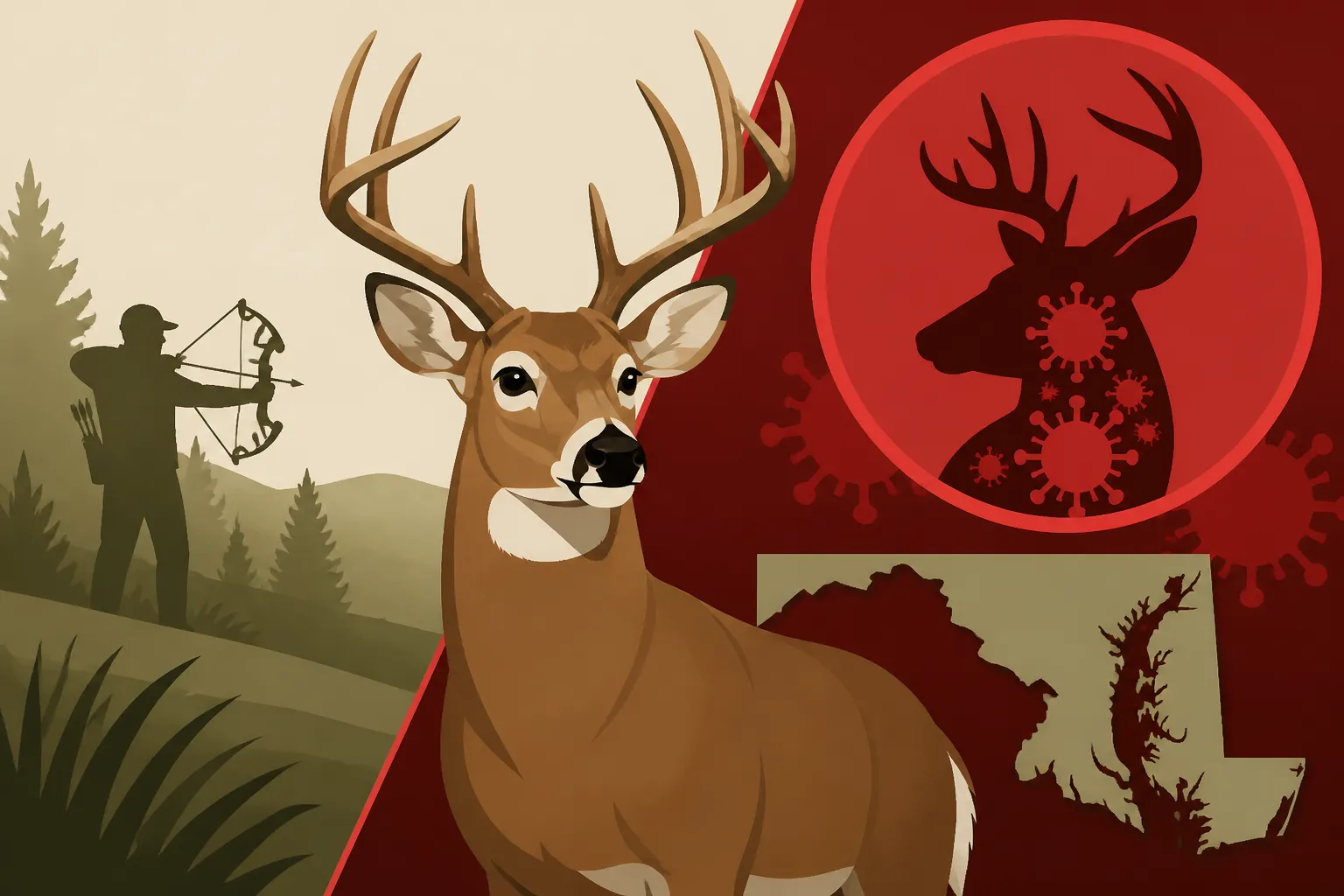
Epizootic Hemorrhagic Disease, or EHD as it's commonly known, is a non-contagious viral disease that primarily affects white-tailed deer. While it might sound scary, it's important to know that EHD is endemic in many deer populations across North America, including right here in Maryland. It's not something new, but its presence can certainly be alarming when you stumble upon its effects in the field. Think of it less like a spreading contagion between deer, and more like a fever that just some deer get from an external source.
The disease itself is caused by an orbivirus, and it's transmitted to deer through the bite of tiny, biting insects called midges. Often referred to as "no-see-ums" or "gnats," these aren't your typical mosquitoes or ticks, but small, fly-like insects that thrive in certain warm, damp conditions. These midges are the key to EHD's spread; without them, the virus doesn't move. The frustrating part is that these midges are a natural part of our Maryland ecosystems, particularly active during the late summer and early fall, which often coincides with the earliest parts of our hunting seasons. This timing can be especially heartbreaking when you've been Scouting Maryland Public Land Before Season only to find dead deer where you expected to find healthy ones.
Once a deer is bitten by an infected midge, the virus enters its bloodstream and can cause significant damage to blood vessels. This leads to internal hemorrhaging, hence the "hemorrhagic" in its name. The severity of the disease can vary; some deer might only experience a mild infection and recover, while others succumb very quickly. Typically, symptoms appear within a week of infection. Unfortunately, for white-tailed deer, which have little natural immunity to many strains of EHD, the outcome is often fatal. Our White-Tailed Deer in Maryland are particularly susceptible, which means an outbreak can feel very impactful.
Maryland has experienced EHD outbreaks historically, usually in cycles tied to environmental conditions that favor midge populations, such as prolonged periods of drought followed by heavy rains, or just consistently warm, humid weather late in the summer. When temperatures stay high well into autumn, the midge season extends, increasing the window for deer to contract the disease. This is why you often hear about EHD hitting hardest in August, September, and early October, just as many of us are preparing for or even starting Hunting Maryland's Long Archery Season. It's a natural, albeit devastating, phenomenon that wildlife biologists continually monitor.
The Visible Signs and Impact of EHD on Maryland's Deer Population
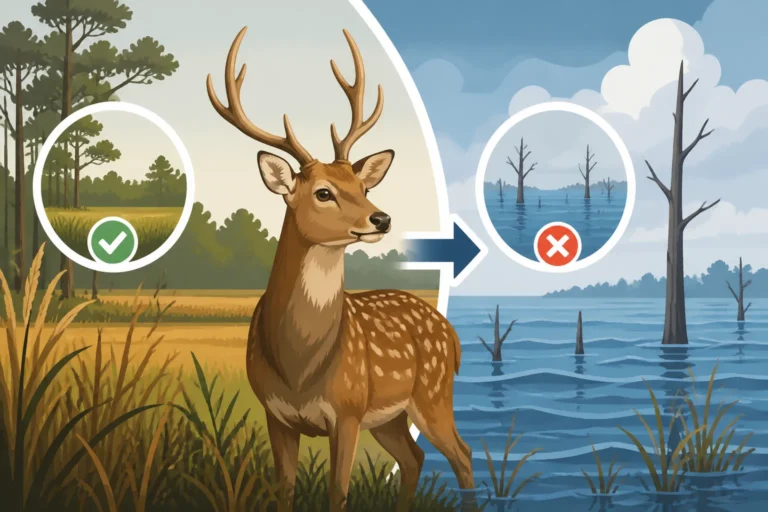
Recognizing EHD in the field is crucial, not just for your own peace of mind, but also for helping wildlife officials track its spread. The most common and heartbreaking sign of an EHD outbreak is finding deer that have died suddenly, often near water sources. Deer suffering from EHD develop a high fever, and much like a person with a bad flu, they seek out water to cool themselves down. So, it's not uncommon to find deceased deer in or near ponds, streams, or low-lying wet areas, even small puddles. This can be particularly true if you're Hunting a Farm Pond Dam Late in the Season or checking creek bottoms.
Beyond finding deceased deer, there are several key symptoms that might indicate a deer is suffering from EHD. You might observe a deer that appears lethargic, disoriented, or unusually tame, not fleeing from humans as it normally would. They often have swollen heads, necks, tongues, or eyelids due to the internal hemorrhaging and fluid buildup. Sometimes, you'll see ulcers or lesions on their tongues or in their mouths. A deer with EHD might also be drooling excessively, having difficulty breathing, or show signs of lameness, struggling to walk due to swelling and internal pain in their hooves. If you spot a deer acting this way, it's a clear red flag.
The impact of EHD on our Maryland deer population can range from localized dips in numbers to more significant, widespread die-offs in specific areas. It’s important to remember that EHD doesn’t usually wipe out an entire region’s deer, but it can severely affect a particular local herd, leaving many hunters feeling a profound sense of loss. We’ve seen areas where deer numbers were high, only to be reduced dramatically after a severe EHD year. This can influence hunting success for a season or two, especially for antlerless tags, as the population works to rebound. In contrast, Maryland's Sika Deer, an Imported Herd tend to be less affected by EHD than white-tailed deer, though they are not entirely immune. Their different genetic makeup offers some resilience, highlighting the species-specific nature of this disease.
| Symptom | Likely Cause | What to Look For | When It Appears |
|---|---|---|---|
| Sudden Death | EHD, Vehicle Collision | Carcass often near water, no visible trauma | Late Summer to Early Fall |
| Swollen Face/Tongue | EHD | Blue tongue, swollen eyelids, excessive drooling | Days after infection |
| Lethargy/Lameness | EHD, Injury, Starvation | Deer unable to stand, limping, unresponsive | Days after infection |
| Hemorrhages | EHD | Internal bleeding (visible on necropsy), bloody foam from mouth/nose (rare) | Rapid onset |
| Emaciation | Starvation, Chronic Wasting Disease | Very thin body, visible ribs/hip bones | Persistent |
| Open Wounds | Injury, Predation | Cuts, gashes, bite marks | Any time |
These outbreaks, while disheartening, are usually not a long-term threat to the overall Maryland's Statewide Deer Harvest Numbers. Deer populations are resilient, and those that survive an outbreak often develop some immunity to that specific strain of the virus, passing on some resistance to future generations. However, a significant outbreak can certainly change your hunting plans for a season, forcing you to adjust your expectations about deer sightings and success, particularly in affected areas like a specific woodlot or drainage. It might even lead to a reduction in local populations for a couple of seasons, impacting your ability to meet Maryland's Deer Bag Limits and Antler Rule.
What Maryland Hunters Should Do When Encountering EHD
Coming across a sick or deceased deer in the field, especially when you suspect EHD, can be jarring. Your immediate reaction might be to investigate or even try to help, but it's important to approach these situations safely and responsibly. Your first priority should always be your own safety, followed by assisting wildlife management efforts.
If you find a deer that appears to be suffering from EHD – exhibiting symptoms like swelling, lethargy, or struggling to stand – the best course of action is to keep your distance. Do not attempt to approach or handle the animal. While EHD is not known to affect humans, dogs, or other domestic animals, a sick, disoriented deer can be unpredictable and potentially dangerous. The most helpful thing you can do for the deer and for wildlife management is to report your observation.
The Maryland Department of Natural Resources (MDNR) relies on reports from hunters and landowners to track disease outbreaks. When you report a suspected EHD case, they can gather crucial data on the timing, location, and severity of the outbreak, which helps them understand population impacts and manage the herd more effectively. You can usually find information on how to report sick or dead wildlife on the MDNR website, often through their dedicated wildlife health section or by contacting your local wildlife biologist. Be prepared to provide the exact location of the deer, the date and time you observed it, and any symptoms or signs you noticed. Apps like GoHunt, which many hunters use for land navigation and scouting, can also be invaluable for pinpointing the exact location of your sighting, making it easier for MDNR staff to follow up.
Regarding venison consumption, the general consensus among wildlife health experts is that EHD does not pose a health risk to humans. However, it is strongly advised not to consume meat from any animal that appears sick. The virus itself doesn't cause human illness, but a deer that has been severely ill may have other health issues or its meat might not be in prime condition. If you harvest a deer and then notice signs of EHD after the fact, such as hemorrhages on the internal organs or abnormal blood clots when Field Dressing a Deer in Warm September Weather, it's best to discard the meat. When in doubt, always err on the side of caution. If you're using a resource like GoHunt to plan your hunts, keep an eye on any local MDNR alerts they might relay about disease outbreaks in your target areas.
Proper carcass disposal is another important consideration. If you find a dead deer suspected of EHD on private land, and it's not going to be retrieved by MDNR, you should try to dispose of it in a way that prevents scavengers from spreading the carcass around and to minimize any potential spread of the midges that caused the disease. Burying the carcass deep enough to deter scavengers is often recommended. On public lands, it's best to leave the disposal to the authorities after reporting it. Remember, these efforts contribute to the overall health management of our Maryland's Deer Disease Watch List.
Living with EHD: Long-Term Outlook and Management for Maryland's Deer
EHD is an unfortunate, yet natural, part of managing our wild deer populations in Maryland. While outbreaks can be devastating in localized areas, deer populations are generally quite resilient. After a significant EHD event, it's typical to see a temporary reduction in deer numbers in the affected zone. However, surviving deer often develop immunity, and the population typically begins to rebound within a year or two. Nature has a way of balancing itself out, and deer herds are incredibly good at recovering. You might find that areas that were hit hard one year could show promising signs of recovery the next, especially with good habitat and food sources.
For Maryland's wildlife managers, EHD is a constant consideration. The MDNR continually monitors deer health and tracks outbreaks to understand their impact on herd dynamics. They use this information to make decisions about future hunting regulations, such as antlerless allocations or season lengths, to ensure the long-term health and sustainability of the deer population. While there's no vaccine or direct treatment for EHD in wild deer, understanding its patterns and impact allows for adaptive management strategies. If you're keen on knowing the specifics of your hunting area, regularly checking the MDNR's wildlife health updates is a good practice. Tools like GoHunt can provide overlays for public land boundaries, but always cross-reference with official state sources for disease information.
From a hunter's perspective, living with EHD means being aware and adaptable. You might need to adjust your expectations for a season if your favorite hunting spot was heavily impacted. It's a good reminder of the importance of scouting throughout the year, not just right before the season, so you can observe any changes in deer density or health. If you notice a particular area has been hit hard, it might be a good time to explore new ground or focus your efforts on areas less affected. This resilience in both the deer and the hunters is what keeps our traditions alive.
Ultimately, EHD is a stark reminder that hunting is deeply intertwined with natural ecological processes. While we can't prevent these outbreaks, our role as informed and responsible hunters helps the Maryland Department of Natural Resources effectively manage our deer herd. By knowing the signs, reporting our observations, and adapting our strategies, we contribute to the health and sustainability of Maryland's CWD Management Area Rules and all deer populations across the state, ensuring that future generations can enjoy the challenge and reward of the hunt.
Disclaimer
This article is for general informational purposes only and does not constitute professional advice. Laws, prices and regulations vary by location and change over time. Consult a qualified professional for guidance on your specific situation.