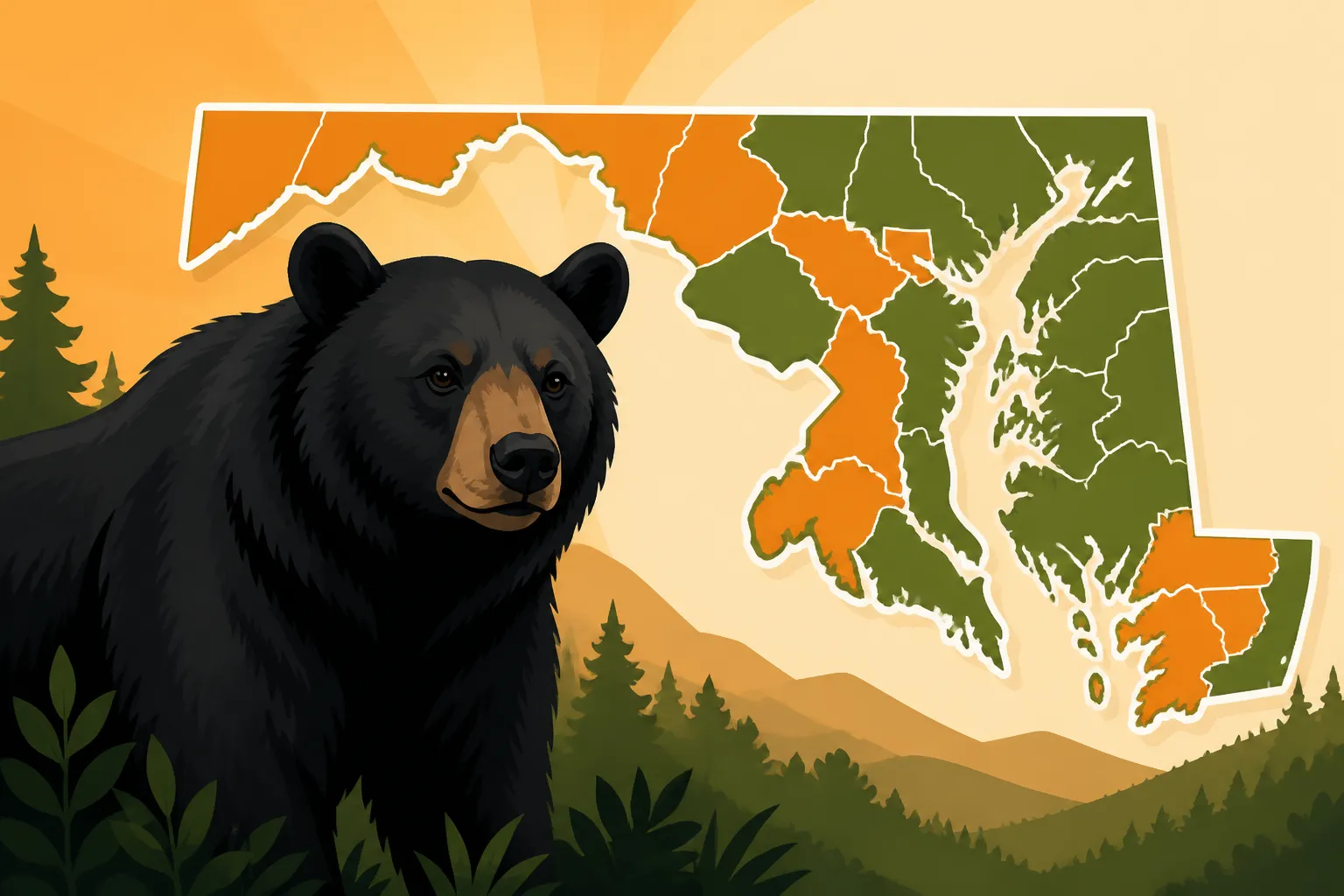
Which Counties Hold Maryland Black Bears
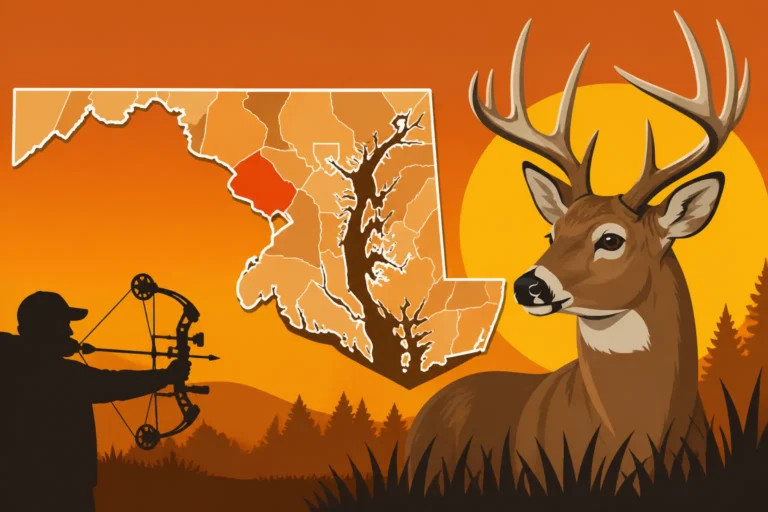
Maryland’s landscape is a diverse tapestry, but for many hunters, the thought of black bears conjures images of distant, wild lands. It can feel daunting to pinpoint where these elusive creatures truly roam within the Old Line State, leading to frustration for those dreaming of a bear hunt or simply hoping for a glimpse. This guide will meticulously break down the counties where Maryland’s black bear population thrives, detailing their expansion and offering insights into their preferred habitats, helping you understand exactly which corners of the state are home to these magnificent animals.
Maryland's Black Bear Population: A Comeback Story
It’s easy to forget that just a few decades ago, the idea of a healthy black bear population in Maryland seemed like a pipe dream. These incredible animals were once a staple of our wild spaces, but times changed, and their numbers dwindled significantly. Thankfully, through concerted conservation efforts and a natural resilience, Maryland's black bears have staged a remarkable comeback.
Historical Presence and Decline
If you could travel back in time a few centuries, you'd find black bears living across much of Maryland, from the eastern woodlands to the western mountains. They were simply a part of the natural fabric, intertwined with the landscape. However, as human settlements grew, so did the pressures on wildlife. Deforestation for agriculture and timber, coupled with unregulated hunting, began to chip away at bear numbers. By the early 20th century, black bears were largely extirpated from the eastern and central parts of the state, clinging to a precarious existence in the most remote pockets of Western Maryland. It was a classic tale of habitat loss and human encroachment pushing a species to the brink, leaving many to believe these powerful creatures were gone for good.
Modern Recovery and Expansion
The tide began to turn in the latter half of the 20th century. With growing public awareness and dedicated efforts by the Maryland Department of Natural Resources (DNR), habitat protection and reintroduction initiatives started to bear fruit. The vast, contiguous forests of Western Maryland, particularly in the Appalachian Mountain region, provided the perfect sanctuary for the remaining bears to rebound. As their numbers slowly climbed, a controlled hunting season was eventually re-established, not to diminish the population, but as a vital management tool to maintain a healthy balance and foster public tolerance. This careful stewardship has allowed for a significant increase in the population, a true testament to successful wildlife management, and you can learn more about this success story in our detailed piece on Maryland's Black Bear Population Growth.
Bear Distribution Beyond the Core
While Western Maryland remains the undisputed stronghold, the success of the black bear population means they're not content to stay in one place. As younger bears mature and seek new territories, and as food sources fluctuate, these adaptable animals are increasingly venturing beyond their traditional stomping grounds. This phenomenon has led to what wildlife biologists call "range expansion," where bears are observed in counties where they haven't been seen in generations. These sightings, though often transient and usually involving solitary males looking for new breeding areas, signal a healthy and expanding population. It means that while the core hunting opportunities are concentrated, the potential for encountering a bear, or finding sign, is slowly but surely spreading eastward.
The Core Bear Counties: Western Maryland's Stronghold
When you talk about black bears in Maryland, you're primarily talking about Western Maryland. This is where the landscape truly favors these creatures, offering vast tracts of forest, abundant food sources, and plenty of seclusion. These are the counties where you'll find the highest population densities and, consequently, the primary hunting opportunities.
Garrett County: The Bear Mecca
If Maryland has a "bear Mecca," it's unequivocally Garrett County. Tucked away in the far western corner of the state, Garrett boasts the largest amount of public land, including sprawling state forests like Savage River State Forest and parts of Green Ridge State Forest. These areas provide exactly what a black bear needs to thrive: dense, mature hardwood forests, diverse undergrowth, numerous natural springs and waterways, and ample cover for denning and raising cubs. Acorns from the oak forests, berries, wild cherries, and even insects found in fallen logs provide a rich and varied diet throughout the seasons. This abundance of resources and expansive, unbroken habitat makes Garrett County the top destination for bear sightings and the focal point of Maryland's bear hunting season. Exploring these areas requires careful planning, but it's where your best chances lie, as detailed in our guide on Hunting Maryland's Western Mountain Forests. If you're serious about finding bear sign, Garrett County should be your first stop, as discussed in Scouting Bear Sign in Garrett County.
Allegany County: A Close Second
Just to the east of Garrett lies Allegany County, another critical piece of Maryland's prime bear country. Allegany shares many of the same rugged, mountainous characteristics with Garrett, including significant portions of Green Ridge State Forest. The continuous forest habitat along the Appalachian ridges allows bears to move freely between these counties, maintaining a robust population. While perhaps not quite as dense in bear numbers as Garrett, Allegany offers excellent opportunities for those seeking a bear. The terrain can be challenging, with steep hollows and thick timber, but it's precisely this wildness that makes it so appealing to bears and adventurous hunters alike. Public land opportunities here are substantial, and understanding them is key, which you can read about in Allegany County Public Hunting Access. Hunters often find bears in the more remote areas, especially those near water sources and heavy mast crop areas.
Washington County: Eastern Edge of the Stronghold
Moving further east, Washington County marks the easternmost boundary of Maryland’s primary bear stronghold. While its bear population density might not rival Garrett or Allegany, sightings and established territories are increasingly common, especially in the western and northern parts of the county that border the Appalachian Ridge. Places like South Mountain and the connected state lands provide critical habitat corridors for bears dispersing from the more western counties. Farmers and residents in these areas report more frequent encounters, indicating a growing, albeit perhaps less concentrated, presence. For hunters, Washington County offers unique opportunities, often closer to the Piedmont region, but still demanding the same dedication to scouting and understanding bear behavior. While bear permits for this county are often part of the general Western Maryland lottery, its inclusion is a testament to the expansion of the population. Detailed information about hunting access in this area can be found in Washington County Public Hunting Ground.
Emerging Bear Hotspots and Transient Sightings
While the western counties are the undisputed heart of Maryland's black bear population, the species' incredible adaptability and successful recovery mean that their presence is no longer strictly confined to these traditional areas. Bears are on the move, and new hotspots are emerging, alongside occasional, more transient sightings that hint at an even broader potential range.
Frederick County: A Growing Presence
Frederick County, situated between the true mountains and the more developed central Maryland, has been a significant area for growing bear activity in recent years. Specifically, the western half of Frederick, encompassing areas like Catoctin Mountain and South Mountain, provides essential forest cover and connectivity to the larger Appalachian system. Bears, particularly younger males, are utilizing these natural corridors to explore new territories, often following stream valleys and unbroken timber patches. Residents in areas like Cunningham Falls State Park and Monocacy River regions are reporting increasing bear sightings, sometimes even in suburban-adjacent areas. This doesn't mean Frederick County has the same bear density as Garrett, but it certainly indicates a robust and expanding population pushing eastward. For hunters who draw a permit, the western reaches of Frederick County, particularly on public lands like Catoctin Mountain Park or areas along the Appalachian Trail, offer intriguing prospects. You can find more on public land opportunities in Frederick County Public Land Access.
Other Piedmont and Central Maryland Sightings
Beyond Frederick, it's becoming less unusual to hear about black bear sightings in other counties throughout the Piedmont and even closer to the densely populated central Maryland corridor. Counties like Carroll, Howard, Montgomery, and even Harford have recorded sporadic bear appearances. It’s important to understand, however, that these are generally not established breeding populations. Instead, these sightings are most often attributed to dispersing young male bears that can travel significant distances in search of new habitat, mates, or food. They might traverse agricultural fields, cross busy highways, and navigate suburban fringes, often creating quite a stir. While fascinating, these transient bears typically don't stay long, and the habitat isn't yet sufficient to support a permanent population. So, while you might see a black bear near Damascus or Westminster, it doesn't mean there's a huntable population there. For more on these occasional ventures, check out Bear Sightings Outside the Four Hunt Counties.
The "Bear Highway" Concept
Bears are incredibly intelligent and efficient travelers, and they often use specific geographical features as "bear highways" to navigate the landscape. These include major river corridors like the Potomac and Susquehanna, extensive utility rights-of-way, and large, contiguous blocks of forest that crisscross county lines. These natural and man-made linear features provide cover, access to water, and a relatively safe passage, allowing bears to move from their core western habitats into new areas. For instance, a bear might follow the Potomac River east from Allegany County, eventually ending up in Frederick or even farther. Understanding these travel corridors is key to predicting where bears might show up next, even in counties not traditionally known for their presence. This concept helps explain why sightings can pop up in seemingly unexpected places, far from the established mountain strongholds.
Understanding Bear Habitat and Movement Patterns
To truly understand which counties hold Maryland's black bears, and why, you need to delve into the specifics of their habitat preferences and how their movements are intricately linked to the changing seasons and available food sources. It's not just about what's on the map; it's about what's in the landscape.
Ideal Bear Habitat Components
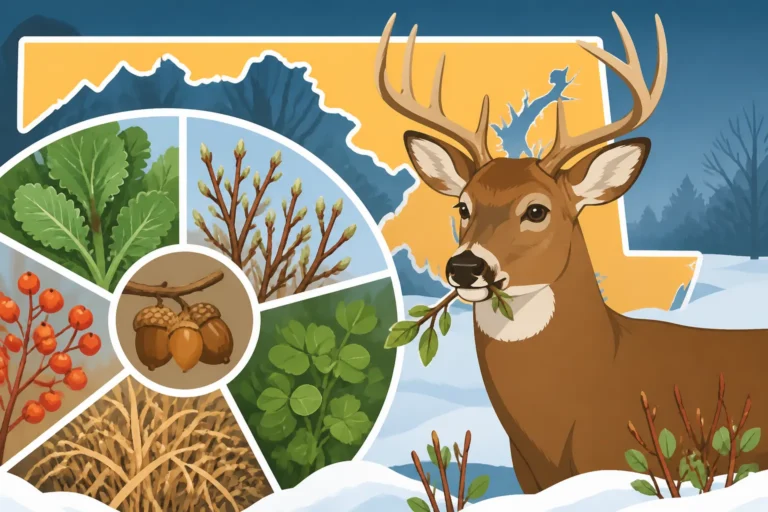
Black bears are creatures of the forest, and their ideal habitat is a mosaic of features that provide everything they need to survive and thrive. At the core, they require large, unbroken tracts of mature woodland, especially those dominated by mast-producing trees like oaks and hickories, which offer crucial fall food sources. Beyond the towering trees, a healthy understory of dense brush and thickets is vital for cover, providing secure bedding areas, escape routes, and safe havens for cubs. Access to water is non-negotiable, whether it's flowing streams, small ponds, or natural springs. Moreover, a diverse array of food sources throughout the year is paramount. This includes spring greens, various berries and soft mast in summer, and the critical hard mast (acorns, beechnuts) in the fall. Old-growth timber stands with hollow logs and rock crevices also provide essential denning sites. Without this complex mix, a bear population simply cannot sustain itself, making these Western Maryland counties so uniquely suited for them.
Seasonal Movements and Food Availability
A black bear's life in Maryland is a continuous quest for calories, and their movements are almost entirely dictated by the seasonal availability of food. In spring, as they emerge from their dens, bears are often found in lower elevations, seeking out early green vegetation, tender shoots, and occasionally scavenging carrion left over from winter. As summer progresses, their focus shifts to soft mast crops—blueberries, blackberries, raspberries, and wild cherries. This is when they might venture into more open areas or along forest edges where these fruits are abundant.
However, fall is the most critical time for bears in Maryland, as they enter hyperphagia, a period of intense eating to pack on fat reserves for winter denning. During this time, they will concentrate heavily on hard mast, primarily acorns. The availability of acorns can drastically influence bear distribution within a county. In a poor mast year, bears may travel extensively, even into less traditional areas, to find food. Conversely, a bumper crop can keep them concentrated in prime oak forests. Understanding these patterns, and even checking local mast crop reports, can be invaluable for pinpointing bear activity. This focus on fall food is why you'll often hear about bears being more active in October and November. For more on their diet, take a look at What Maryland Bears Eat in Fall. Tools like GoHunt can be incredibly helpful here, allowing you to use satellite imagery and topographic maps to identify potential mast-producing ridges and dense cover that might attract bears. You can even layer public land boundaries to maximize your scouting efficiency.
Denning Behavior and Winter Habits
As the days shorten and temperatures drop, Maryland's black bears begin preparing for their winter slumber. Typically, bears in our region will seek out denning sites from late November into December, though this can vary based on weather conditions and individual bear physiology. They aren't true hibernators in the sense that their body temperature drops dramatically, but rather enter a state of torpor. Denning sites are crucial for their survival through the lean winter months and for the birth of their cubs in mid-winter.
Common denning locations include hollow trees, rock crevices and caves, brush piles, or even a simple shallow depression under a fallen log or dense thicket. These sites provide protection from the elements and predators. Pregnant sows seek out particularly secure dens to ensure the safety of their newborn cubs, which are born blind and helpless, weighing only about half a pound. The bears will remain in these dens until spring, usually emerging in late March or early April, depending on the weather. Knowing when and where bears typically den helps understand their annual cycle and why you might see a surge in activity during the pre-denning gorging period. Our article on When Maryland Bears Den for Winter provides even more specific details on this fascinating aspect of their lives.
Challenges and Opportunities for Bear Hunters
While Maryland's black bear population is thriving, the opportunity to hunt them remains highly controlled and, for many, a significant challenge. It's not a general season where anyone with a license can participate; it requires careful planning, a bit of luck, and a deep understanding of the rules and the bears themselves.
The Bear Lottery System and Limited Permits
Unlike deer or turkey hunting, pursuing a black bear in Maryland is not a guaranteed annual endeavor. The state manages its bear population through a highly restrictive lottery system. Each year, the Maryland Department of Natural Resources (DNR) assesses the bear population, harvest data, and public tolerance to determine how many permits will be issued. These numbers are typically very limited, often in the hundreds for thousands of applicants, making drawing a permit a genuine stroke of luck. Hunters apply for the lottery, and if selected, are granted a permit for the specified season in the hunt zone.
To increase your chances over time, Maryland uses a preference point system. For every year you apply for the lottery and don't get drawn, you earn a preference point. These points increase your odds in subsequent drawings, making it crucial for dedicated bear hunters to apply every year, even if they don't plan to hunt that particular season. This system ensures that while it's tough to get a permit, persistent applicants are eventually rewarded. Understanding the nuances of this system is paramount, as covered in detail in Maryland's Black Bear Lottery and Maryland Bear Preference Point Rules. Without a permit, a bear hunt simply isn't an option.
Scouting for Bear Sign and Public Land Strategies
Once you've secured that coveted bear permit, the real work begins. Maryland's bear season is short, typically only a few days, so effective scouting is absolutely critical. Bears leave distinct signs, and learning to read them is like learning a new language. Look for tracks in mud or soft ground, distinct claw marks on trees where they've climbed for mast, and "bear rubs" where they've rubbed against trees to mark territory or scratch an itch. Scat can tell you what they're eating and how recently they've been in the area. Torn-apart logs and overturned rocks are also clear indicators of a bear feeding on insects.
Much of Maryland's bear hunting occurs on public lands in Garrett, Allegany, and Washington counties. These areas, while vast, can also experience significant hunting pressure during the short season. Strategies for hunting public land include identifying remote areas far from roads, focusing on dense bedding cover near good food sources, and using topographical maps to find natural funnels or saddles that bears might use to travel. Modern mapping apps, such as GoHunt, are invaluable tools here. They allow you to overlay public land boundaries, identify timber types (like oak stands), mark water sources, and plan entry and exit routes that minimize disturbance. Remember, bears are incredibly sensitive to pressure, so finding ground others walk past, as suggested in Scouting Maryland Public Land Before Season, can make all the difference.
Guided Hunts and Private Land Access
For those who are successful in the lottery but may lack extensive experience in bear country or the time for intensive scouting, a guided hunt can be an excellent option. Maryland has reputable guides, particularly in the western counties, who specialize in black bear hunting. These guides often have access to private lands, which can see less pressure and offer more consistent opportunities. They also possess intimate knowledge of local bear movements, current food sources, and effective hunting techniques. A guide can significantly improve your odds of success, providing expertise in tracking, shot placement, and recovery, especially in challenging mountain terrain. Our guide on Guided Bear Hunts After Drawing a Permit offers more insights into what to expect from such an experience.
Gaining private land access on your own is another route, though it requires considerable effort and building relationships with landowners. Offering to help with chores, respecting property, and being a good ambassador for hunting can sometimes open doors. Private land, particularly agricultural areas bordering large timber blocks, can be productive, as bears will often feed on crops or in orchards. However, always ensure you have explicit, written permission before hunting any private ground.
| County | Primary Status | Key Characteristics | Current Trend | Hunting Opportunity Notes |
|---|---|---|---|---|
| Garrett | Core Stronghold | Vast contiguous forests (Savage River, Green Ridge), high mast production, numerous waterways, low human population density. | Stable, robust population. | High density, primary lottery hunt zone. Requires rigorous scouting. |
| Allegany | Core Stronghold | Rugged Appalachian terrain (Green Ridge), significant forest cover, good mast crops, connects directly to Garrett's habitat. | Stable, robust population. | Good density, primary lottery hunt zone. Challenging terrain. |
| Washington | Expanding Stronghold | Western half with Appalachian Ridge connection (South Mountain), increasing forest cover, borders Allegany/Frederick. | Increasing sightings and established presence. | Included in lottery hunt zone. Lower density than Garrett/Allegany. |
| Frederick | Emerging Hotspot | Western portions with Catoctin Mountain and South Mountain, good forest corridors, increasing rural-wildlife interface. | Noticeable increase in established bears. | No current general lottery hunting season for Frederick only, but part of expanding range. |
| Carroll | Transient Sightings | Scattered woodlots, agricultural land, proximity to Frederick. | Occasional, transient sightings. | No huntable population. Sightings primarily dispersing young males. |
| Howard | Transient Sightings | Fragmented habitat, river corridors, high population density. | Very rare, transient sightings. | No huntable population. |
| Montgomery | Transient Sightings | Highly fragmented, urban/suburban, river corridors. | Extremely rare, transient sightings. | No huntable population. |
Disclaimer
Please be aware that hunting regulations, seasons, and permit requirements in Maryland can change. Always consult the most current Maryland Department of Natural Resources (DNR) hunting guide and regulations before planning any hunting trip. This guide is for informational purposes only and should not be considered legal advice or a substitute for official DNR publications.