What a Mature Maryland Buck Weighs
It’s a classic scenario: you’ve spent countless hours scouting, hanging stands, and finally, a buck steps out. Your heart races, the shot is clean, and as you walk up, you think, "Wow, he looks bigger than I thought!" Or perhaps you're simply trying to understand the potential of your hunting grounds. Figuring out what a mature Maryland buck really weighs, beyond just guessing, can be a frustrating puzzle, making it tough to judge trophy potential or even just manage expectations. This guide is here to unravel that mystery, giving you a realistic understanding of buck weights across the Old Line State.
Understanding "Mature" in Maryland Deer Hunting
When we talk about a "mature" buck, it's not just about impressive antlers, though those certainly catch our eye. True maturity in a whitetail buck is a complex interplay of age, genetics, and environment, all of which contribute significantly to its overall body weight.
Age Versus Antlers
Many hunters, myself included, often equate big antlers with an old deer. While there’s certainly a correlation, it’s not always a direct one. A buck’s antler growth is largely influenced by its age, but also heavily by its nutrition and genetics. A 2.5-year-old buck with excellent nutrition might have a respectable rack, but it's likely still putting most of its energy into growing its skeletal frame and body mass. It hasn't peaked in body weight yet.
A genuinely mature buck, typically 3.5 years old or older, has largely finished its skeletal growth and is now dedicating more resources to body maintenance and antler development. Maryland's antler restrictions, like the three-point rule in some areas, actually encourage hunters to pass on younger bucks, giving them a chance to reach a more mature age class where their full body and antler potential can be realized. This approach, outlined further in discussions like Hunting Around Maryland's Three-Point Antler Rule, contributes to healthier, heavier deer in the population. You’ll often find that the heaviest bucks might not always have the largest racks, especially if they are past their antler-growing prime but still carrying significant body mass.
Regional Differences in Deer Size
Maryland is a diverse state, ranging from the rugged mountains of Western Maryland to the rich agricultural lands of the Eastern Shore and the more suburban corridors. This geographical variety leads to noticeable differences in deer size and weight. Deer in Western Maryland (Region A), for example, generally have access to less abundant, lower-quality forage compared to their counterparts on the Eastern Shore (Region B) where expansive farm fields provide a buffet of high-energy crops like corn and soybeans.
Therefore, a "mature" buck in Garrett County might naturally weigh less than a "mature" buck of the same age in Dorchester County. These regional differences are critical to understand when setting your expectations for buck weights. The state is broadly divided into Region A and Region B for deer management, and these distinctions play a significant role in herd dynamics and deer physical characteristics. Learning more about Maryland's Deer Herd by Region can give you a better grasp of these variations across the state. Hunters often notice these differences firsthand, with Eastern Shore bucks often appearing "chunkier" or "blockier" due to their richer diet.
Factors Influencing a Maryland Buck's Weight
A buck's weight isn't a static number; it's a dynamic reflection of its environment, age, and individual genetic makeup. Understanding these influences can help hunters better predict and appreciate the size of the deer they encounter.
Nutrition and Habitat Quality
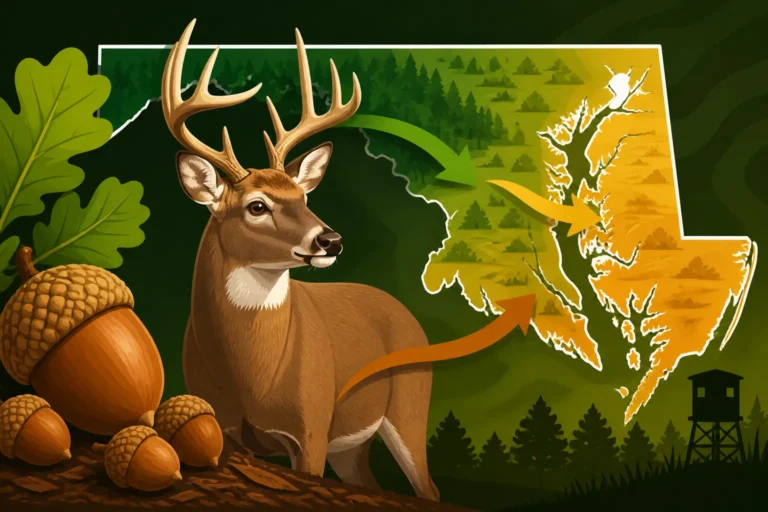
Without a doubt, nutrition is the most significant factor in determining a buck's body weight. Deer are opportunistic browsers and grazers, constantly seeking out the most nutritious food sources available. In Maryland, this means a diverse diet that can include acorns, various forages, and critically, agricultural crops. On the Eastern Shore, bucks often grow larger due to consistent access to nutrient-rich fields of corn, soybeans, and alfalfa. These high-protein, high-carbohydrate sources provide the energy and building blocks needed for substantial muscle and bone development.
In contrast, deer in more forested, less agricultural areas, like much of Western Maryland, rely more heavily on natural browse, acorns, and mast crops. While still vital, these sources can be more sporadic or less nutrient-dense, leading to slightly smaller average body weights. A prime example is the impact of a good acorn crop year versus a poor one, which can be seen in the overall health and weight of the deer herd that winter. Hunters using tools like GoHunt can analyze satellite imagery to identify prime agricultural fields, oak stands, or clear-cuts that offer superior nutrition, giving them an edge in finding heavier bucks. Understanding What Maryland Deer Eat Through Winter can further inform your scouting and hunting strategies.
Age and Genetics
Beyond nutrition, age is a critical component of a buck's weight. Whitetail bucks typically don't reach their peak body weight until they are 4.5 to 6.5 years old. Before this, much of their energy is still dedicated to skeletal growth. Once they reach physical maturity, more energy can be allocated to muscle mass and fat reserves. It's not uncommon for a 1.5-year-old buck to weigh a scant 120-130 pounds live weight, while a 4.5-year-old buck from the same area, with the same access to food, might easily exceed 180-200 pounds.
Genetics also play an undeniable role. Just like people, some deer are naturally predisposed to be larger than others, even if they share the same diet and age. These genetic predispositions, combined with optimal nutrition, are what produce those truly exceptional, heavy-bodied bucks that make the local news. While hunters can't control genetics, they can indirectly influence the herd's genetic potential by allowing younger, smaller-racked bucks to age, giving those superior genetics a chance to express themselves. Knowing How Old a Three-Point Buck Usually Is can help you make more informed decisions in the field and contribute to a healthier, more mature deer population.
Seasonal Fluctuations
A buck's weight isn't constant throughout the year; it fluctuates dramatically with the seasons. During the spring and summer, as high-quality forage becomes abundant, bucks pack on pounds, building up fat reserves to prepare for the energy-intensive rut and the lean winter months. They are often at their heaviest just before the rut begins in late October or early November.
However, the rut takes a tremendous toll. During the breeding season, bucks are constantly on the move, chasing does, fighting rivals, and rarely taking time to feed. This intense activity, coupled with reduced caloric intake, can cause a mature buck to lose 20-30% or even more of its body weight in just a few weeks. A buck that weighed a solid 200 pounds pre-rut might be down to 160 pounds or less by the time December rolls around. This significant drop is why many late-season hunters often find bucks looking gaunt and spent. Understanding Hunting the Rut in Early to Mid November is key to appreciating how much energy these animals expend during this critical period.
Average Weights for Mature Maryland Bucks
So, what kind of numbers are we truly looking at when discussing mature Maryland bucks? It's important to differentiate between live weight and dressed weight, as well as to consider the regional variations we've discussed.
Live Weight Ranges
For a truly mature Maryland buck (3.5 years and older), live weights can vary quite a bit depending on the region and the specific year's conditions. On the rich agricultural lands of the Eastern Shore (Region B), a mature buck will often tip the scales in the 170 to 200-pound range, with some exceptional specimens pushing well over 220 pounds. These are the deer that have been feasting on corn and soybeans for years, building incredible body mass.
Move to the central part of the state, where agriculture mixes with suburban woodlands and state forests, and mature buck weights might average a bit lower, perhaps 150 to 180 pounds. Still respectable, but reflecting a slightly less abundant or consistent food source. In the more rugged, heavily forested mountains of Western Maryland (Region A), a mature buck might be considered heavy at 140 to 170 pounds. While individual deer can always defy these averages, these ranges provide a realistic benchmark for hunters across the state.
Dressed Weight Considerations
When a deer is harvested, it's almost always field-dressed before being weighed. Field dressing involves removing the internal organs (viscera), which significantly reduces the deer's overall weight. On average, a field-dressed deer will lose approximately 25-30% of its live weight. This is a crucial number to remember when you hear a hunter report a deer's weight.
For example, a buck that weighed 180 pounds live weight might come in around 135 pounds field-dressed. A massive 220-pound live weight buck could still be a very impressive 165 pounds or more on the scale after field dressing. Knowing this conversion is vital for understanding reported weights and for setting your own expectations when you finally get your deer to a scale. Proper Field Dressing a Deer in Warm September Weather is not only about hygiene and meat preservation but also about preparing the animal for an accurate dressed weight measurement.
Record Book Bucks and Extreme Weights
While the average mature Maryland buck falls within the ranges mentioned, every now and then, a truly extraordinary animal is harvested. These are the "once-in-a-lifetime" deer that achieve celebrity status in local hunting circles. These record-book bucks, whether they qualify for typical or non-typical categories, often represent the perfect storm of superior genetics, abundant nutrition, minimal stress, and exceptional age.
Such bucks can easily exceed 250 pounds live weight, and some have even pushed closer to 300 pounds in rare instances, especially from the prime agricultural areas of the Eastern Shore. While these giants are outliers, they demonstrate the ultimate potential of Maryland's deer herd under ideal conditions. Tracking these exceptional animals through organizations that maintain records, such as those that document Maryland's Top Typical and Nontypical Bucks, highlights the genetic potential that exists in the state. Don't expect to tag one of these every season, but it's inspiring to know they're out there.
Estimating Weight in the Field and After the Harvest
Judging a buck's weight can be tricky, especially in the fleeting moments before a shot or even after the harvest when adrenaline is high. However, with practice and knowledge, you can become more adept at making reasonable estimates.
Field Estimation Techniques
Before you even raise your weapon, you can make an educated guess about a buck's weight by observing several visual cues. Look at its overall body mass, particularly the depth of its chest and the thickness of its neck. A truly mature buck will have a deep, blocky chest and a thick, often swollen neck during the rut, making its head appear small in comparison. Compare its body to known objects or other deer if available. Don't just focus on the antlers; a big rack on a skinny body often indicates a younger buck. Pay attention to the thickness of its legs and the depth of its belly (though this can fluctuate with feeding).
Another method involves observing how the deer moves. A truly heavy, mature buck often moves with a deliberate, powerful gait, rather than the more nimble, sometimes gangly movements of a younger deer. These visual cues are never foolproof, but they can help you differentiate between a yearling and a truly mature, heavy-bodied deer. This judgment is similar in principle to how hunters learn Judging Three Points on One Antler in the Field, relying on quick visual assessment.
Post-Harvest Weighing Methods
Once you've harvested a buck, getting an accurate weight is much easier. The most common method for hunters is to use a gambrel and a reliable scale. Portable digital scales designed for game are widely available and increasingly accurate. After field dressing, simply hang the deer from its hind legs on the gambrel, and the scale will provide a dressed weight. This is the most practical way for individual hunters to record their harvest weight.
Many deer processors, especially those in rural Maryland, will also weigh your deer as part of their service. This is often the most accurate way to get a dressed weight, as they typically have certified scales. If you're fortunate enough to have access to a local processor, they can also handle the meticulous butchering process, saving you a ton of work. For more on this, checking out resources like Finding a Processor Near Your Maryland Hunt can be incredibly helpful. Always ensure your scale is properly calibrated for the most accurate readings, especially if you're participating in any local big buck contests.
The Role of Weight in Deer Management and Hunting Strategy
Understanding buck weight goes beyond bragging rights; it's a vital component of effective deer management and can significantly influence your hunting approach. By analyzing weight data, hunters can gain insights into herd health and optimize their chances of success.
Weight as an Indicator of Herd Health
The average body weight of bucks, and indeed the entire deer herd, serves as a crucial indicator of the overall health of the local population and the carrying capacity of its habitat. In areas where deer populations are too high relative to the available food sources, individual deer often exhibit lower average body weights, smaller antlers, and a higher incidence of disease. This is because there's simply too much competition for food, and no single deer can get the optimal nutrition needed to reach its full potential.
Conversely, areas with balanced deer numbers and rich habitat tend to produce larger, healthier deer with higher average weights. Wildlife biologists closely monitor these trends to make informed management decisions, such as adjusting bag limits or advocating for specific harvest strategies. For hunters, observing a consistent pattern of small, lean deer might signal an overpopulation issue in your hunting area, suggesting that increased antlerless harvest could improve the health of the remaining herd. This is especially true when considering Hunting Maryland's Two Deer Management Regions, where management strategies are often tailored to specific local conditions.
Planning Your Hunt Around Prime Body Condition
Knowing how a buck's weight fluctuates seasonally can give you a strategic advantage when planning your hunts. If your goal is to harvest the heaviest possible buck, targeting the early archery season or the very beginning of the firearms season, before the rut takes its full toll, often yields the best results. During this pre-rut period, bucks are at their physical peak, having spent the summer gorging on high-energy foods, and are still relatively predictable in their movements as they focus on feeding.
As the rut progresses and into the late season, bucks lose considerable weight, making them physically less impressive, though still a rewarding harvest. However, understanding this can shift your focus to late season food sources. If you know bucks are burning calories rapidly, you can key in on crucial Late Season Food Sources for Maryland Deer that offer a concentrated energy boost, like standing corn, brassicas, or late-season acorns, knowing that deer will be drawn to them to try and regain some lost weight.
Using Data for Future Success
Keeping meticulous records of the deer you harvest, including their dressed weight, age (if you can estimate it), and the location of the kill, can be invaluable for future hunting success. Over time, this data can reveal patterns about which areas consistently produce heavier, older bucks, and which habitat types are most productive. Are bucks from a particular woodlot always heavier than those from a nearby marsh? Do bucks harvested after a particularly good acorn crop weigh more?
Modern hunting apps and mapping tools, like those offered by GoHunt, make it easier than ever to log this information and visualize it on a map. By overlaying your harvest data with habitat maps, historical weather patterns, and even food plot locations, you can start to identify correlations and fine-tune your scouting and hunting strategies for the following seasons. This data-driven approach, similar to Scouting Maryland Public Land With Aerial Photos, moves beyond guesswork, allowing you to build a more informed picture of your hunting grounds and the deer that inhabit them, leading to more consistent success in tagging those heavy-bodied Maryland bucks. Don't forget, after the harvest, registering your deer through channels like Registering a Maryland Deer by Phone or App is a mandatory step that also contributes to statewide data collection on herd health.
Disclaimer
Please remember that hunting regulations, seasons, and licensing requirements can change. Always consult the most current Maryland Department of Natural Resources (DNR) official publications for accurate and up-to-date information before planning any hunting activity. Safety should always be your top priority in the field.