Why Ruffed Grouse Declined in Maryland
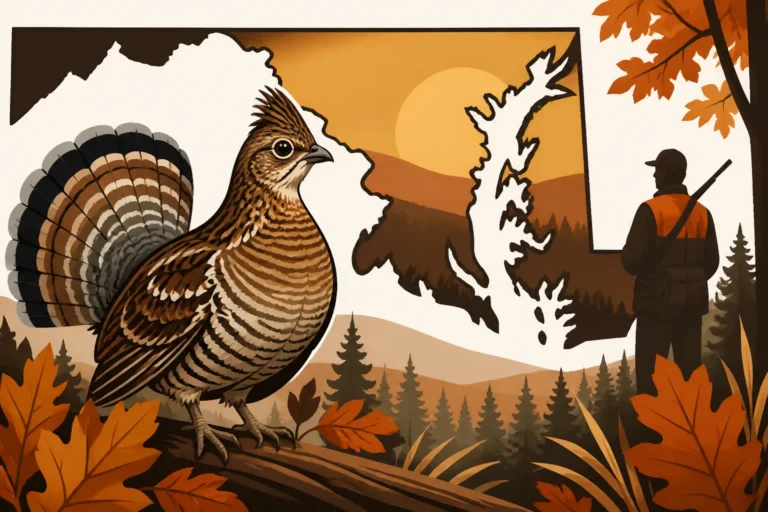
It's truly heartbreaking for many of us who remember a different time, but the truth is, the drumming of the ruffed grouse has become an incredibly rare sound in Maryland's woodlands. For generations, these magnificent birds were a staple of small game hunting, particularly in our western mountains. Sadly, their numbers have plummeted dramatically, leaving many hunters wondering what happened to this once-cherished upland bird. This guide dives deep into the complex reasons behind the ruffed grouse's decline in Maryland, exploring the environmental shifts and challenges that have pushed them to the brink.
The Historical Presence of Ruffed Grouse in Maryland
If you talked to any old-timer who hunted the mountains of Western Maryland in the mid-20th century, their eyes would light up at the mention of grouse. Back then, "pa'tridge" hunting was a real tradition, a challenging pursuit through rugged terrain where the flush of a grouse was the ultimate reward. These birds weren't just present; they were a vibrant part of the ecosystem, their populations healthy enough to sustain regular hunting seasons and provide ample opportunity for those willing to chase them.
Where Grouse Once Thrived
Historically, ruffed grouse were found primarily in the cooler, higher elevation regions of Western Maryland, specifically Garrett and Allegany counties, stretching into parts of Washington and Frederick counties. This was their stronghold because these areas offered the diverse, mixed hardwood forests with plenty of young, regenerating timber that grouse absolutely need to survive and thrive. Think of vast tracts of oak, hickory, and maple, interwoven with areas of dense mountain laurel thickets and stands of conifers, all providing the perfect blend of food, cover, and nesting sites. They were particularly at home in the remote hollows and on the steep ridges, places where human disturbance was minimal, and the forest cycled naturally through periods of growth and regeneration.
Memories of the Past: A Hunter's Perspective
I remember my grandfather talking about days spent in Savage River State Forest or Green Ridge, the air crisp, the leaves crunching underfoot, and the sudden, explosive flush of a grouse from a thicket of greenbrier. He'd often say finding a covey was a real accomplishment, a testament to keen eyesight and a patient walk. Hunters used to plan entire trips around chasing these birds, and stories of memorable flushes and successful shots filled camp conversations. The challenge wasn't just in finding the birds, but in the quick, instinctive shot needed as they rocketed through the timber. It was a hunt that demanded skill and offered immense satisfaction. For many, it was the quintessential experience of Small Game Species in Maryland. This rich history makes the current scarcity all the more poignant.
Primary Drivers of the Decline: Habitat Loss and Fragmentation
The single biggest factor in the ruffed grouse's disappearance isn't a mystery; it's habitat. These birds are incredibly specialized, needing a very specific type of forest structure that has become increasingly rare in Maryland over the last several decades. It's a classic case of the landscape changing faster than the wildlife can adapt.
The Vanishing Young Forest Habitat
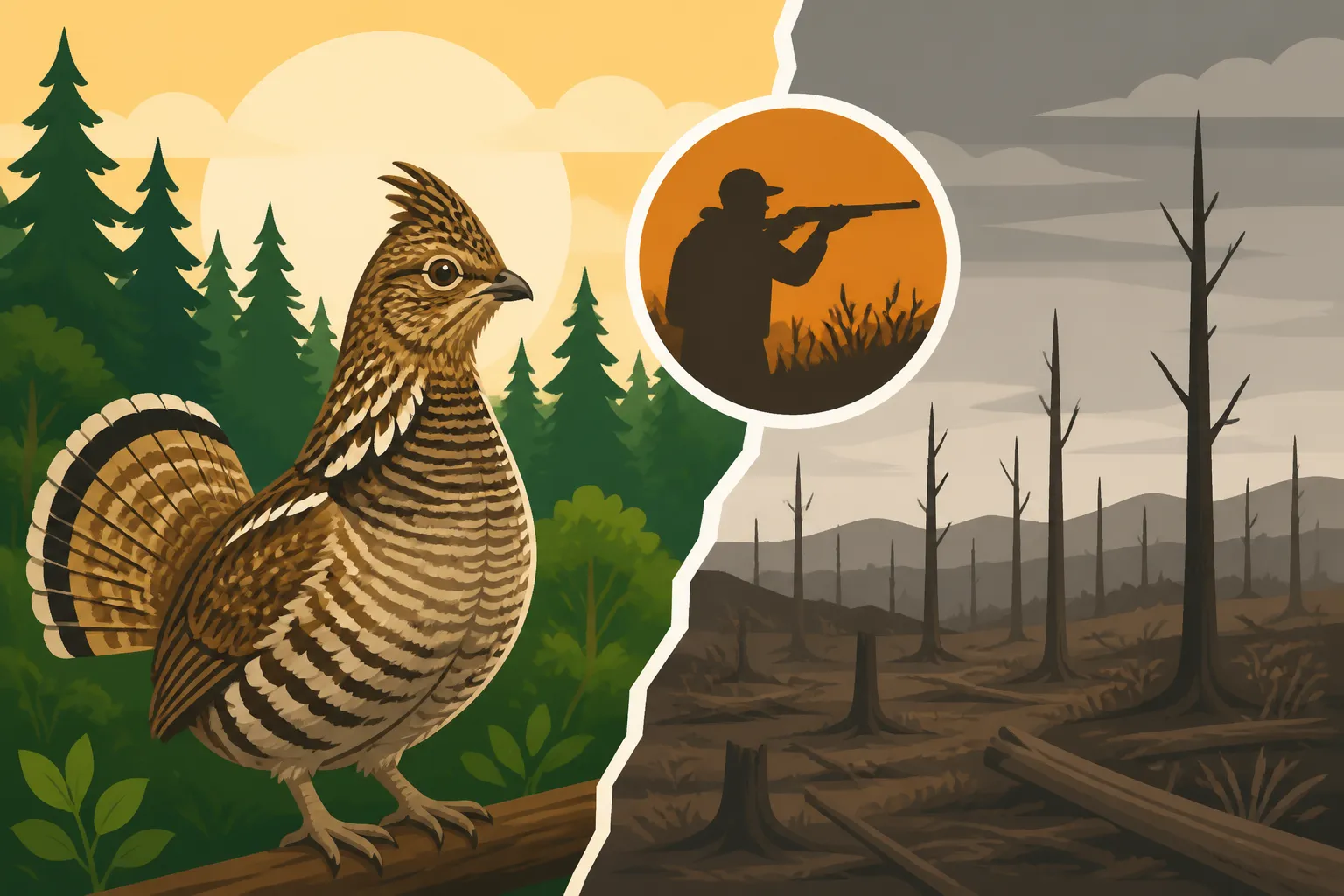
Ruffed grouse depend almost entirely on young, regenerating forests – what we call "early successional habitat." This isn't just any forest; it's dense, brushy growth that comes in after a timber harvest, a fire, or a significant storm. Imagine thick tangles of saplings, shrubs, and briars, so dense you can barely walk through it. This provides incredible overhead cover from avian predators like hawks and owls, and ground cover from foxes and coyotes. It's also where they find critical food sources like buds, catkins, and berries, especially in winter.
The problem is, much of Maryland's western forests have matured. While mature forests are wonderful for other species, they lack that crucial, low-growing density that grouse need for survival. Without regular disturbance, our woodlands grow into tall, open stands with a sparse understory. Grouse simply can't hide or raise their broods effectively in such conditions. This lack of ongoing, active forest management that creates these pockets of young growth has been devastating.
Impact of Forest Maturation
Think about it: in the past, wildfires, small-scale farming practices that eventually reverted to forest, and timbering operations that were less industrial and more localized, naturally created a mosaic of forest ages. Today, we're very good at fire suppression, which is great for protecting homes, but it removes a natural disturbance that benefited grouse. Timber harvesting, when it does occur, often focuses on larger clear-cuts or selective logging that doesn't always mimic the dense regeneration required. The result is a more uniform, older forest across much of the grouse's historical range. This isn't necessarily a "bad" forest, but it's the wrong kind of forest for a bird that needs that thick, brushy transition zone. It’s a challenge that managers face even in large areas like Hunting Maryland's Western Mountain Forests.
Fragmentation by Development and Infrastructure
Beyond simply maturing, Maryland's forests have also been increasingly fragmented. Even in our more rural western counties, roads, housing developments, and other infrastructure projects carve up once-continuous forest blocks. When a large forest is broken into smaller pieces, the amount of "edge" habitat increases. While some species thrive on edges, it can be detrimental for interior forest species like grouse. These fragmented areas allow generalist predators, like How Coyotes Took Hold in Maryland and Red and Gray Foxes in Maryland, to penetrate deeper into what were once relatively safe havens. It also isolates small populations of grouse, making it harder for them to find mates, increasing the risk of inbreeding, and making them more vulnerable to localized disease outbreaks or severe weather events. A population isolated by a highway might as well be on another continent.
Secondary Factors Contributing to the Decline
While habitat loss is the undeniable Goliath in the story of Maryland's ruffed grouse, several other factors have played significant roles, chipping away at already vulnerable populations. These often interact with habitat degradation, exacerbating the overall decline.
Disease and Predation Pressures
One major concern in recent decades has been the West Nile Virus. While we often think of this as a human health issue, it can be devastating to bird populations, especially grouse, which seem particularly susceptible. Studies have shown significant mortality rates in grouse exposed to the virus, and given their already declining numbers, even a moderate hit from disease can have a disproportionately large impact. When you combine this with increased predation pressure, it's a double whammy. As mentioned, fragmented habitats and growing populations of opportunistic predators like coyotes, bobcats, and even raccoons, put intense pressure on grouse nests, chicks, and even adult birds. These predators often thrive in the very habitats that grouse struggle in, creating an ecological imbalance.
Climate Change and Weather Patterns
Climate change introduces another layer of complexity. Ruffed grouse are adapted to specific environmental conditions, particularly the colder winters of their northern range. Warmer average temperatures in Maryland can impact them in several ways. Milder winters might reduce their ability to "snow roost" – burrowing into soft snow for insulation, which is a critical survival strategy in harsh weather. If there isn't enough snow, or if it melts too quickly, they lose this vital protection from both cold and predators.
Beyond temperature, altered precipitation patterns, such as more intense rain events during nesting season, can directly harm chicks. Prolonged wet, cold springs can lead to higher chick mortality due to hypothermia and a lack of insect protein, which young grouse depend on. These subtle but persistent shifts in climate can make an already challenging environment even more difficult for grouse to thrive. Hunting After a Maryland Cold Front isn't just about deer; small game can be affected by weather too.
Reduced Hunter Participation and Management Focus
It might seem counterintuitive, but a decline in hunting interest can also indirectly affect species that benefit from active habitat management. For many years, hunters were key advocates and often participants in creating and maintaining grouse habitat. As grouse numbers dwindled, so did the enthusiasm for hunting them, leading to less collective pressure for specific grouse management efforts. State agencies, with limited resources, naturally prioritize species with higher public interest and more viable populations.
This isn't to say that hunting caused the decline; hunting pressure on grouse in Maryland has been minimal for decades, well after the decline began. Instead, it's a reflection that without a strong constituent base actively pursuing and advocating for a species, it can sometimes slip further down the priority list for habitat work. Hunters using tools like GoHunt to scout and plan for other species may not even think to look for grouse, further reducing awareness and advocacy for them.
What This Means for Maryland Hunters and Conservation
For those of us who appreciate the wildness and challenge of upland bird hunting, the decline of the ruffed grouse in Maryland is a somber reality. It means a significant shift in what we can expect from our local woods, and it underscores the importance of ongoing conservation efforts.
Limited Hunting Opportunities Today
Let's be blunt: if you're looking to hunt ruffed grouse in Maryland today, your opportunities are incredibly rare. While a season may still technically be open, finding enough birds to justify a hunt is a monumental task. Most grouse enthusiasts now travel to states further north, like Pennsylvania or West Virginia, where populations are still strong enough to offer a realistic chance. You might stumble upon a single bird by sheer luck while Squirrel Hunting Maryland Hardwood Ridges or even Still-Hunting Western Maryland Mountain Timber, but targeting them specifically is often an exercise in futility. The days of consistent flushes are, for the most part, gone from the Maryland landscape. This isn't just about the bird; it's about the entire experience of hunting it.
Conservation Efforts and Their Challenges
Maryland's Department of Natural Resources (DNR) is certainly aware of the situation and has undertaken efforts to monitor grouse populations and improve habitat where possible. This often involves active forest management in areas like Maryland's State Forests Open to Hunters and Maryland's Wildlife Management Areas, aiming to create those vital patches of young forest. However, these efforts face significant challenges. Habitat work is expensive and often requires long-term commitment. Public opinion on clear-cutting or aggressive timbering can be divided, even when it's done for wildlife benefit. Furthermore, the sheer scale of the historical habitat required versus the limited public land available makes widespread recovery a daunting prospect.
Conservation also involves understanding the interconnectedness of species. Efforts to control predator populations or mitigate the impacts of disease are complex and require careful scientific consideration. It's a slow, uphill battle, and success depends on a combination of dedicated resources, public understanding, and perhaps a bit of luck. GoHunt, for example, offers detailed mapping and information that can help hunters and conservationists alike identify potential habitat areas and track land use changes over time, aiding in the strategic planning of these efforts.
The Future of Grouse Hunting in Maryland
What does the future hold for ruffed grouse hunting in Maryland? Honestly, it's uncertain. Without a significant shift in land management practices, and perhaps a stroke of environmental fortune, it's unlikely we'll see a return to the grouse numbers of yesteryear. The focus for grouse enthusiasts in Maryland now largely rests on preserving what tiny populations remain and supporting habitat initiatives that benefit early successional species.
For many, grouse hunting in Maryland has transitioned from a practical pursuit to more of a nostalgic dream. It's a reminder of what we've lost and a call to action for broader conservation efforts that consider the needs of all forest wildlife. Perhaps, with sustained effort and a renewed appreciation for diverse forest habitats, future generations might once again hear the wild drum of the ruffed grouse echo through our mountains. We can use platforms like GoHunt to stay informed about areas where habitat improvements are being made, even if it's just to observe and appreciate these resilient birds.
| Factor Contributing to Decline | Description of Impact on Ruffed Grouse |
|---|---|
| Young Forest Habitat Loss | Removes critical dense cover for nesting, brooding, and predator evasion. |
| Forest Maturation | Over-mature forests lack the dense undergrowth and diverse food sources of young, disturbed areas. |
| Habitat Fragmentation | Isolates populations, increases exposure to edge predators, and reduces genetic diversity. |
| Disease (e.g., West Nile) | Direct mortality and reduced health in already stressed and declining populations. |
| Increased Predation | Higher populations of generalist predators (coyotes, foxes) thrive in fragmented landscapes, impacting grouse. |
| Climate Change | Warmer winters reduce snow roosting opportunities; extreme weather impacts chick survival and food availability. |
| Reduced Management Focus | Less dedicated habitat work due to lower hunter numbers and shifting conservation priorities. |
Disclaimer
This article is for general informational purposes only and does not constitute professional advice. Laws, prices and regulations vary by location and change over time. Consult a qualified professional for guidance on your specific situation.