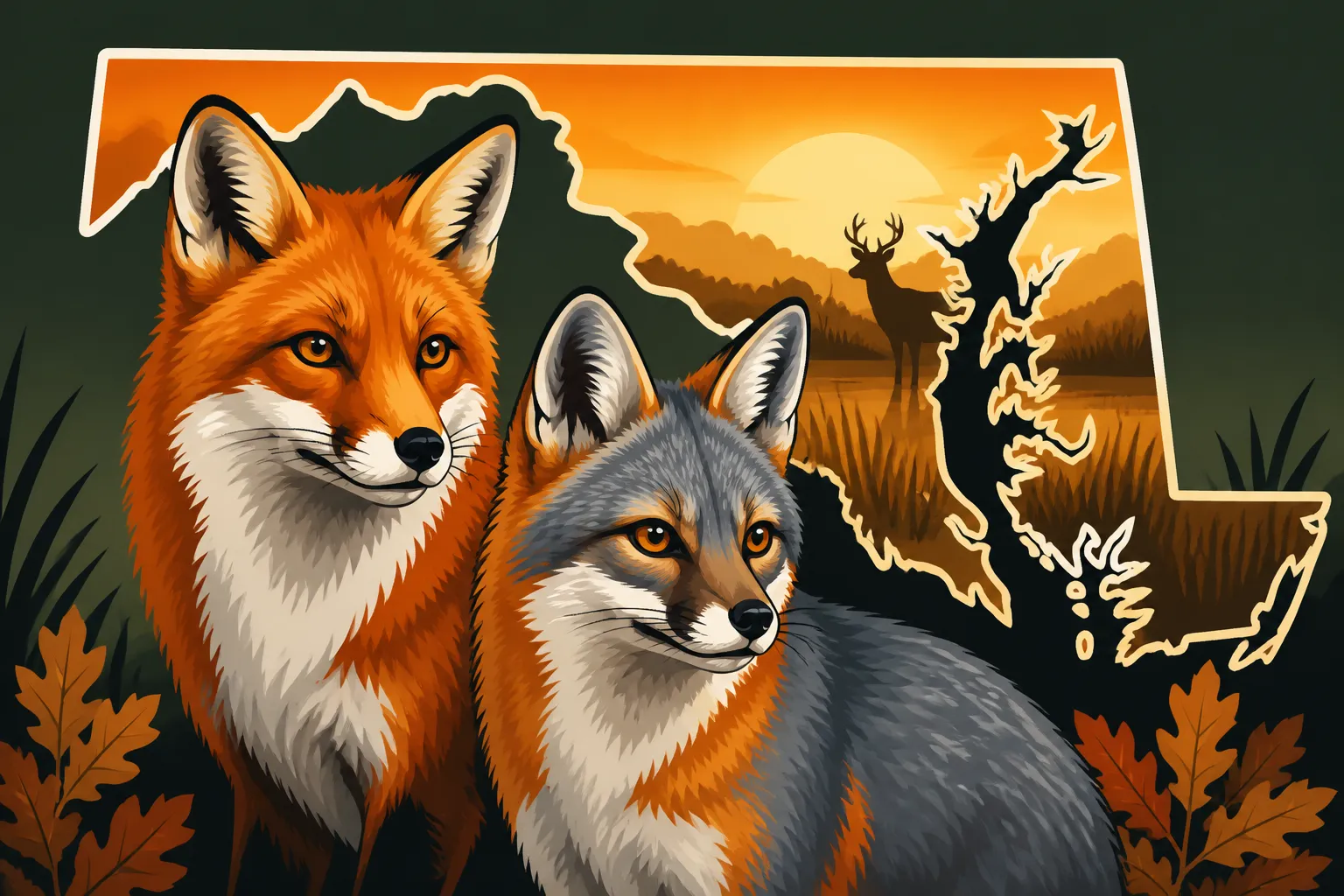
Red and Gray Foxes in Maryland
For many Marylanders, the sight of a fox can be a fleeting, almost magical moment, a splash of wild color darting across a field or melting into the tree line. But for those who live near them, or for hunters looking to understand the local wildlife, the differences between our state's red and gray foxes can be a source of confusion and even frustration. This guide is here to shed light on these two cunning canids, helping you understand their unique traits, habitats, behaviors, and their role in Maryland's diverse ecosystem.
Distinguishing Maryland's Fox Species: Red Versus Gray
It’s easy to lump all foxes into one mental category – sly, bushy-tailed predators. But here in Maryland, we have two distinct species, the red fox and the gray fox, each with its own characteristics and preferences. Knowing how to tell them apart isn't just a matter of curiosity; it can inform your understanding of local wildlife dynamics, aid in scouting efforts, or help you make informed decisions if you're experiencing interactions on your property.
Key Physical Characteristics of Red Foxes
The red fox ( Vulpes vulpes) is probably what most people picture when they think of a fox. They are truly striking animals, and their appearance is often quite memorable.
- Coloration: While they are called "red" foxes, their coats can actually vary quite a bit. Typically, they boast a vibrant rusty-red or orange-red fur across their back, sides, and head. However, you might also encounter individuals with darker, almost brownish-red coats, or even "cross foxes" with a black stripe down their back and across their shoulders, forming a cross shape. Their legs and paws are usually black, often extending up the forelegs like dark stockings, giving them a very distinctive look.
- Tail: This is often the most definitive characteristic. Red foxes possess a long, bushy tail that almost always has a prominent white tip. This white tip is a reliable identifier, even if the rest of the fox's coloration is a bit off the typical red. Their tail is about two-thirds the length of their head and body combined, and they use it for balance, as a rudder when running, and even as a warm blanket in cold weather.
- Size and Build: Red foxes are generally larger and more slender than their gray counterparts. They stand a bit taller on their legs and have a more graceful, almost elegant build. An adult red fox typically weighs between 7 to 15 pounds, though larger specimens aren't unheard of. Their snout is noticeably more pointed than a gray fox's, and their ears are relatively large and erect, often black-tipped.
Identifying Gray Foxes in Maryland
The gray fox (Urocyon cinereoargenteus) might not have the same iconic imagery as the red fox, but they are just as fascinating and perhaps even more unique in their adaptations. They’re often mistaken for coyotes at a quick glance due to their more grizzled appearance, but they are indeed a true fox.
- Coloration: As their name suggests, gray foxes primarily exhibit a salt-and-pepper gray coat on their back, sides, and tail. However, they also have distinct patches of reddish-brown or rusty fur on their neck, legs, and along their flanks. Their underside is typically white or light gray. Unlike the uniform black on a red fox's legs, a gray fox often has more mottled coloring.
- Tail: The tail of a gray fox is also bushy, but it is typically shorter and broader than a red fox's. Crucially, a gray fox's tail nearly always has a black stripe running down the top and ends with a black tip, not white. This difference in tail tip color is one of the easiest and most consistent ways to distinguish the two species when observed clearly.
- Size and Build: Gray foxes are generally smaller and stockier than red foxes. They have a somewhat more dog-like appearance, with shorter legs and a more robust build. They typically weigh between 7 to 14 pounds, putting them in a similar weight class to red foxes, but their proportions are different. Their snout is shorter and broader, and their ears are less prominent than a red fox's, without the distinct black tips.
Where Foxes Live and Thrive in Maryland
Understanding where these clever creatures make their homes is key to appreciating their presence in Maryland. Both red and gray foxes are adaptable, but they have some distinct preferences that dictate where you're most likely to encounter them across our diverse landscapes. From the dense woods of Western Maryland to the open farmlands of the Eastern Shore, foxes have found ways to carve out their niche.
Red Fox Habitat Preferences
Red foxes are incredibly versatile, which is one reason why they are so widespread. They are often associated with fragmented habitats – areas where woodlands meet open fields, or where agricultural lands border small woodlots. This preference provides them with a rich mosaic of resources, perfect for their opportunistic hunting style.
- Agricultural and Suburban Areas: You'll frequently find red foxes in Maryland's agricultural regions, especially on the Eastern Shore or in central Maryland. The edges of cornfields, soybean fields, and wheat fields provide ample hunting opportunities for rodents, rabbits, and ground-nesting birds. They're also surprisingly common in suburban areas, where green spaces, parks, and even large residential yards offer food sources like mice, voles, and even discarded human food. This adaptability to human-altered landscapes is a hallmark of the red fox, leading to regular sightings even in places like Montgomery County or around the outskirts of Baltimore.
- Woodland Edges and Openings: While not typically deep forest dwellers, red foxes thrive where forests open up into meadows or clearings. These "edge habitats" provide cover for denning and escape, while the open areas are prime hunting grounds. They might use old groundhog burrows for dens or excavate their own, often under fallen logs, in brush piles, or beneath outbuildings. The key for a red fox is access to both cover and open hunting territory. You might find them hunting a powerline cut at last light or working a Maryland creek bottom late in the season.
Gray Fox Habitat Preferences
Gray foxes are often considered the more "wild" of the two species, preferring denser cover and less human disturbance than their red fox cousins. Their unique ability to climb trees also gives them access to resources and escape routes that red foxes simply can't utilize.
- Denser Woodlands and Mixed Forests: Unlike red foxes, gray foxes are much more comfortable deep within Maryland's woodlands. They favor mixed deciduous-coniferous forests, especially those with a thick understory, rocky outcrops, or steep terrain. You'll find them in places like Green Ridge State Forest or along the Savage River, where the timber provides excellent cover. Their preference for these environments means they are less frequently seen in wide-open agricultural fields, though they will utilize forest edges adjacent to fields.
- Brushy Areas and Wetlands: Gray foxes also make good use of dense brush, thickets, and even some wetland environments. The thick vegetation provides excellent concealment from predators like coyotes and gives them access to a different array of prey. On the Lower Eastern Shore, for example, they might inhabit the edges of marshes or dense loblolly pine stands, areas where the thick cover suits their more secretive nature. Their tree-climbing ability means they can escape danger by scrambling up a tree, or even raid bird nests or squirrel dens for food.
| Feature | Red Fox (Vulpes vulpes) | Gray Fox (Urocyon cinereoargenteus) |
|---|---|---|
| Primary Color | Rusty red/orange-red, sometimes darker. Black legs/paws. | Salt-and-pepper gray. Patches of reddish-brown on neck/legs/flanks. |
| Tail Tip | White | Black |
| Tail Stripe | None | Distinct black stripe along the top |
| Build | More slender, taller, graceful | Stockier, shorter legs, more dog-like |
| Snout | Longer, more pointed | Shorter, broader |
| Ears | Relatively large, erect, often black-tipped | Less prominent, not typically black-tipped |
| Habitat | Open fields, agricultural edges, suburban areas, fragmented woods | Denser woodlands, mixed forests, brushy areas, rocky terrain |
| Unique Trait | None (cannot climb trees effectively) | Can climb trees (uses claws to grip bark) |
Maryland Fox Behavior, Diet, and Ecological Role
Both red and gray foxes are fascinating creatures, each playing a vital role in Maryland's ecosystems. Understanding their daily lives, what they eat, and how they interact with their environment helps us appreciate their place in the wild and for those of us who hunt or trap, it offers crucial insights into their patterns and movements.
Hunting Strategies and Diet
Foxes are opportunistic predators, meaning they'll eat whatever is most readily available, which makes them incredibly adaptable. Their diets are surprisingly varied, ranging from small mammals to insects and even berries, depending on the season and location.
- Red Fox as an Opportunist: The red fox is a master hunter of small prey. Their keen sense of hearing allows them to pinpoint rodents under snow or thick vegetation, often culminating in a characteristic "mouse pounce." They primarily feast on voles, mice, and rabbits, which are abundant in the open fields and woodland edges they frequent. But they won't pass up an easy meal, including ground-nesting birds and their eggs, insects, fruits, berries, and even carrion. In suburban areas, they’re known to raid trash cans or feast on pet food left outdoors, leading to those frustrating encounters some homeowners face. Their diet is a big reason why they're so successful across so much of Maryland.
- Gray Fox's Diverse Menu: Gray foxes also have a broad diet, but their ability to climb trees opens up additional food sources. While they still hunt small mammals like rabbits and rodents, they are also more likely to prey on arboreal creatures such as squirrels and birds' nests high in the branches. They are also known to consume a higher proportion of insects, fruits, and nuts than red foxes, especially during certain times of the year. For instance, in the fall, they might spend more time foraging for acorns or persimmons in the woodlands. Their climbing prowess allows them to escape ground-based predators and access food sources out of reach for other canids.
Social Structure and Reproductive Habits
Both fox species are generally solitary, especially outside of the breeding season, but they do form strong pair bonds when it's time to raise their young.
- Red Fox Family Life: Red foxes typically breed in late winter, with kits (pups) born in early spring. A litter usually consists of four to six kits. Both parents participate in raising the young, with the male bringing food to the den while the female nurses. Kits emerge from the den at about five weeks old and are taught to hunt by both parents throughout the summer. By late summer or early fall, the young foxes disperse to establish their own territories, a period where they are particularly vulnerable as they navigate new landscapes and learn to survive independently. This is often when hunters looking for Fox Hunting and Trapping Rules might encounter younger, less experienced animals.
- Gray Fox Denning and Raising Young: Gray foxes also breed in late winter, with similar litter sizes to red foxes. Their denning habits, however, often reflect their habitat preferences. They might use hollow logs, rock crevices, brush piles, or even abandoned buildings for their dens. Their ability to climb trees can also extend to den sites, with some reports of gray foxes denning in hollow trees. Like red foxes, both parents are involved in caring for the kits, teaching them vital survival skills before they disperse in the fall. This period of dispersal can be a challenging time for young foxes, as they must avoid predators and find unoccupied territory.
Interspecies Interactions and Predation
In Maryland, red and gray foxes often share the same general geographic areas, but they tend to niche partition by habitat preference and direct competition is minimized. However, both species face pressure from larger predators, most notably coyotes.
- Avoiding the Coyote: The expansion of the coyote population in Maryland has had a noticeable impact on both fox species. Coyotes are larger and more dominant predators, and they view foxes as competition for food and territory, sometimes even preying on foxes themselves. This pressure often forces foxes, particularly the smaller gray fox, into denser cover or more nocturnal behavior to avoid encounters. It’s not uncommon to see a local fox population decrease in areas where coyotes have become established. This dynamic is a good example of why understanding Coyote Calling in Maryland Farm Country is relevant even when you're focused on smaller furbearers.
- Ecological Balance: Despite facing predation, both fox species play crucial roles in maintaining ecological balance. By preying on rodents, rabbits, and other small animals, they help control populations that could otherwise damage crops or gardens. They are also scavengers, cleaning up carrion and helping to recycle nutrients in the ecosystem. Their presence signifies a healthy and diverse environment, even if they occasionally cause localized nuisance issues for landowners.
Hunting and Trapping Foxes in Maryland
For those interested in hunting or trapping, Maryland offers opportunities for both red and gray foxes. Whether you're drawn to the challenge of calling in a cunning canid or the traditional skill of running a trapline, understanding the regulations, methods, and ethical considerations is paramount. Foxes are intelligent animals, and pursuing them requires patience, knowledge, and respect for their wild nature.
Maryland Regulations and Seasons
Before you even think about heading into the field, you absolutely must familiarize yourself with Maryland’s current hunting and trapping regulations. These rules are put in place to manage wildlife populations sustainably and ensure safety for everyone.
- Hunting Seasons and Legal Hours: Fox hunting seasons in Maryland vary by county and species, so it’s critical to check the official hunting guide for the most up-to-date information. Generally, fox hunting seasons often align with or overlap with other small game seasons. Legal shooting hours usually extend from one half-hour before sunrise to one half-hour after sunset. However, there can be exceptions, especially for certain furbearers or nuisance situations, so always verify. Remember to consult the specific Maryland Shooting Hours and Legal Light regulations. Using a resource like GoHunt can be invaluable here, as many platforms keep updated regulatory summaries, helping you quickly discern what's legal in your chosen area.
- Trapping Seasons and Licensing: Trapping foxes is also permitted in Maryland, but it requires specific licenses and adheres to strict season dates and equipment restrictions. You’ll need a valid Maryland Trapping License, and there are often regulations regarding trap types (e.g., foot-hold traps, body-gripping traps), trap sizes, setting methods (e.g., water sets, dry sets), and checking schedules. These rules are designed to ensure humane practices and prevent non-target captures. Learning about Maryland Trapping License Requirements and the nuances of Trapping Season Dates by Species is non-negotiable for anyone considering setting a line.
Effective Hunting and Trapping Methods
Successful fox hunting and trapping relies on understanding fox behavior, choosing the right equipment, and deploying smart strategies. It’s a pursuit that combines field craft with technical skill.
- Calling Techniques for Hunters: Predator calls are highly effective for foxes. Electronic callers, loaded with sounds like rabbit in distress, bird in distress, or even pup distress, can bring a curious fox in close. Manual calls, such as a lip squeaker or an open-reed rabbit call, also work well and offer the advantage of no batteries or electronics to fail in cold weather. When calling, consider the wind direction – you want the call to carry downwind of where you expect the fox to approach, but you need to be upwind so they don't scent you. Setting up in an elevated position or against a good backdrop can help you remain concealed. This method is often similar to Coyote Calling in Maryland Farm Fields at First Light, with adjustments for fox behavior.
- Stand Placement and Patience: Whether you’re calling or still-hunting, stand placement is crucial. Look for natural funnels, field edges, or creek bottoms that foxes are likely to travel. A clear line of sight, with some cover for yourself, is ideal. Fox hunting often requires significant patience. They are cautious animals, and it might take a while for them to commit to a call or emerge from cover. Dawn and dusk are prime times, as foxes are most active during these low-light hours. For those who scout thoroughly, using tools like GoHunt can help identify promising areas before ever setting foot in the field.
- Trapline Setup and Location: For trappers, understanding Running a Trapline in Rural Maryland is an art. Fox sets often involve dirt hole sets, where bait and lure are buried in a small hole, mimicking a cache made by a rodent. Another common method is a flat set, which is less conspicuous and uses lure on an elevated object like a clump of grass. Location is everything: look for pinch points, trails along field edges, old logging roads, or anywhere you’ve seen fox sign like tracks or scat. The key is to make the set look as natural as possible, minimizing human scent and disturbance.
Ethical Considerations and Wildlife Management
Hunting and trapping foxes isn't just about the pursuit; it’s about responsible wildlife management and maintaining ethical standards. These animals are a part of our natural heritage, and their management contributes to a healthy ecosystem.
- Conservation and Population Management: Fox populations, like all wildlife, can fluctuate. Hunting and trapping, when done within regulated seasons and limits, can be a tool for managing these populations, preventing overpopulation in certain areas, and reducing conflicts with humans or livestock. For example, in areas where chicken coops or small farm animals are regularly predated, regulated take of foxes can help mitigate these issues. Maryland’s wildlife agencies set seasons and bag limits based on population data to ensure sustainable practices.
- Respect for the Animal and the Resource: Ethical hunting and trapping mean minimizing suffering, making clean kills, and utilizing the animals taken whenever possible. This could mean skinning and tanning the pelts, or in some cases, using the meat (though not commonly consumed in the US, it is edible). It also means adhering strictly to all regulations, respecting private property rights (always get permission before hunting or trapping on private land!), and leaving no trace. A commitment to learning about Maryland's Furbearers and Where They Live helps foster this deeper respect.
Coexisting with Foxes and Managing Conflicts
While foxes are a vital part of Maryland’s ecosystem, their presence can sometimes lead to conflicts, especially in suburban or rural residential areas. Whether it's a concern for pets, small livestock, or just a desire to keep them from becoming too comfortable near your home, understanding how to coexist and mitigate potential problems is key.
Preventing Nuisance Behavior
The best way to manage conflicts with foxes is often to prevent them from becoming problems in the first place. Foxes are highly adaptable and will quickly learn to associate human presence with an easy meal.
- Securing Food Sources: This is hands-down the most important step. Foxes are scavengers and opportunists. Make sure all outdoor trash cans have tight-fitting lids. Never leave pet food or water bowls outside, especially overnight. If you feed birds, clean up spilled seed regularly, as it attracts rodents, which in turn attract foxes. Composting bins should be securely sealed to prevent access. Even fallen fruit from trees can be a draw. By eliminating these easy food sources, you make your property less attractive to hungry foxes.
- Protecting Small Livestock and Pets: If you have chickens, ducks, rabbits, or other small livestock, secure their coops and pens with sturdy, buried wire mesh. Foxes are adept diggers, so extending the mesh a foot or more underground in an L-shape can prevent them from digging beneath fences. For pets, especially cats and small dogs, never leave them unsupervised outdoors, particularly at dawn, dusk, or night when foxes are most active. While attacks on larger pets are rare, smaller animals can be seen as prey. Consider a secure, covered run for outdoor pets. Remember that foxes are just one of the Predators and Nuisance Species in Maryland that you might need to protect against.
Deterring Unwanted Fox Presence
If foxes are already frequenting your property and you want to encourage them to move on, there are several humane deterrence methods you can employ. Consistency is key with any deterrent.
- Exclusion and Barriers: Fencing can be an effective deterrent, but it needs to be robust. Fences should be at least 6 feet high and, as mentioned, extend underground to prevent digging. Electric fencing, particularly for livestock enclosures, can also be a strong deterrent. Filling in any accessible burrows or dens you find on your property can also discourage them from taking up residence, but always check first to ensure no animals are currently inside, especially during denning season.
- Hazing and Repellents: If a fox appears unafraid of humans, you can try hazing it. This means making loud noises (shouting, banging pots), waving your arms, or spraying it with a hose. The goal is to make the experience unpleasant and teach the fox to associate humans with danger, not food. There are also commercial animal repellents available that use scent or taste to deter foxes, but their effectiveness can vary and they often require reapplication, especially after rain. For persistent issues, contacting a wildlife professional might be necessary.
When to Seek Professional Assistance
While many fox conflicts can be resolved with preventative measures and deterrence, there are times when professional intervention is the safest and most effective course of action.
- Repeated, Aggressive Behavior: If a fox exhibits unusually bold or aggressive behavior, such as approaching people or pets without fear, or repeatedly trying to enter structures, it could be a sign of illness, injury, or habituation to human food. In such cases, it's best to contact your local animal control or a licensed wildlife rehabilitator. Do not attempt to approach or handle the animal yourself.
- Serious Damage or Threat: If foxes are causing significant damage to property, repeatedly preying on livestock despite your best efforts, or if you suspect a fox has rabies, professional help is warranted. They can assess the situation, recommend appropriate management strategies, and, if necessary, humanely remove the animal. Always prioritize safety for yourself, your family, and your pets.
By understanding the unique lives of Maryland's red and gray foxes and implementing thoughtful management strategies, we can reduce conflicts and continue to appreciate these wild, intelligent creatures as a valuable part of our state's rich natural heritage.
Disclaimer
This article is for general informational purposes only and does not constitute professional advice. Laws, prices and regulations vary by location and change over time. Consult a qualified professional for guidance on your specific situation.