What Acorn Crops Do to Maryland Deer Movement
One of the biggest frustrations for Maryland deer hunters is trying to predict where those elusive whitetails will be from one week to the next. It often feels like deer vanish into thin air, and that mystery usually boils down to one powerful, seasonal factor: the acorn crop. Understanding how acorn abundance impacts deer movement is absolutely critical for filling your tags in Maryland's diverse landscapes, from the Western Mountains to the Eastern Shore.
The Allure of Acorns: Why Maryland Deer Crave Them
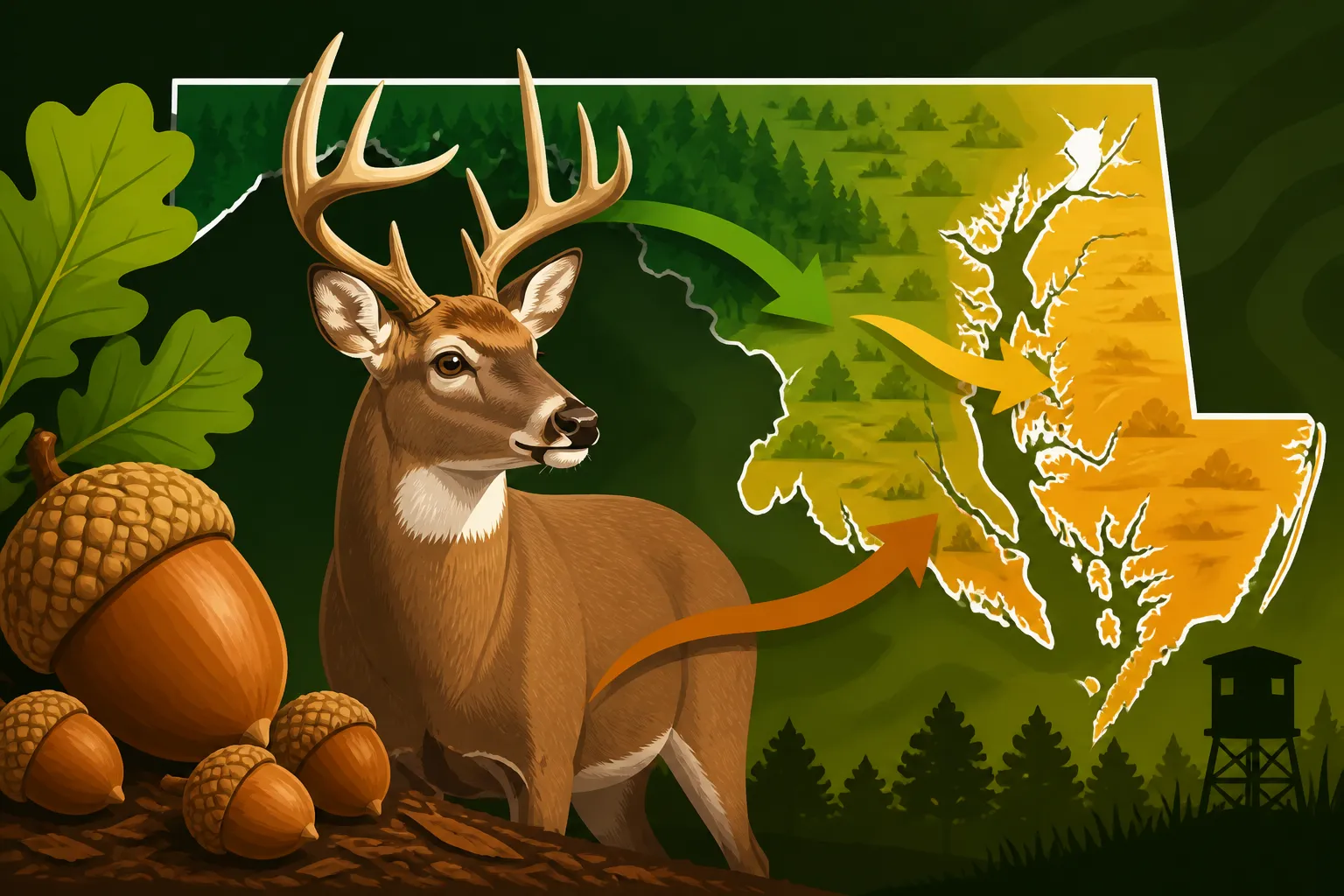
Acorns are, quite simply, deer candy. They are a powerhouse of carbohydrates and fats, providing a dense caloric punch that deer need to build fat reserves for the lean winter months and fuel the rigors of the rut. When acorns are plentiful, they become the deer's primary focus, often overriding other food sources that might seem more obvious to a hunter. This natural preference dictates their daily routines, influencing everything from bedding areas to travel corridors.
White Oaks vs. Red Oaks: The Deer's Preferred Menu
Not all acorns are created equal in the eyes of a Maryland deer. We have a variety of oak species across the state, and their differing characteristics play a significant role in deer feeding patterns.
White Oaks (e.g., White Oak, Chestnut Oak, Swamp White Oak):
These are the superstars for deer. White oak acorns generally have lower tannin levels, which means they are less bitter and more palatable. They also typically mature and drop earlier in the fall, often starting in late September or early October. When white oak acorns begin to hit the ground, deer will abandon almost everything else to gorge on them. A stand of producing white oaks can be an absolute magnet for deer, sometimes drawing them from miles around. Hunters often focus their efforts on finding these early-dropping, sweet acorns, knowing that deer will prioritize them until they're gone.
Red Oaks (e.g., Northern Red Oak, Scarlet Oak, Pin Oak, Willow Oak):
Red oak acorns contain higher levels of tannins, giving them a more bitter taste. They also mature later, usually dropping from late October through December, sometimes even hanging on trees into winter. While deer prefer white oaks when both are available, red oak acorns become incredibly important once the white oak crop is depleted. They provide a crucial, sustained food source deeper into the hunting season, especially during the colder months when other natural foods become scarce. Knowing which type of oaks are dropping can give you a significant advantage in patterning deer.
The Impact on Deer Nutrition and Health
A robust acorn crop isn't just about hunter success; it's vital for the overall health of Maryland's deer herd. When acorns are abundant, deer enter winter in much better physical condition. This translates to stronger immune systems, better survival rates through harsh weather, and improved reproductive success for does the following spring. For bucks, good nutrition from a consistent acorn supply during their antler-growing period contributes to healthier, larger racks. You'll often hear hunters remarking on the size and body condition of deer in years following a banner acorn drop. Conversely, a poor acorn year can lead to deer entering winter stressed and underweight, making them more susceptible to disease and winter mortality. This cyclical availability of acorns truly shapes the entire deer ecosystem.
Navigating a Bumper Acorn Crop: When Deer Disperse
Imagine a year when acorns are practically raining from the trees across the landscape. Every oak stand, every woodlot edge, every little timber patch seems to have a feast laid out. This sounds like a hunter's dream, right? Well, it can actually be one of the toughest years to consistently find deer.
Challenges for the Hunter: Finding Dispersed Deer
When acorns are everywhere, deer don't have to travel far to find food. This means they become highly dispersed. Instead of concentrating in predictable areas like agricultural fields, food plots, or specific travel corridors, they might be bedding and feeding within a small, dense oak thicket, barely moving more than a few hundred yards in a day. Their patterns become less distinct because the primary motivator – finding food – is easily satisfied almost anywhere there are oaks. Your well-placed stands overlooking a cornfield or a clover plot might sit empty, not because deer aren't around, but because they're happily munching on acorns deep in the timber. This can be incredibly frustrating, especially if you've relied on specific pinch points or destination food sources in previous years. The old saying, "the deer are where the acorns are," becomes painfully true, and "where" could be anywhere.
Adjusting Your Strategy: Focus on the Timber
In a bumper acorn year, you absolutely have to shift your focus from field edges to the timber. This is where your scouting and adaptability really shine. Instead of looking for deer entering a field at dusk, you need to be looking for fresh droppings, chewed acorn caps, and active trails within oak stands.
Here's how to adjust:
- Go Deep: Don't just hunt the edges of the woods. Get into the heart of oak ridges and flats. Use mapping tools, like what GoHunt provides, to identify mature oak timber on public lands or the private ground you hunt. These maps can help you pinpoint areas with high concentrations of oak species.
- Still-Hunting: This is the perfect time for a quiet, slow still-hunt through oak-dominated woods. Move at a snail's pace, stopping frequently to scan ahead and listen. Deer will be less wary if they're not forced to expose themselves in open areas. Pay attention to subtle sounds – the crunch of leaves from a feeding deer, the flick of an ear. This tactic works exceptionally well in places like Still-Hunting Western Maryland Mountain Timber.
- Locate Dropping Zones: Find the "hot zones" where acorns are actively falling and deer are feeding. These areas will have fresh sign: abundance of chewed acorn caps, fresh deer droppings, and distinct trails leading in and out. Sometimes, these hotspots are surprisingly small, like a single mature white oak in an otherwise diverse forest.
- Hunt Early and Late: Deer will often feed heavily on acorns throughout the day, not just dawn and dusk. Consider all-day sits if you've found an active feeding area, especially during the rut when bucks are cruising for does, and both are moving through timber. A good strategy for this might involve setting up on a Hunting a Green Ridge Ridgetop Bench where oaks are abundant.
- Use Trail Cameras Strategically: Instead of placing cameras on field edges, put them deep in the timber, directly on trails leading into oak stands or right under heavy-producing trees. This will help you confirm deer activity and get a sense of when they are using these areas. Where to Hang a Camera on a Maryland Field Edge can give you more tips on camera placement.
The Scramble for Food: Hunting During a Poor Acorn Year
Now, let's flip the script. What happens when the acorn crop is a bust? Maybe a late frost nipped the flowers, or a prolonged drought caused early drop and spoilage. These years can actually be a boon for hunters who understand how to capitalize on predictable deer movements.
Deer Concentrate: Predictable Patterns Emerge
When acorns are scarce, deer are forced to rely on alternative food sources. This often means they will travel further and concentrate their feeding efforts in specific locations. This change in behavior makes them much more predictable. They have fewer options, so they must funnel into the areas that still offer calories.
Typical alternative food sources include:
- Agricultural Fields: Corn, soybeans, winter wheat, and even hayfields become magnets.
- Food Plots: Planted clover, brassicas, or winter cereals become incredibly attractive.
- Browse: Woody browse, like honeysuckle, greenbrier, and young saplings, gets hit harder.
- Soft Mast: Persimmons, wild grapes, apples, and crabapples, if available, become hot spots.
This concentration makes it easier for hunters to identify key feeding areas and predict travel routes between bedding and these limited food sources. Instead of scattered activity, you'll see more defined trails and consistent patterns.
Targeting Alternative Food Sources
In years with poor acorn production, your hunting strategy should pivot sharply towards these alternative food sources.
- Focus on Ag Fields: If you have access to farms, concentrate your efforts on standing or recently cut cornfields, soybean fields, or winter wheat. Deer will hit these hard, often right at dawn and dusk. Look for heavily used entry and exit points along wood lines. Hunting a Standing Corn Field Edge for Deer provides specific insights for these situations.
- Hunt Food Plots: If you've planted food plots, this is the year they will truly shine. Deer will be hammering them, offering excellent opportunities, especially in the late season. Planting a Fall Food Plot on Maryland Ground is a great resource if you're considering this option.
- Identify Funnels and Pinch Points: Since deer are moving from bedding to these concentrated food sources, they will use the paths of least resistance. Look for natural funnels like narrow strips of timber between fields, creek bottoms, saddles, or hedgerows that connect cover to food. These become high-traffic highways. A Hunting a Funnel Between Two Grain Fields strategy can be particularly effective.
- Scout for Browse: Don't overlook natural browse. In areas with little agriculture or few food plots, deer will browse heavily on woody vegetation. Look for signs of heavy feeding on shrubs and young trees. Creeks bottoms and regenerating clear-cuts are often good places to find this.
- Observe Rubs and Scrapes: Even in poor acorn years, deer will still make rubs and scrapes as part of their communication. These can be key indicators of active travel corridors and buck movement, often leading to or from those critical alternative food sources. Learning to read these signs, as detailed in Reading Sign in Maryland Mountain Timber, will greatly aid your efforts.
- Late Season Strategy: As the season progresses and temperatures drop, the importance of these concentrated food sources only increases. During Maryland's late muzzleloader and January firearms seasons, deer are actively trying to regain lost calories. This makes Late Season Food Sources for Maryland Deer paramount to finding success. A clover plot, as discussed in Hunting a Clover Plot on a Maryland Farm, can be a fantastic draw.
Reading the Landscape: How to Scout for Acorns
The key to adapting your hunting strategy to acorn availability is knowing what kind of crop you're dealing with before the season really kicks into gear. Early scouting for acorns is just as important as scouting for deer sign itself.
Early Season Scouting: What to Look For
The best time to gauge the acorn crop is often in late summer and early fall, typically August and September, before the leaves start turning and falling en masse. This allows you to assess the potential while deer patterns are still somewhat in flux.
- Visual Inspection: Walk through your hunting areas, especially focusing on mature oak stands. Look up into the canopy. Can you see acorns forming on the branches? Binoculars are incredibly helpful here. White oaks usually show acorns earlier than red oaks. Pay attention to specific trees that have been reliable producers in the past.
- Ground Observation: Even in August, you might find some early-dropping white oak acorns on the ground, sometimes even still green. If you see a lot of these, it's a good indicator. Look for evidence of squirrel and bird activity around oak trees; if they're busy collecting, it's a good sign of a robust crop.
- Talk to Locals: Farmers, foresters, and other outdoors enthusiasts are often excellent sources of information. They spend a lot of time in the woods and fields and can give you a general sense of the overall acorn production in a specific area or county.
Using Technology and Local Knowledge
Modern tools can significantly aid your acorn scouting efforts, making you a more efficient and successful hunter.
- Aerial Maps: Utilize platforms like GoHunt, which offer detailed satellite imagery. You can identify oak-dominated stands, often distinguishable by their leaf shape and canopy structure, even before you set foot on the ground. These maps allow you to prioritize which areas to scout on foot. You can mark potential hotspots and plan your routes. Scouting Maryland Public Land Before Season delves deeper into leveraging maps for pre-season scouting.
- Previous Year's Records: Keep a hunting journal. Note down whether it was a good or bad acorn year, and where you saw deer concentrating. Over time, you'll build a valuable historical database for your specific hunting grounds.
- Connect with Other Hunters: Join local hunting forums or clubs. Sharing information with other ethical hunters in your area can provide a broader picture of acorn production across a larger region, giving you a better understanding of Maryland's Deer Herd by Region and how they might be moving.
Knowing how the acorn crop is shaping up is truly one of the most powerful pieces of intelligence you can gather as a Maryland deer hunter. It directly informs your stand placement, your scouting efforts, and your overall strategy, leading to more encounters and better success in the field.
Acorn Crop Impact on Deer Movement: A Summary
Understanding the nuances of the acorn crop is a game-changer for deer hunters. Here’s a quick overview of how a good year differs from a poor one in terms of deer behavior:
| Factor | Good Acorn Year | Poor Acorn Year |
|---|---|---|
| Deer Dispersion | Highly dispersed, spread out across oak timber | Concentrated around limited alternative food sources |
| Primary Food Focus | Acorns (white oaks first, then red oaks) | Agricultural fields, food plots, browse, soft mast |
| Hunter Challenge | Finding deer in vast timber, less predictable | Identifying key concentrated food sources |
| Effective Strategy | Still-hunting, hunting deep in timber, focus on oak stands | Hunting field edges, food plots, funnels, creek bottoms |
| Travel Patterns | Shorter movements, often within small timber pockets | Longer movements between bedding and distant food |
| Rut Impact | Bucks may cruise timber more, less field activity | Bucks will often travel more widely between food sources |
Ultimately, whether it's a banner year for acorns or a complete bust, adaptability is your greatest asset. By scouting diligently, staying flexible, and understanding the profound impact of this critical food source, you'll be well-prepared to put yourself in front of Maryland's whitetails.
Disclaimer
This article is for general informational purposes only and does not constitute professional advice. Laws, prices and regulations vary by location and change over time. Consult a qualified professional for guidance on your specific situation.