Telling a Migrant Goose From a Resident Bird
It can be incredibly frustrating to be out in a Maryland field, watching geese fly overhead, and wonder if you're looking at the local crew that nests down the road or birds that have flown hundreds of miles. Distinguishing between migrant and resident Canada geese isn't just a matter of curiosity; it's vital for hunters to stay compliant with regulations and adapt their strategies. This comprehensive guide will walk you through the subtle, yet critical, differences between these two populations, helping you become a more effective and responsible goose hunter in Maryland.
Understanding the Two Populations: A Tale of Two Geese
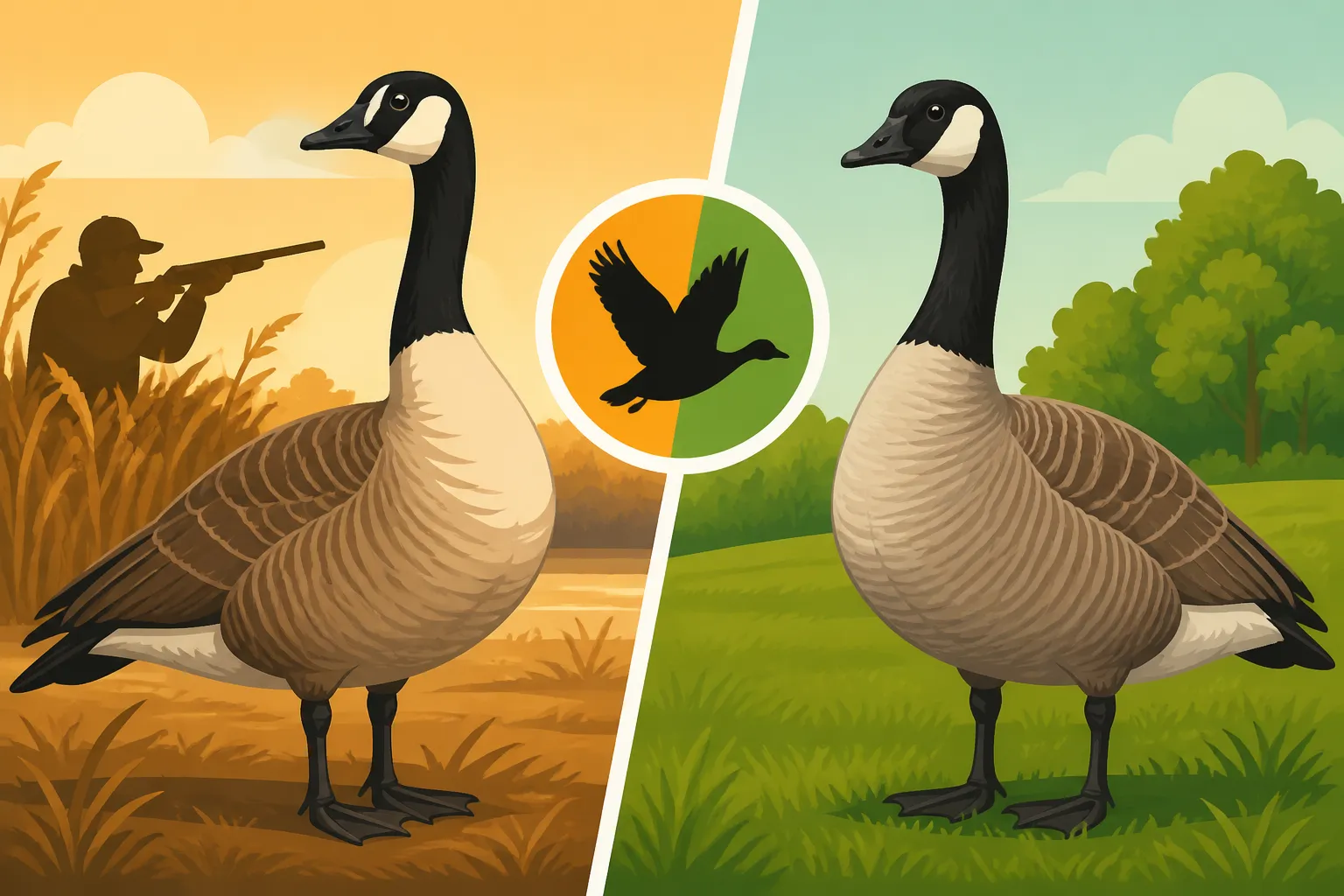
Maryland is truly unique because we host two distinct populations of Canada geese: the "resident" birds who live here year-round, and the "migratory" geese that travel thousands of miles to winter in our milder climate. While they look similar on the surface, understanding their origins and habits is the first step to telling them apart in the field.
Resident Geese: The Homebodies of Maryland
Think of our resident Canada geese as the neighbors who never leave. They're the birds you see grazing in suburban parks, golf courses, retention ponds, and local farm fields all summer long. These birds typically nest and raise their young right here in Maryland, establishing territories and becoming quite accustomed to human activity. Over the decades, their populations have boomed, adapting incredibly well to our developed landscapes. They're often seen in smaller, more fragmented groups, sometimes loafing on water, sometimes spread out across a manicured lawn. Their year-round presence means they’re often less wary of human presence than their migratory cousins, but don't mistake that for being easy targets – they still know how to evade pressure. Knowing that these birds are around all the time, even when other birds are long gone, helps you understand their patterns. For deeper insights into this population, check out Resident Canada Geese in Maryland.
Migratory Geese: The Atlantic Population Travelers
On the flip side, we have the majestic migratory geese, primarily belonging to what's known as the Atlantic Population. These are the birds that breed in northern Quebec and Labrador, undertaking epic journeys south each fall to spend the winter months in places like the Chesapeake Bay watershed. When you hear that distant honking high in the sky, often in huge, organized V-formations, you're likely hearing these travelers. They arrive in Maryland generally starting in late September and October, with numbers peaking through November and December. Their entire life cycle revolves around this north-south migration, making them incredibly driven and instinctively cautious. They've faced hunting pressure across multiple states, which tends to make them much warier and more responsive to subtle cues. Their presence significantly impacts Goose Hunting Maryland's Eastern Shore Grain Fields and other agricultural areas during the colder months. Understanding How Many Canada Geese Winter in Maryland gives you a sense of the scale of this annual migration.
Key Field Identification Cues for Maryland Hunters
When you're out in the blind, the pressure is on, and you need to make quick decisions. Relying on a single characteristic to tell geese apart can be tricky, but by combining several observations, you can get a pretty good read on whether you're looking at a resident or a migrant bird.
Size, Build, and Overall Appearance
One of the most noticeable differences, though sometimes subtle, is size. Resident Canada geese, often referred to as "giant Canadas" by many hunters, tend to be noticeably larger and heavier-bodied. They can look almost clunky or chunky compared to their migratory counterparts. Their necks might appear thicker, and they often have a more robust, "barrel-chested" appearance. Migratory geese, particularly those from the Atlantic Population, are typically smaller, sleeker, and more streamlined. They have a more refined look, built for endurance flying. When a flock of mixed geese is on the ground, or even flying, try to compare individuals. A seasoned hunter using a good pair of binoculars, like those you might find advertised on GoHunt for scouting, can often pick out these differences. It's not always a dramatic difference, but generally, if you see a truly massive goose, it's probably a resident.
Behavioral Differences and Wariness
This is arguably the most critical distinction for hunters. Resident geese, due to their constant exposure to humans, often exhibit a higher degree of complacency. They might feed closer to roads, fly lower over developed areas, and tolerate a certain amount of noise or activity. They still get "educated" and pressured, especially on public land, but their baseline wariness can be lower. They often forage in manicured lawns, golf courses, or smaller agricultural patches.
Migratory geese, on the other hand, are often incredibly wary. They've run a gauntlet of hunters from Canada down to Maryland. They'll fly higher, circle widely, and meticulously scrutinize decoy spreads for any signs of danger. They often prefer large, open agricultural fields – think vast expanses of cut corn or winter wheat on the Eastern Shore – where they have wide-open sightlines. Their flight patterns tend to be more deliberate and purposeful, traveling directly between large roosting areas and feeding grounds. You'll often see them commit to a field from a greater altitude, making several passes before dropping in, if they drop in at all. This heightened wariness requires a different approach to concealment and calling.
Flock Structure and Flight Patterns
Observe how the geese fly and gather. Migratory geese are famous for their strong, organized V-formations. These V-patterns are highly efficient for long-distance travel, and when you see a large flock of 50-100+ birds in a tight V, moving with a clear purpose high in the sky, you're almost certainly looking at migrants. They are on a mission, whether it's moving from a major roost to a feeding field or continuing their journey further south.
Resident geese, while they can sometimes form loose V-formations, more often fly in smaller, less structured groups. Their flights are typically shorter, moving between local ponds, rivers, or fields. You might see a "gang" of 10-20 residents flying in an amorphous blob, or perhaps a broken V, from one side of a farm to the other. They often fly at lower altitudes, especially when commuting between known, safe spots. Paying attention to these aerial patterns can give you strong clues. Using mapping tools, like those offered by GoHunt, to track known roosting and feeding areas can help you anticipate these movements.
Vocalizations
While not foolproof, some hunters claim to discern subtle differences in vocalizations. Migratory geese, especially when flying in large flocks, tend to have a louder, more urgent, and often higher-pitched honk. This collective honking during flight is a crucial communication tool for maintaining flock cohesion over long distances. Resident geese, while certainly vocal, might have a slightly deeper, perhaps more guttural honk. Their calls can also sound more sporadic or less "organized" when in smaller groups. This is a nuanced aspect, but with enough time spent observing both populations, you might start to pick up on these subtle auditory cues.
Here's a quick comparison table to help summarize these differences:
| Characteristic | Resident Canada Goose | Migratory (Atlantic Population) Canada Goose |
|---|---|---|
| Size & Build | Generally larger, heavier, chunkier, robust | Typically smaller, sleeker, more streamlined |
| Wariness | Often less wary, more habituated to human presence | Highly wary, cautious, scrutinize surroundings |
| Habitat Preference | Parks, golf courses, suburban ponds, local farm fields | Large open agricultural fields (corn, wheat), major refuges |
| Flock Structure | Smaller, less organized groups, loose formations | Large, tight V-formations, purposeful flight |
| Flight Altitude | Often lower flights between local areas | High altitude, direct flight paths |
| Primary Movement | Local, daily flights between roost & feed | Long-distance seasonal migration (fall/winter) |
| Vocalizations | Often deeper, more sporadic honks | Louder, more urgent, higher-pitched collective honking |
Why Distinguishing Geese Matters for Your Hunt
Knowing whether you're hunting resident or migratory geese isn't just an academic exercise; it has real, practical implications for your success and, most importantly, for staying legal. Maryland's hunting regulations are specifically designed to manage these two populations differently, and a misunderstanding can lead to a violation.
Season Dates and Bag Limits: The Legal Imperative
This is where the rubber meets the road. Maryland often has distinct season dates and bag limits for different goose management zones, which are directly tied to these two populations. For example, there are specific dates for the "Atlantic Population Zone" and the "Resident Population Zone." Shooting a migratory goose when only the resident season is open, or vice versa, could mean serious trouble. You absolutely need to consult the current Maryland hunting regulations, available through the state's DNR website or via resources like GoHunt, to understand these specific dates and limits. This is also why an article like Atlantic Population Versus Resident Goose Zones is so crucial. Always double-check before you head out, because these details can change from year to year. Keeping up with Maryland Waterfowl Zones and Season Dates is your responsibility as a hunter.
Tailoring Your Hunting Strategy and Location
The differences in behavior mean you need different tactics. If you're targeting wary migratory geese, you'll need maximum concealment, potentially a Layout Blind Hunting a Kent County Corn Field, a large spread of lifelike decoys, and expert calling to convince them to drop into your setup. You'll likely be hunting vast fields or large open waters where they feel safe. Understanding Reading Goose Flight Lines Off the Chesapeake becomes paramount for these birds.
For resident geese, while still needing good concealment, you might find success with smaller decoy spreads in more diverse locations – maybe a pasture edge, a small pond, or even a suburban green space (where legal and permitted, of course). They might respond to less aggressive calling, and their movements are often more predictable on a day-to-day local basis. Decoying Canada Geese on the Upper Eastern Shore might involve different techniques depending on the population you're after.
Decoy Spreads and Calling Techniques
Imagine trying to call in a wary old migrant that's seen hundreds of decoy spreads with a sloppy, half-hearted resident setup. It simply won't work. Migratory geese demand realism. Your decoy spread needs to be clean, well-placed, and ideally, reflect a large feeding or loafing flock. They're looking for safety in numbers. Your calling needs to be authentic, varied, and often more reserved once they start circling. Aggressive calling too close can flare them.
Resident geese, while not stupid, might be a bit more forgiving. They may respond to more varied calling, including excitement calls, especially if they are accustomed to seeing other geese in small, social groups. However, over-calling any goose population is a common mistake. Learning how to properly set up a spread, whether it's Setting a Goose Spread in Cut Corn or a smaller field, is key.
Maximizing Your Chances: Tips and Tools for Success
Being able to differentiate between migrant and resident geese will undoubtedly elevate your hunting game. It's about being prepared, adaptable, and using the right tools for the job.
Scouting is Your Ultimate Weapon
There's no substitute for time spent scouting. Before the season, and certainly before each hunt, get out there and observe. Where are the geese feeding? How are they flying? Are they in massive Vs high overhead, or smaller groups bouncing between local water sources and fields? Pay attention to the types of fields they prefer – huge cut corn fields often signal migrants, while smaller pastures or even suburban green spaces can indicate residents. A good scouting app, like those often reviewed on GoHunt for hunters, can help you mark locations, track observations, and understand patterns before you ever step foot in the blind. Scouting Maryland Public Land Before Season is crucial, but equally important for private land.
Adaptability is Key
Even the best-laid plans can go awry. You might set up for migrants, only to have a flock of residents surprise you. Or vice-versa. The most successful goose hunters are those who can adapt on the fly. This might mean adjusting your calling, modifying your decoy spread if possible, or even changing your location mid-hunt if conditions or goose behavior dictate. Being prepared for either scenario, or understanding which population is most active that day, is a huge advantage.
Gear Considerations and Preparation
The type of goose you're pursuing can also influence your gear. For those super wary migrants, top-tier camouflage, a comfortable and effective Layout Blind Hunting a Kent County Corn Field, and premium full-body decoys can make a difference. These birds have seen it all. For resident birds, while quality gear is always beneficial, you might not need to be quite as extreme in your setup, depending on the pressure they've received. Always ensure your calls are tuned, your shotgun is clean, and you have enough ammunition for the day, regardless of the target. Remember that even though you might feel confident, the birds are still wild animals.
Ultimately, learning to tell a migrant goose from a resident bird isn't about snobbery or judgment; it's about being a smarter, more ethical, and more successful hunter. It's about respecting the animals, adhering to the regulations, and making every moment in the field count. So, next time you're out, take a moment to observe, and you might just unlock a deeper understanding of Maryland's incredible goose populations.
Disclaimer
This article is for general informational purposes only and does not constitute professional advice. Laws, prices and regulations vary by location and change over time. Consult a qualified professional for guidance on your specific situation.