How Tides Move Marsh Game Around
Hunting in Maryland's vast tidal marshes presents a unique challenge, one that can make or break a day afield. Many hunters, especially those new to the marsh, find themselves frustrated by seemingly unpredictable game movement, or worse, getting stuck by a rapidly changing tide. This guide is dedicated to demystifying the profound influence of the tides on marsh game, providing actionable insights so you can predict where the sika, waterfowl, and other marsh critters will be, and how to adapt your strategy accordingly.
The Rhythmic Breath of the Marsh: Understanding Maryland's Tides
The Chesapeake Bay and its tributaries, along with the Atlantic coastal bays, are constantly breathing with the rise and fall of the tide. This isn't just a minor inconvenience for your boat; it's the fundamental driver of life and movement for everything that calls these marshes home. Understanding this rhythm is the first step to becoming a truly effective marsh hunter. Forget what you think you know about static deer patterns – in the marsh, everything moves with the water.
High Tide: Where the Game Goes
When the tide starts to push in, creeping over the mudflats and slowly inundating the lower marsh, it essentially squeezes game out of their usual hiding spots. This incoming water acts like a natural drive, pushing animals towards the highest ground available. Think about it: if you were a sika deer trying to stay dry, where would you go when your favorite feeding flat becomes chest-deep water?
During high tide, you'll find game concentrating on hummocks – those slightly elevated islands of Spartina grass or brush that remain dry. Ditch banks, even those just a foot or two higher than the surrounding marsh, become critical travel corridors and bedding areas. Pine islands, often found dotting the vast marsh landscape, become literal refuges, providing cover and higher ground. Sika deer are masters of adapting to this, often bedding down on these small islands or along the elevated edges of the marsh where it meets the upland. Even muskrats, raccoons, and sometimes even rabbits will be pushed onto these same pieces of high ground. For the hunter, this means shifting your focus from wide-open flats to these smaller, concentrated areas. Setting up on a point of high ground or along a ditch bank that funnels game during the high water can be incredibly productive.
Low Tide: Uncovering Feeding Opportunities
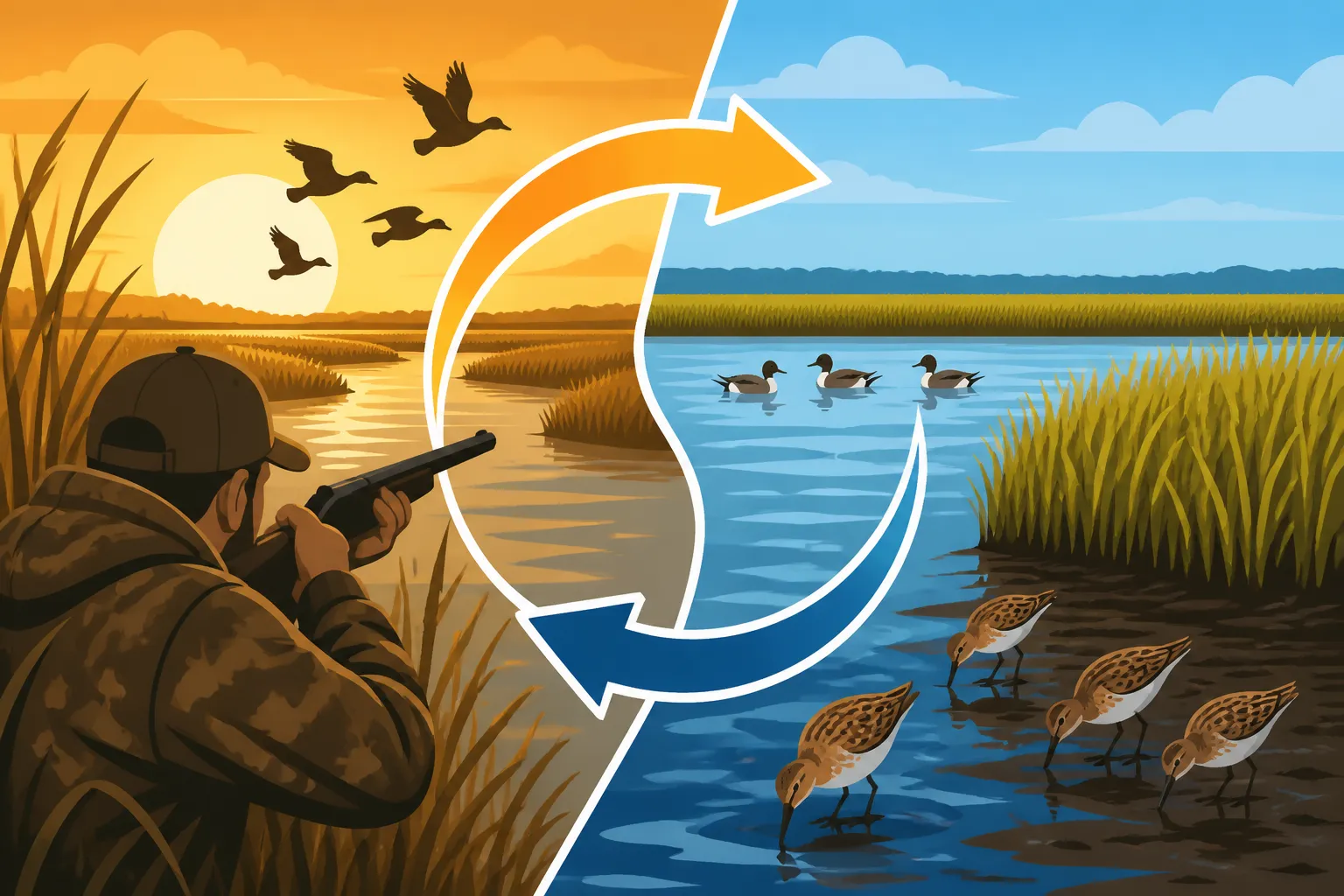
Just as high tide pushes game to elevation, low tide unveils a treasure trove of feeding opportunities. As the water recedes, it exposes vast mudflats, oyster beds, and the rich bottoms of marsh guts and ditches. This is dinner time for a huge variety of marsh inhabitants.
Waterfowl, especially dabbling ducks like mallards and black ducks, absolutely flock to these newly exposed areas. They'll sift through the mud for seeds, tubers, and invertebrates that were previously submerged. Geese, too, will move into these areas to graze on exposed vegetation. For sika deer, low tide can mean access to fresh browse along the exposed banks of guts or the chance to uncover succulent roots and shoots in the now-dry muck. They're incredibly opportunistic feeders. A keen marsh hunter knows that scouting these exposed areas for fresh tracks and feeding sign during low tide can reveal critical patterns for future hunts. However, low tide also means hunter access changes dramatically. What was once boat-navigable water might become impassable mud, making Boating Into a Sika Marsh at Low Tide a critical skill to plan around.
Predicting Game Movement Based on Tidal Shifts
The key to successful marsh hunting isn't just knowing what the tide does, but when and how it does it. This involves becoming a student of the tides, recognizing that they are not always perfectly predictable, and understanding the external forces that can influence them.
Reading the Tide Chart Like a Playbook
A tide chart is your most valuable scouting tool in the marsh. It's essentially a playbook that tells you when the water will be high, when it will be low, and how much it will move. Local marinas often have printed charts, but for modern hunters, a reliable app like GoHunt can provide precise, real-time tidal data for specific locations within the marsh, including predicted heights and times for high and low slack water.
When you're looking at a tide chart, pay attention to a few things. First, note the predicted height of the high and low tides. A "big" tide (a higher high and a lower low) will have a more dramatic impact on game movement. Second, mark the times of slack tide – the brief period when the water isn't moving in or out. This can be a transition period for game, as they might feel safer moving between areas. Finally, understand the ebb (outgoing) and flow (incoming) currents. Strong currents can make boat travel challenging and influence how game might use certain channels. For example, if you're trying to intercept sika along a ditch bank, knowing when the water is just starting to creep in, pushing them up, is far more valuable than arriving at peak high tide when they've already settled. Reading Tide Charts Before a Marsh Hunt is not just a suggestion; it's a necessity.
The Influence of Moon and Wind on Tides
While tide charts provide a great baseline, they don't always tell the whole story. The moon and the wind are powerful forces that can drastically alter predicted tidal movements, often to a hunter's frustration.
The moon is the primary driver of tides, and its phases have a direct impact. During a full moon or a new moon, the gravitational pull is strongest, resulting in "spring tides" – higher high tides and lower low tides. These can be fantastic times to hunt the marsh, as game movement will be more pronounced. Conversely, during quarter moon phases, you get "neap tides," which have less extreme highs and lows, and therefore less dramatic game movement. Beyond the moon, local weather, particularly sustained wind, plays a huge role. A strong, consistent wind blowing into the marsh (like a sustained east or southeast wind on the Eastern Shore) can "pile up" water, making high tides much higher than predicted and potentially holding low tides at a higher level. Conversely, a strong wind blowing out of the marsh (like a persistent west or northwest wind) can "blow out" the water, creating lower-than-predicted low tides and holding high tides at a suppressed level. Imagine planning a hunt based on a predicted low tide only to arrive and find the marsh still largely flooded because a stiff easterly blew all night. This is a common scenario in places like Dorchester County and can completely change your hunting plan, forcing you to adapt on the fly.
Tactical Adjustments for Tidal Hunting in Maryland Marshes
Knowing how tides work is one thing; putting that knowledge into practice is another. The marsh demands flexibility, preparedness, and specific tactics to succeed.
Positioning for Success: High Ground and Edge Hunting
When hunting the marsh, always be thinking about elevation and edges. As the tide rises, animals are going to seek the highest ground they can find. This means your stand or blind placement should be strategically located along these elevated features. Look for ditch banks that remain dry, small islands of oak or pine, or the higher fringes of the marsh where it transitions to dry land. These become natural funnels for game.
Consider setting up on the leeward side of a pine island if the wind is howling, as game will seek shelter there, especially during an incoming tide. Similarly, a subtle bend in a deep marsh gut or the confluence of two small ditches can create a pinch point where animals are forced to travel during higher water. For sika hunters, observing these areas during different tidal phases, perhaps with a good pair of binoculars, can reveal invaluable travel corridors. You'll also need to consider your gear; Hip Boots Versus Chest Waders in Sika Country is a debate for a reason, as your ability to move through varying water depths can dictate your success.
Utilizing Boats and Decoys with the Tide
Boats are often indispensable for marsh hunting, but the tide dictates their utility. During high tide, deeper channels and guts become navigable, allowing you to access areas that might be unreachable at low water. Conversely, a falling tide can leave you high and dry, literally, if you don't plan your exit carefully. Understanding Hunting Fishing Bay's Marsh Guts by Boat means knowing when your boat can safely navigate and when it's best to anchor up and wait.
For waterfowl hunters, the tide has a direct impact on decoy spreads. Strong incoming or outgoing currents can tangle lines, flip decoys, or pull them out of position. Heavier keel weights are often a necessity, and deploying your spread strategically to account for the current is crucial. Sometimes, waiting for slack tide to set up or adjust decoys is the smartest move. If you're hunting ducks over an exposed mudflat during low tide, you'll want your decoys much shallower than if you're targeting divers in deeper water at high tide.
Post-Shot Considerations and Retrieval
This is where the tidal marsh can truly test a hunter's resolve. Recovering downed game in a dynamic, watery environment is arguably the most challenging aspect of marsh hunting. If you down a sika deer or a duck, the clock starts ticking immediately, and the tide can become your biggest enemy or a surprising helper.
If a sika deer drops in a shallow gut, a rising tide might float it away into deeper water or push it into impenetrable phragmites. A falling tide might expose it on a mudflat, but then make it incredibly difficult to reach without a boat or serious wading. For waterfowl, a strong current can carry a downed bird a long way in a short amount of time. Always mark the spot precisely, whether with a mental note, a GPS waypoint (GoHunt is great for this), or even a marker buoy. Having a reliable dog is an absolute game-changer in the marsh. Without one, consider how you'll get to the animal – wading, kayaking, or boating – and if the current or depth will allow it. Waiting out a tide might be necessary, but this also increases the risk of losing the animal to scavengers or being carried away. Having a clear plan for Recovering a Deer From a Tidal Marsh is not just about ethics; it's about making sure your hard-earned success doesn't turn into a lost opportunity.
Species-Specific Tidal Behaviors in Maryland Marshes
While the general principles of tidal influence apply across most marsh game, different species have evolved unique behaviors to thrive in this fluctuating environment. Understanding these nuances can fine-tune your approach.
Sika Deer and the Marsh Cycle
Sika deer are arguably the poster children for tidal marsh hunting in Maryland. They are incredibly adept at navigating the ebb and flow. During high tide, they'll move to the highest points, often using dense stands of phragmites or switchgrass for cover, but always near an elevated bank or small knoll. Where Sika Deer Bed in Phragmites often correlates directly with areas that remain dry during the highest water. They'll also use the narrow, dry strips along creeks and guts as travel corridors. As the tide recedes, they'll venture out onto exposed mudflats to browse on tender shoots and roots, sometimes even pawing for tubers.
Their movements are not random; they are a direct response to water levels. An incoming tide will concentrate them, making them more vulnerable to hunters positioned on the high ground. A falling tide opens up their feeding grounds, spreading them out. This makes timing your entry and exit critical. When you're trying to set up on a Hunting a Marsh Ditch Bank at Sunrise, knowing the exact tidal phase will tell you if you're putting yourself in a prime travel corridor or just sitting by an empty ditch.
Waterfowl and Tidal Feeding Patterns
Maryland's marshes are legendary for waterfowl, and their movements are intimately tied to the tides. Dabbling ducks, like mallards, black ducks, and teal, are primarily shallow-water feeders. They thrive when mudflats and shallow edges are exposed, allowing them to dabble for seeds, aquatic vegetation, and invertebrates. Low tide, or the first stages of an incoming tide creeping over newly exposed flats, often triggers intense feeding activity.
Diving ducks, such as canvasbacks, redheads, and buffleheads, generally prefer deeper water, but even their feeding patterns can be influenced. They'll follow baitfish or shellfish concentrations that might shift with tidal currents. For geese, especially resident Canada geese, tidal flats near agricultural fields can be prime feeding grounds at low tide. Understanding these patterns means knowing whether to set up on a high-tide roost or a low-tide feeding area. Observing the tide charts and then applying that knowledge to where the birds want to be is crucial for Decoying Divers on Maryland's Open Bay or any duck hunt in the marsh.
Other Marsh Inhabitants
While sika and waterfowl often get the most attention from hunters, the entire ecosystem of the tidal marsh is in flux with the tides. Muskrats, for example, are highly dependent on the marsh's water levels. They build their lodges on higher ground or create intricate tunnel systems that allow them to navigate beneath the rising and falling water. Their movements for food or to avoid predators will be influenced by how much open water is present.
Raccoons, a common furbearer in Maryland's marshes, will also forage along exposed mudflats at low tide, looking for crabs, mussels, and other edibles. Their tracks can often tell you what kind of food sources are available. Even small game like marsh rabbits will seek refuge on the highest ground during a flood tide. Observing these smaller inhabitants can offer clues about general game movement and predator activity in the area. The entire marsh is a complex, interconnected system, all governed by the relentless push and pull of the tides. Ignoring this fundamental force means missing out on a huge piece of the puzzle.
Disclaimer
This article is for general informational purposes only and does not constitute professional advice. Laws, prices and regulations vary by location and change over time. Consult a qualified professional for guidance on your specific situation.