Where to Get a Deer Tested for CWD
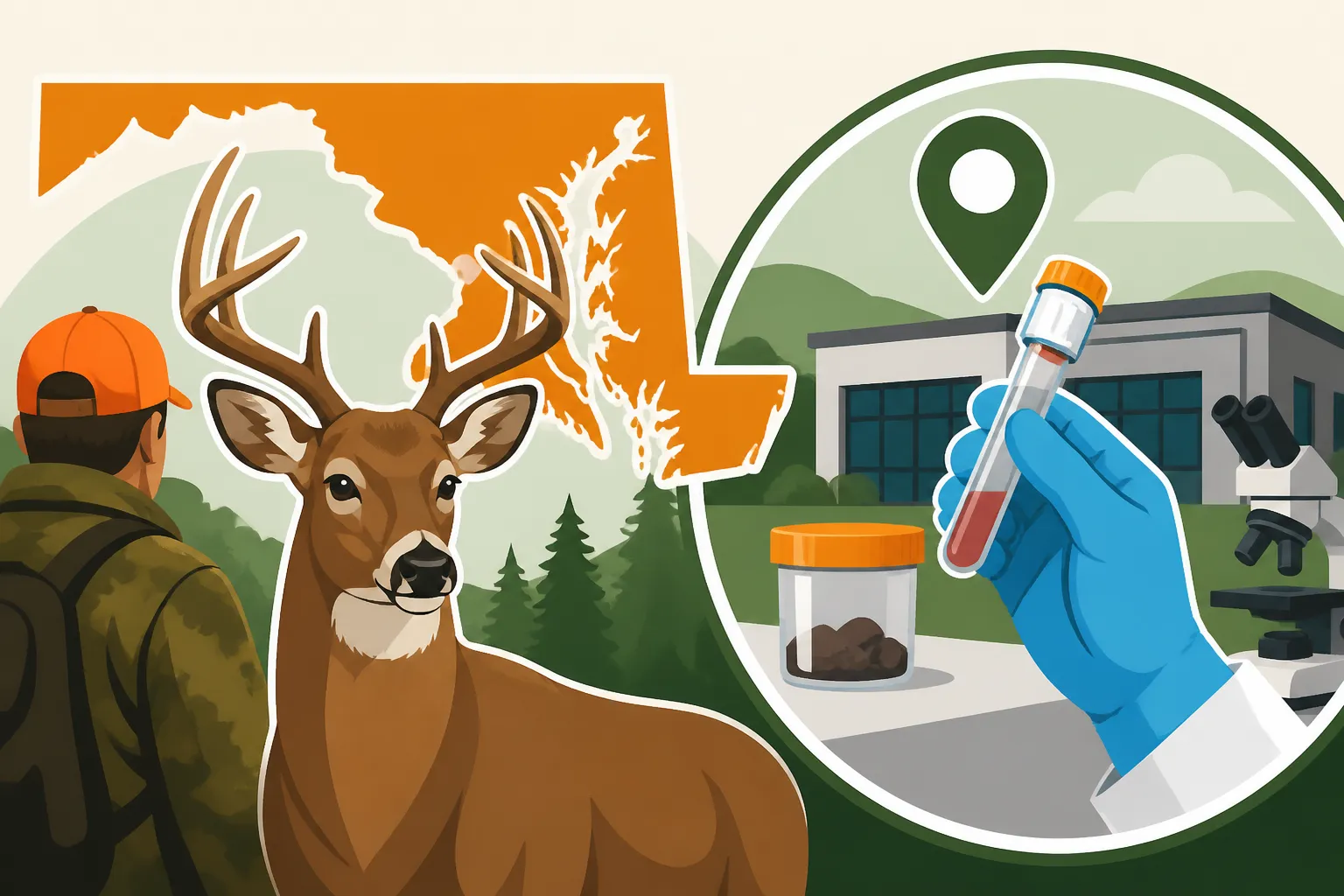
Finding a deer that appears sick or is taken from an area known for Chronic Wasting Disease (CWD) can be really unnerving for any hunter. The uncertainty of whether your harvest is safe to eat, coupled with the desire to do the right thing for wildlife management, is a heavy burden. This guide is here to walk you through everything you need to know about getting a deer tested for CWD in Maryland, ensuring you have peace of mind and contribute to the health of our deer herds.
Understanding Chronic Wasting Disease in Maryland Deer
Chronic Wasting Disease (CWD) is a devastating neurological disease that affects deer, elk, and moose. It's a type of transmissible spongiform encephalopathy (TSE), similar to mad cow disease, and it's always fatal for the infected animal. What makes CWD so concerning for hunters and wildlife managers alike is that it's highly contagious among cervids and can persist in the environment for years, making eradication incredibly challenging once it takes hold.
When a deer contracts CWD, it doesn't happen overnight. The disease has a long incubation period, often years, during which the animal might appear perfectly healthy. As it progresses, CWD causes distinct lesions in the brain, leading to a host of symptoms like drastic weight loss (hence "wasting"), stumbling, listlessness, excessive drooling, and a general loss of fear of humans. Imagine spotting a deer in the woods that just doesn't seem right – its ribs might be showing, it's walking in circles, or perhaps it's standing lethargically even as you approach. These are the kinds of signs that immediately raise red flags for CWD. While there's no evidence CWD can spread to humans, consuming venison from an infected animal is generally not recommended, which is why testing is so important for hunter confidence.
Maryland has been actively monitoring for CWD for many years, and unfortunately, it has been detected in several western counties. The Maryland Department of Natural Resources (DNR) has established specific CWD Management Areas, primarily in Allegany, Washington, and Frederick counties, where surveillance efforts are intensified. Understanding Maryland's CWD Management Area Rules is crucial if you hunt in these regions, as there might be specific regulations regarding carcass movement or mandatory testing requirements. These measures are designed to limit the spread of the disease and protect the broader deer population.
When and Why You Should Consider CWD Testing
Deciding whether to get your deer tested for CWD isn't always straightforward, especially if the deer appears outwardly healthy. However, there are several key scenarios where testing becomes highly recommended, if not mandatory, and the benefits extend far beyond just your individual harvest.
First and foremost, if you harvest a deer that exhibits any of the clinical signs of CWD—such as severe emaciation, abnormal behavior, drooling, or neurological issues—testing is absolutely imperative. Even if you're not hunting in a designated CWD Management Area, a visibly sick deer warrants immediate attention. Reporting such an animal to the Maryland DNR is vital for tracking the disease's spread. Beyond obvious symptoms, if you're hunting in or near one of the established CWD-positive counties, or if you regularly hunt in areas with high deer densities, proactively testing your harvest offers significant peace of mind. Many hunters choose to test their deer even if they look healthy, simply to be certain about the venison they're putting on their family's table.
The "why" behind CWD testing is multi-faceted. For the individual hunter, it's about food safety and confidence. Knowing that your venison is free of CWD allows you to process and consume it without worry. For the broader hunting community and wildlife management, testing contributes invaluable data. Every test result, whether positive or negative, helps the DNR track the prevalence and geographic spread of the disease. This data informs their management strategies, including decisions about deer population control, carcass restrictions, and public awareness campaigns. It’s a collective effort, and your participation is a critical part of protecting Maryland's cherished deer herd for future generations. Resources like the GoHunt app can also be a handy tool for quick reference on specific county regulations or reporting requirements while you're in the field, making it easier to stay informed on the go.
Maryland's CWD Surveillance Program and Testing Locations
The Maryland Department of Natural Resources (DNR) maintains a robust CWD surveillance program to monitor the disease across the state. This program relies heavily on hunter cooperation, collecting samples primarily during the deer hunting seasons. The goal is to collect enough samples from various regions to get a clear picture of CWD prevalence and to detect any new outbreaks early. This comprehensive approach is crucial for managing the disease effectively.
For hunters, submitting a sample for testing is designed to be as convenient as possible. The DNR utilizes several methods for sample collection:
- DNR Check Stations: During certain key firearms seasons, particularly in CWD Management Areas, the DNR may operate staffed check stations where you can bring your harvested deer. DNR staff will collect the necessary tissue samples (typically lymph nodes and brain stem) and provide you with a confirmation number. These stations are usually well-advertised before the season.
- Self-Serve Drop-Off Sites: Perhaps the most common method, especially for archers and muzzleloader hunters, is the network of self-serve drop-off sites. These are typically large coolers or freezers located at various WMAs, state forests, or other public access points, particularly in Western Maryland counties like Allegany, Washington, and Frederick. You'll usually find instructions, tags, and tools (like a saw for the head) provided. You simply remove the deer's head, attach the provided information tag (which includes your harvest confirmation number from Registering a Maryland Deer by Phone or App), and place it in the designated collection unit. Remember to make a note of What a Deer Confirmation Number Is For, as it’s your key to retrieving your test results later.
- Participating Taxidermists and Processors: Many local taxidermists and venison processors across Maryland, especially in the CWD-affected regions, are trained and authorized by the DNR to collect CWD samples. This is a fantastic option if you're already taking your deer to one of these establishments. They handle the sampling process and submission for you, often as part of their standard service. When choosing a taxidermist, don't hesitate to ask if they participate in the CWD sampling program.
- Targeted Surveillance Efforts: In some instances, the DNR might conduct targeted surveillance in specific areas, especially if there's a suspected new CWD detection. This could involve special arrangements for sample collection or even asking hunters to voluntarily submit samples from certain locations. Keep an eye on DNR announcements and local hunting forums for the latest information.
It's important to remember that testing primarily focuses on the brain stem and lymph nodes, as these are the tissues where CWD prions accumulate early in the disease progression. While the DNR makes efforts to expand collection, the focus remains on the areas most critical for monitoring the disease.
Here's a general idea of where you might find these services, although always check the official Maryland DNR website for the most current locations and operational hours before you head out:
| Type of Location | Typical Counties/Regions | Notes |
|---|---|---|
| DNR Check Stations | Allegany, Washington, Frederick (during peak firearms seasons) | Staffed, specific dates/times. Check DNR website for seasonal openings. |
| Self-Serve Drop-Offs | Allegany, Washington, Frederick, Garrett, Carroll, Howard | Often at WMAs like Billmeyer WMA, Indian Springs WMA, Green Ridge State Forest, Patuxent River Park. Open 24/7 during season. |
| Taxidermists/Processors | Statewide, but more prevalent in Western/Central Maryland | Look for signs indicating CWD sample collection. Call ahead to confirm participation. |
Even if you’re using a mapping tool like GoHunt to scout Hunting Maryland's Western Mountain Forests or Hunting a Green Ridge Ridgetop Bench, you'll want to cross-reference with the official DNR site for precise drop-off locations, as these can change annually. The DNR publishes detailed maps and lists of collection sites on their website, usually well in advance of the hunting season. This proactive approach by the DNR helps manage challenges identified in Maryland's Deer Disease Watch List.
The CWD Testing Process: What to Expect
Once you've harvested a deer and decided to get it tested for CWD, knowing what to expect during the sampling and waiting period can alleviate a lot of anxiety. The process is relatively straightforward, but careful handling of the deer is important to ensure a valid sample.
The first step, once you've field dressed your deer (following safe practices, perhaps like those for Field Dressing a Deer in Warm September Weather), is to prepare the head for submission. The DNR primarily needs the lymph nodes and a section of the brain stem for testing. If you're using a staffed check station or a participating taxidermist, they will handle the actual sample extraction. However, if you're using a self-serve drop-off site, you'll need to remove the head yourself. This usually involves cutting the neck about 3-4 inches behind the jawbone. Ensure you keep the head relatively clean; avoid getting excessive dirt or debris on it.
When you arrive at a self-serve drop-off location, you'll typically find instructions and supplies. You'll need to fill out a tag with crucial information: your name, contact details, the date of harvest, the county and specific location (e.g., WMA name, nearest intersection) where the deer was taken, and your harvest confirmation number. This confirmation number, which you receive when you register your deer (either online or via phone), is absolutely vital for linking your sample to your results. After tagging the head securely, place it into the designated cooler or freezer. These sites are typically serviced regularly by DNR staff.
Now comes the waiting game, which can feel like the longest part. CWD test results generally take a few weeks, sometimes longer during peak hunting seasons due to the high volume of samples. While you wait, you have a couple of options for handling your venison. Many hunters choose to process their deer as usual, but then store the meat separately in a freezer until results are back. This way, if a positive result comes back, the meat can be easily disposed of without having been consumed. Others might wait to process the deer at all, though this isn't always practical, especially with warmer early-season temperatures. Your GoHunt app or the DNR website can provide guidance on safe venison storage durations. Regardless, if you're taking your deer to a commercial processor, make sure to inform them that you've submitted a sample for CWD testing so they can also segregate the meat appropriately.
Interpreting Your CWD Test Results and Next Steps
Once the CWD lab analysis is complete, the Maryland DNR will notify you of the results. This notification is usually sent via email or mail, depending on the contact information you provided when submitting the sample. Understanding these results and knowing what to do next is crucial.
If your deer tests negative for CWD, congratulations! This means no CWD prions were detected in the samples, and your venison is considered safe for consumption. You can proceed with enjoying your harvest with full confidence. This is the outcome every hunter hopes for, and it's a testament to the ongoing efforts to keep Maryland's deer herd healthy. You can then confidently share your venison, knowing you've done your due diligence.
However, if your deer tests positive for CWD, it’s understandable to feel disappointed and concerned. The DNR will contact you directly to discuss the results and provide guidance. In the event of a positive test, the recommendation is strongly to not consume the venison. While there's no scientific evidence to suggest CWD can be transmitted to humans, public health officials advise against eating meat from CWD-positive animals as a precautionary measure. If you had already processed the meat and stored it, the DNR will advise on proper disposal methods, which often involves double-bagging and disposing of it in a landfill. Do not discard it in the woods, as this could contribute to environmental contamination. This is where segregating your venison while awaiting results, as mentioned in the previous section, proves invaluable.
Beyond your individual harvest, a positive CWD test triggers important responses from the DNR. It helps them pinpoint areas where the disease is present or potentially spreading, influencing future management decisions for the affected region. It might lead to increased surveillance, additional carcass disposal recommendations, or even specific hunting regulations in that particular area. Therefore, it's incredibly important to cooperate fully with the DNR and follow their guidance, as it contributes directly to the collective effort to manage and mitigate CWD in Maryland. Even if you're just looking up other general hunting information, such as Maryland's Deer Bag Limits and Antler Rule, remember that CWD can impact future regulations, so staying informed is key.
Minimizing Risk and Responsible Hunting Practices
As hunters, we are stewards of the land and its wildlife. Our actions play a significant role in preventing the spread of CWD and ensuring the health of Maryland's deer population. Adopting responsible practices, both in the field and at home, is paramount.
One of the most important steps you can take is to minimize the spread of CWD through proper carcass handling. If you harvest a deer in a CWD-positive area, or anywhere for that matter, try to debone the animal in the field. This means leaving the brain, spinal cord, eyes, spleen, and lymph nodes (the parts where CWD prions concentrate) at the kill site. If you can't debone in the field, transport the entire carcass directly to a processor or drop-off site equipped to handle CWD samples, ensuring no parts are left along roadsides or in unauthorized areas. The DNR has specific guidelines for Bringing a Deer Carcass Into Maryland from other states, and these principles also apply to moving carcasses within CWD-affected areas in Maryland. Avoid high-risk parts when processing, and always use separate tools and surfaces for processing wild game meat compared to domestic meat. After field dressing, thoroughly clean and disinfect all tools and surfaces with a bleach solution (e.g., a 50/50 mix of bleach and water).
Another crucial aspect of responsible hunting is staying informed and reporting any suspicious observations. Utilize resources like the Maryland DNR website, local hunting groups, and even advanced mapping platforms like GoHunt, which can sometimes integrate CWD surveillance information or alert you to specific county regulations. If you encounter a deer that appears sick, even if you don't harvest it, make sure to report it to the Maryland DNR. Early detection of CWD is vital for containing its spread. Remember, it’s not just about your hunt; it’s about the long-term health of the entire ecosystem.
Finally, consider where you get your hunting information. Reputable sources, like the DNR and established hunting organizations, provide the most accurate and up-to-date guidance on CWD. Whether you're looking into Maryland Hunting Licenses and What They Cost or researching the best tactics for Bowhunting Maryland's Long Archery Season, ensure you're also keeping up with CWD advisories. By being diligent, informed, and proactive, Maryland hunters can make a real difference in protecting our deer herd from this challenging disease.
Disclaimer
The information provided in this guide is for general informational purposes only and does not constitute official legal or scientific advice. Always refer to the latest regulations, advisories, and guidelines published by the Maryland Department of Natural Resources (DNR) or other relevant government agencies for the most accurate and up-to-date information regarding CWD testing, hunting regulations, and carcass handling protocols in Maryland.