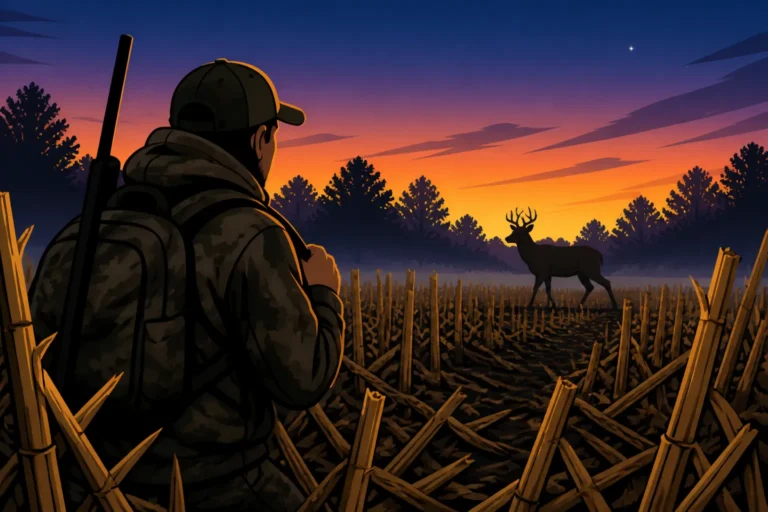
Trapping Maryland Furbearers Through Winter
The crisp bite in the air, the frosted fields, and the silence of a snow-dusted Maryland landscape might signal a slowdown for many, but for the dedicated trapper, it's an invitation. Winter presents a unique set of challenges and opportunities for those looking to harvest furbearers, from dealing with icy waterways to tracking through fresh powder. This guide will walk you through everything you need to know to successfully run a trapline in Maryland during the colder months, helping you overcome common frustrations and maximize your efforts when the mercury drops.
Understanding Maryland's Furbearer Landscape in Winter
Winter in Maryland transforms the environment, and with it, the behavior of our local furbearers. Understanding how these animals adapt to the cold is crucial for successful trapping. It’s not just about knowing where they are, but why they are there and what they’re doing.
Key Furbearer Species and Their Winter Habits
Maryland is home to a diverse array of furbearers, each with distinct winter habits that trappers must understand. The cold weather often concentrates these animals as they seek food, shelter, and mates, creating prime opportunities for those who know where to look.
Raccoons, with their masked faces and dexterous paws, are common throughout Maryland, from suburban woodlots to deep marshlands. In winter, raccoons tend to become less active, often denning up for extended periods during severe cold snaps. They'll seek out hollow trees, rock crevices, old barns, or even storm drains for shelter. When temperatures moderate, they'll emerge, typically at night, to forage for whatever food is available—persimmons, acorns, leftover agricultural crops, or even discarded human food. Trapping for raccoons in winter often means focusing on their dens, travel corridors between denning and feeding areas, or specific food sources.
Muskrats are the quintessential marsh furbearer, and their activity is heavily influenced by water conditions. As winter progresses, muskrats become incredibly reliant on their lodges or bank dens for warmth and protection from predators. They'll continue to feed on aquatic vegetation, often creating "push-ups" (mounds of vegetation built over breathing holes in ice) as feeding stations or temporary shelters. Trapping muskrats in winter means working in and around these structures, identifying active runs under the ice, and being mindful of fluctuating water levels and ice thickness. Their predictable movements in their aquatic environment make them a consistent target, provided you can safely access their habitats. For a deeper dive, check out our guide on Muskrats of the Chesapeake Marshes.
Foxes, both red and gray, remain active throughout the winter. Red foxes, often found in more open agricultural areas, fields, and forest edges, hunt small rodents like voles and mice, which are often easier to locate under shallow snow cover. Gray foxes, typically preferring denser woodlands and brushy cover, are known for their unique ability to climb trees, an adaptation they might use to escape predators or hunt arboreal prey. In winter, both species are driven by the constant need for food, making areas with high rodent populations or consistent carrion attractive. Trappers will focus on their travel paths, scent posts, and areas where cover meets open hunting grounds.
Coyotes are a relatively newer furbearer to Maryland but have expanded their range significantly, found now in nearly every county. Unlike some other species, coyotes thrive in winter, with their thick coats providing insulation. They are formidable predators, often hunting in family groups or pairs, targeting deer, small game, and carrion. Winter snow can be a trapper's friend when targeting coyotes, as it reveals their travel routes, hunting patterns, and the location of recent kills. Focusing on pinch points, field edges, and areas with deer activity can be highly effective for coyote trapping.
Other furbearers like opossums, beavers, and river otters also present winter opportunities. Opossums, while less active in extreme cold, will still forage, often found scavenging near human habitations or along creek bottoms. Beavers are largely aquatic, focusing on maintaining their lodges and food caches. Winter is an excellent time to trap beavers as their fur is prime and their movements, though under ice, are often predictable around their structures. River otters, too, remain active, often found sliding on snow and ice, hunting fish in open water, or traveling between water bodies. Understanding the unique biology and winter adaptations of these animals is the first step toward a productive trapline. Our article on Maryland's Furbearers and Where They Live provides more general information on these species across the state.
Navigating Regulations and Seasons
Before you even think about setting your first trap, you absolutely must understand Maryland's trapping regulations. Ignoring these rules isn't just unethical; it can lead to hefty fines and loss of trapping privileges. Maryland takes its wildlife management seriously, and ignorance is rarely an acceptable excuse.
The general trapping season for most furbearers in Maryland typically opens in November and runs through late winter, often into March or even beyond for certain species like beaver. However, these dates are not universal and can vary by species, county, and even year-to-year. For example, species like raccoon and opossum often have longer seasons compared to mink and muskrat. You'll need to consult the Maryland Department of Natural Resources (DNR) hunting and trapping guide every single year. This guide, usually available online or at local licensing agents, is your bible for season dates, bag limits, and specific regulations. A critical step is to check the specific Trapping Season Dates by Species for the current year.
Beyond season dates, there are crucial licensing requirements. Every trapper in Maryland needs a valid Furbearer Permit, in addition to a regular hunting license. There might be different permits or stamps for non-residents. Junior trappers also have specific age requirements and licensing protocols. It's imperative to ensure your paperwork is in order before you ever step foot into the field. You can learn more about this by reading our piece on Maryland Trapping License Requirements.
Counties can also have specific restrictions. For instance, some counties might have limitations on trap types or setbacks from dwellings. You might encounter specific rules concerning land ownership and permission. Maryland law generally requires written permission to trap on private land. This isn't just a suggestion; it's a legal necessity. Always get permission in writing, especially when running a trapline that might span multiple properties. Knowing these hyper-local rules will save you a lot of headaches and ensure a smooth season. For instance, trapping in suburban areas, even with permission, often comes with additional considerations regarding non-target catches and public perception.
Essential Trapping Gear for Maryland Winters
Trapping in Maryland during winter isn't a fair-weather hobby. The elements can be harsh, from bitter cold and driving snow to treacherous ice. Having the right gear isn't just about efficiency; it's about safety and comfort. Don't skimp on quality, especially when it comes to the tools that keep you warm and the traps that do the work.
Trap Types and Their Applications
Choosing the right trap for the right species and conditions is fundamental to successful winter trapping. Each trap type has its strengths and legal limitations that you must adhere to.
Body-grip traps, often referred to as Conibear traps (after their original designer), are designed to dispatch an animal quickly by striking it behind the head or across the body. They come in various sizes, with the 110/120 size being excellent for muskrats and mink, often set in underwater runs or entrance to lodges. The 220 size is effective for raccoons, typically used in cubby sets or over concealed bait. The 330 size is primarily for beaver and otter, requiring careful placement due to their powerful jaws and body. In Maryland, body-grip traps are popular for water sets where they can be completely submerged, reducing non-target catches. However, rules exist regarding their use on land, often requiring them to be placed within a cubby or at certain distances from public trails to prevent accidental catches of pets or other non-target animals.
Foot-hold traps, sometimes called leghold traps, are designed to hold an animal by the foot until the trapper arrives. These are classic traps and come in two main designs: coil spring and long spring. Coil spring traps are more compact and faster-acting, while long spring traps offer a wider spread and can be more powerful. For foxes and coyotes, modified foot-holds are common. Modifications often include laminated jaws to reduce injury, center swivels for less animal self-injury, and heavy-duty chains. The goal is to hold the animal humanely until it can be dispatched. In Maryland, specific jaw spread limits apply to foot-hold traps, and they must be checked regularly, typically within 24 hours. For larger furbearers like beaver, powerful foot-holds placed near their runs or castor mounds are effective.
Snares are simple, effective devices made of wire cable that cinch around an animal's neck. In Maryland, snares are legal for furbearers, but strict regulations govern their use, including snare cable diameter, length, and the use of break-away devices to prevent accidental captures of larger non-target animals like deer. Snares are often used for coyotes and foxes, placed strategically in trails, fence crossings, or other natural funnels where the target animal is likely to pass through. They require careful setup to ensure humane dispatch and to minimize non-target catches, often incorporating "stops" that prevent the snare loop from closing too tightly.
Live traps, such as cage traps, capture an animal without harming it. While not traditionally used for large-scale commercial fur trapping, they are excellent for nuisance wildlife removal or for trappers who prefer to release non-target animals. They work well for raccoons, opossums, and even skunks in certain situations, especially in urban or suburban environments where lethal traps might be inappropriate. However, live traps require frequent checks and proper handling techniques to avoid injury to both the trapper and the animal.
| Trap Type | Primary Target Species | Common Sizes/Configurations | Typical Winter Set Location | Advantages | Disadvantages |
|---|---|---|---|---|---|
| Body-grip | Muskrat, Mink, Raccoon, Beaver, Otter | 110/120, 220, 330 | Underwater runs, cubbies, den entrances | Quick dispatch, effective in water | Can be dangerous to set, land-use restrictions |
| Foot-hold | Fox, Coyote, Beaver, Raccoon, Otter | #1.5 – #4 | Dirt hole, flat set, channel set | Selective, can be modified for humane catches | Requires daily checks, potential for non-target catches |
| Snare | Coyote, Fox, Raccoon | Various cable diameters | Trails, fence crossings, natural funnels | Inexpensive, lightweight, effective for canids | Strict regulations, can be less selective |
| Live Trap | Raccoon, Opossum, Skunk | Various cage sizes | Near dens, food sources, residential areas | Humane capture, allows for release | Bulky, requires frequent checks, animal relocation rules |
Remember, always consult the current Maryland DNR regulations for specific legal trap types, jaw spread limits, and setting requirements before deploying any device.
Winter Trapline Essentials and Safety
Winter trapping demands more than just traps and lures; it requires a robust set of tools and a keen awareness of safety. The unforgiving nature of a Maryland winter means being prepared for anything.
Your trapline tools are an extension of your hands. A good pair of heavy-duty setting gloves is paramount, not just for warmth but for handling traps and for protection against animal bites. Trapping gloves, typically thick leather or rubberized, are essential. You'll need specialized setting tools for body-grip traps, which can be difficult and dangerous to compress by hand. A stout digging trowel or hatchet is crucial for chopping through frozen ground or ice to set traps. Drags and stakes are necessary to secure traps, especially for larger animals like coyotes or beavers. For water sets, a pair of hip boots or chest waders (if the water isn't too deep for the chest waders) is indispensable; however, in truly icy marsh conditions, a small boat or sled might be necessary to access sets. For muskrat trapping in particular, having suitable waders is critical for Wading Into a Dorchester Marsh Before Daylight.
Safety, especially in winter, cannot be overstated. Hypothermia is a real threat when spending hours outdoors in the cold. Layered clothing, including moisture-wicking base layers, insulating mid-layers, and a waterproof/windproof outer shell, is a must. A warm hat, gloves, and waterproof boots with good traction are non-negotiable. Always carry extra clothing, high-energy snacks, and plenty of water in an insulated bottle to prevent freezing.
When trapping marshes or frozen waterways, ice safety is paramount. Never assume ice is safe. Carry ice picks, a spud bar to test ice thickness, and have a rescue plan. Tell someone where you're going and when you expect to return. A life vest, even when on ice, can be a lifesaver if you break through. Cold water shock can be deadly, and getting back onto solid ice can be incredibly difficult without the right tools and knowledge. For those who frequently navigate marshy areas, especially for species like sika deer, understanding the nuances of Hip Boots Versus Chest Waders in Sika Country can be helpful, as similar considerations apply to trapping muskrats.
Beyond the elements, carrying a well-stocked first-aid kit is critical for treating minor cuts, scrapes, or sprains that can easily occur when working with traps in challenging terrain. A fully charged cell phone (and perhaps a portable charger) is essential for emergencies, though be aware that cell service can be spotty in remote areas of Maryland. A GPS device or a reliable mapping app like GoHunt on your phone can be invaluable for navigating your trapline, marking set locations, and finding your way back in low light or inclement weather. GoHunt is particularly useful for tracking your routes and noting specific animal sign you encounter, making your scouting efforts much more efficient throughout the winter.
Strategic Setups for Winter Furbearers
Once you have your gear and understand the regulations, the art of trapping comes down to strategic placement. Winter conditions often simplify animal movements, as they are largely driven by food and shelter, making well-placed sets incredibly effective.
Setting for Marsh Furbearers: Muskrats and Mink
Maryland's vast tidal marshes, especially on the Eastern Shore, are prime muskrat and mink habitat. Winter conditions often make these animals more predictable as they concentrate around stable food sources and secure dens.
For muskrats, understanding their aquatic infrastructure is key. They build "lodges" – conical mounds of vegetation – or burrow into banks to create dens. They also construct smaller "push-ups" in icy conditions, which are essentially temporary breathing and feeding stations. In winter, focus your efforts on active lodges, bank dens, and the runs leading to and from them. Underwater "dive sets" using body-grip traps (like a 110 or 120) placed at the entrance to a den or a plunge hole in a lodge are highly effective. You can also place traps in active muskrat runs just under the surface of the water or ice, using guide sticks to ensure the muskrat swims directly into the trap. "Colony traps," which are essentially small wire cages that allow muskrats to enter but not exit, can be very effective in dense muskrat areas, placed over active runs. The Trapping Muskrat in a Dorchester Marsh article offers excellent specific advice for this particular habitat.
Mink, agile and predatory, often share the same marsh habitats as muskrats, preying on them as well as fish, frogs, and small rodents. Look for mink sign along the edges of ditches, stream banks, and near muskrat lodges. Mink often travel linear routes, making cubby sets or box traps placed under overhanging banks or in narrow culverts highly effective. A small fish or muskrat carcass can be used as bait. Body-grip traps (110 or 120) are ideal for mink, set in these confined spaces or directly in active mink runs. Always be mindful of changing water levels; a set that's perfect at low tide might be completely submerged or dry at high tide. Reading the tides before you head out is crucial for marsh trapping. Our article, Mink Along Maryland Creeks and Marsh Edges, elaborates on specific strategies for these cunning furbearers.
Upland Sets for Raccoon, Fox, and Coyote
Moving away from the water, upland furbearers require different strategies, often utilizing dirt hole sets, flat sets, and a variety of baits and lures.
Raccoons are notoriously curious and food-driven, making them susceptible to a variety of upland sets. "Pocket sets" are highly effective: dig a hole into a bank or a mound, place bait (like fish, sweet baits, or commercial paste lures) at the back, and conceal a foot-hold trap (a #1.5 or #2 coil spring) in front of the hole. "Dog-proof traps" (DP traps) are also incredibly popular for raccoons. These are cylindrical traps that raccoons can reach into with their paws but are much harder for non-target animals like dogs to operate. Place them with dry cat food, marshmallows, or corn as bait. "Cubbies," small structures made of logs, rocks, or even old tires, with bait at the back and a body-grip (220) or foot-hold trap at the entrance, also work well, especially when protected from snow.
For foxes, patience and meticulous trap-setting are key. "Dirt hole sets" are a classic for both red and gray foxes. Dig a slanted hole in the ground, about 6-8 inches deep, and place a strong-smelling bait (like tainted meat or commercial fox paste) at the back. Conceal a foot-hold trap (a #1.5 or #1.75 coil spring) in front of the hole, ensuring it's level with the ground and covered thinly with fine dirt or peat. "Flat sets" involve no digging; instead, a piece of bait or lure is placed on the ground, and the trap is concealed nearby. "Scent post sets" mimic a natural urination spot. A piece of lure or gland scent is placed on an upright object (a stick, rock, or clump of grass), with the trap concealed where the fox would step to investigate. Blending your sets to look natural is critical.
Coyotes, being warier than foxes, demand even greater attention to detail and a more robust trap. Dirt hole sets are still effective, but they need to be larger and more heavily baited, often with a larger, stronger foot-hold trap (#1.75 or #2 coil spring for smaller coyotes, #3 or #4 for larger ones) and careful trap preparation to minimize human scent. "Post sets" are similar to fox scent posts but often larger. Snares are also highly effective for coyotes when placed in natural travel corridors or choke points. Regardless of the set, extreme caution regarding scent and visual disturbance is necessary. For deeper insights into coyote behavior, especially concerning calls, our article on Coyote Calling in Maryland Farm Country can provide valuable context on their movements and responses in agricultural settings. For all canid sets, ensuring your trap is well-bedded and won't wobble, even with frozen ground, is crucial.
Tackling Beavers and Otters in Winter Waters
Beavers and otters are powerful aquatic furbearers, and trapping them in winter requires specialized knowledge of their underwater world and robust equipment.
Beavers are engineers of the wetlands, building dams and lodges that significantly alter their habitat. In winter, they rely heavily on underwater food caches. Prime trapping locations include their main runs leading to and from lodges or dams, channels they've created, and feed beds. "Castor mound sets" are excellent for attracting beavers, especially during the breeding season which often falls in winter. Create a small mound of mud and debris near the water's edge, anoint it with beaver castor lure, and place a body-grip (330 size) or a large foot-hold trap (#4 or #5) in the water directly in front of the mound. "Channel sets" involve placing large body-grip traps in narrow channels or culverts where beavers are forced to swim through. When ice forms, finding active runs under the ice and chopping out holes for your traps becomes necessary. Remember to anchor your traps securely with heavy stakes or rebar, as a beaver can easily pull a trap free. For specific locations where these industrious animals are prevalent, our guide on Where Beavers Have Spread in Maryland Streams can offer useful information.
River otters are playful and nomadic predators, often found traveling long distances along waterways. They will use beaver lodges and dens for shelter. Look for "otter slides" on snowy banks or mudslides where they enter and exit the water, and "crossover" points where they move from one body of water to another. Body-grip traps (330 size) are highly effective for otters, placed in these slides or in natural funnels along their travel routes. Foot-hold traps (#3 or #4) can also be used in blind sets on land trails they frequent. Otters are often caught incidentally in beaver sets, so if you're targeting beavers, be prepared for an otter. Again, heavy anchoring and sturdy equipment are essential due to their strength. Always be aware of federal regulations regarding otter harvest, as these sometimes differ from state rules.
Winter Trapline Management and Best Practices
Running a trapline through winter conditions in Maryland is a commitment. It requires daily dedication, adaptability, and a strong understanding of both animal behavior and environmental factors.
Running Your Trapline in Freezing Conditions
The most critical aspect of winter trapline management in Maryland is the daily check. By law, traps typically must be checked within a specific timeframe (often every 24 hours), but in freezing conditions, even shorter intervals are advisable. A trapped animal left exposed to the elements for too long can suffer unnecessarily.
Dealing with frozen traps and snow is an inevitable part of winter trapping. Snow can bury traps, making them ineffective. Ice can freeze up the mechanisms of foot-hold and body-grip traps, rendering them useless. For foot-hold traps, using antifreeze solutions (like a mixture of salt and water, or commercial trapping wax) in the trap bed can help prevent freezing. Covering traps with peat moss, wax paper, or dry dirt rather than snow also helps. When snow falls, you'll need to re-clear your trap beds and ensure the pan and jaws can fire freely. For body-grip traps in water, constant vigilance for ice formation is key. You might need to break ice daily or switch to deep water sets that are less prone to freezing over.
Re-setting and maintaining your sets is an ongoing process. A sprung trap needs to be re-set immediately. If a set hasn't caught anything after a few days, consider if it's in the right location or if your bait/lure needs refreshing. Animals that have been caught and escaped can become trap-shy, so ensuring a solid catch on the first visit is important. After a catch, clean the area and refresh the set to maximize your chances of another capture.
Minimizing human scent and visual disturbance is always important, but particularly so in winter when animals are highly sensitive to anything out of place in their stark environment. Wear clean gloves, use natural materials to blend your sets, and approach and leave your sets carefully to avoid leaving strong scent trails. When using a mapping tool like GoHunt, you can precisely mark your trap locations and even plan your routes to minimize disturbance to the surrounding area, helping you to remain as stealthy as possible. Our article on Running a Trapline in Rural Maryland provides a good general overview of managing your line, but these specific winter considerations are paramount when the ground is frozen and visibility is high.
Handling Caught Animals and Dispatch
The humane and ethical dispatch of a trapped animal is a non-negotiable responsibility of every trapper. This is often the most challenging part of trapping, but it must be done quickly and humanely.
Before approaching a caught animal, assess the situation. Is it a species that could pose a threat? Raccoons, foxes, and coyotes can inflict serious bites. Beavers and otters are incredibly powerful in the water. Always approach cautiously and from a safe direction. For foot-hold traps, a dispatch pole can be a useful tool to maintain distance. For body-grip traps, a caught animal is usually already dispatched.
Humane dispatch methods are designed to be swift and minimize suffering. For land animals, a .22 caliber firearm shot to the head is often recommended for a quick, clean kill. For water animals, drowning sets (where the trap is rigged to pull the animal into deep water quickly) are common and considered humane. Another method for smaller furbearers is a sharp blow to the head with a blunt object, delivered with force and precision. Regardless of the method, the goal is always immediate cessation of life. Familiarize yourself with and practice these methods beforehand.
Carcass management and fur care begin immediately after dispatch. Handle the animal carefully to avoid damaging the fur, which is your ultimate product. For larger animals, you might need to carry them out on a sled or drag them, especially in snow. For smaller animals, a game bag will suffice. Once back at your processing area, the clock starts ticking for proper fur care. This involves skinning, fleshing, stretching, and drying the pelt to preserve its quality. This initial care directly impacts the value of the fur, so taking your time and doing it right is crucial.
Skinning, Processing, and Marketing Furs
The work doesn't end when the animal is out of the trap. Proper processing is essential to getting the most value from your harvest.
Basic skinning techniques vary slightly by species, but the general principle is the same: carefully remove the hide from the carcass. For most furbearers, you'll skin "cased," meaning the hide is pulled off like a sock, leaving a tube of fur. This method is common for muskrats, mink, foxes, coyotes, and raccoons. For beavers and otters, they are often "open skinned" (split down the belly) due to their body shape. You'll need a sharp knife (a specialized skinning knife with a curved blade is ideal), a sturdy gambrel or hook to hang the animal, and a clean workspace. Take care around scent glands and avoid cutting into the gut cavity.
Fleshing is the process of removing all residual fat and muscle tissue from the inside of the hide. This is crucial for preventing spoilage and ensuring the fur dries properly. A fleshing beam and a fleshing knife are standard tools. The hide is placed over the beam, and the fleshing knife is used to scrape away the tissue. This step requires patience and practice to avoid cutting or tearing the hide.
After fleshing, the hide is stretched and dried. "Stretchers" or "boards" are specific forms, usually made of wire or wood, designed to shape the pelt to industry standards. The hide is pulled taut over the stretcher, fur side in (for drying) or fur side out (for some species like beaver, or if you're marketing to a taxidermist), and allowed to air dry in a cool, well-ventilated area away from direct sunlight or heat. Proper drying prevents rot and locks in the fur's quality.
Finally, understanding fur markets and grading is vital if you intend to sell your furs. Fur prices fluctuate based on fashion trends, global demand, and the quality of your pelt. You might sell to a local fur buyer, send your furs to an auction house, or sell them privately. The grading process evaluates the fur's prime-ness (thickness and density), color, size, and freedom from defects. A well-skinned, fleshed, and stretched pelt will always command a better price. Research current market prices and seek advice from experienced trappers or fur buyers to maximize your return. While GoHunt might not directly assist in fur marketing, it certainly helps you identify prime trapping grounds where you're more likely to harvest high-quality, prime furs that fetch a better price.
Advanced Tips for a Successful Maryland Winter Trapping Season
Moving beyond the basics, seasoned trappers in Maryland develop a nuanced understanding of their environment and the animals they pursue. These advanced tips can help elevate your trapping game, especially during the challenging winter months.
Scouting and Reading Winter Sign
Winter, ironically, can be the easiest time to scout for furbearers, thanks to the tell-tale signs left in snow and on frozen ground. Learning to read these clues is like deciphering a secret language of the wild.
Tracks in fresh snow are an invaluable resource. They reveal not only the presence of an animal but also its direction of travel, gait, and sometimes even its purpose. Learning to differentiate between fox and coyote tracks, or muskrat and mink tracks, is fundamental. Look for track patterns that indicate regular travel corridors: along field edges, through brush lines, across frozen ponds, or along stream banks. Scat (animal droppings) can also indicate recent activity and diet, giving clues about what bait might be effective. For instance, raccoon scat containing corn kernels might suggest a pocket set near a harvested field. Rub marks, especially on trees or bank edges, can indicate beaver or otter activity, or even a fox marking its territory.
Identifying travel corridors and den locations becomes much simpler with snow cover. Animals often take the path of least resistance. In deep snow, look for areas where snow is disturbed or where trails are packed down. These are prime locations for snares or foot-hold sets. Winter dens, essential for warmth, become critical focal points. Raccoon dens in hollow trees or groundhog burrows are often given away by fresh tracks in the snow leading directly to them. Similarly, muskrat lodges often show signs of recent use, with fresh vegetation added to the top or visible entrance holes.
Utilizing technology like GoHunt for mapping and property lines takes your scouting to the next level. Before you even step foot in the woods, use GoHunt's satellite imagery and topographical maps to identify potential funnels, water sources, cover types, and access points. You can mark potential den sites, travel routes, and landowner boundaries, ensuring you have permission for every set. This digital scouting can save you countless hours of unproductive walking and dramatically increase your efficiency, allowing you to focus on the most promising areas. You can overlay different map layers to see public land boundaries versus private land, helping you pinpoint exactly where you're legally allowed to set traps, especially relevant when Scouting Maryland Public Land Before Season.
Overcoming Winter Challenges
Maryland winters can throw a lot at a trapper: sudden thaws, deep freezes, heavy snowfalls, and biting winds. Adapting your strategy to these dynamic conditions is the hallmark of an experienced winter trapper.
Ice formation is perhaps the biggest challenge for aquatic sets. A sudden cold snap can freeze an entire marsh or stream, locking up your traps. For water sets, try to place traps in deeper water or under current where ice is less likely to form quickly. Using heavy, dark anchors for body-grip traps can absorb some solar heat, delaying freezing. If surface ice is a persistent problem, consider switching to "subsurface" sets where the trap is completely under the ice, often in a carefully cut hole that is then covered with snow. This is particularly useful for muskrats and mink. For beavers, you might need an ice chisel or even a chainsaw to cut trap holes through thick ice.
Heavy snow can bury land sets, rendering them useless or making them difficult to find. After a snowfall, you'll need to revisit your land sets, clear them, and reset them with fresh covering. Using a sifter to apply a thin layer of dry dirt or peat over the trap can prevent it from freezing into a solid block of ice if the snow melts and refreezes. Protect your sets from falling snow or rain by using a small natural roof (like a piece of bark) or by placing them under overhanging cover.
Extreme cold can reduce animal activity, making trapping slower. During these periods, focus on denning areas where animals are concentrated. Baits and lures become even more critical, as animals are highly motivated by food. Use lures with strong odors that can carry in the cold, still air. Scent posts with gland lures can stimulate curiosity even when hunger isn't the primary driver. Also, ensure your traps are prepared to handle the cold. Oiled trap springs and mechanisms can prevent sluggish action in freezing temperatures.
Ultimately, successful winter trapping in Maryland is about constant observation and adaptation. What works one week might not work the next if the weather changes drastically. Stay informed about local forecasts, be ready to change your tactics, and never stop learning from your experiences. Each challenge overcome makes you a more skilled and resilient trapper.
Disclaimer
Please note that trapping regulations and seasons can change frequently. Always consult the most current Maryland Department of Natural Resources (DNR) hunting and trapping guide before engaging in any trapping activities. This guide is for informational purposes only and does not supersede state or local laws. It is the individual trapper's responsibility to know and abide by all applicable regulations.