Hunting a Maryland Shoreline Point Blind
For many Maryland waterfowl hunters, the dream of having their own piece of the Chesapeake Bay shoreline, complete with a fixed blind for ducks and geese, is a deeply ingrained aspiration. It's a special kind of hunt, steeped in tradition and offering a unique connection to the Bay's incredible migratory bird populations. However, securing and effectively hunting a Maryland shoreline point blind involves navigating a complex web of regulations, understanding the Bay's dynamic environment, and mastering specific strategies. This guide will walk you through everything you need to know about making that dream a reality, from licensing and setup to successful hunting tactics.
Understanding Maryland's Waterfowl Blind Site Licensing System
The first hurdle, and often the most confusing, for anyone wanting to hunt a fixed blind on a Maryland shoreline point is understanding the blind site licensing system. Maryland has a unique, seniority-based system for allocating hunting locations, particularly along its vast tidal waters. It's not as simple as just putting up a blind; there are very specific rules to follow, and ignoring them can lead to fines and lost opportunities.
Riparian Rights and Blind Site Allocation
Maryland law prioritizes riparian landowners – those whose property borders tidal water – for blind site licenses. If you own waterfront property, or have permission from a landowner who does, you generally have preferential rights to license a blind site directly in front of that property. This is where the term "point blind" often comes into play, as these desirable locations are usually found extending from a point of land into the water, offering excellent visibility and decoy spreads. The system is designed to give these landowners, and those with their consent, first dibs on locations adjacent to their property.
This doesn't mean non-riparian owners are out of luck entirely, but it does mean their options are more limited and often involve a lottery system for open, unassigned sites. Every spring, there's a specific period for renewing existing licenses or applying for new ones. If a licensed blind site isn't renewed, it becomes "open" and can be applied for by anyone, though often these are less desirable locations or in more difficult-to-access areas. It’s a competitive process, and many prime spots have been held by families for generations, passed down through the licensing system. Understanding these Maryland Waterfowl Blind Site Licensing rules is absolutely paramount before you even think about putting a nail in a board.
Key Dates and Application Process
The application period for blind site licenses is critically important. Generally, applications for renewed blind sites must be submitted by the end of January or early February each year, while applications for open, unassigned sites usually open up in late February or early March. These dates are firm, and missing a deadline can mean losing your site or missing your chance at a new one.
The process often involves filling out specific forms, providing property information (if you're a riparian owner or representative), and submitting the required fees. It's crucial to ensure all information is accurate and submitted on time. Once a site is licensed to you, you are responsible for marking it according to state regulations, typically with a stake or buoy showing your license number and the year. You also need to ensure that your actual blind is constructed within specific distances of this marked site. Neglecting these details could render your licensed site invalid or lead to conflicts with other hunters. For non-riparian hunters, this is where scouting heavily with tools like onX Hunt to identify public land access points and potential open water areas becomes invaluable.
Choosing and Constructing Your Shoreline Point Blind
Once you've navigated the licensing maze and secured a prime spot, the real work (and fun!) begins: choosing the right type of blind and getting it built. A shoreline point blind isn't just a place to hide; it's a strategic position that needs to blend into the environment, withstand the elements, and offer comfort and concealment for long hours in all kinds of weather.
Site Selection and Environmental Considerations
Even with a licensed "point" blind, not all points are created equal. You'll want to carefully assess the exact location for your blind, considering prevailing winds, sun angles, water depths, and typical flight paths of birds in your area.
- Wind: Dominant winds dictate how your decoys will set and where birds will typically approach. A blind that allows you to set up with the wind at your back, pushing your decoys out in front, is often ideal.
- Sun Angle: Morning hunts are often best when the sun isn't directly in your eyes. Position your blind to minimize glare, which can make it hard to see incoming birds and can also silhouette your blind against the sky.
- Water Depth: The water immediately in front of your point needs to be suitable for deploying your decoy spread. Too deep, and it's a struggle to anchor; too shallow, and larger diving ducks might shy away. You also need enough depth for a boat to access the blind, especially at varying tides. Reading Tide Charts Before a Marsh Hunt is essential for understanding how water levels will fluctuate throughout the day.
- Cover: The blind needs to blend seamlessly with the natural shoreline vegetation. Is there existing phragmites, marsh grass, or scrub brush that you can incorporate into your blind design? The goal is not to look like a man-made structure, but rather a natural part of the landscape.
Remember, tides play a huge role in the Chesapeake Bay. What looks like a great spot at high tide might be a muddy mess at low tide, making it impossible to access or deploy decoys. Always scout your chosen spot at various tide levels.
Blind Construction Materials and Design
Shoreline point blinds vary wildly in their construction, from simple pallet frames to elaborate enclosed structures. The best design for you depends on your budget, the amount of effort you're willing to put in, and the specific conditions of your site.
Common Construction Materials:
- Wood: Pressure-treated lumber is a popular choice for framing due to its durability against moisture and rot. Plywood can be used for walls and roofs, though it will need regular maintenance and weatherproofing.
- Metal: Galvanized steel or aluminum frames can offer incredible longevity and resistance to rot, though they might be more expensive and require specialized tools for construction.
- Natural Materials: Local brush, cedar branches, phragmites, and marsh grass are essential for camouflaging your blind. The more natural material you can incorporate, the better your blind will blend in.
Design Considerations:
- Size: Make it large enough to comfortably accommodate your hunting party, gear, and dog, but not so large that it looks out of place. Most blinds are designed for 2-4 hunters.
- Concealment: The primary purpose of a blind is concealment. Ensure your blind offers full cover from above and all angles where birds might approach. A hinged roof or shooting ports are common features to allow for quick shots.
- Durability: Chesapeake Bay weather can be brutal. Your blind needs to be strong enough to withstand strong winds, heavy rains, and ice. Anchor it securely to the ground or bottom.
- Comfort: While it's a blind, adding a bench, dry storage, and a dog box can make long hunts much more enjoyable. Keep in mind accessibility, especially if you plan on Hunting Maryland's Junior Turkey Day or taking new hunters out who might appreciate a bit more comfort.
- Legal Marking: Don't forget the legal requirement to clearly mark your blind with your license number and year. This is often done on a durable sign attached to the blind itself.
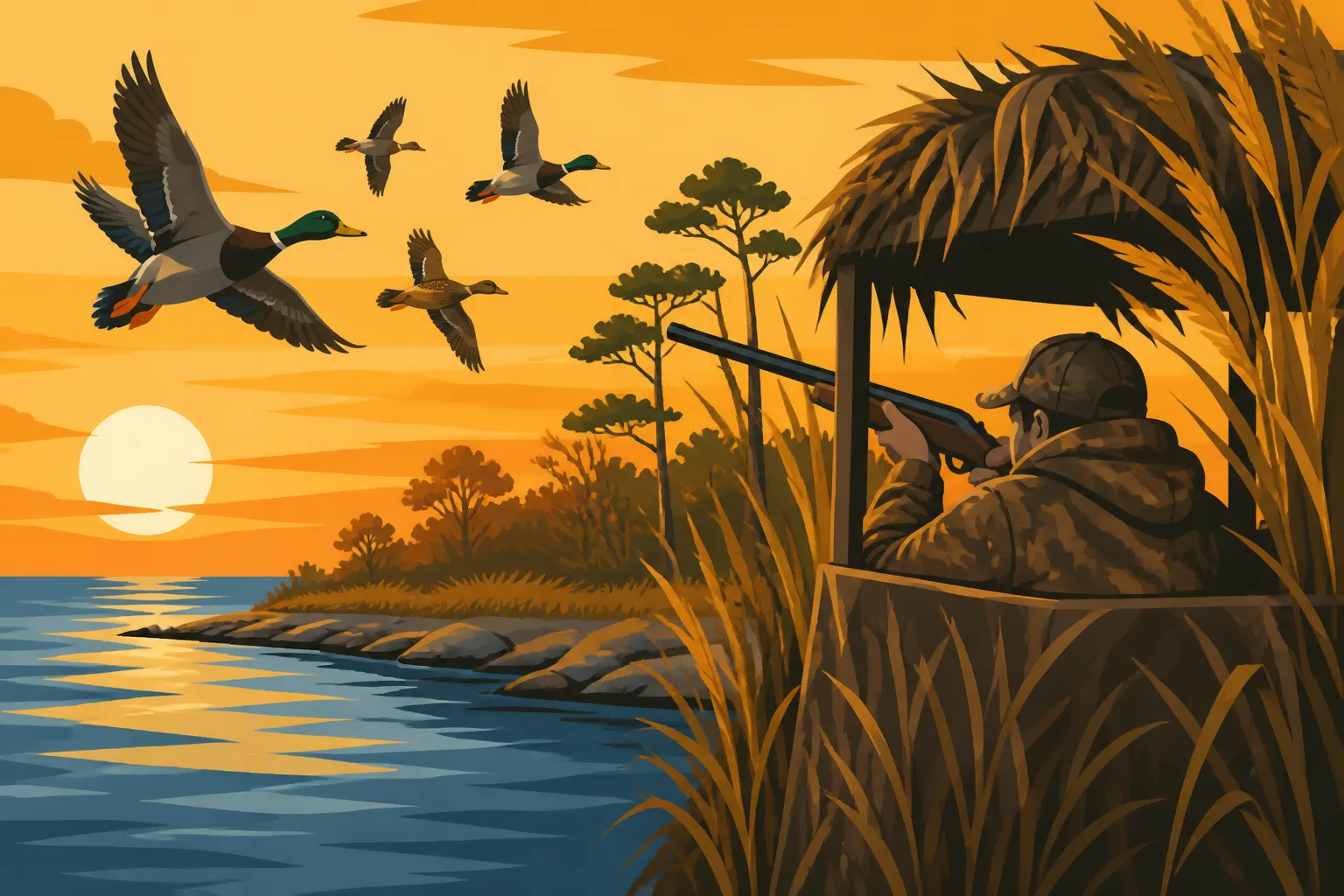
A good example of a durable, well-camouflaged blind might start with a sturdy pressure-treated lumber frame, sunk into the mud or anchored with heavy-duty stakes. The walls could be framed out and covered with exterior-grade plywood, then liberally brushed in with local vegetation, secured with wire or zip ties. A hinged roof allows for shooting and better concealment. Remember to plan for drainage so water doesn't pool inside.
| Feature | Shoreline Point Blind | Offshore Stake Blind |
|---|---|---|
| Location | Fixed on or very near the shoreline, extending from land | Fixed in open water, often far from shore |
| Access | Typically by wading, short boat ride, or walk-in | Primarily by boat, often larger vessels for safety |
| Construction | Can be elaborate, permanent structures (wood, metal) | Simpler, often a platform or small box on pilings/stakes |
| Visibility | Blends with natural shoreline vegetation | Often more exposed, relies on small profile and camouflage |
| Species Targeted | Versatile for puddle ducks, geese, divers | Excellent for divers, sea ducks, birds working open water |
| Tide Impact | Access and decoy depth heavily affected by tide | Less impact on blind itself, but boat access crucial |
| Licensing | Riparian priority, specific application periods | Lottery system for open water sites, often competitive |
| Maintenance | Requires regular brushing in, structural upkeep | Subject to severe weather, marine growth, structural checks |
Strategic Hunting from a Maryland Shoreline Point Blind
Having a great blind in a great location is only half the battle. To consistently harvest birds, you need to understand how to effectively hunt it. This means mastering decoying, calling, and understanding bird behavior in response to weather and tides.
Decoy Spreads for Success
Decoy placement is an art, not a science, and it’s especially crucial when hunting a fixed point blind. Your goal is to make your spread look natural and inviting, drawing birds into kill range.
- Puddle Ducks (Mallards, Black Ducks, Widgeon): These birds prefer shallower water and often feed on the edges. Create a "pocket" or landing zone directly in front of your blind, leaving an open area where birds can commit to land. Mix in species-specific decoys, but don't overdo it. A core group of mallards with a few black ducks or pintails often works well. A jerk string can add vital movement, mimicking feeding birds.
- Diving Ducks (Canvasbacks, Redheads, Bluebills): Divers typically raft in open water and prefer deeper feeding grounds. For these, you'll need larger spreads, often in lines or massed groups well offshore, with a "hook" or lane leading back towards your blind. Think about where they typically land when coming into a raft of birds. When Decoying Divers on Maryland's Open Bay, you need to consider the currents and how they affect your lines.
- Canada Geese: If you're targeting geese from your point blind, you'll need larger, visible goose decoys, often in separate family groups. Geese typically land into the wind, so position your main landing zone accordingly. A small cluster of floaters near the blind can mimic resting birds, while a field spread on an adjacent point could pull more attention. Setting a Goose Spread in Cut Corn principles can often be adapted for shoreline hunting with floaters.
Consider the currents and wind. Decoys should look natural, not clumped together. Too many decoys too close to the blind can make birds wary. Sometimes, less is more, especially with wary late-season birds. Keep your decoys clean and free of unnatural shine or algae.
Calling and Concealment
Calling is a powerful tool, but like decoying, it can be overdone. The goal is to get the birds' attention and reassure them, not to scare them off with incessant, unnatural noise.
- Ducks: Start with soft greeting calls to get their attention, then transition to feed calls and contented quacks as they get closer. As they cup their wings, go silent. If they start to peel off, a soft comeback call might turn them. Mastering the subtle nuances of duck calling takes practice.
- Geese: Goose calling is about mimicking the family chatter and honks of a feeding or resting flock. Short, sharp clucks, honks, and moans can work. Again, don't overcall. Listen to what the real birds are doing and try to match their cadence and volume.
- Concealment is King: No amount of calling or decoying will overcome poor concealment. Stay still. Don't fidget. Keep your face covered with a mask or face paint, and wear dark gloves. Any movement, especially an unexpected flash of skin, can flare birds. The blind should be thoroughly brushed in, both inside and out, breaking up its outline. Fresh brush throughout the season is essential as natural vegetation degrades. This is why Hunting a Chesapeake Bay Blind at First Light often means getting there well before legal shooting hours to get settled and ensure everything is hidden.
Adapting to Weather and Tide
The Chesapeake Bay is a dynamic environment, and successful point blind hunting means adapting to changing conditions.
- Wind and Weather: Strong winds can push birds low and fast, making them harder to decoy and shoot. They can also create rough water, making boat access challenging and affecting decoy spread stability. Cold fronts often bring in new migrations of birds, but can also make them warier. Hunting after a cold front can be fantastic, but often requires more patience.
- Tide: As mentioned, tides profoundly affect shoreline hunting. At high tide, birds might spread out into flooded marsh grasses, making them harder to concentrate. At low tide, mud flats might be exposed, limiting your decoy spread and access. Plan your hunts around favorable tides when birds are more likely to be concentrated in accessible water. Knowing when to put out decoys and when to retrieve them before the tide traps your boat is critical. For more on navigating marsh conditions, check out Boating Into a Sika Marsh at Low Tide.
- Hunting Pressure: Public and private land blind sites can experience significant hunting pressure, especially on weekends or during peak migrations. If birds are heavily pressured, they become educated and wary. Try new tactics like smaller, more natural decoy spreads, less aggressive calling, or even targeting specific species that might be overlooked. Using an app like onX Hunt can help you visualize other hunting areas nearby and understand potential flight paths influenced by pressure.
Essential Gear and Considerations for Point Blind Hunters
Beyond the blind itself, having the right gear is critical for comfort, safety, and success when hunting a Maryland shoreline point blind.
Waterfowl Specific Gear
Hunting on or near the water means you'll need specialized gear to stay dry, warm, and safe.
- Waders: Chest waders are non-negotiable for setting and retrieving decoys, as well as wading to your blind if it's close to shore. Choose durable, insulated waders if hunting in cold weather.
- Waterproof Outerwear: A good waterproof and windproof jacket and pants are essential. Layering beneath is key for warmth, as temperatures can fluctuate wildly on the Bay.
- Waterproof Bags: Keep all your essential items (phone, extra layers, snacks, calls, first-aid kit) in dry bags or waterproof containers.
- Shotgun and Ammo: Ensure your shotgun is in good working order and patterned correctly for steel shot. Always use non-toxic shot for waterfowl hunting. Carry enough shells for your hunt, and consider different shot sizes for various species (e.g., larger shot for geese, smaller for teal).
- Calls: A variety of duck and goose calls, and the skill to use them, will increase your chances.
- Decoys: Good quality decoys that are properly weighted and rigged are vital. Don't forget an anchor system appropriate for your water depth and bottom type.
- Dog Gear: If hunting with a retriever, a dog blind or mat inside the main blind, along with plenty of fresh water, is essential. They are a crucial part of many waterfowl hunts!
Safety and Navigation
Safety is paramount, especially when hunting around large bodies of water like the Chesapeake Bay.
- Life Jackets: If using a boat, personal flotation devices (PFDs) are legally required and could save your life. Ensure everyone in the boat wears one, especially in cold weather or rough water. Check out Boat Safety on the Chesapeake in December for crucial information.
- First-Aid Kit: A well-stocked kit for cuts, scrapes, and other common injuries is a must. Include items for hypothermia if hunting in cold weather.
- Navigation: Even if you think you know the area, fog can roll in quickly, disorienting you. A GPS device or a reliable navigation app on your phone (like onX Hunt) is invaluable for finding your way to and from the blind, especially in the dark. Carry a fully charged power bank for your phone.
- Communication: A reliable means of communication, such as a cell phone (in a waterproof case) or a VHF radio, is important in case of emergency. Be aware that cell service can be spotty in some remote marsh areas.
- Weather Forecast: Always check the marine weather forecast before heading out. High winds, heavy fog, or thunderstorms can turn a pleasant hunt into a dangerous situation.
- Legal Documents: Have your Maryland Resident License Options, migratory game bird stamps, and blind site license readily accessible. Maryland requires a Federal Duck Stamp, a Maryland Migratory Game Bird Stamp, and HIP registration for migratory bird hunters. Make sure you understand Maryland Migratory Bird Stamp Requirements before heading out.
Hunting a Maryland shoreline point blind is a truly rewarding experience, offering a unique blend of challenge and tradition. By understanding the licensing intricacies, building a robust and well-camouflaged blind, and employing smart hunting strategies, you'll be well on your way to enjoying some of the best waterfowl hunting the Bay has to offer. Just remember to always prioritize safety and respect the regulations that protect this incredible resource.
Disclaimer
This article is for general informational purposes only and does not constitute professional advice. Laws, prices and regulations vary by location and change over time. Consult a qualified professional for guidance on your specific situation.