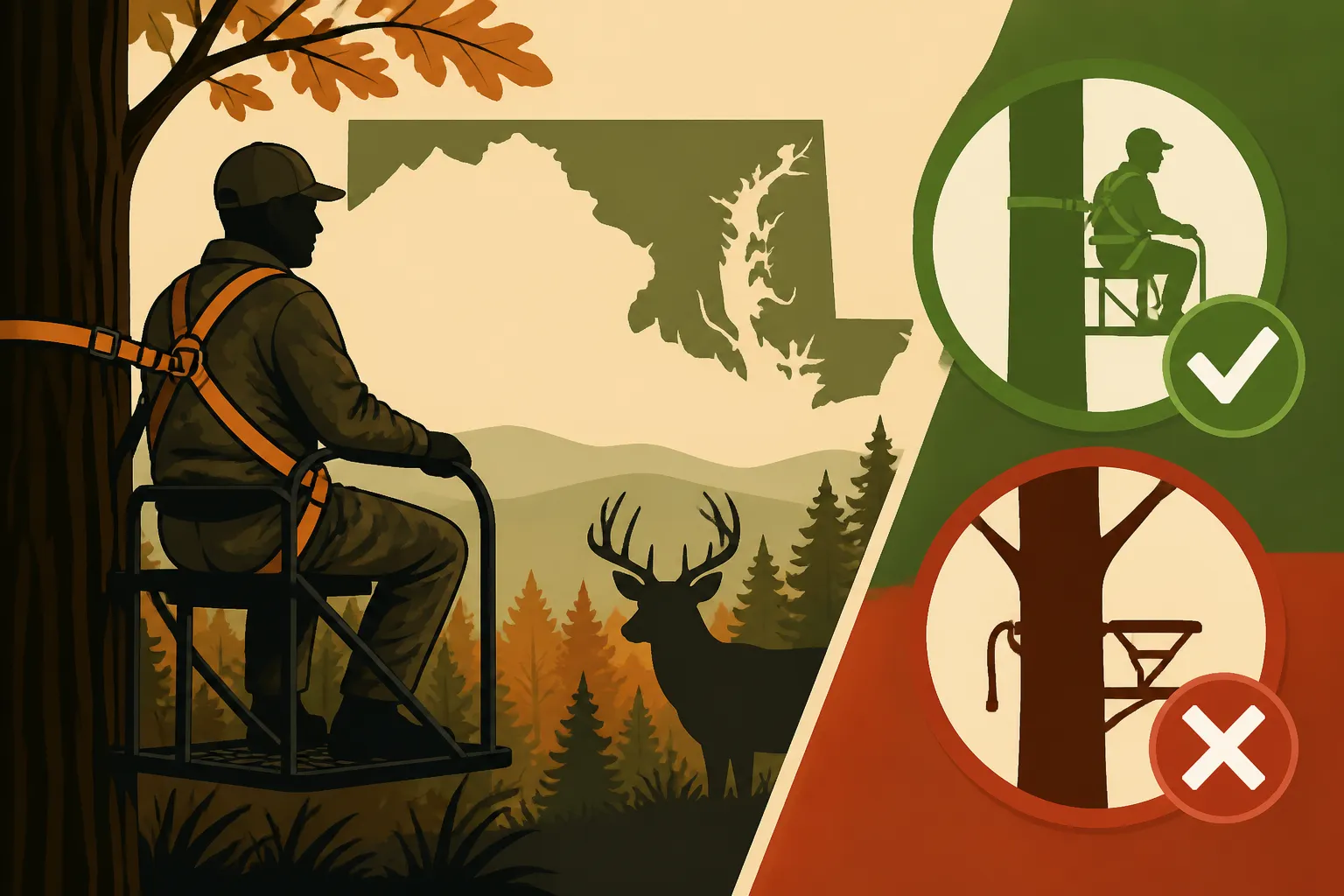
Treestand Rules on Maryland Public Land
Navigating the intricate world of public land hunting can feel like trying to solve a puzzle with half the pieces missing, especially when it comes to something as specific as treestand regulations. It’s a common frustration for hunters who just want to do the right thing and stay on the right side of the law, yet the rules often vary depending on where you are. This guide is here to shed some much-needed light on Maryland's treestand rules on public land, helping you set up safely, legally, and with peace of mind.
Understanding the Landscape of Public Land Treestand Rules in Maryland
Hunting on public land in Maryland offers incredible opportunities, but it also comes with a responsibility to understand and adhere to specific regulations, especially concerning equipment like treestands. These rules are put in place not just for safety, but also to protect the natural resources, prevent damage to trees, and ensure fair access for all users. It's a balancing act, and sometimes it can feel like the regulations are designed to trip you up, but with a clear understanding, you can avoid common pitfalls.
The Critical Difference: Temporary vs. Permanent Treestands
The first, and arguably most important, distinction you need to grasp when considering treestand use on Maryland public lands is the difference between a temporary and a permanent stand. This isn't just a nuance; it's a fundamental rule that dictates what you can and cannot do.
A permanent treestand is generally defined as any stand that is designed to remain in place for an extended period, often involving methods that cause direct damage to the tree. Think of old-school ladder stands bolted to a tree, or homemade platforms nailed into the trunk. On Maryland public lands, these types of permanent or damaging stands are almost universally prohibited. The reasoning is straightforward: these stands can injure trees, introduce disease, create litter, and become a safety hazard long after they are abandoned or fall into disrepair. You'll find that wildlife management agencies are very serious about preventing tree damage, and for good reason—those trees are critical habitat.
In contrast, a temporary treestand is designed for short-term use and must be removed periodically. These are typically portable climbing stands, hang-on stands, or ladder stands that utilize straps, chains, or other non-damaging attachment methods. The key here is "non-damaging." You're expected to use equipment that leaves no lasting mark on the tree. This means no screws, no nails, no lag bolts, and no cutting of limbs for stand placement, unless explicitly allowed for specific maintenance purposes (which is rare for a hunter). The focus is on minimal impact, ensuring that the forest environment remains as undisturbed as possible for subsequent users and for the health of the trees themselves. For any hunter, selecting a truly temporary stand is step one in compliance.
The Rules of Attachment: Protecting Maryland's Trees
When you're hanging a temporary stand, how you attach it is just as important as what type of stand it is. Maryland's public land regulations are very clear: you cannot use any method that will damage the tree. This means certain practices, which might be acceptable on private land with the landowner's permission, are strictly forbidden.
Prohibited attachment methods include:
- Nails and Screws: These are absolute no-gos. They pierce the bark and cambium layer, leaving wounds that can allow disease, insects, and rot to enter the tree, potentially leading to its decline or death.
- Lag Bolts and Screw-In Steps: Similar to nails and screws, these destructive methods compromise the tree's health and integrity. While convenient for climbing, they leave permanent holes.
- Chains Without Protection: If you use a chain to secure a stand, it must be protected with rubber or other material to prevent it from girdling the tree (cutting into the bark as the tree grows or the stand settles). A chain digging directly into the bark is considered damaging.
Permitted attachment methods typically involve:
- Nylon or Polyester Straps: These are the most common and accepted methods. They distribute pressure over a wider surface area and don't penetrate the tree. Ensure they are secured tightly to prevent slipping but not so tight as to girdle the tree over time.
- Cable or Rubber-Coated Chains: If you're using a chain, it needs to be coated or used with protectors to prevent damage.
- Climbing Stands: These stands are designed to be mobile and use a clamping action, often with rubberized pads, to ascend the tree without penetrating it.
It's your responsibility to ensure your equipment and methods leave no lasting trace. DNR officers regularly patrol public lands, and they know what to look for. A damaged tree due to an illegal stand can lead to fines and even the loss of your hunting privileges.
Identification and Removal Deadlines: Don't Leave Your Stand Behind
So, you've got your temporary, non-damaging stand all set up. Great! But you're not done with the rules yet. Maryland's public land regulations also dictate how your stand must be identified and, crucially, when it needs to be removed. These rules are in place to prevent abandonment, facilitate wildlife management, and allow for other public land uses outside of hunting season.
Most public land areas in Maryland require that any treestand left overnight or for any extended period must be clearly marked with the hunter's full name and DNR ID number (or hunting license number). This identification serves several purposes: it allows DNR officials to identify the owner, ensures accountability for damages, and helps manage crowded hunting areas. Imagine the chaos if stands weren't identified; it would be impossible to address issues or return lost property.
The real kicker for many hunters, and a source of common violations, is the removal deadline. These deadlines vary significantly by specific public land unit, so you absolutely cannot assume one rule fits all. On many Wildlife Management Areas (WMAs), particularly those with high use, stands might need to be removed daily after each hunt. On other WMAs or State Forests, you might be allowed to leave a temporary stand for a longer period, sometimes up to a week or even for the entire season, but with a strict deadline to remove it shortly after the hunting season for that particular species closes.
For example, if you're hunting deer in a WMA and the deer season closes, you usually have a very limited window—often within a week or two—to remove all your equipment. Failing to remove your stand by the specified deadline can result in it being confiscated by the state. This isn't just a threat; it happens. DNR staff will often cut down and collect abandoned stands, and retrieving them can be a difficult, if not impossible, process, often involving fines. Always consult the specific regulations for the WMA or State Forest you plan to hunt to know the exact identification and removal requirements. This is where tools like onX Hunt can be incredibly helpful for identifying specific land boundaries, but always cross-reference with official DNR publications.
Navigating Treestand Rules on Specific Maryland Public Lands
Maryland is rich with diverse public hunting opportunities, from dense western mountain forests to the unique marshes of the Eastern Shore. However, the treestand rules aren't a one-size-fits-all proposition. What's allowed in a State Forest might be strictly prohibited in a Wildlife Management Area, and federal lands introduce another layer of complexity. It's crucial to understand these distinctions to hunt legally and ethically.
Wildlife Management Areas (WMAs): Daily Removal vs. Extended Stay
Maryland's Wildlife Management Areas are managed specifically for wildlife habitat and public hunting access. As such, they often have some of the most detailed and sometimes restrictive rules for treestands. The primary goal is to minimize long-term impact on the land and ensure fair access for the numerous hunters who might use the same tract.
On many WMAs, particularly those that see heavy hunting pressure or are relatively small, the rule is simple and strict: all treestands and ground blinds must be removed daily. This means packing everything out with you at the end of your hunt, every single time. This rule is designed to prevent stands from becoming permanent fixtures, damaging trees over time, creating litter, and staking out prime spots indefinitely, which can lead to conflicts among hunters. For example, if you're hunting in a popular WMA on the Eastern Shore, like Fishing Bay or Deal Island, you can pretty much count on a daily removal rule due to the unique marsh environment and high use. This also applies to many of the smaller, more accessible WMAs in the central region.
However, some larger or less-pressured WMAs might allow temporary stands to remain for a specified period, often with the condition that they are clearly marked with your DNR ID number. Even in these cases, there will always be a hard deadline for removal after the season closes. For instance, some of the larger WMAs in Western Maryland, part of Hunting Maryland's Western Mountain Wildlife Management Areas, might have different provisions than a small WMA near Annapolis. It's truly a unit-by-unit basis, which can be frustrating, but it emphasizes the need to check the specific WMA regulations before you ever step foot in the woods. Many hunters use mapping apps like GoHunt to understand land boundaries, but the rules for specific WMAs usually require consulting the Maryland DNR website or their printed hunting guide.
State Forests and State Parks: Varied Access and Rules
Maryland's State Forests offer a different kind of public land hunting experience, often characterized by larger tracts of timber, more rugged terrain, and sometimes less intense hunting pressure than smaller WMAs. Because of their size and management objectives, the treestand rules can be slightly different.
In most Maryland State Forests open to hunting, such as Savage River State Forest or Green Ridge State Forest in Region A, temporary treestands are generally permitted to be left for longer periods than in many WMAs. The key here, again, is that they must be truly temporary, non-damaging, and clearly marked with your DNR ID. There will still be a hard deadline for removal after the hunting season ends, typically a week or two post-season closure. This allows hunters to establish stands in promising areas without the daily chore of packing them in and out, which is a huge benefit in remote, mountainous terrain. However, this privilege comes with the understanding that these stands are still left at your own risk, and theft or damage can occur. You are responsible for any stand you place.
State Parks, on the other hand, often have very restricted or even prohibited hunting access. Many state parks are primarily recreational areas focused on hiking, picnicking, and camping, and hunting might only be allowed in specific designated sections or through special permit hunts. If hunting is allowed, treestand rules will likely be even stricter, potentially requiring daily removal across the board or prohibiting them entirely. It's rare to find a State Park where leaving a treestand for an extended period is permitted. Always verify hunting access and specific regulations directly with the park management or the Maryland DNR for any State Park you intend to hunt. Maryland's State Forests Open to Hunters provides a good overview, but always drill down to the specific unit.
Federal Lands: A Different Set of Overlords
Beyond state-managed lands, Maryland also has federal lands, primarily in the form of National Wildlife Refuges and some limited National Park Service areas where hunting might occur. When you step onto federal land, you're entering a different regulatory environment altogether.
National Wildlife Refuges (NWRs) like Blackwater National Wildlife Refuge on the Eastern Shore or Patuxent Research Refuge in Central Maryland often have highly specific and often more restrictive hunting regulations, including those for treestands. Hunting on NWRs is almost always managed through a special permit or lottery system, and the regulations will be laid out in excruciating detail in their hunt brochures or specific refuge rules. It is very common for NWRs to prohibit all treestands, or to only allow climbing stands that are removed daily. Some might allow temporary stands, but only within specific, tightly controlled hunt zones and with very strict removal deadlines. For example, Maryland Federal Refuge Hunting Rules will detail that permanent blinds are usually out of the question, and even temporary ones may have severe restrictions.
The rationale for stricter rules on federal lands often relates to their primary mission of wildlife conservation, which can sometimes prioritize habitat preservation over recreational hunting convenience. It also ties into managing visitor impact given the broad range of activities these lands support. If you're considering hunting a federal refuge, your first step must be to obtain and meticulously read their specific hunting regulations. Don't rely on state rules; federal rules supersede them.
Practical Considerations and Best Practices for Treestand Use
Understanding the official rules is one thing, but successful and responsible treestand hunting on public land also involves a lot of practical know-how and adherence to an unspoken code of ethics. You're sharing these resources with countless others, and being a good steward goes a long way.
Scouting Smart and Stand Placement
Effective scouting is the foundation of successful hunting, especially when you're restricted by treestand rules on public land. It's not just about finding deer sign; it's about finding deer sign in a location where you can legally and practically set up a stand, respecting both the regulations and other hunters.
Before you even think about hauling your stand in, spend significant time on the ground. Use tools like onX Hunt to overlay property lines, locate accessible public land parcels, and identify potential entry and exit routes. This is invaluable for avoiding trespass and ensuring you're within a legal hunting zone. Scouting Maryland Public Land Before Season is not just about finding deer, but about finding the right spots. Look for natural funnels, pinch points, active travel corridors between bedding and feeding areas, and subtle terrain features that can concentrate deer movement.
When you're evaluating a specific tree for stand placement, consider:
- Suitability: Is the tree healthy and strong enough to safely support your weight and the stand? Avoid dead, diseased, or unstable trees.
- Concealment: Can you get adequately hidden without having to excessively prune limbs (which is often prohibited or heavily restricted)? Look for natural cover.
- Wind Direction: Position yourself so your scent is carried away from expected deer travel routes. Wind and Thermals in Western Maryland Terrain might be different from marsh hunting, but the principle is the same.
- Accessibility: How easy is it to get to and from the stand quietly and without disturbing game? Remember, on many WMAs, you'll be packing that stand in and out daily.
Always remember that public land hunting is a dynamic environment. The best spot one week might be less productive the next due to pressure or shifting food sources. Being flexible and having a few scouted backup locations is key.
The Unfortunate Reality: Security and Theft Concerns
It's a harsh truth, but leaving a treestand on public land, even if legally allowed, comes with the risk of theft or damage. While most hunters are respectful, there's always a chance someone might take advantage. This is a common frustration, especially when you've invested good money and time in your gear.
Here are some strategies to mitigate the risk:
- Less Obvious Locations: While you want a good hunting spot, consider if your stand can be placed in a less conspicuous location that isn't easily seen from major trails or access points. Deep woods, thick cover, or less traveled sections of public land might be better for long-term stand placement.
- Security Cables/Locks: Use sturdy cable locks to secure your stand to the tree. While not foolproof, they act as a deterrent and make it harder for casual theft. You can often thread these through the stand's frame and around the tree.
- Marking Your Stand: As required, ensure your stand is clearly marked with your name and DNR ID. This doesn't prevent theft, but it could aid in recovery if it's found by authorities.
- Accept the Risk: Ultimately, if you choose to leave a stand on public land, you have to accept that there's a possibility it might not be there when you return. Some hunters simply opt for daily pack-in/pack-out stands to avoid this concern entirely.
Ethical Considerations and "Claim Jumping"
Public land hunting operates on a blend of written laws and unwritten rules of etiquette. One of the biggest ethical considerations revolves around respecting other hunters' space and efforts. "Claim jumping," or intentionally setting up a stand very close to another hunter's established, legally placed stand or obvious hunting area, is a huge no-no.
While no one "owns" a spot on public land, a certain level of respect is expected. If you hike into an area and find a clearly marked, legally placed treestand, or discover evidence of recent hunting activity (like boot tracks, fresh sign near a well-used trail, or even a ground blind), it's generally considered bad form to set up right on top of them. Give other hunters space. Public land is big enough for everyone if we're considerate.
The key is to act as you would want others to act towards you. If you place a stand, expect others to potentially use the same general area, but hope they respect your immediate vicinity. If you're looking for an area with less pressure, you might need to scout further off the beaten path or explore areas like Finding Maryland Ground Others Walk Past. A bit of courtesy goes a long way in fostering a positive hunting community on public lands.
Avoiding Common Pitfalls and Staying Compliant
Even with the best intentions, it's easy to make mistakes when dealing with public land regulations. The rules can be nuanced, vary by location, and change from year to year. Knowing the common pitfalls and how to proactively avoid them is crucial for a stress-free hunting season.
The Peril of Misinterpreting Regulations
One of the most common reasons hunters find themselves in trouble is simply misunderstanding or misinterpreting the regulations. It's not always malicious; sometimes the rules can be confusing, especially when they differ between specific public land parcels.
Key areas for potential misinterpretation:
- Removal Deadlines: As mentioned, these vary wildly. Assuming a one-week grace period applies everywhere when a daily removal is actually required is a quick way to lose a stand.
- Definition of "Temporary": What you consider temporary might not align with the DNR's definition. If it causes any tree damage, it's likely not temporary enough.
- Specific WMA/Forest Rules: Don't assume the rules for Savage River State Forest are identical to those for Idylwild Wildlife Management Area. Each unit often has its own set of rules, often found in specific brochures or addenda to the main hunting guide.
- Changes Year to Year: Regulations are not static. What was allowed last year might not be this year. Always get the most current guide.
To avoid misinterpretation, your best bet is always to consult the official Maryland DNR hunting guide for the current year. It's usually available online or as a physical pamphlet at license vendors. If there's a specific WMA or State Forest you plan to hunt, look for specific unit regulations – these are often appended to the main guide or found on the specific land unit's webpage. When in doubt, call the regional DNR office for clarification. It's far better to ask than to assume and face a penalty. Maryland Public Land Registration Requirements might even apply to certain hunts, adding another layer to check.
The Consequences of Non-Compliance
Breaking treestand rules, even accidentally, can lead to a range of unpleasant consequences. These aren't just minor inconveniences; they can significantly impact your hunting season and future privileges.
- Fines: Monetary penalties are common for violations like tree damage, improper identification, or failure to remove a stand. These fines can quickly add up and often far exceed the cost of the stand itself.
- Confiscation of Equipment: As noted, if your stand isn't removed by the deadline or is deemed illegal, DNR officers have the authority to confiscate it. Retrieving it can be a bureaucratic nightmare, and sometimes it's simply lost for good.
- Loss of Hunting Privileges: More severe or repeated violations can result in the suspension or revocation of your hunting license, meaning you won't be able to hunt in Maryland for a specified period. This is a serious consequence for any passionate hunter.
- Damage to Trees and Habitat: Beyond the legal repercussions, non-compliance contributes to the degradation of the very resource we all enjoy. Damaged trees can die, impacting wildlife habitat and the aesthetic appeal of public lands for everyone.
It's a stark reminder that hunting is a privilege, not a right, and that privilege comes with strict adherence to the rules.
Leveraging Technology for Better Compliance
In today's digital age, technology can be a powerful ally in staying compliant with public land regulations. While it doesn't replace reading the official rulebook, it can certainly help you visualize and navigate the complexities.
Mapping applications like onX Hunt and GoHunt are invaluable for public land hunters. They offer detailed satellite imagery, topographic maps, and crucially, land ownership overlays.
- Boundary Awareness: You can instantly see public vs. private land boundaries, preventing accidental trespass which is a critical aspect of legal hunting. This is particularly useful in areas with checkerboard land ownership. Using onX Layers for Maryland Land Status can show you precisely where you are.
- Access Points: These apps help identify legal access points, parking areas, and designated public access easements.
- Offline Maps: Many areas of public land in Maryland, especially the remote corners of State Forests, have no cell service. Being able to download maps for offline use is a game-changer, ensuring you always know your location relative to boundaries and rules.
- Recording Waypoints: You can mark your stand locations, vehicle parking spots, and important deer sign, which helps with navigation and planning, especially if you need to remove your stand by a certain date. Finding Maryland Property Lines Before You Hunt is made infinitely easier with these tools.
While these tools are fantastic for navigation and land identification, remember that they typically do not include the specific, nuanced regulations for each WMA or State Forest regarding treestands. You still need to do your homework and consult the official DNR sources for those details. However, using them in conjunction with the regulations will dramatically increase your confidence and ability to hunt legally and responsibly on Maryland's public lands.
| Feature / Rule | Temporary Treestands (Maryland Public Land) | Permanent Treestands (Maryland Public Land) |
|---|---|---|
| Attachment Method | Straps, chains (with tree protection), climbers | Nails, screws, lag bolts, any tree-damaging method |
| Tree Damage | None permitted | Prohibited |
| Identification Required | Yes, full name & DNR ID/license number | Not applicable (they are generally illegal) |
| Removal Requirement | Varies: Daily to post-season deadline | Prohibited, will be confiscated |
| Typical Legal Status | Generally permitted with specific conditions | Generally prohibited |
| Risk of Confiscation | High if not identified or removed by deadline | Very high if found, regardless of identification |
| Ethical Considerations | Respect other hunters' space, minimize impact | Detracts from public land experience, harms resources |
Disclaimer
This article is for general informational purposes only and does not constitute professional advice. Laws, prices and regulations vary by location and change over time. Consult a qualified professional for guidance on your specific situation.