Trail Camera Rules on Maryland Public Land
It's incredibly frustrating when you're trying to do everything right as a hunter, especially when it comes to navigating the nuanced rules of public land. You want to scout effectively, use modern tools like trail cameras, but you're constantly second-guessing whether you're even allowed to deploy them. The truth is, Maryland's public lands aren't a one-size-fits-all situation, and what's permissible in one area might get you a hefty fine in another. This guide aims to clear up that confusion, offering a realistic look at trail camera regulations on Maryland's public hunting grounds, so you can scout smart and stay legal.
Understanding the Patchwork of Public Land Regulations
Maryland offers a fantastic diversity of public hunting opportunities, from the rugged mountains of the west to the tidal marshes of the Eastern Shore. However, this diversity also means a patchwork of regulations, especially concerning tools like trail cameras. It's easy to assume that if it's public land, the rules are universal, but that's rarely the case. Different agencies manage different tracts of land, and each can have its own specific guidelines – or lack thereof – regarding the use of trail cameras. This creates a real headache for hunters who just want to understand the playing field.
For instance, a state-managed Wildlife Management Area (WMA) might have one set of expectations, while a National Wildlife Refuge, managed by a federal agency, will almost certainly have a completely different, and often more restrictive, approach. Even within state lands, there can be subtle differences. This isn't just about knowing where the property lines are; it's about knowing who owns those lines and their specific policies. This is where tools like onX Hunt or GoHunt can be invaluable, not just for showing you boundaries, but for helping you identify the managing agency so you can then seek out their precise regulations. Ignorance of the law is never an excuse, and in Maryland, a little homework can save you a lot of trouble.
Why Rules Vary By Land Management Agency
The primary reason for this regulatory mosaic boils down to the different missions and mandates of the various land management agencies. The Maryland Department of Natural Resources (DNR), for example, manages state forests and WMAs with a strong focus on recreation, timber production, and wildlife management, often including hunting. Their regulations tend to be more accommodating to hunting-related activities, within reason. They understand that hunters use tools to scout and increase their chances of success, and they generally aim to balance that with resource protection.
On the other hand, federal agencies like the U.S. Fish and Wildlife Service, which manages National Wildlife Refuges, or the National Park Service, which oversees areas like the C&O Canal, often have a more preservation-focused mission. Their primary goal might be habitat restoration, endangered species protection, or historical preservation, with hunting being a secondary or even tertiary consideration, if allowed at all. For these agencies, anything that introduces artificial elements, could disturb wildlife, or creates potential litter or impacts on visitor experience, is often viewed with caution or outright prohibited. This difference in philosophy directly translates to the rules surrounding trail cameras, which are seen by some as an intrusion into wild spaces.
The Importance of Verifying Local Rules
Given this varied landscape, simply assuming you're good to go with a trail camera on any piece of public land in Maryland is a recipe for trouble. You absolutely must verify the specific rules for the exact parcel of land you intend to hunt. This isn't just a suggestion; it's a critical step in ethical and legal hunting. A quick phone call to the local WMA office, a check of the specific State Forest website, or a deep dive into the regulations for a National Wildlife Refuge can save you from a citation, or worse, the confiscation of your equipment.
It's tempting to think that "everyone does it," but relying on anecdotal evidence from other hunters is risky. Regulations can change, and enforcement can vary. Always seek official guidance from the managing agency. Many agencies now have detailed regulations available online, and some even publish specific fact sheets or FAQs regarding trail camera use. Before you ever hang a camera, make sure you know the exact policy for that particular tract of ground. This diligence is part of being a responsible hunter, ensuring you're protecting both the resource and your hunting privileges.
Maryland DNR Regulations on State-Managed Lands
For the vast majority of hunters in Maryland, state-managed lands—primarily Wildlife Management Areas (WMAs) and State Forests—are where they'll be deploying trail cameras. The Maryland Department of Natural Resources (DNR) oversees these areas, and while specific rules can vary slightly by location, there are general guidelines that apply across the board. The good news is, for the most part, the DNR understands the utility of trail cameras for scouting and their use is generally permitted, provided you follow certain common-sense and ethical practices. This isn't the Wild West, but it's not a federal no-go zone either.
The core principle the DNR operates under is to allow recreational activities while minimizing impact on the natural resources and other users. This means your trail camera use should be non-intrusive, responsible, and leave no lasting trace. You're not there to permanently alter the landscape or interfere with other people's experience. It's all about balance, and as a hunter, understanding this philosophy will help you interpret and adhere to the guidelines. Think about how your presence, and your equipment, affects the environment around you.
Permitted Use and Placement Guidelines
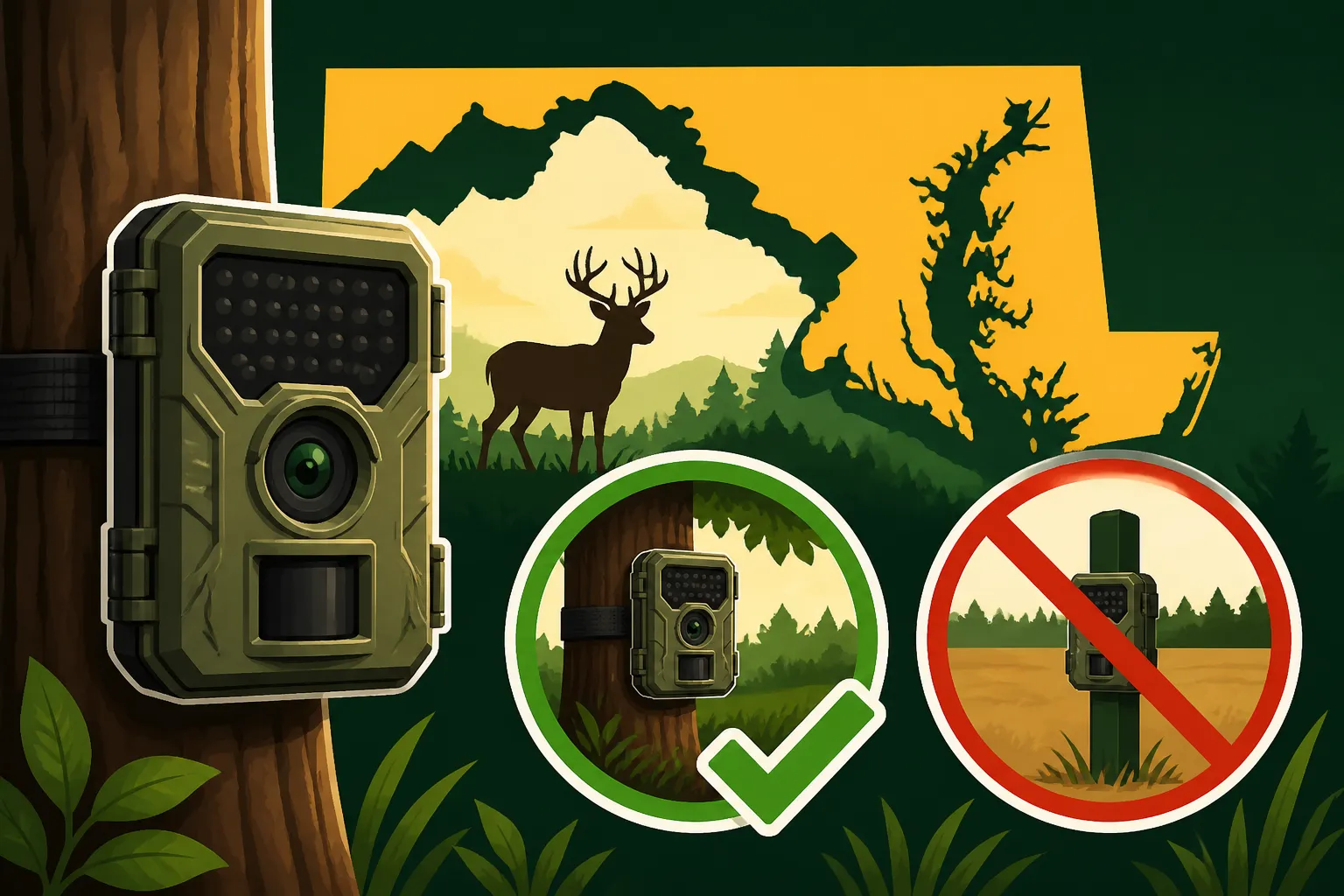
Generally speaking, the Maryland DNR permits the use of trail cameras on its state forests and WMAs for scouting purposes. However, there are some critical stipulations to keep in mind. You typically cannot damage trees or vegetation to hang your camera. This means no screwing camera mounts directly into trees, no hacking away branches for a better view, and no clearing out brush that isn't already permitted. Strap-on mounts are universally accepted as the preferred method because they are non-damaging. Imagine the cumulative impact if thousands of hunters screwed mounts into trees; it would be detrimental to the forest health over time.
Furthermore, cameras should be placed in a way that doesn't obstruct trails, roads, or access points used by other visitors. You want your camera to be discreet and out of the way, not a trip hazard or an eyesore for hikers or other hunters. The idea is for your camera to gather information without being a nuisance. While not always explicitly stated, common courtesy also dictates not placing cameras directly over another hunter's stand or a frequently used game trail they are clearly working. Respect for other users is paramount on public land, where space is often shared.
Rules Regarding Identification and Retrieval
One very important rule for trail cameras on Maryland DNR-managed lands is that your camera must be clearly marked with your full name and current hunting license number. This isn't just a suggestion; it's a mandatory requirement. This identification allows DNR officers to easily track ownership, ensuring accountability and deterring illegal activity. Without proper identification, your camera could be considered abandoned property and might be removed or confiscated by wildlife officials. It's a simple step, but one that many hunters overlook, leading to unnecessary complications.
Additionally, while you can leave cameras out for extended periods, they are generally not meant to be permanent fixtures. You should retrieve your cameras at the end of the hunting season or within a reasonable timeframe, often specified as 30 days after the season closes. Leaving cameras out year-round can lead to degradation, environmental litter, and conflicts with other users or land management activities. Some areas might even have specific dates by which all stands and cameras must be removed. Always check these details, as adhering to them helps maintain good relations between hunters and the DNR. This also ties into being a responsible steward of the land, ensuring that your equipment isn't left to rust and become litter once the seasons change.
Federal Lands and Other Jurisdictions: A Different Story
While state-managed lands in Maryland generally offer more flexibility for trail camera use, you absolutely cannot assume the same rules apply to federal lands or other types of public access. In fact, when you step onto federally-managed property, the rules often flip entirely. This is a crucial distinction, and misunderstanding it can lead to serious consequences, including fines and potential legal action. Don't let your excitement about scouting override the need to understand where you are and whose rules you're playing by.
The primary difference stems from the governing mandates. Federal agencies, with their broader national directives, tend to err on the side of caution when it comes to any kind of permanent or semi-permanent installations on their lands. They're often tasked with preserving wilderness character, protecting specific species, or maintaining historical integrity, and a trail camera, even a small one, can be seen as an infringement on those objectives. This is where your diligence in checking land boundaries, perhaps with a mapping app like GoHunt, becomes paramount – knowing you're on federal ground is the first step to knowing you need to follow a different set of rules.
National Wildlife Refuges and Park Service Lands
When it comes to National Wildlife Refuges (NWRs) in Maryland, such as the well-known Blackwater National Wildlife Refuge on the Eastern Shore or Patuxent Research Refuge in Prince George's County, the rule of thumb is usually: no trail cameras allowed. These refuges are specifically established to protect wildlife and habitat, and any artificial device that could potentially disturb wildlife, alter the natural landscape, or present a visual intrusion is typically prohibited. This extends to tree stands that are screwed into trees, or anything that leaves a "permanent" mark.
Similarly, lands managed by the National Park Service, like the C&O Canal National Historical Park, which offers limited hunting opportunities in some sections, will also typically prohibit trail cameras. Their mandate for historical and natural preservation is very strict, and any items left unattended are often viewed as litter or potential archaeological disturbances. The best approach for any federal land is to presume trail cameras are forbidden unless you find explicit, written permission stating otherwise from the managing authority. Always verify, but be prepared for a "no." If you're considering a hunt on these lands, like Hunting the Woods Along the C&O Canal, confirm all equipment rules first.
Other Public Access Points
Beyond the major state and federal categories, Maryland has other forms of public access that might not fit neatly into a "WMA" or "NWR" box. These can include:
- County Parks and Local Public Lands: Rules on these can vary wildly by county and even by specific park. Some may allow hunting but prohibit trail cameras; others might have no specific stance. Always check with the local county parks and recreation department.
- State Parks (where hunting is allowed): While some Maryland State Parks do allow hunting, their regulations often differ from WMAs. It's common for them to have stricter rules on what can be left on site, including trail cameras. You'll want to consult the specific park's regulations or website. Check out Maryland State Park Hunting Rules for more details.
- Privately Owned, Publicly Accessible Lands (e.g., land trust properties): Sometimes, private land trusts or conservation organizations open their properties to public hunting. These often come with their own unique set of rules developed by the private entity, which can be very restrictive. They might specifically ban trail cameras to reduce human impact or liability.
The takeaway here is simple: never assume. Always identify the specific managing authority for any parcel of land you wish to hunt and consult their official regulations directly. Don't rely on word-of-mouth or what you might do on another property.
Ethical Considerations and Best Practices for Hunters
Beyond simply following the letter of the law, using trail cameras on public land comes with a set of ethical considerations and best practices that responsible hunters should adopt. Public land is a shared resource, and how we, as hunters, conduct ourselves reflects on the entire hunting community. Being mindful of these unwritten rules ensures a positive experience for everyone and helps maintain access for future generations. It’s not just about staying out of trouble; it’s about being a good steward and a respectful participant.
One of the biggest frustrations for hunters on public land can be feeling crowded or encountering disrespectful behavior. Trail cameras, if used improperly, can contribute to these tensions. By adhering to a strong ethical code, we can minimize conflict and ensure that these valuable scouting tools don't become a source of antagonism among fellow outdoors enthusiasts. After all, we're all out there for similar reasons – to connect with nature and pursue game – and mutual respect is the cornerstone of that experience.
Respecting Other Hunters and Their Space
Public land is, by its very nature, open to everyone. This means you're going to encounter other hunters, hikers, birdwatchers, and various outdoor enthusiasts. When deploying trail cameras, it's crucial to respect their space and experience. Avoid placing cameras directly over a well-established stand site that clearly belongs to another hunter, or setting them up in high-traffic areas where they might be a visual nuisance or tempt tampering. No one wants to walk up to their favorite spot only to find someone else's camera staring them down.
Think about the "Golden Rule" of public land hunting: hunt like you'd want others to hunt around you. If you come across another hunter's camera, leave it alone. Do not move it, tamper with it, or steal it. Theft of a trail camera is a crime, and it casts a negative shadow on the entire hunting community. If you suspect a camera is in an inappropriate spot, or if it's clearly abandoned, report it to the local land manager, don't take matters into your own hands. This respect extends to the game as well; don't use cameras to "herd" animals or for any form of harassment. Consider how Hunting Pressure on Maryland Public Land might be impacted by overly aggressive or inconsiderate camera placement.
Minimizing Disturbance and Impact
The goal of a trail camera is to gather information without disturbing the natural environment or the animals you're observing. To achieve this, minimize your visits to check cameras. Every time you walk into an area, you're leaving scent, making noise, and potentially altering animal patterns. If possible, consolidate your camera checks with other scouting activities or only visit when you know the wind is favorable. The less human intrusion, the more natural the wildlife behavior you'll capture.
Using non-invasive mounting methods, like straps instead of screws, is a must on public land. Screwing into trees can damage them, creating entry points for disease and insects, and permanently altering the tree. This is usually explicitly forbidden by DNR regulations. Also, ensure your camera is camouflaged and discreetly placed. You don't want it to stick out like a sore thumb, attracting attention from curious passersby or even potential thieves. A well-placed camera should blend into its surroundings, making it harder for both humans and wildlife to notice.
Practical Tips for Trail Camera Deployment
To make your trail camera experience on Maryland public lands both effective and legal, here are a few practical tips:
- Label Everything: As mentioned, clearly mark your camera with your name and hunting license number. Use a durable, waterproof label.
- Use Locking Cables/Cases: While not foolproof, a locking cable or security case can deter casual theft and ensure your investment stays put.
- Map Your Camera Locations: Use a GPS app like onX Hunt or a physical map to mark every camera you deploy. This helps you retrieve them efficiently and ensures none are forgotten. Losing a camera not only means a financial loss but also contributes to litter on public land.
- Battery Life: Invest in good quality batteries or solar panels to extend battery life, reducing the frequency of your visits. This minimizes disturbance to the area and the animals.
- Angle and Height: Position cameras at an angle that avoids direct sunlight, which can cause glare and blurry photos. Consider the height – a deer's eye level is often best for capturing good images, but adjust for species-specific scouting (e.g., higher for turkeys).
- Check Regulations Annually: Regulations can change. Before each hunting season, or if you plan to hunt a new piece of public land, double-check the current trail camera rules. What was allowed last year might not be this year.
By being diligent, respectful, and well-informed, you can effectively use trail cameras to enhance your hunting experience on Maryland's public lands without running afoul of the rules or disrespecting other users.
Navigating Public Land Trail Camera Rules: A Quick Guide
| Public Land Type | Typical Trail Camera Stance (Maryland) | Key Actions for Hunters |
|---|---|---|
| State Forests | Generally Permitted (Maryland DNR). | Verify local rules. Use strap mounts. Label with name/license. Retrieve after season (often by specified date). Do not damage trees or obstruct trails. |
| Wildlife Management Areas (WMAs) | Generally Permitted (Maryland DNR). | Verify local rules. Use strap mounts. Label with name/license. Retrieve after season (often by specified date). Do not damage trees or obstruct trails. |
| National Wildlife Refuges (NWRs) | Generally Prohibited (Federal). | Assume prohibited. Check specific refuge regulations before even considering placement. Penalties can be severe. This is where knowing you're on federal land (using onX Hunt or GoHunt) is crucial. |
| National Park Service Lands (e.g., C&O Canal) | Generally Prohibited (Federal). | Assume prohibited. Check specific park regulations. These areas are heavily focused on preservation and can have strict rules against unattended personal property. |
| State Parks (with hunting) | Varies, often more restrictive than WMAs. May be prohibited or have very specific guidelines. | Check specific park regulations directly. Do not assume. Look for rules on "unattended property" or "installations." |
| County Parks/Local Public Lands | Varies widely by county and specific park. Some may allow hunting but prohibit cameras. | Contact the specific county or local park authority. This is a true "check with local rules" situation; no statewide assumption can be made. |
Disclaimer
This article is for general informational purposes only and does not constitute professional advice. Laws, prices and regulations vary by location and change over time. Consult a qualified professional for guidance on your specific situation.