Hunting a Loblolly Pine Cutover
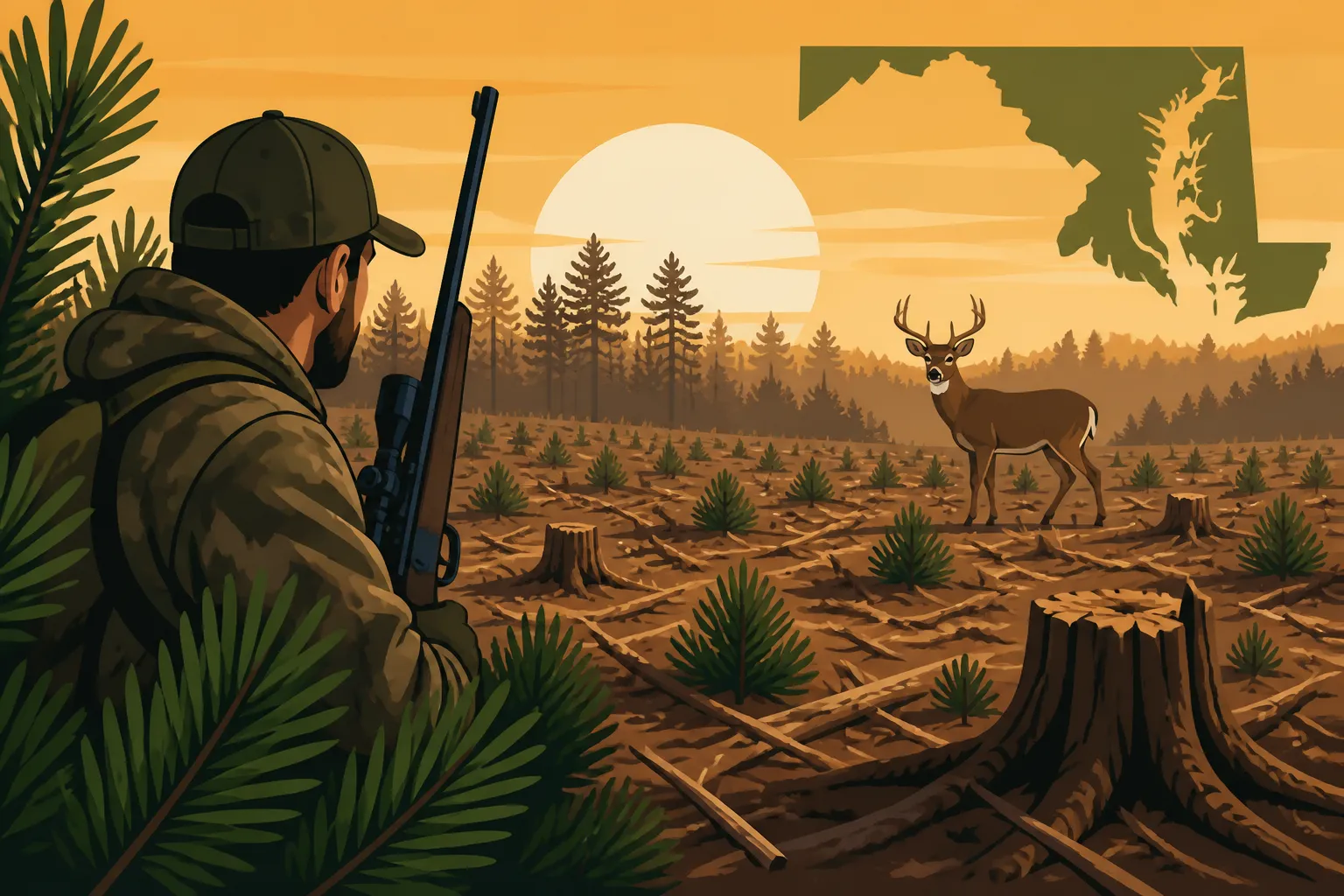
There’s a unique challenge that many Maryland deer hunters face, especially on the Lower Eastern Shore or any area with significant timber operations: the dreaded loblolly pine cutover. You know the sight – a once-forested tract now a tangled, impenetrable mess of stumps, logging slash, and dense, thorny regrowth. It looks like a wasteland to us, but to a whitetail, it’s a fortress, a sanctuary, and often, a dinner plate. Trying to hunt these areas can feel like pushing through a briar patch blindfolded, leaving many hunters frustrated and wondering if it's even worth the effort. But trust me, with the right approach, these seemingly impossible tangles can become absolute deer magnets, and this guide is here to break down exactly how to unlock their potential.
Understanding the Loblolly Pine Cutover Ecosystem
Before you can effectively hunt a loblolly pine cutover, you really need to get inside the mind of a deer and understand why they love these places that seem so inhospitable to us. It’s not just random, unmanageable cover; it’s a vital part of their survival strategy, especially in areas where hunting pressure is high.
Why Deer Seek Out Cutovers
Imagine you’re a deer. What are your biggest needs? Food, water, and cover, right? Loblolly pine cutovers often provide an incredible trifecta, though the emphasis shifts with the age of the cut. In the first few years after a clear-cut, sunlight floods the forest floor, igniting a boom of new growth. We're talking tender herbaceous plants, briars, small saplings, and a burst of forbs that are incredibly palatable to deer. It’s a literal smorgasbord, a buffet line of fresh nutrition that simply doesn't exist under a mature, shaded pine canopy. Deer will browse these areas heavily, especially in the growing season. As the pines begin to regenerate and grow taller, the cover becomes denser, offering incredible thermal protection from harsh winter winds and scorching summer sun. This dense tangle also offers unparalleled security cover. A deer can bed down in the middle of a thicket, virtually invisible, knowing that anything approaching will have to fight its way through a noisy, scent-trapping maze of vegetation. It’s their ultimate safe zone from predators, including us hunters. This is particularly true for older, wiser bucks who become masters at finding the thickest, nastiest spots to hide out. You might be hunting White-Tailed Deer in Maryland just a stone's throw from a major road, but if there's a good cutover, those deer will feel completely secure.
The Stages of a Cutover and Deer Use
Not all cutovers are created equal, and their value to deer changes dramatically over time. A freshly cut area, perhaps a year or two old, is often all about the immediate explosion of tender browse. Deer might feed heavily here, especially at night or during low-light hours, but they might still seek denser, older cover for bedding if it's nearby. The real sweet spot for hunting often comes when the regrowth is three to eight years old. At this stage, the young pines, briars, and other vegetation are typically head-high or taller, forming an almost impenetrable wall. This is prime bedding and escape cover. Deer can move through it relatively easily on their established trails, while a human struggling through makes enough noise to alert every creature within a quarter-mile. Beyond eight to ten years, as the young pines start to form a closed canopy, they shade out the understory once more, and the browse value begins to diminish. It transitions from a supermarket to more of a travel corridor or a place for bedding if it remains exceptionally thick. Knowing these stages can help you prioritize which cutovers to focus your efforts on.
Scouting Strategies for Loblolly Pine Cutovers
You absolutely cannot just waltz into a cutover blind and expect to find deer, let alone shoot one. The sheer density makes casual hunting nearly impossible. Effective scouting, whether it’s before the season or even during, is the single most critical step to success.
Using Aerial Imagery and Topographical Maps
Your scouting begins long before you set foot in the woods, often from the comfort of your home. Platforms like onX Hunt are invaluable here. Start by identifying recently timbered areas. Look for patterns: where does the cutover border mature timber? Are there unlogged islands of pines or hardwoods within the cut? Do old logging roads or creek bottoms bisect the area? These features create natural funnels and travel corridors that deer will use, even in the densest cover. Mature timber adjacent to a cutover is often a transition zone; deer will feed in the thick stuff and then filter back into the older woods to bed or vice-versa. Pay close attention to subtle elevation changes, even slight ones, which can create micro-habitat variations that deer exploit. A small rise, a slightly drier patch, or a subtle dip might be just enough to offer a preferred bedding spot. Plot out potential entry and exit routes, focusing on wind direction and minimizing disturbance. You want to know exactly how you're getting in and out without alerting every deer in the county. Scouting Maryland Public Land With Aerial Photos is a great resource to learn more about this.
Boots-on-the-Ground Reconnaissance
Once you've done your digital homework, it's time to get your boots muddy. This is where the real work, and the real frustration, often begins. Cutovers are tough to navigate. You'll need durable pants, a thick jacket, and maybe even a machete in some spots. Your goal isn't to walk every square foot, but to identify the key deer highways. Look for well-worn trails, especially those that run along the edges of the cutover, or those that connect it to other habitat features like water sources, mature timber, or agricultural fields. Within the cutover itself, look for internal trails. Deer often create tunnels through the densest brush. These are gold. If you find heavy rub lines or substantial scrape lines within or directly bordering a cutover, you've hit a jackpot. This tells you bucks are not just passing through, but actively living and marking their territory there. These are excellent spots to consider hanging a stand if conditions allow, or to focus a still-hunting effort. Be patient, move slowly, and mark your findings on your GPS (again, onX Hunt is fantastic for this). Think about Reading Sign in Maryland Mountain Timber – the same principles apply, just in a much thicker setting.
Hunting Techniques for Dense Cover
Now for the exciting part: actually hunting these beastly places. It requires a different mindset and different tactics than hunting open hardwoods or agricultural fields. Patience, stealth, and adapting to the conditions are paramount.
Still-Hunting the Thickets
Still-hunting is perhaps the most effective way to hunt a dense loblolly pine cutover as a solo hunter. This isn't about covering ground; it's about covering it slowly. We're talking one step, stop, scan for five minutes, then another step. Your eyes and ears are your primary tools. You’re looking for horizontal lines in a vertical world – the back of a deer, an ear flick, the subtle twitch of a tail. Listen for everything: a twig snap that isn't yours, the rustle of leaves that's too heavy for a squirrel, the distinct sound of a deer chewing on browse. The wind is your absolute best friend here. Always hunt into the wind, or with a quartering wind, allowing your scent to be carried away from where you expect deer to be. When you move, take two or three steps, then freeze. Look, listen, and slowly pivot your head, scanning every angle. Deer will often let you walk right past them if you're making constant noise, but if you stop, they get nervous, and that's when they might move, giving you a shot. This method is incredibly demanding, both physically and mentally, but it often puts you right on top of a bedded deer. You might only cover a few hundred yards in an hour, but those yards will be incredibly productive.
Strategic Stand Placement and Ambush Points
While still-hunting is great, sometimes a stand can be the ticket, especially if you've done your scouting homework. Focus on placing stands on the edges of cutovers, particularly where they transition into mature timber, food plots, or creek bottoms. Deer often use these edges for travel, moving from the security of the thick cover to more open feeding areas, especially during the last hour of daylight or first hour of dawn. Look for pinch points, old logging road intersections, or where a well-used trail exits the dense cover. If the cutover is large, look for unlogged "islands" of older trees or small hardwood hammocks within the cutover. These isolated pockets often act as natural hubs for deer activity and can be fantastic ambush points. Setting up a stand here allows you to see further into the thick stuff and catch deer moving between bedding and feeding. Portable ladder stands or hang-on stands are often best as they can be moved relatively easily. Remember, in these dense areas, your shot opportunities will be close and quick. Practice shooting at close range, under 30 yards, to ensure you can make an ethical shot when the moment comes. Consider Hanging a Stand on a Maryland Farm Edge for more tips on placement.
The Art of the Deer Drive (Group Hunting)
For those hunting with a group, deer drives can be incredibly effective in dense cutovers. This isn't a casual stroll; it requires careful planning and communication. Designate drivers and standers. The drivers move slowly and deliberately through the thickest parts of the cutover, pushing deer towards the standers who are positioned on known escape routes, trails, or open edges. The key is to keep the drive slow and controlled. Drivers should pause frequently, making enough noise to keep the deer moving, but not so much that they bust out blindly. Standers need to be absolutely still, patient, and prepared for a fast-moving shot. Safety is paramount during a drive. Everyone must know each other's positions, wear plenty of How Much Blaze Orange Maryland Requires, and adhere to strict shooting lanes. This can be an excellent way to push reluctant bucks out of their secure bedding areas in mid-day.
Here's a quick comparison of these methods:
| Hunting Method | Ideal Situation | Pros | Cons |
|---|---|---|---|
| Still-Hunting | Solo hunter, high density, unpredictable deer | Very stealthy, puts you right on bedded deer, adaptable | Physically demanding, slow, limited visibility, few shots |
| Stand Placement | Known travel routes, edges, internal pockets | Less movement, can cover multiple trails, patient hunting | Limited to one spot, getting in/out can spook deer |
| Deer Drive | Group of hunters, very dense cover, mid-day | Effective for pushing out bedded deer, covers large area | Requires group coordination, safety critical, can be chaotic |
Essential Gear and Safety Considerations
Hunting a loblolly pine cutover isn't like walking through a manicured hardwood forest. The environment itself presents challenges that demand specific gear and an unwavering focus on safety.
Navigating the Tangle
Forget your jeans and light jacket. For cutovers, you need serious brush-resistant clothing. Think heavy-duty canvas pants, briar-proof chaps, or specialized hunting apparel designed for thick cover. These areas are notorious for thorns, sharp branches, and general nastiness that will shred ordinary clothes. Good, sturdy boots are also a must, preferably waterproof, as cutovers can often hold water or border marshy areas. Navigation can be a nightmare in these featureless, dense environments. A reliable GPS unit or a smartphone with a mapping app like onX Hunt is absolutely non-negotiable. Mark your vehicle, your entry point, any significant sign you find, and plan your route carefully. It’s incredibly easy to get disoriented once you step into the thick stuff, even on familiar ground. Knowing Finding Maryland Property Lines Before You Hunt is also critical, especially if the cutover borders private property.
Visibility and Communication
Blaze orange is not just a legal requirement in many seasons; it’s a critical safety tool in dense cover. Wear more than the minimum if you can. Cutovers drastically limit visibility, making it harder for other hunters to see you, especially if you're moving slowly or are partially obscured. If you're hunting with a group, maintain communication. Two-way radios are excellent for this, allowing you to coordinate drives or simply check in on each other’s positions without making a lot of noise. When hunting solo, always let someone know where you’re going and when you expect to be back. Cell service can be spotty in remote cutovers, so don’t rely solely on your phone for emergency communication.
Packing for the Unexpected
Beyond your weapon and basic hunting gear, a small, well-stocked daypack is crucial. Water, high-energy snacks, a small first-aid kit (including supplies for cuts and scrapes from thorns!), a reliable flashlight or headlamp (even if you plan to be out before dark, things happen), and a basic survival whistle are all good additions. Remember, getting a deer out of a dense cutover can be a Herculean task. Consider bringing a sturdy drag rope or a game cart if the terrain allows for it on the edges. Field dressing a deer in warm weather, which can happen during the Maryland Archery Season Opening Day in September, also presents its own challenges. You'll want gloves and to work quickly. Always be prepared for your hunt to take longer and be more physically demanding than you anticipate.
Hunting a loblolly pine cutover might not be glamorous, but it is incredibly rewarding when you finally connect with a deer that felt truly unhuntable. It forces you to hone your skills, slow down, and truly understand the deer's world. With careful scouting, strategic hunting, and the right gear, these dense tangles can become your secret weapon in the Maryland woods.
Disclaimer
This article is for general informational purposes only and does not constitute professional advice. Laws, prices and regulations vary by location and change over time. Consult a qualified professional for guidance on your specific situation.