Spot-and-Stalk Bear Hunting Maryland’s Mountains
Drawing a Maryland bear permit is tough enough, but the real challenge begins when you hit the rugged mountains of Western Maryland with a spot-and-stalk strategy in mind. This method, while incredibly rewarding, demands a deep understanding of bear behavior, the terrain, and sheer physical endurance. If you're looking to break down the complexities of finding and approaching one of Maryland's impressive black bears on their home turf, this comprehensive guide is for you.
Understanding Maryland's Bear Habitat in the Mountains
Maryland's black bear population has seen a remarkable comeback, primarily concentrated in the western counties. These aren't your typical flatland woods; we're talking about the Allegheny Mountains, a landscape defined by steep ridges, deep hollows, and dense forest. Successfully spot-and-stalking a bear here means truly understanding where they live and how they use this challenging environment.
Identifying Prime Bear Country
When you think of bear habitat in Maryland, picture the sprawling forests of Garrett and Allegany counties. Areas like Savage River State Forest and Green Ridge State Forest are classic examples of where these magnificent animals roam. These state lands offer a mosaic of mature hardwoods, dense conifer thickets, and regenerating clear-cuts, all crucial for a bear's life cycle. Mature oak stands are particularly vital, especially during fall when acorns drop. Bears will travel significant distances to gorge on this high-energy food source as they prepare for winter hibernation. Look for areas with a good mix of these features, often near water sources, which bears utilize heavily for drinking and cooling off, especially during warmer hunting days.
Another critical habitat feature is dense cover. Bears need places to bed down, feel secure, and escape pressure. This often means thick laurel and rhododendron patches, impenetrable multiflora rose, or dense stands of young pines. While these areas are almost impossible to penetrate on foot without making a racket, understanding their presence helps you predict where a bear might retreat to after feeding in a more open area. Using mapping tools, like the ones available on GoHunt, to identify these different habitat types can give you a massive advantage even before you step foot in the woods. Analyzing aerial photos for timber cuts on Maryland forest land and identifying transition zones between different forest types can reveal travel corridors and feeding grounds.
Seasonal Movements and Food Sources
Bear movements in Maryland are heavily dictated by the season and, most importantly, food availability. In the early fall, during Maryland's short bear season, bears are typically in hyperphagia, meaning they are eating almost constantly to build up fat reserves. This makes high-calorie mast crops, primarily acorns, incredibly attractive. A hot oak flat, especially one near a bedding area, can be a magnet for bears. Conversely, if the acorn crop is poor, bears might shift to other food sources like wild grapes, black cherries, or even agricultural crops in fringe areas.
Later in the season, if the permit hunt extends into colder weather, bears might start focusing more on denning sites and moving less frequently, or at least less openly during daylight hours. Early season, however, is all about food. Therefore, your scouting efforts should heavily involve finding these critical food sources. Don't just look for acorns on the ground; look for evidence that bears have been there. Torn-up logs, overturned rocks, and scat filled with acorn hulls are all indicators. Understanding what Maryland bears eat in fall is paramount to locating them. Their movement patterns also dictate where you'll find them. They'll often feed at dawn and dusk, retreating to thick cover during the day. This is why glassing clear-cuts and open timber at first light or last light is a classic spot-and-stalk tactic.
The Art of Spot-and-Stalk for Black Bears
Spot-and-stalk hunting for black bears in Maryland's mountains is a thrilling endeavor that tests every aspect of a hunter's skill set. It's a delicate dance of observation, stealth, and precise execution in unforgiving terrain.
Glassing Techniques in Mountain Terrain
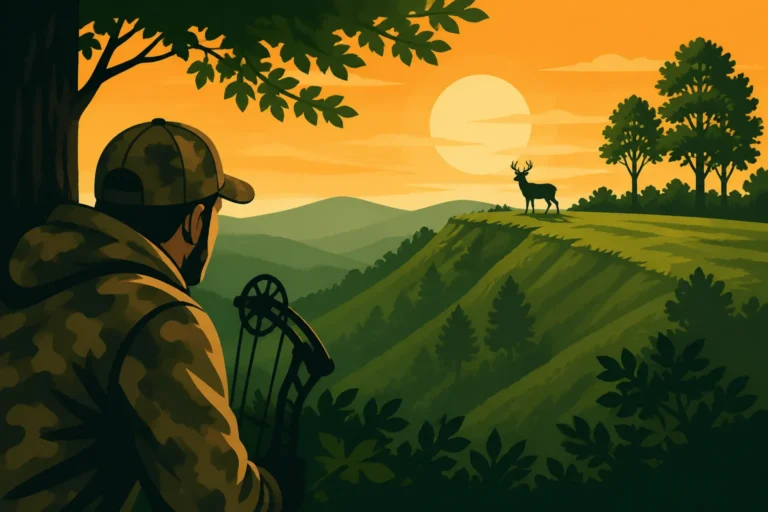
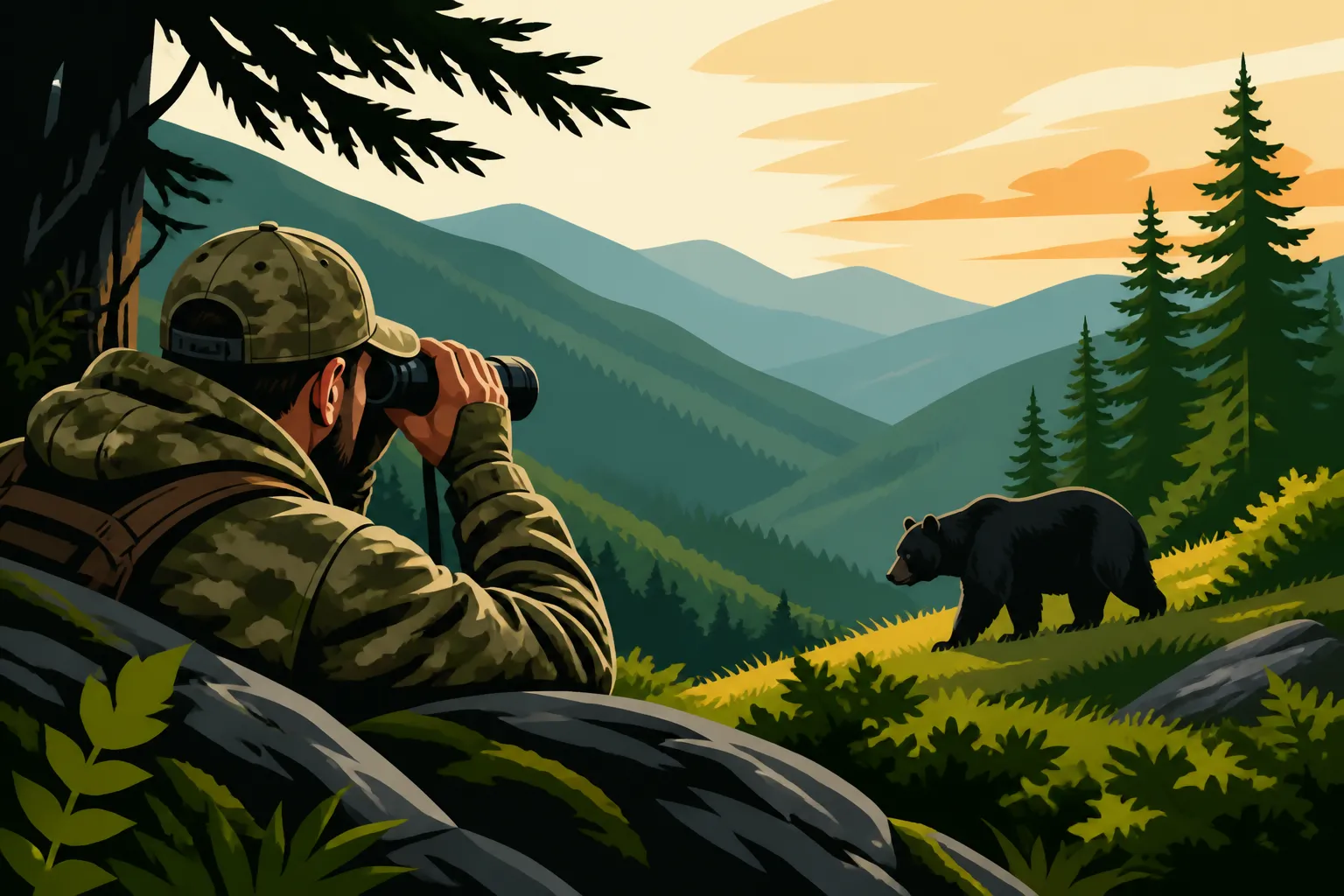
The "spot" in spot-and-stalk is arguably the most critical component, especially in the vast, broken landscapes of Western Maryland. You're not just casually looking; you're systematically dissecting the landscape with high-quality optics. Find a high vantage point – a ridge top, a clear-cut edge, or even a steep hillside – that overlooks potential feeding areas or travel corridors. Glassing a Western Maryland clear-cut for bear is a prime example of this strategy. These openings, especially those with new growth, can be excellent places for bears to browse or find small berries.
Start your glassing session slowly, meticulously scanning every shadow, every stump, and every patch of brush with your binoculars or a spotting scope. Bears aren't always black; they can appear brown or even cinnamon, and their dark coats often blend seamlessly with shadows or burnt timber. Look for anomalies: a patch of darker fur that seems out of place, a subtle movement, or the distinct rounded shape of a bear's back or head. Don't rush. Spend 15-30 minutes, sometimes longer, in one spot before moving on. Often, a bear that looked like a stump will slowly reveal itself by moving an ear or lifting its head. The sun angle also plays a huge role; sometimes, waiting for the sun to hit a certain slope can illuminate a hidden bear.
Stalking Strategies and Wind Awareness
Once you've spotted a bear, the real work of the "stalk" begins, and this is where Maryland's mountains can truly challenge you. The first rule of any stalk is the wind. Black bears have an incredible sense of smell, far superior to their eyesight. If the bear gets a whiff of you, the hunt is over. Always approach from downwind, even if it means taking a significantly longer, more difficult route. This might require circling an entire ridge or dropping into a hollow and coming back up. Understanding wind and thermals in Western Maryland terrain is non-negotiable. Mornings typically see thermals rising as the sun heats the ground, while evenings often have them falling into hollows. You must anticipate these shifts and plan your approach accordingly.
Movement must be slow, deliberate, and silent. Every step should be calculated. Watch for loose rocks, fallen branches, and crunchy leaves. You're trying to move like a ghost through the woods. Use terrain features like creek beds, ridge lines, or thick stands of trees to conceal your approach. Don't skyline yourself on a ridge; stay just below the crest. If the bear is feeding, take advantage of moments when its head is down or it's momentarily obscured by brush. It's often a game of stop-and-go, moving a few steps, then pausing for several minutes, scanning the bear and its surroundings for any signs of alarm. The goal is to close the distance to a comfortable shooting range without alerting the animal to your presence. Remember, these mountains are dense, and a bear can disappear into thick cover in seconds.
Essential Gear for Mountain Bear Hunting
Successfully hunting black bears in Maryland's mountains requires more than just a hunting license and a rifle. The right gear can make or break your hunt, influencing everything from your ability to spot game to your safety and comfort in rugged terrain.
Optics Are Key for Spotting
As discussed, optics are absolutely non-negotiable for spot-and-stalk bear hunting. You'll need high-quality binoculars, at minimum, and ideally, a spotting scope mounted on a lightweight tripod. For binoculars, aim for a 10×42 or 12×50 magnification. Brands like Vortex, Leupold, and Maven offer excellent clarity and durability that can withstand the rigors of mountain hunting. Don't skimp here; the ability to resolve fine details at long distances is what separates a successful spotter from someone just looking at trees.
A spotting scope, often in a 15-45x or 20-60x range, will allow you to scrutinize a distant object you've identified with your binoculars. This helps you confirm whether it's actually a bear, assess its size, and determine a potential stalk route. Using a sturdy, yet lightweight carbon fiber tripod for your spotting scope is crucial for steady viewing, especially when spending long periods glassing. Even for your binoculars, consider a bino harness; it keeps your optics secure and readily accessible, and many models distribute the weight comfortably across your chest, which is a blessing on steep climbs. Remember, the better you can see, the less you'll have to move, minimizing your chances of spooking game or wasting energy on fruitless stalks.
Weapon Choices for Black Bears
When it comes to firearms for black bear hunting in Maryland, ethical and effective harvesting is the priority. Black bears are hardy animals, and a clean, quick kill is paramount. While Maryland's legal weapons by county rules might allow various options, a powerful rifle cartridge is generally preferred for bear. Popular choices often include calibers like .30-06 Springfield, .300 Winchester Magnum, .308 Winchester, or even larger options like the .338 Winchester Magnum. The key is to use a bullet designed for large, thick-skinned game, which will retain its weight and penetrate deeply to reach vital organs. Premium bonded or monolithic bullets are excellent choices.
For those considering archery equipment, the challenge intensifies. You'll need a compound bow with sufficient draw weight (typically 60 lbs or more) and well-tuned, heavy arrows fitted with sharp, durable broadheads. Shot placement is even more critical with archery equipment, and generally, you'll need to get much closer to the bear than with a rifle. Regardless of your weapon choice, familiarity and proficiency are essential. Spend ample time at the range, practicing from various field positions, as you never know what kind of shot opportunity the mountains will present. Knowing which weapon season to spend your buck tag (or bear permit in this case) on means knowing your personal limits and your weapon's capabilities.
Clothing and Footwear for Rugged Terrain
Your clothing and footwear choices can profoundly impact your comfort, safety, and success. Maryland's mountain weather can be unpredictable, swinging from mild to cold, rainy to clear, all within a single day. Layering is your best friend. Start with a moisture-wicking base layer, add insulating mid-layers (fleece or synthetic down), and top it off with a waterproof and windproof outer shell. Choose quiet fabrics that won't rustle loudly when you move through brush. Earth tones or camouflage patterns that blend with the Western Maryland timber are appropriate.
Footwear is equally critical. You need sturdy, waterproof hiking boots with excellent ankle support and aggressive tread for traction on steep, rocky, and often wet terrain. Break them in well before your hunt to avoid blisters. Many hunters opt for boots with a stiff sole for better support when side-hilling. Don't forget good quality wool or synthetic socks to wick away moisture and prevent blisters. Given the potential for encountering other hunters on public land, wearing sufficient blaze orange is also a legal requirement and a critical safety consideration in Maryland.
| Essential Gear for Spot-and-Stalk Bear Hunting | Description | Why It's Crucial |
|---|---|---|
| High-Quality Binoculars | 10×42 or 12×50 magnification, waterproof, fog-proof. | Locating bears at long distances and identifying subtle movements. |
| Spotting Scope & Tripod | 15-45x or 20-60x magnification, lightweight carbon fiber tripod. | Detailed observation, confirming bear identity, assessing size, planning stalks. |
| Rifle & Ammunition | .30-06, .308, .300 Win Mag with premium, heavy-for-caliber bullets. | Ethical, quick, and humane harvest of a resilient animal. |
| Backpack (30-50L) | Durable, comfortable, capable of carrying gear and potentially meat. | Transporting essentials, water, food, and game meat out of tough terrain. |
| Layered Clothing System | Moisture-wicking base, insulating mid-layers, waterproof/windproof outer shell. | Adapting to changing mountain weather, staying warm/dry, moving quietly. |
| Sturdy Hiking Boots | Waterproof, ankle support, aggressive tread, broken in. | Traction, stability, comfort on steep, uneven, and potentially wet ground. |
| Mapping Device (GPS/Phone App) | GPS unit or smartphone with robust hunting app (e.g., GoHunt with downloaded maps). | Navigation, tracking movements, marking spots, understanding property lines, ensuring you don't get lost. |
| First-Aid Kit | Basic supplies for cuts, blisters, sprains, emergency blanket. | Addressing minor injuries and emergencies in remote areas. |
| Water & Snacks | Ample hydration and high-energy food. | Maintaining energy and preventing dehydration during strenuous climbs and long days. |
| Blaze Orange Vest/Hat | Meets Maryland's visibility requirements. | Crucial safety measure, especially on public land during open seasons. |
| Bear Spray (optional but recommended) | High-potency capsaicin spray. | Non-lethal defense against unexpected bear encounters. |
Reading Bear Sign and Behavior
Understanding bear sign and behavior is like reading a secret language in the woods. It gives you clues about their presence, their recent activities, and even their intentions, which is invaluable when you're trying to locate one in Maryland's vast mountain forests.
Scat, Tracks, and Rub Marks
When you're out scouting or actively hunting, keep your eyes peeled for distinct bear sign. Bear scat is highly variable, depending on their diet. In the fall, you'll often find scat packed with acorn hulls, wild grape seeds, or apple remnants if they've been near an orchard. Fresh scat, still moist and odorous, tells you a bear has been in the area very recently. Bear tracks are also distinctive: five toes, usually with visible claw marks, and a larger heel pad than a canine. The hind footprint can sometimes look eerily similar to a human's. Look for these tracks in soft soil near water sources, muddy trails, or logging roads. If you're lucky enough to find a track in fresh snow, it's like a roadmap.
Beyond scat and tracks, look for rub marks on trees. Bears rub against trees to mark their territory, scratch an itch, or even to shed fur. These rubs often occur on larger trees, and you'll see hair caught in the bark or mud streaks where they've rubbed. Similarly, claw marks on trees, especially larger ones, can indicate a bear has climbed to access nuts or simply to rest. Overturned rocks or torn-up logs are signs of a bear foraging for grubs and insects. The freshness of these signs will tell you how recently a bear has been active there, helping you narrow down your search area significantly.
Understanding Bear Feeding Patterns
As mentioned, black bears in Maryland are primarily driven by food, especially in the fall. Their feeding patterns dictate much of their movement. In areas with abundant mast crops like acorns, bears will often establish a routine, moving from bedding areas to prime feeding grounds, often at dawn and dusk. They might spend hours in a single oak flat, methodically consuming acorns. If you can identify these feeding areas, you've found a high-probability spot for a bear encounter.
However, bears are opportunistic omnivores, and their diet can shift. If acorns are scarce, they might turn to other natural foods or even agricultural fields. Look for signs of browsing on berry bushes, disturbed corn fields, or even broken branches in apple orchards. A bear's sense of smell is its primary tool for finding food, so wind direction carries scents of food from miles away, guiding their movements. When scouting, think about where the most attractive food sources are and how a bear might travel to them from its bedding areas. These travel corridors, often along benches or through saddles, can be excellent ambush points or starting locations for a stalk.
Safety Considerations and Regulations
Hunting black bears in Maryland's rugged mountains requires not just skill but also a strong emphasis on safety and adherence to all regulations. The challenges of the terrain, combined with the presence of a powerful wild animal, demand vigilance.
Hunting Solo Versus With a Partner
Many hunters enjoy the solitude of a solo mountain hunt, and indeed, spot-and-stalk can be a very personal pursuit. However, when it comes to bear hunting in Western Maryland, especially in remote areas like Savage River State Forest, having a hunting partner or at least someone who knows your exact hunting location and expected return time is highly advisable. The terrain is unforgiving: steep slopes, dense thickets, and unpredictable weather can lead to accidents, from falls to sprained ankles. If you’re hunting alone and get injured, self-rescue can be incredibly difficult, and cell service can be spotty at best.
A partner also offers practical advantages. They can help with glassing, potentially spotting a bear you missed, or provide an extra set of eyes during a stalk. Most importantly, a partner is invaluable during the recovery phase. Packing a bear out of Savage River State Forest can be an immense physical undertaking, often requiring multiple trips and specialized equipment. A partner makes this monumental task safer and more manageable. If you do choose to hunt solo, be meticulously prepared: carry a fully charged phone, a GPS device with downloaded maps, a first-aid kit, and enough supplies to spend an unexpected night in the woods. Always inform someone of your detailed plans.
Bear Spray and Encounter Protocol
While black bears in Maryland are generally not aggressive towards humans, unexpected encounters can happen, especially if you surprise a sow with cubs or a bear on a fresh kill. It's always wise to carry bear spray and know how to use it. Bear spray is a non-lethal deterrent designed to temporarily incapacitate a bear, giving you time to retreat. Make sure it's easily accessible on your hip or chest, not buried in your backpack.
If you do encounter a bear at close range, the protocol is generally to make yourself look as large as possible, make noise (yell, bang pots), and slowly back away while facing the bear. Do not run, as this can trigger a chase response. If a bear approaches you, stand your ground, continue to make noise, and be prepared to use your bear spray if it closes to within 15-30 feet. Know the difference between a defensive charge (often a bluff charge, stopping short) and a predatory attack (rare but serious). In a predatory attack, fight back aggressively. Always be aware of your surroundings, especially when moving quietly through thick cover.
Maryland Blaze Orange Requirements
Safety for yourself and others in the woods is paramount. Maryland has strict blaze orange requirements during certain hunting seasons, including the firearms portion of the bear season. Hunters must wear a cap or outer garment exposing at least 250 square inches of solid fluorescent orange or pink, visible from all sides. This applies to deer, bear, and turkey hunters (except during the spring turkey season when camouflaged orange is sufficient).
While spot-and-stalk implies a quieter, less visible approach, wearing blaze orange is not just a legal obligation but a critical safety measure, especially on public lands where other hunters might be present. Even if you believe you're in a remote area, another hunter could be approaching or glassing from a distance. Don't compromise on visibility; your life, and the lives of others, depend on it. Always check the current Maryland blaze orange requirements before heading afield, as rules can occasionally be updated.
Post-Harvest Logistics and Tracking
Taking down a black bear in Maryland's mountains is a significant achievement, but the hunt isn't truly over until the animal is recovered, processed, and legally registered. The size and weight of a bear, combined with the rugged terrain, present unique logistical challenges.
Field Dressing and Cooling the Harvest
Once you've successfully harvested a bear, the immediate priority is to field dress it to begin the cooling process. A bear's thick fat layer can retain heat for a long time, potentially spoiling the meat, especially during warmer early season days. Quickly removing the internal organs is crucial. Make sure you have a sharp knife, game bags, and gloves. Be prepared for a significant amount of blood and stomach contents. Some hunters also remove the fat at this stage to further aid cooling, although this is more involved.
After field dressing, try to get air circulation around the carcass. If possible, prop it open or hang it to allow heat to dissipate. If you plan to quarter the bear for easier packing, doing so on the spot can save immense effort compared to dragging a whole bear. Having a solid game recovery plan, including knowledge of blood trailing in marsh grass after dark (even though this is mountains, the principle of following a blood trail in tough terrain applies) or any specific challenges for recovering a deer from a tidal marsh, can be adapted for bear. Even if you think the shot was perfect, always assume you'll need to track. Mark your shot location, the last place you saw the bear, and proceed cautiously on the trail.
Packing Out a Bear From Mountain Terrain
This is where the real physical exertion begins. A mature Maryland black bear can weigh anywhere from 200 to over 500 pounds, and trying to drag one out of a steep hollow is often impossible and unsafe. Quartering the bear and packing it out in pieces is the most practical method. This involves butchering the bear into manageable sections: typically two front shoulders, two hindquarters, backstraps, and possibly the head and hide. Many hunters will debone the meat to reduce weight even further.
You'll need a robust internal or external frame pack capable of carrying heavy loads. Game bags are essential to keep the meat clean and allow it to breathe. Plan your route carefully, ideally downhill to a trail or road, but often the terrain won't allow for an easy path. It might take multiple trips, even with a partner. Remember to budget ample time for this. If you are far back in the woods, starting the pack-out process immediately after the kill is vital to ensure the meat stays cool and doesn't spoil. This is another area where having a hunting partner is an enormous advantage.
Registering Your Harvest
Once the bear is out of the woods, the final step is legal registration. In Maryland, all harvested deer, turkeys, and bears must be registered. You can do this via phone, online through the Maryland Department of Natural Resources (DNR) COMPASS portal, or using their mobile app. You need to register your bear within 24 hours of harvest.
During registration, you'll provide details about your license, the date and time of harvest, the county, and the sex of the animal. You'll receive a confirmation number that you must write on your tag and attach to the bear. This is a critical step to ensure your harvest is legal and provides vital data for Maryland DNR to manage the bear population effectively. Failing to register your harvest within the deadline can result in fines and penalties. Familiarize yourself with how to register a Maryland deer by phone or app, as the process is similar for bears. This entire process, from shot to registration, makes for a complete and ethical hunt.
Disclaimer
Please note that hunting regulations, season dates, and license requirements can change. Always consult the official Maryland Department of Natural Resources (DNR) hunting guide and website for the most current and accurate information before planning your hunt. Safety should always be your top priority.