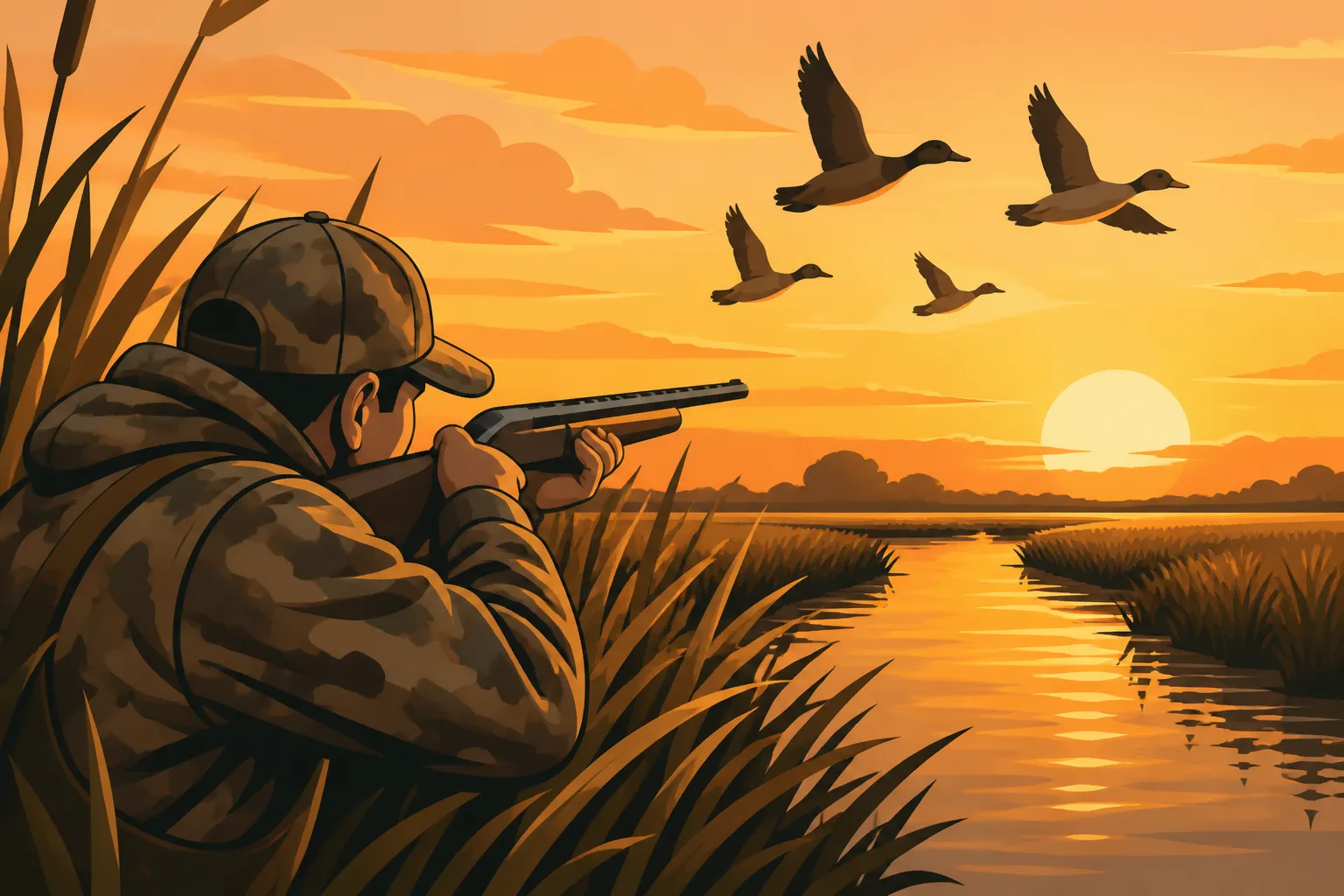
Hunting a Marsh Ditch Bank at Sunrise
There's nothing quite like the unique challenge and immense satisfaction of hunting Maryland's tidal marshes, especially when you're perched on a ditch bank as the sun peeks over the horizon. The thought of wading through the muck in the dark, wondering what unseen obstacles lie beneath the murky water, can be daunting for even seasoned hunters. This guide will walk you through everything you need to know to successfully hunt a marsh ditch bank at sunrise, making your efforts both safer and more productive.
Understanding the Marsh Ecosystem and Deer Behavior
Maryland's coastal marshes are a world unto themselves, a fascinating blend of land and water that demands a specialized approach from hunters. To be successful on a marsh ditch bank at sunrise, you first need to truly grasp the unique dynamics of this environment and how deer, particularly Sika deer, interact with it.
The Dynamics of Tidal Marshes at Dawn
Imagine standing in a marsh before daylight, the air thick with the smell of salt and decaying vegetation, the distant cries of waterfowl echoing across the flats. This is the realm of the tidal marsh, an environment constantly reshaped by the ebb and flow of the Chesapeake Bay. Tides are the undisputed rulers here, dictating everything from water depth to the accessibility of food sources for the resident deer. A ditch bank that was a dry, elevated travel corridor at low tide might be completely submerged and impassable at high tide.
This constant fluctuation means deer movement is often tied to the tides. At low tide, more marsh bottom is exposed, offering new foraging opportunities for grasses and aquatic vegetation. As the tide rises, deer might move to higher ground, like those very ditch banks, or seek refuge in isolated pine islands or dense phragmites stands. Understanding these patterns is crucial for predicting where deer will be, especially during the early morning hours. Dawn also brings with it shifting thermals; as the sun begins to warm the air, scent can start to lift, making your approach and stand placement even more critical. Many hunters often debate the merits of different footwear for these conditions, and you might find yourself asking if you need Hip Boots Versus Chest Waders in Sika Country.
Why Deer Use Ditch Banks
Ditch banks, though seemingly small features in the vastness of the marsh, are absolute magnets for deer movement. Think about it: they offer a slight elevation, often just enough to keep deer out of standing water or above the thickest, most tangled vegetation. This elevation provides both a drier walking path and a better vantage point for deer to survey their surroundings, offering a sense of security in an otherwise exposed environment. For Sika deer, which are naturally more elusive and prefer dense cover, these banks become their highways and hiding spots.
These narrow strips of higher ground also act as natural funnels, concentrating deer movement into predictable corridors. A deep ditch on one side and impenetrable reeds on the other essentially force deer to travel along the bank, making it an ideal ambush point. They'll use these banks not just for travel between bedding areas and feeding grounds, but also for browsing on the slightly different vegetation that often grows on the bank itself. Observing rub lines, scrapes, and fresh tracks along these banks during your scouting trips will quickly confirm their importance. Learning how to effectively interpret these signs is part of Reading a Marsh Trail for Sika Sign. It's a skill that pays dividends, particularly when you're trying to figure out where deer are coming from or going to.
Strategic Planning for Your Sunrise Hunt
You can’t just show up to a marsh ditch bank at first light and expect success. These hunts demand meticulous planning, foresight, and a deep understanding of the environment. Without proper preparation, you’re more likely to scare deer off or spend your morning shivering in the wrong spot.
Scouting and Stand Placement Considerations
The true work for a successful sunrise hunt begins long before opening day. Dedicated scouting is paramount. You need to identify key ditch banks that show consistent deer sign – fresh tracks, droppings, rubs, and active scrapes. Pay close attention to how these banks connect to other features like patches of higher ground, isolated clumps of loblolly pines, or dense stands of phragmites where deer might bed. Many experienced hunters rely heavily on mapping tools to gain an aerial perspective of these areas. Platforms like GoHunt, for instance, offer invaluable satellite imagery and public/private land overlays that can help you pinpoint promising ditch banks and plan your ingress and egress routes without disturbing deer.
When it comes to stand placement, think stealth and wind. The slight elevation of a ditch bank means deer will often travel along it, but they'll also be acutely aware of their surroundings. You need to be positioned where you have a clear shot, but also where your scent is carried away from their likely approach. Prevailing winds in the morning can be fickle, so having a couple of spots scoped out for different wind directions is a smart move. Portable ladder stands or hang-on stands can be effective if there are suitable trees along the bank, but often, a low-profile ground blind tucked into dense cover, like a thick stand of phragmites, is your best bet for concealment. Remember, deer in these marsh environments are incredibly wary, and any unnatural movement or scent will send them packing. Finding just the right spot can often feel like a puzzle, but a detailed approach to Setting a Stand on a Marsh Ditch Bank will guide you. For those new to public land, it’s always a good idea to refresh your knowledge on Scouting Maryland Public Land With Aerial Photos and also how to leverage digital tools by Using onX Layers for Maryland Land Status.
Gear and Clothing for a Marsh Sunrise
Hunting a marsh ditch bank at sunrise means dealing with a combination of cold, wet, and potentially muddy conditions, all while needing to remain silent and concealed. Your gear and clothing choices are absolutely critical to your comfort and success. First and foremost, quality waterproof waders are non-negotiable. Whether you opt for chest waders or a pair of sturdy hip boots will depend on the expected water depth, but ensure they are well-insulated if hunting in colder months. Layering your clothing is also key; you’ll be exerting yourself walking in, then sitting still for hours, so adjustability is a must to prevent sweating on the way in and getting cold later.
Beyond warmth and waterproofing, scent control is paramount. The marsh environment can be very open, and even the slightest breeze can carry your scent for long distances. Wear scent-free base layers and outer garments, and store them properly to minimize human odor. A reliable headlamp with a red or green light option is essential for navigating in the pre-dawn darkness without spooking game. Don't forget bug repellent, especially in the early archery season when mosquitoes and gnats can be relentless. Other critical items include a waterproof backpack to keep your essentials dry, a rangefinder, binoculars, and calls specifically for Sika deer if that's your target. Proper footwear, as mentioned earlier, is a common topic of discussion among marsh hunters, and a deeper dive into Hip Boots Versus Chest Waders in Sika Country can help you make an informed decision.
Executing the Hunt at First Light
The planning is done, your gear is packed, and the alarm clock rings hours before dawn. This is where execution becomes everything. Your approach, your patience, and your understanding of how deer move in those critical first moments of daylight will often determine the outcome of your hunt.
Approaching Your Stand in the Dark
The journey to your stand on a marsh ditch bank before the sun rises is perhaps the most critical, and often the most challenging, part of the entire hunt. You need to be incredibly stealthy, moving with purpose but absolute quiet. Every splash, every rustle, every misplaced step can send deer scurrying long before you even settle in. This often means embracing the slow, deliberate pace of a turtle, placing each foot carefully to minimize noise and avoid slipping in the mud or tripping over unseen obstacles. A good headlamp, as mentioned, is essential for safety, but use it sparingly and always on a low-light setting (red or green) to avoid alerting game.
It’s always a good practice to walk the path to your stand once or twice in daylight during scouting, taking note of any potential hazards or particularly noisy sections. By mapping out your ingress route with a tool like GoHunt, you can identify the quietest path that keeps you downwind of where you expect deer to be bedded or traveling. The goal is to arrive at your stand or blind at least 45 minutes to an hour before legal shooting light, giving the marsh time to settle back down after your disturbance and allowing you to get comfortable and ready for the first hint of daylight. This pre-dawn setup is crucial for increasing your odds. For those planning to hunt in the early morning, it's particularly useful to understand strategies like Wading Into a Dorchester Marsh Before Daylight.
What to Expect During the Sunrise Period
As the first sliver of light paints the eastern sky, the marsh comes alive, and with it, the deer activity often picks up significantly. This is when deer are typically moving from their nocturnal feeding areas back to their bedding cover. On a ditch bank, you'll want to be keenly aware of the wind. As the sun begins to warm the earth, thermals will typically start to rise, carrying your scent upward. This can be an advantage if deer are approaching from lower ground, but it's a dynamic factor you must always consider.
Deer often appear silently, emerging from dense cover like phragmites or loblolly pine edges. Be ready. Look for movement, not necessarily a whole deer, but a flick of an ear, a dark patch against the reeds. Sika deer, in particular, are notorious for their ghost-like ability to appear and disappear in the dense marsh vegetation. If you're targeting Sika, listening for their distinctive "whistle" can also be a dead giveaway to their presence, especially during the rut. Understanding Hunting Sika Stags During Their Fall Whistle or even Calling Sika Stags During the September Whistle can provide a significant edge. Patience is truly a virtue during this prime time; resist the urge to fidget or check your phone. Those first few hours after sunrise are often the most productive.
Post-Shot Strategy and Recovery in the Marsh
Congratulations, you've made a good shot! Now comes the next critical phase: safely and efficiently recovering your deer from the challenging marsh environment. This isn't your typical woodlot recovery; the marsh adds layers of complexity that require careful thought and preparation.
Tracking and Recovery Challenges
The immediate aftermath of a shot in the marsh demands discipline. Resist the urge to immediately jump down and track. Give the deer time, especially if it's a Sika, which can be incredibly tough and often runs further than you'd expect, even with a solid hit. Waiting 30 minutes to an hour, or even longer for a questionable hit, increases your chances of finding the deer bedded down and expired, rather than bumping it and forcing a longer, more difficult track. Tracking in the marsh presents unique hurdles. Blood trails can be sparse or quickly washed away by tidal waters, or simply absorbed by the absorbent marsh grass and mud.
Start by marking your shot location and the last place you saw the deer. Tools like GoHunt can be incredibly useful here, allowing you to drop pins on your exact location, the shot, and the last sighting, creating a virtual breadcrumb trail on your GPS map. This is particularly helpful in the monotonous, disorienting landscape of the marsh. Move slowly and deliberately, looking for bent grass, broken reeds, and subtle signs beyond just blood. Keep an eye on the water's edge and any deeper ditches, as wounded deer often seek water for refuge or to cool down. It’s a painstaking process, and a comprehensive guide on Blood Trailing in Marsh Grass After Dark can offer more detailed techniques, even if you’re tracking during the day. The challenges are amplified when trying to Recovering a Deer From a Tidal Marsh, so be prepared for a difficult task.
Field Dressing and Extraction
Once you’ve successfully located your deer, the next step is field dressing. If it's a warm sunrise hunt in early archery season, swift and thorough field dressing is paramount to preserving the meat. Getting the guts out quickly helps cool the carcass and prevents spoilage. Given the potentially wet and muddy conditions, try to get the deer onto the highest, driest ground available on the ditch bank or a nearby hummock before beginning. Have a sharp knife, gloves, and wet wipes handy.
Extracting a deer from a marsh can be back-breaking work. Unlike solid ground, you can't always drag a deer easily. The mud, water, and thick vegetation make every foot of movement a struggle. If you're hunting with a partner, it’s easier to take turns pulling. For heavier deer, or if you're alone, you might need to quarter the animal to make it manageable. For Sika deer, which are smaller than whitetails, quartering might not be necessary, but it's always an option. If you have access to a small boat or canoe, that can be a game-changer for extraction, allowing you to float the deer out. Always have a plan for how you'll get the deer out before you even step foot in the marsh.
Summary of Key Marsh Hunting Tips
| Aspect | Key Consideration | Importance |
|---|---|---|
| Tide Charts | Consult daily, understand impact on deer movement and access. | Crucial for predicting deer presence and safe navigation. |
| Scent Control | Strict regimen for clothing, gear, and personal hygiene. | Deer rely heavily on smell; minimizes alerting them. |
| Stealthy Approach | Slow, quiet movement to stand, using headlamp sparingly. | Prevents spooking deer before legal shooting light. |
| Wind Awareness | Monitor shifting thermals and wind direction constantly. | Dictates deer approach and your scent cone. |
| Scouting | Identify pinch points, fresh sign, bedding areas on ditch banks. | Locates high-probability ambush points. |
| Waders/Waterproof | Essential for comfort, safety, and staying dry in the marsh. | Prevents hypothermia and ensures a tolerable hunt. |
| Patience | Wait at least 30-60 minutes post-shot, observe surroundings. | Maximizes recovery chances, especially for Sika deer. |
| Extraction Plan | Know how you'll get the deer out before you start the hunt. | Avoids exhaustion and potential meat spoilage. |
| GPS/Mapping App | Mark trails, stand locations, and shot/last seen points (e.g., GoHunt). | Prevents getting lost, aids in tracking, and helps with future hunts. |
Disclaimer
Hunting is a challenging and rewarding pursuit that carries inherent risks. This guide is intended for informational purposes only and should not replace proper hunter education, local regulations, or personal judgment. Always consult the Maryland Department of Natural Resources (DNR) for current hunting laws, season dates, and licensing requirements. Ensure you have all necessary permits and adhere strictly to all safety guidelines. The marsh environment can be unpredictable and dangerous; always hunt with a buddy, inform someone of your hunting plans, and be prepared for changing weather and tidal conditions. Stay safe out there!