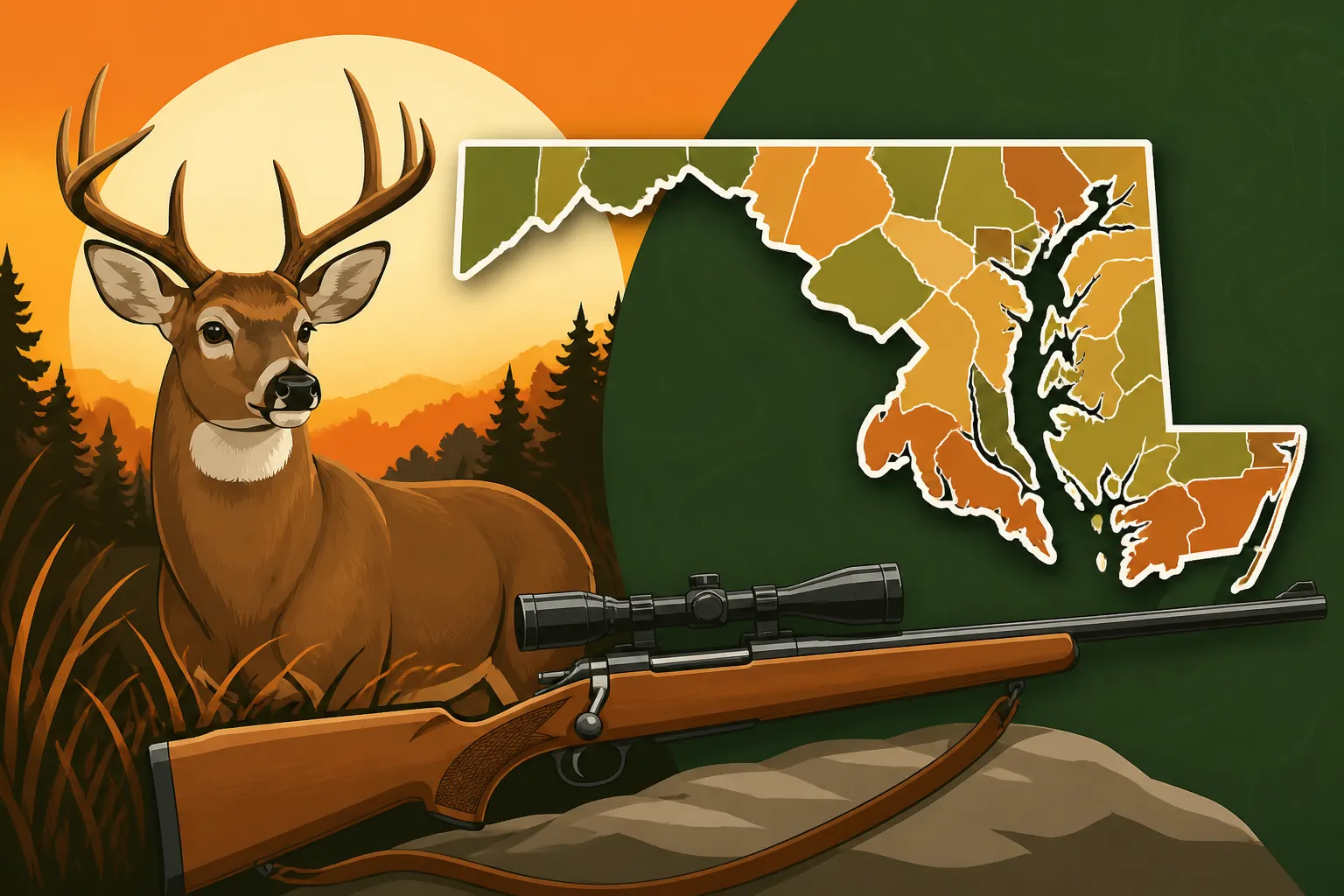
Maryland Legal Deer Rifles by County
Trying to figure out which rifle you can legally use for deer hunting in Maryland can feel like deciphering an ancient riddle, especially when you cross county lines. It's not as straightforward as just grabbing your favorite deer rifle and heading out. Maryland has a unique, sometimes confusing, patchwork of regulations that dictates what firearms are permissible for deer in different parts of the state. This guide will help you untangle those rules, clarify which rifles are legal in which counties, and ensure you're compliant and confident when you hit the woods.
The Patchwork of Maryland's Deer Weapon Regulations
Maryland's approach to deer hunting weapons isn't a "one size fits all" situation, and honestly, it can be a real headache trying to keep it all straight. The state is divided into two distinct deer management regions, Region A and Region B, and these regions form the fundamental basis for weapon restrictions. It's a system designed to balance hunter opportunity with public safety, particularly in areas with higher human population densities.
Historically, much of Maryland, especially the more populated eastern and central areas, was restricted to shotguns and archery equipment for deer hunting. The concern was always about the range and power of traditional centerfire rifles in suburban or semi-rural environments where houses might be closer together. However, over the years, as deer populations grew and hunting traditions evolved, there's been a gradual shift to allow more diverse weapon choices, including certain types of rifles. This change has been welcomed by many hunters who prefer the accuracy and ethical shot placement offered by rifles, but it's also introduced new layers of complexity to the regulations. Understanding these regional distinctions is the first critical step before you even think about loading your magazine. For a deeper dive into these areas, you might want to read more about Hunting Maryland's Two Deer Management Regions.
Why Region-Specific Rules Exist
The primary reason for these region-specific rules boils down to population density and safety. Imagine the sprawling, heavily wooded mountains of Western Maryland versus the relatively flat, often fragmented agricultural and suburban landscapes of the Eastern Shore or central Maryland. The risk profile for a high-powered rifle bullet traveling miles is vastly different in these two scenarios.
In the more densely populated areas, often classified under Region B, the goal is to minimize the potential for bullets to travel beyond the immediate hunting area. This is why shotguns with slugs were traditionally favored, as their effective range is significantly less than that of many centerfire rifles. As development continues, these concerns only become more pronounced. Maryland's Department of Natural Resources (DNR) has to constantly balance the desire of hunters to use their preferred equipment with the necessity of ensuring public safety in a state that is both rural and highly urbanized. It's a tough line to walk, and the regulations reflect that ongoing compromise, often leading to a system that feels a bit like a jigsaw puzzle with pieces that don't quite fit together perfectly at first glance.
Distinguishing Region A and Region B Counties
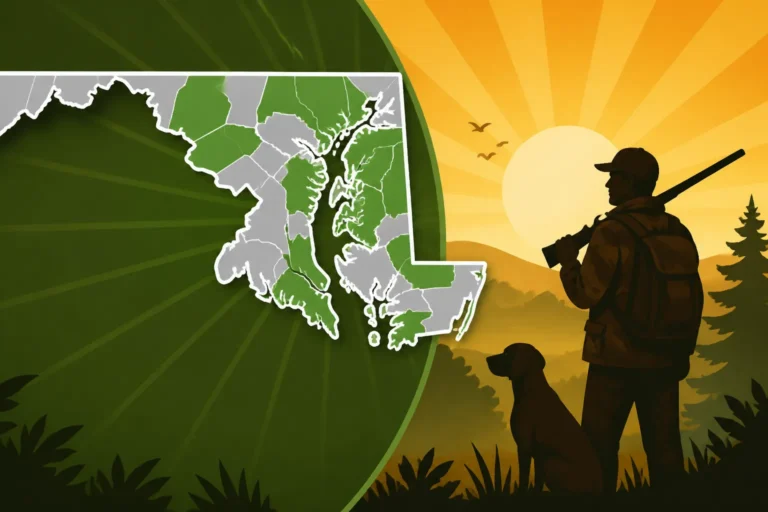
To simplify, Region A generally encompasses the more rural, mountainous western counties, while Region B covers the rest of the state, including the Eastern Shore, Southern Maryland, and the central, more populated areas.
- Region A Counties: These are typically Garrett, Allegany, and parts of Washington County. These areas are characterized by vast tracts of state forests, mountains, and generally lower population densities. Here, the traditional fear of a high-powered rifle bullet traveling too far is less acute, leading to more permissive rifle regulations.
- Region B Counties: This includes pretty much everywhere else – Dorchester, Caroline, Kent, Queen Anne's, Harford, Baltimore, Howard, Montgomery, Anne Arundel, Prince George's, Charles, St. Mary's, Calvert, and the remainder of Washington County not in Region A. These are the areas where the "shotgun-only" or "straight-wall cartridge" rules are more prevalent due to the higher population and agricultural-residential mix. If you're planning a hunt, knowing which region your target county falls into is paramount. Tools like GoHunt can be incredibly helpful here, offering detailed maps that clearly delineate these regional boundaries, helping you plan your hunt without second-guessing the local rules.
Hunting with Rifles in Maryland's Western Counties (Region A)
If you're a fan of hunting deer with a traditional centerfire rifle, Region A is where you'll feel most at home. These westernmost counties offer the greatest flexibility when it comes to legal deer firearms, reflecting their more rugged, expansive landscapes and lower population densities. It's a welcome reprieve for many hunters who prefer the precision and range that a rifle can offer, especially when targeting deer in the dense timber and steep terrain of the Appalachian foothills.
In Garrett, Allegany, and specified portions of Washington County, hunters have the green light to use a wide array of centerfire rifles chambered in cartridges typically associated with deer hunting. This includes popular calibers like .243 Winchester, .270 Winchester, .30-06 Springfield, .308 Winchester, and many others. The key here is "centerfire," meaning rimfire cartridges like the .22LR are not permissible for deer. This broad allowance gives hunters in Region A the freedom to choose a rifle that best suits their personal preference, hunting style, and the specific conditions they expect to encounter in the challenging mountain environment. Whether you're still-hunting through a Savage River oak flat or sitting on a green ridge ridgetop bench, having a reliable rifle in hand provides peace of mind.
Specific Rifle Calibers Permitted in Region A
When it comes to specific rifle calibers in Region A, the list is quite extensive, essentially including most commonly recognized centerfire rifle cartridges suitable for deer. There aren't arbitrary restrictions on barrel length or overall rifle length, beyond what is considered standard and safe for hunting.
To be clear, there's no official DNR list that says "you can use X, Y, and Z calibers." Instead, the regulation states that centerfire rifles are legal, generally implying any cartridge commonly accepted as ethical for deer hunting. This leaves some discretion to the hunter to choose an appropriate caliber. However, it's always wise to err on the side of caution and opt for calibers that are unequivocally effective for deer, such as:
- .243 Winchester: A popular choice for its flat trajectory and light recoil, effective for deer at reasonable ranges.
- .270 Winchester: A classic deer cartridge known for its speed and power.
- .30-06 Springfield: The quintessential American deer cartridge, capable of taking any North American big game.
- .308 Winchester: A compact and efficient cartridge, highly accurate and powerful enough for deer.
- 6.5 Creedmoor: A newer favorite, lauded for its excellent ballistics and mild recoil.
While most standard deer calibers are fine, always ensure you're using ammunition designed for hunting, not target shooting, with appropriate bullet construction for quick, humane kills. Moreover, remember that you need to be aware of Maryland's Deer Bag Limits and Antler Rule regardless of your chosen weapon.
Where Traditional Rifles Make Sense
Hunting with traditional rifles truly shines in the expansive, wild terrain of Western Maryland. These areas often feature large tracts of public land, such as the Savage River State Forest or Green Ridge State Forest, where long sight lines are possible, and the bullet travel is less likely to pose a risk to homes or structures.
Consider a scenario where you're set up on a clear-cut edge overlooking a distant logging road or across a mountain hollow. A modern rifle allows you to make an ethical shot at distances that would be impractical or unsafe with a shotgun or muzzleloader. Furthermore, the accuracy of a rifle can be a significant advantage when trying to pick through dense cover to find a clear shot lane, a common challenge in Maryland's mountain timber. If you're a hunter who enjoys scouting remote areas and taking advantage of elevation and terrain, then the rifle freedom in Region A is a major draw. For scouting, many hunters find that digital mapping platforms can really help identify these remote areas; a service like GoHunt can overlay public land boundaries and topography, making it easier to pinpoint promising hunting locations far from any residential areas.
Navigating Weapon Choices in Region B Counties
Stepping into Maryland's Region B counties means entering a different world when it comes to deer rifle regulations. For many years, the vast majority of Region B was strictly limited to shotguns with slugs, archery equipment, and muzzleloaders for deer hunting. This was, as we discussed, largely due to public safety concerns in more populated areas. However, recent changes have introduced new options, primarily in the form of straight-wall cartridge rifles, which offer rifle-like performance while addressing some of the safety concerns associated with traditional bottlenecked rifle cartridges.
These changes are significant because they allow hunters in many Region B counties to use a more precise and often more comfortable firearm than a shotgun. It's a great compromise that acknowledges hunters' preferences while still respecting the need for safety in areas where deer often roam close to human habitation. If you're planning on Hunting a Suburban Woodlot in Montgomery County or trying to get on a farm in Queen Anne's, understanding these straight-wall rules is absolutely essential.
Straight-Wall Cartridge Rifles: A Key Option
The introduction of straight-wall cartridge rifles has been a game-changer for deer hunters in many Region B counties. Unlike traditional rifle cartridges that "neck down" at the bullet, straight-wall cartridges maintain a consistent diameter from the case head to the bullet. This design characteristic generally results in less bullet travel distance compared to bottlenecked rifle cartridges, making them a safer option in areas with higher population densities.
The Maryland DNR specifically allows these in most Region B counties. Popular straight-wall calibers for deer include:
- .350 Legend: A relatively new cartridge designed specifically for states with straight-wall restrictions. It offers good velocity, energy, and a flat trajectory suitable for deer at typical hunting ranges.
- .450 Bushmaster: A more powerful option, delivering significant knockdown power with a heavier bullet. It's excellent for close to medium range.
- .45-70 Government: A classic big-bore cartridge that, while traditional, fits the straight-wall definition and is incredibly effective.
- .44 Magnum and .357 Magnum: While often associated with handguns, rifles chambered in these revolver cartridges are also legal straight-wall options, offering less recoil and more accuracy than their handgun counterparts.
When choosing a straight-wall cartridge, consider the typical range of your shots, recoil tolerance, and the availability of ammunition. These rifles provide an excellent bridge between the limited range of a shotgun slug and the extended reach of a traditional bottlenecked rifle. They bring a level of accuracy and comfort that many hunters find superior to a shotgun, making them an increasingly popular choice across Region B.
County-Specific Weapon Rules Table
Here's a breakdown of legal deer firearms by county. Always double-check the latest Maryland Hunting & Trapping Guide for any updates, as regulations can sometimes change.
| County (Primary Region) | Archery | Muzzleloader | Shotgun (Slugs) | Centerfire Rifle | Straight-Wall Cartridge Rifle | Airgun |
|---|---|---|---|---|---|---|
| Garrett (A) | Yes | Yes | Yes | Yes | Yes | Yes |
| Allegany (A) | Yes | Yes | Yes | Yes | Yes | Yes |
| Washington (A/B split) | Yes | Yes | Yes | Yes (Region A parts) | Yes (Region B parts, and A) | Yes |
| Frederick (B) | Yes | Yes | Yes | No | Yes | Yes |
| Montgomery (B) | Yes | Yes | Yes | No | Yes | Yes |
| Howard (B) | Yes | Yes | Yes | No | Yes | Yes |
| Carroll (B) | Yes | Yes | Yes | No | Yes | Yes |
| Baltimore (B) | Yes | Yes | Yes | No | Yes | Yes |
| Harford (B) | Yes | Yes | Yes | No | Yes | Yes |
| Cecil (B) | Yes | Yes | Yes | No | Yes | Yes |
| Kent (B) | Yes | Yes | Yes | No | Yes | Yes |
| Queen Anne's (B) | Yes | Yes | Yes | No | Yes | Yes |
| Talbot (B) | Yes | Yes | Yes | No | Yes | Yes |
| Caroline (B) | Yes | Yes | Yes | No | Yes | Yes |
| Dorchester (B) | Yes | Yes | Yes | No | Yes | Yes |
| Wicomico (B) | Yes | Yes | Yes | No | Yes | Yes |
| Somerset (B) | Yes | Yes | Yes | No | Yes | Yes |
| Worcester (B) | Yes | Yes | Yes | No | Yes | Yes |
| Anne Arundel (B) | Yes | Yes | Yes | No | Yes | Yes |
| Prince George's (B) | Yes | Yes | Yes | No | Yes | Yes |
| Charles (B) | Yes | Yes | Yes | No | Yes | Yes |
| St. Mary's (B) | Yes | Yes | Yes | No | Yes | Yes |
| Calvert (B) | Yes | Yes | Yes | No | Yes | Yes |
Note: "Airgun" refers to certain high-powered air rifles now legal for deer in Maryland.
Always confirm the specific regulations for the exact property or public land you plan to hunt, as some areas may have additional local restrictions beyond county-wide rules. For example, certain public lands might have their own specific weapon requirements.
Considerations for Suburban and Private Land Hunts
Hunting in Region B often means dealing with smaller parcels of land, closer proximity to residences, and strict safety rules. While straight-wall rifles offer improved performance, the overarching principle of knowing your backdrop and ensuring projectile containment remains paramount.
Many hunters in these areas rely on tree stands or ground blinds that offer elevated shots or direct bullet paths into safe backstops, such as thick timber or a hillside. If you're on private land, you might be involved in Deer Drives on Maryland Private Ground, where communication and strict adherence to safety zones are critical. Always communicate clearly with landowners and fellow hunters about your chosen weapon and its capabilities. Getting permission from landowners to hunt requires not just politeness, but also demonstrating a clear understanding and respect for safety, especially with any firearm. Using mapping apps from providers like GoHunt can help you visualize property lines and potential shot angles, ensuring you stay compliant with all setback rules. Remember, even with straight-wall rifles, responsibility rests squarely on the hunter.
Important Considerations Beyond the Rifle Itself
Understanding which rifle you can legally carry in Maryland is only one piece of the puzzle. Being a responsible and ethical hunter involves much more than just the firearm itself. There are several other crucial factors you need to consider to ensure a safe, compliant, and successful hunt, regardless of whether you're in the mountains of Garrett County or the farmlands of Dorchester. Ignoring these details can quickly turn a promising hunt into a frustrating or even dangerous situation.
From hunter education to understanding local land rules, every element plays a role in your overall experience and adherence to Maryland's conservation efforts. It's easy to get caught up in the excitement of weapon choice, but taking a step back to review the fundamentals will always serve you best.
Blaze Orange Requirements and Safety Protocols
One of the most critical safety protocols for any firearms hunter in Maryland is wearing adequate blaze orange. Maryland law is clear on this: during certain firearms seasons, hunters are required to wear a minimum amount of blaze orange to increase visibility and prevent accidents. This typically means a solid blaze orange hat and an outer garment (like a vest or jacket) worn above the waist, visible from all sides.
It's not just a recommendation; it's a legal requirement designed to make you easily identifiable to other hunters. Beyond the legal mandate, it's just plain smart hunting. Imagine still-hunting through thick brush in Western Maryland during firearms season; that splash of orange is your best defense against being mistaken for game. Even if you're hunting with archery gear during a firearms season, the smart choice is to wear blaze orange. Familiarize yourself with Maryland Blaze Orange Requirements to avoid any issues. Always treat every firearm as if it's loaded, keep the muzzle pointed in a safe direction, and be 100% sure of your target and what is beyond it before taking a shot.
Public Land Versus Private Land Restrictions
Maryland offers a substantial amount of Public Hunting Land in Maryland, including Wildlife Management Areas (WMAs) and State Forests, but access and weapon rules can sometimes differ from general county regulations. While the county dictates the broad framework for legal deer rifles, specific public land parcels might have more restrictive rules.
For example, a particular WMA within a Region B county might be shotgun/archery only, even if straight-wall rifles are generally permitted in that county. Conversely, some public lands might have specific managed hunts that allow weapons not typically allowed in that region for a limited time. Always consult the Maryland DNR website for specific public land regulations for the area you intend to hunt. This information is often listed under the individual WMA or State Forest pages. On private land, while you still must adhere to state and county laws, landowners may impose additional restrictions on the types of weapons allowed. Always discuss this with the landowner when you secure permission.
The Role of Hunter Education and Ethical Shot Placement
Regardless of the rifle you choose or the county you hunt in, fundamental hunter education is paramount. If you're a new hunter or an out-of-state visitor, completing Maryland Hunter Education Requirements is mandatory. These courses cover not just firearm safety but also wildlife identification, conservation principles, and ethical hunting practices.
Ethical shot placement is crucial. Just because a rifle can shoot accurately at a long distance doesn't mean you should take that shot if conditions aren't ideal. Wind, brush, animal movement, and your own skill level all play a role. A well-placed shot with a smaller, legal caliber is always superior to a poorly placed shot with a "magnum" rifle. Your goal as a hunter is a quick, humane harvest, minimizing suffering. Knowing your weapon's capabilities, your own limitations, and practicing regularly are essential for ensuring an ethical outcome. When combined with thorough scouting—perhaps using aerial photos with an app like GoHunt to identify deer travel corridors and optimal stand locations—you can increase your chances of a clean shot and a successful hunt.
Disclaimer
This guide is intended for informational purposes only and is not a substitute for the official Maryland Department of Natural Resources (DNR) hunting regulations. Hunting laws and regulations can change, and it is the hunter's responsibility to review and comply with the most current Maryland Guide to Hunting & Trapping. Always verify specific county and public land regulations before hunting.