Maryland Straight-Wall Rifle County Rules
Navigating Maryland's diverse hunting regulations can feel like trying to untangle a giant knot, especially when it comes to legal firearms. For many deer hunters, the desire to use a rifle in counties traditionally restricted to shotguns has been a long-standing frustration, often leading to confusion about what's actually permissible. This guide is here to shed light on Maryland's straight-wall rifle county rules, helping you understand where and how these specialized firearms fit into your hunting plans.
Understanding Maryland's Legal Weapons Landscape
Maryland's hunting regulations are designed to balance hunter opportunity with public safety, given the state's varied terrain, from dense western mountains to sprawling suburban areas and agricultural Eastern Shore farmlands. This often results in a patchwork of rules for legal weapons, creating significant headaches for hunters trying to stay compliant. The complexity can be daunting, and understanding the "why" behind these rules is key to grasping the straight-wall rifle allowances.
The Rationale Behind Weapon Restrictions
Historically, many of Maryland's more populated counties, particularly those designated as Region B, have restricted deer hunting to shotguns, muzzleloaders, and archery equipment. The primary concern? Public safety. Traditional centerfire rifle cartridges, like a .30-06 or .270, have a substantial effective range, with bullets capable of traveling several miles. In areas with homes, roads, and other infrastructure, this posed an unacceptable risk for stray projectiles. Shotguns, firing slugs, have a much shorter effective range, making them a safer option in these environments. However, shotguns can also be less accurate at longer distances compared to rifles, and for many hunters, the desire for rifle-like accuracy and performance in these zones persisted. This is where the innovation of the straight-wall rifle cartridge comes into play, offering a middle ground that balances ballistic performance with reduced range for safety.
General Rules for Rifles and Shotguns in Maryland
Before straight-wall cartridges gained wider acceptance, deer hunting with traditional centerfire rifles was generally confined to Maryland's less densely populated western counties, primarily within what's known as Region A. These are Garrett and Allegany counties, plus specific portions of Washington and Frederick counties, where vast tracts of forest minimize the risk of errant shots. In the rest of the state, Region B, shotguns firing single projectile slugs were the main firearm option for deer, alongside archery and muzzleloader hunting. This distinction meant hunters often had to own different firearms depending on where they hunted, adding to the expense and logistical challenges. It’s a classic scenario where rural and suburban hunting experiences diverge sharply, sometimes leaving hunters feeling limited by the tools they can bring to the field. If you’re planning your season, make sure you understand the general rules by checking out Maryland's Legal Weapons by County for a complete breakdown of what's allowed where.
Decoding Straight-Wall Rifle Regulations by County
The introduction of straight-wall cartridge rifles has been a game-changer for many Maryland hunters, providing a rifle option in areas where traditional centerfire rifles are prohibited. This move reflects a broader trend across states with diverse populations, aiming to expand hunting opportunities while maintaining safety. But like many regulations, it's not a blanket rule, and understanding the specifics by county is crucial.
Region A Versus Region B Considerations
Maryland divides its counties into two deer management regions, Region A and Region B, which have different rules for antlered deer bag limits, antlerless deer limits, and, crucially, legal weapons. Region A encompasses Garrett and Allegany counties, along with the Catoctin and South Mountain management units in Frederick and Washington counties. These are the more mountainous, less developed areas where traditional centerfire rifles have always been permitted for deer hunting. You can learn more about these distinctions in Hunting Maryland's Two Deer Management Regions.
Region B, on the other hand, covers the vast majority of the state, including the more suburban and agricultural counties. In Region B, centerfire rifles were historically prohibited for deer. This is precisely where straight-wall cartridge rifles now offer a viable alternative. The rationale is simple: straight-wall cartridges, characterized by their lack of a bottlenecked case (like .45-70 Government, .350 Legend, or .450 Bushmaster), are designed to produce a projectile with a shorter maximum range compared to bottlenecked cartridges, even though they can still be incredibly effective for hunting deer out to 200 yards or more. This makes them a safer option for more developed areas, opening up rifle hunting opportunities to a wider range of Maryland landscapes.
Specific Counties Permitting Straight-Wall Rifles
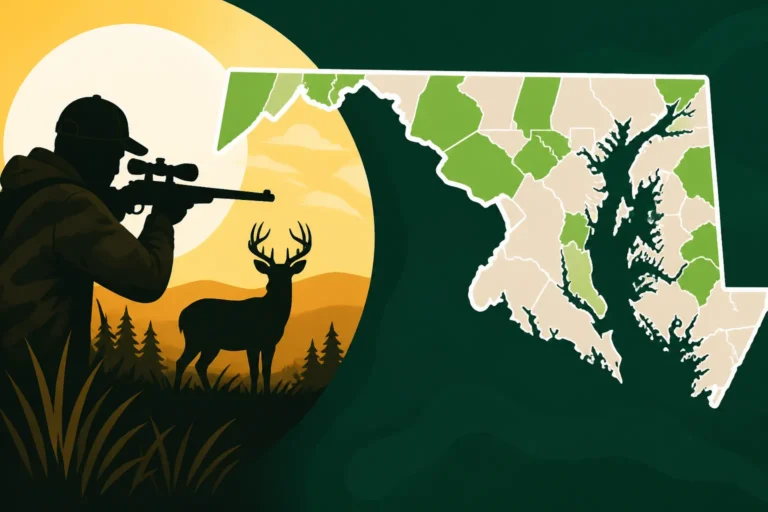
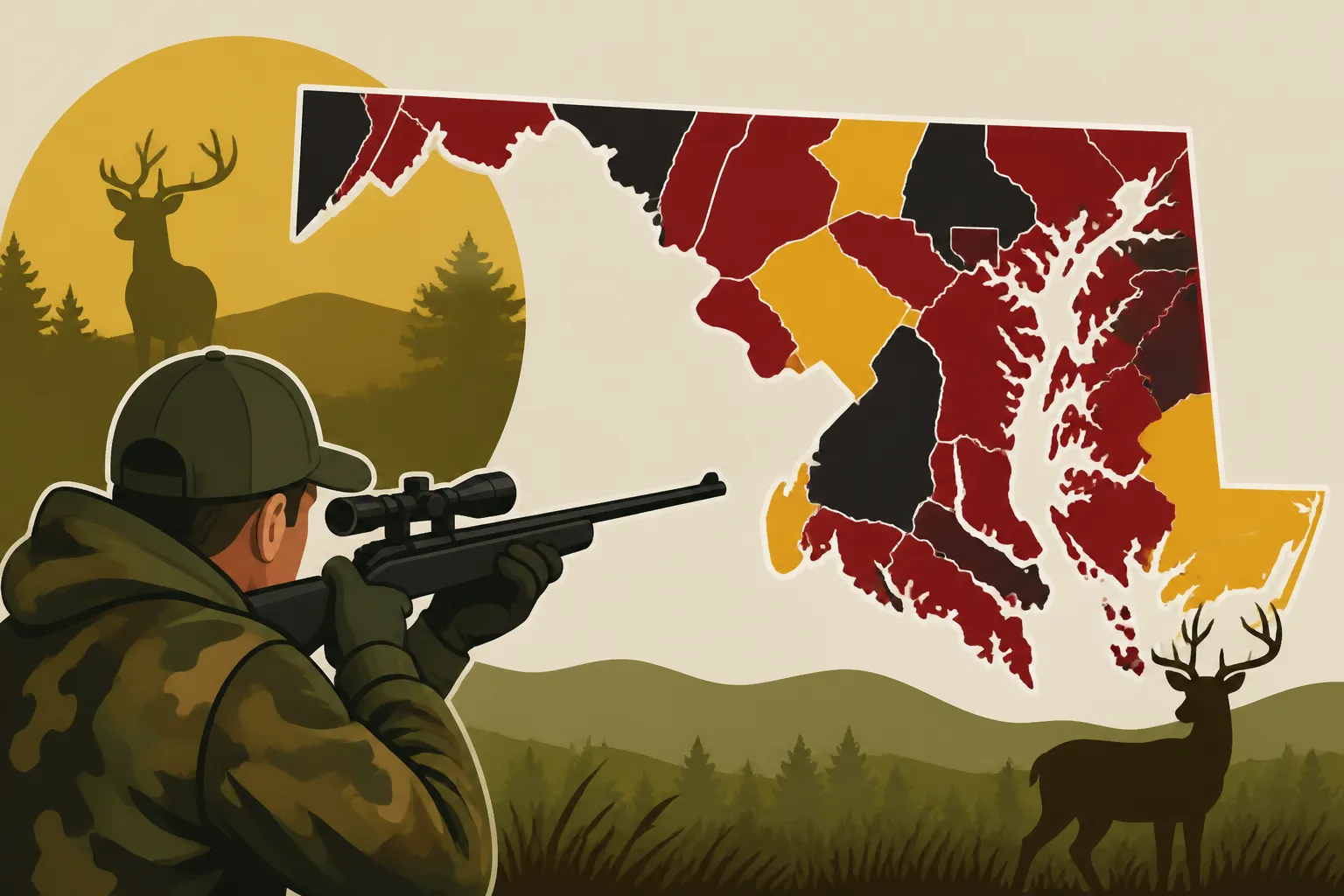
As of recent regulations, straight-wall cartridge rifles are legal for deer hunting during the firearms seasons in all counties designated as Region B where traditional centerfire rifles were previously prohibited. This includes a substantial portion of the state, offering new opportunities for hunters in these areas.
Here's a breakdown of counties where straight-wall rifles are permitted for deer:
| Region | County | Straight-Wall Rifles Permitted | Traditional Centerfire Rifles Permitted | Notes |
|---|---|---|---|---|
| B | Anne Arundel | Yes | No | |
| B | Baltimore Co. | Yes | No | |
| B | Calvert | Yes | No | |
| B | Caroline | Yes | No | |
| B | Carroll | Yes | No | |
| B | Cecil | Yes | No (except for specific areas in Region A) | Most of Cecil is Region B |
| B | Charles | Yes | No | |
| B | Dorchester | Yes | No | |
| B | Frederick | Yes (outside Region A) | Yes (within Region A units) | Check specific management units |
| B | Harford | Yes | No | |
| B | Howard | Yes | No | |
| B | Kent | Yes | No | |
| B | Montgomery | Yes | No | |
| B | Prince George's | Yes | No | |
| B | Queen Anne's | Yes | No | |
| B | St. Mary's | Yes | No | |
| B | Somerset | Yes | No | |
| B | Talbot | Yes | No | |
| B | Washington | Yes (outside Region A) | Yes (within Region A units) | Check specific management units |
| B | Wicomico | Yes | No | |
| B | Worcester | Yes | No | |
| A | Allegany | Yes | Yes | Both types allowed |
| A | Garrett | Yes | Yes | Both types allowed |
This means hunters in many popular deer hunting counties can now leverage the accuracy and power of a rifle, making hunts more enjoyable and potentially more successful. It's important to double-check the current Maryland DNR regulations each year, as rules can sometimes be updated. This expansion also directly impacts the timing of when you can use these weapons, particularly during Maryland's Split Firearms Deer Season and the Hunting the Late November Firearms Split periods.
Common Straight-Wall Calibers for Maryland Hunting
When considering a straight-wall rifle for hunting in Maryland's Region B, several calibers stand out for their effectiveness and availability. The key is that the cartridge case itself must be "straight-walled," without a bottleneck. Popular choices include:
- .45-70 Government: A venerable cartridge with a long history, the .45-70 delivers significant power and is highly effective on deer. Modern loadings offer improved ballistics, making it a reliable choice.
- .350 Legend: This newer cartridge was specifically designed to meet straight-wall hunting regulations in various states. It offers a flatter trajectory and lighter recoil than many other straight-wall options, making it a very popular choice for deer hunters. It's often compared to some popular handgun calibers in performance, but designed for rifle platforms.
- .450 Bushmaster: Known for its potent punch, the .450 Bushmaster is another excellent straight-wall option. It delivers impressive knockdown power and is well-suited for larger deer or even black bear, should you draw a permit for Maryland's Black Bear Lottery in the western counties.
- .357 Magnum and .44 Magnum (in rifle platforms): While primarily handgun cartridges, when chambered in a rifle, these also qualify as straight-wall. They offer lighter recoil and can be effective at closer ranges, especially for younger hunters or those sensitive to recoil.
Choosing the right caliber often comes down to personal preference, recoil tolerance, and the typical shooting distances you expect in your hunting area. All these options provide a substantial ethical hunting solution for deer within the appropriate range.
Practical Considerations for Hunters Using Straight-Wall Rifles
Embracing straight-wall rifles opens up new possibilities for hunters in Maryland, but it also comes with practical considerations beyond simply owning the right firearm. From ammunition choice to understanding where to set up your stand, thinking through these details can significantly enhance your hunting success and safety. Many hunters utilize tools like GoHunt to scout and understand terrain, which can be invaluable when planning your approach.
Ammunition Selection and Performance
Not all straight-wall ammunition is created equal. Just like with traditional bottlenecked rifle cartridges, bullet construction plays a massive role in terminal performance. For deer hunting, you'll want to focus on expanding bullets designed for medium game. Soft-point, bonded, or monolithic copper bullets are excellent choices that will deliver reliable expansion and penetration. Avoid full metal jacket (FMJ) ammunition, which is not designed for hunting and may not provide an ethical kill.
Consider the typical distances you'll be shooting. While a .45-70 is powerful up close, its trajectory can be like a rainbow past 150 yards compared to a flatter-shooting cartridge like the .350 Legend. Practice at various ranges to understand your rifle and chosen ammunition's capabilities. Knowing your rifle's point of impact at 50, 100, and 150 yards is crucial. For instance, in a dense woodlot in Carroll County, your shots might be closer, while on a Queen Anne's County field edge, you might encounter longer opportunities.
Scouting and Stand Placement for Straight-Wall Zones
The areas where straight-wall rifles are permitted often consist of mixed habitat—suburban woodlots, small farms, and fragmented forests. This means scouting becomes even more critical. You'll need to identify natural funnels, pinch points, and food sources that deer frequent. Pay close attention to areas where deer transition between bedding and feeding, or travel through cover. Programs like GoHunt can help you pinpoint these areas by overlaying property boundaries with satellite imagery and topographic maps, making it easier to identify secluded pockets of public land or negotiate access to private parcels.
When selecting your stand location, remember the limited range of straight-wall rounds compared to traditional rifles. While they extend beyond shotgun slug ranges, you still need to be mindful of your backdrop and potential projectile travel. A safe shooting lane with a natural berm or thick timber behind your target is always paramount. In these areas, deer often move cautiously, so precise stand placement to catch them unawares, such as along Scrape Lines Along a Maryland Field Edge or a Hunting a Funnel Between Two Grain Fields, can be the difference between a successful hunt and an empty truck.
Navigating Public and Private Land with Straight-Wall Rifles
Hunting with a straight-wall rifle, particularly in Region B, means you might be hunting closer to developed areas, whether on private land with permission or on specific public land tracts. Understanding property lines and setback regulations is not just good practice, it's the law. Many public hunting areas in Region B, like certain Wildlife Management Areas or state parks, will permit straight-wall rifles during the firearms season. Always check specific WMA rules, as some might have additional restrictions. Tools like GoHunt are extremely useful here for overlaying public land boundaries with private parcels, ensuring you stay within legal hunting zones and respect landownership.
For private land, establishing clear communication and getting written permission from landowners is essential. Many landowners in these more populated counties may be hesitant about traditional rifle hunting, but might be more amenable to hunters using straight-wall firearms due to their reduced maximum range. Discuss your equipment and safety precautions openly. Always remember, whether on public or private land, follow all blaze orange requirements and other safety protocols. Familiarize yourself with Maryland's Legal Weapons by County as well as local county ordinances that might further impact hunting activities. Recovering a deer in thicker, more populated areas can also present unique challenges, so be prepared for efficient blood trailing and quick processing, especially if you're hunting in warmer early season conditions.
Disclaimer
Always consult the latest Maryland Department of Natural Resources (DNR) hunting regulations before heading afield. Hunting laws and regulations can change, and it is the hunter's responsibility to be aware of and comply with all current rules.