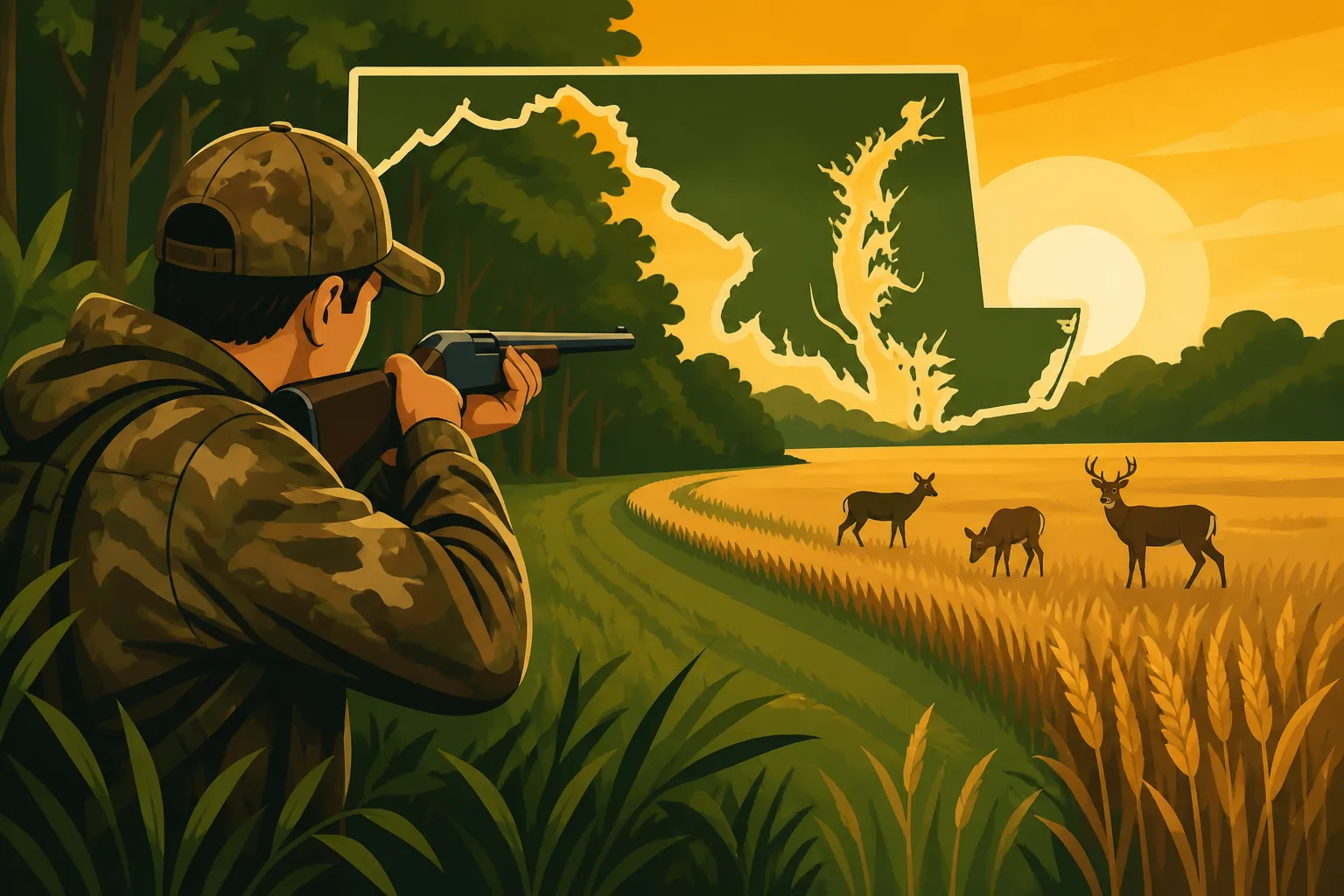
Hunting Millington’s Field Edges
Hunting those expansive farm fields around Millington can feel like staring at a blank canvas, especially when you're trying to pinpoint exactly where deer are moving and why. It's frustrating to drive past a beautiful cornfield or a sprawling soybean plot, knowing deer are in there somewhere, but having no idea how to intercept them. This guide is dedicated to unlocking the secrets of hunting Millington's often-overlooked yet incredibly productive field edges, helping you understand deer movement and make the most of your time in the stand or on the ground.
Decoding Millington's Agricultural Landscape and Deer Movement
Millington, nestled in the heart of Maryland's Eastern Shore farm country, is a mosaic of agricultural fields, woodlots, and creek bottoms. This landscape is a whitetail deer haven, offering abundant food, water, and cover. Understanding how deer utilize these specific features, particularly the edges where field meets timber, brush, or fencerows, is the first step to consistent success. It's not just about finding a field; it's about finding the right part of the field edge.
Understanding Crop Cycles and Food Sources
Deer in the Millington area are absolute opportunists when it comes to food, and the crop rotations dictate much of their movement. In early season, the lush green fields of soybeans provide incredible protein and forage. As fall progresses, cornfields become a magnet, offering both food and dense cover. Imagine a stand of mature corn still standing in October—it's essentially a giant, edible bedding area that deer will utilize extensively, often only coming out to the very edges under the cover of darkness. Once these fields are cut, deer shift to gleaning leftover grains, or they move to other food sources like acorns in nearby woodlots or green winter wheat and clover plots if landowners have planted them. Planting a Fall Food Plot on Maryland Ground can drastically change deer patterns on a property.
It's a constant game of change, and a hunter needs to be adaptable. You might scout a field in August, seeing deer pour out of the woods into soybeans, only for that pattern to vanish once the combine rolls through in late September. That's when those field edges become critical transition zones. Deer might browse on residual crops, or they might move along the edge, heading towards a different food source or a more secure bedding area. Knowing when the local farms typically harvest their crops gives you a huge advantage in predicting these shifts.
The Appeal of Wooded Edges and Fencelines
The wooded edges and fencelines bordering Millington's fields are not just boundaries; they are vital travel corridors and security blankets for deer. A mature wood line offers thermal cover from harsh winds, concealment from predators (including hunters), and direct access to various mast crops like acorns and beechnuts. Deer often feel much safer hugging the timber, especially during daylight hours, using the dense cover as a shield. They'll travel along these edges, pausing to feed in the field, before slipping back into the woods.
Fencelines, especially older ones with overgrown multiflora rose or honeysuckle, can create incredible pinch points and micro-funnels. Even a simple change in topography, like a slight dip or rise along a fenceline, can become a preferred crossing point. It's not uncommon to find rub lines and Scrape Lines Along a Maryland Field Edge paralleling these wooded or brushy boundaries, indicating consistent use by mature bucks. These features concentrate deer movement, making them prime locations for stand placement.
Water Sources and Bedding Areas Near Fields
Beyond food and cover, water is another critical element dictating deer movement, and Millington's landscape often provides it in spades. Small creeks, drainage ditches, and even low-lying areas that collect rainwater along field edges become crucial water sources, especially during dry spells or after a particularly strenuous rut. Deer will often bed surprisingly close to these water sources, particularly if there's good, dense cover nearby.
Think about those thickets of phragmites, tall grass, or brushy swamp edges that often run along the backs of fields or parallel to creeks. These aren't just dead zones; they're prime bedding areas. Deer, especially mature bucks, love to bed where they can watch their backtrail and still catch a breeze to scent check downwind. Often, the shortest, safest route between a bedding area in a thicket and a feeding area in a cornfield is directly along that field edge. Identifying these transitions points—where a thicket meets a field edge, or a creek crosses a travel corridor—can be a game-changer. Using an app like onX Hunt to analyze terrain and potential bedding cover from an aerial perspective can reveal these hidden gems that are difficult to spot from the road.
Mastering Field Edge Strategies for Whitetails
Once you understand why deer use field edges, the next step is to master the how of hunting them. This involves strategic stand placement, recognizing natural funnels, and knowing when to sit and when to move. Hunting field edges is an art form that blends patience with an understanding of deer behavior and the local environment.
Optimal Stand Placement Along the Edge
Choosing the right tree for your stand along a field edge is paramount. The biggest mistake many hunters make is setting up directly on the corner of a field, thinking it offers the best view. While it might, it often exposes you to multiple wind directions and makes your entry and exit routes incredibly difficult to conceal. Instead, look for a tree inside the woods, perhaps 10-20 yards back from the actual field edge, especially if there’s a distinct trail running parallel. This allows deer to feel more comfortable coming out to the edge without necessarily smelling or seeing you.
Always consider the prevailing wind. On the Eastern Shore, winds can be notoriously shifty, but understanding the general direction and how terrain features like depressions or rises can create micro-thermals is crucial. A thermacline can push your scent down into a ditch or up into the air, away from where deer are expected to approach. Aim for setups that allow your scent to blow into the field, not into the woods where deer will be traveling. Your entry and exit routes are just as important; you want to get to and from your stand without spooking deer that might already be in the field or the adjacent woods. Think about approaching from a low ditch or using a thicker strip of woods for cover.
Utilizing Natural Funnels and Pinch Points
Field edges often create natural funnels and pinch points that force deer movement into predictable patterns. A funnel could be a narrow strip of timber connecting two larger woodlots, or a thick hedgerow leading across an open field. A pinch point might be a small gap in an otherwise impenetrable fenceline, or where a creek cuts close to the field edge, narrowing the deer's viable travel path. Hunting a Funnel Between Two Grain Fields is a classic strategy that works extremely well in agricultural areas like Millington.
Look for these features during your scouting trips, both on foot and using satellite imagery. Pay attention to fence crossings, creek bottoms, and any point where the timber or cover narrows down. These are high-traffic areas where deer are almost certainly going to pass through. Setting up within shooting range of such a pinch point, especially one that leads directly from a bedding area to a prime food source in the field, can provide excellent opportunities. Bucks, in particular, will often use these secure travel lanes during daylight hours when they might otherwise remain deeper in the cover.
The Art of Still-Hunting the Perimeter
While static stand hunting is effective, still-hunting the perimeter of Millington's field edges, especially those with good cover, can be incredibly rewarding. This technique involves moving slowly and deliberately, taking only a few steps at a time, then pausing for several minutes to glass and listen. It's about blending into the environment and letting the deer reveal themselves. This works best in areas with diverse cover—like a field edge that transitions into a thicket, then into a mature hardwood stand, or along a brushy creek bank.
When still-hunting, always pay attention to the wind, moving into it or with a crosswind. Use the terrain to your advantage, whether it's a slight rise, a large oak tree, or a natural depression, to break up your silhouette. Look for subtle signs: a flicker of an ear, the horizontal line of a deer's back against the vertical trees, or the movement of brush. This methodical approach can surprise deer that are bedded just off the edge or moving cautiously along it. It requires immense patience but allows you to adapt to deer movement in real-time, making it especially effective when deer patterns are unpredictable.
Scouting, Pressure, and Timing Your Millington Hunt
Successful hunting around Millington's field edges isn't just about showing up; it's about meticulous preparation, understanding local hunting pressure, and knowing when to be in the woods to maximize your chances. Deer are incredibly sensitive to changes in their environment, and smart hunters account for these factors.
Pre-Season Scouting with Technology and Boots on the Ground
Pre-season scouting is the bedrock of success. Before you even think about hanging a stand, spend time in the area. Start with digital tools. Applications like onX Hunt or GoHunt are invaluable for understanding property lines, identifying potential food sources, bedding areas, and pinch points from an aerial view. These tools allow you to mark waypoints, measure distances, and plan your entry and exit routes without disturbing the area. You can identify potential cover, agricultural fields, and even subtle elevation changes that might concentrate deer. Scouting Maryland Public Land With Aerial Photos offers similar benefits for public areas, but the principles apply universally.
Once you have a general idea, put boots on the ground. Walk the field edges, looking for deer trails, rubs, scrapes, and droppings. Pay attention to how deer are accessing the fields from the woods and vice-versa. Look for areas where they might be feeding heavily or bedding just off the edge. Set up trail cameras in key locations, especially where trails enter or exit fields, or along prominent rub lines. These cameras provide invaluable intel on deer movement patterns, preferred travel times, and even specific bucks in the area. Just remember to check your cameras strategically to minimize disturbance.
Managing Hunting Pressure on Farm Properties
Hunting pressure, especially on private farm ground around Millington, can significantly alter deer behavior. Deer learn quickly where hunters are active and will adjust their movements accordingly. If a field edge gets hammered every weekend, deer will likely go nocturnal or avoid that area altogether during daylight. This is where building good relationships with landowners can really pay off; a hunter who is granted permission to hunt a specific farm often has a better chance if they can manage the pressure. Knocking on Doors in Maryland Farm Country is still a viable strategy for finding less-pressured ground.
Consider your approach. If you know a field edge is being hunted heavily, try hunting slightly deeper in the woods, along a secondary travel corridor that deer might use to skirt the primary pressure. Or, conversely, if you have a morning spot that’s usually quiet, be there early before anyone else stirs. Sometimes, less-pressured areas are found by simply walking a little further than everyone else. This might mean wading a ditch or crossing a small, dense thicket to reach a hidden corner of a field edge that doesn't see as much foot traffic.
Capitalizing on Weather Patterns and Rut Activity
Weather plays a massive role in deer movement along field edges. A sudden cold front, particularly after a stretch of warm weather, can trigger intense deer activity. Deer will often hit food sources harder, making field edges prime spots. Similarly, right before a major storm rolls in, deer might feed aggressively. Conversely, during a warm, bluebird day, deer might be less active, preferring to stay bedded in thick cover. Understanding these patterns can help you decide when it's best to be in your stand. Hunting After a Maryland Cold Front can yield incredible results.
And then there's the rut. Early to mid-November is prime time in Maryland, and during this period, bucks are actively searching for does. This means they're covering more ground, often moving along those field edges and through transition zones during daylight hours. A buck might follow a doe out of the timber, across a field edge, and into the standing beans or corn. Using calling techniques like grunts or rattling during the rut can be incredibly effective when positioned along a field edge, as the sound can travel across the open space and attract a cruising buck. Grunt Calls in Maryland Hardwoods can be surprisingly effective even on open edges.
Accessing and Respecting Private Lands Around Millington
Most of the prime field edge hunting opportunities in the Millington area are on private land. Gaining access and maintaining good relationships with landowners is crucial for consistent success. This isn't just about securing a spot; it's about showing respect and upholding the integrity of hunting.
Obtaining Permission from Landowners
Securing permission to hunt private land is a skill in itself. Don't just show up on opening day. Start early in the year, well before hunting season. Dress respectfully, be polite, and introduce yourself. Explain exactly what you're looking for – perhaps just bowhunting for deer, or maybe you're interested in small game. Bring a map, maybe one from onX Hunt, to show them precisely where you'd like to hunt. Offer to help with chores around the farm, like fixing fences or clearing brush. Show them you're responsible and can be trusted. Many landowners appreciate hunters who are willing to help and respect their property.
Always respect a "no." If a landowner says no, thank them for their time and move on. Don't push or argue. Remember, a landowner's trust is hard-earned and easily lost. Once you have permission, ask about any specific rules or areas to avoid. Do they have livestock? Are there certain fields they don't want you in? What about vehicle access? Clarity from the outset prevents misunderstandings later on.
Understanding Local Regulations and Ethical Conduct
Hunting in Maryland comes with specific regulations that hunters must abide by, even on private land. Always know the Maryland's Legal Weapons by County rules for Kent County, and be aware of shooting hours, bag limits, and carcass registration requirements. For instance, The Maryland Deer Registration Deadline After a Kill is something you absolutely cannot miss. Make sure you understand Maryland's Blaze Orange Requirements for firearms seasons, even if you’re tucked away in a wood line.
Ethical conduct goes beyond the written law. It means leaving no trace, packing out everything you pack in, including spent shell casings. It means being courteous to other hunters you might encounter, even if they're on adjacent property. If you wound a deer, diligently track it. If it crosses onto adjacent private property, you still need permission to retrieve it. Having the landowner's phone number handy is essential for these situations. Being a responsible and ethical hunter not only safeguards your privilege but also reflects positively on the entire hunting community.
Navigating Farm Roads and Boundaries
When hunting around Millington's farms, understanding property boundaries and navigating farm roads can be tricky. Many farm roads are private, and using them without permission is trespassing. Always clarify access routes with the landowner. Don't drive across fields unless explicitly told it's okay, and even then, be mindful of crop damage, especially in wet conditions. Stick to established trails or field edges when walking to minimize disturbance.
It's easy to get disoriented, particularly in a new area. Using mapping apps like onX Hunt or GoHunt that clearly show property lines is incredibly beneficial. You can mark your parking spot, your stand locations, and critical trails, ensuring you know exactly where you are at all times. This not only keeps you on the correct property but also helps in retrieving game or navigating out after dark. Always carry a reliable light source, especially if you plan to walk in before dawn or out after dusk, as those field edges can look very different in the dark.
Field Edge Types and Their Deer Hunting Potential in Millington
To help you visualize the different opportunities along Millington's field edges, here's a quick overview of what you might encounter and how deer typically use them.
| Field Edge Type | Characteristics | Deer Usage | Best Hunting Conditions/Tips |
|---|---|---|---|
| Mature Timber Edge | Tall, established trees (oaks, maples), often with an understory. | Travel corridor, browsing on acorns/browse, security cover, bedding. | Early season (acorns), rut (cruising bucks). Set stand 10-20 yards in. |
| Brushy/Thicket Edge | Dense bushes, briars, multiflora rose, young trees. | Primary bedding cover, escape routes, transitional feeding. | Mid-day (deer moving from bed to feed), late season (thermal cover). |
| Creek/Ditch Bottom Edge | Low-lying area, often with water, cattails, or dense saplings. | Water source, travel lane (especially for bucks seeking cover), thermal cover. | Dry spells, rut (bucks follow water courses). Check for tracks in mud. |
| Fenceline/Hedgerow Edge | Narrow strip of cover (trees, brush) separating fields or properties. | Pinch point, travel corridor, occasional bedding in thick spots. | Anytime, especially if it connects larger woodlots. Set up on crosswinds. |
| Standing Corn/Soybean Edge | Active crop field, dense cover within the field itself. | Food source, internal bedding within the crop, secure travel along edge. | Early season (soybeans), early-mid fall (corn). Wind crucial for entry. |
| Cut Crop Field Edge | Harvested field with residual stubble, exposed ground. | Gleaning leftover grains, quick crossings between cover areas. | Late season (deer seeking last food), low light. Longer shots possible. |
Disclaimer
This article is for general informational purposes only and does not constitute professional advice. Laws, prices and regulations vary by location and change over time. Consult a qualified professional for guidance on your specific situation.