Timber Cuts on Maryland Forest Land and Deer
Hunting in Maryland can sometimes feel like you're constantly chasing after shadows, trying to figure out where the deer are hiding, especially on public land that sees a lot of pressure. It's frustrating when you scout a spot, only to find the deer have seemingly vanished. But there's one significant factor that often goes overlooked, yet consistently draws deer like a magnet: timber cuts. This guide will walk you through why these areas are prime deer habitat, how to identify them, and most importantly, how to hunt them effectively in Maryland's diverse forest lands.
Why Timber Cuts are Deer Magnets on Maryland Forest Land
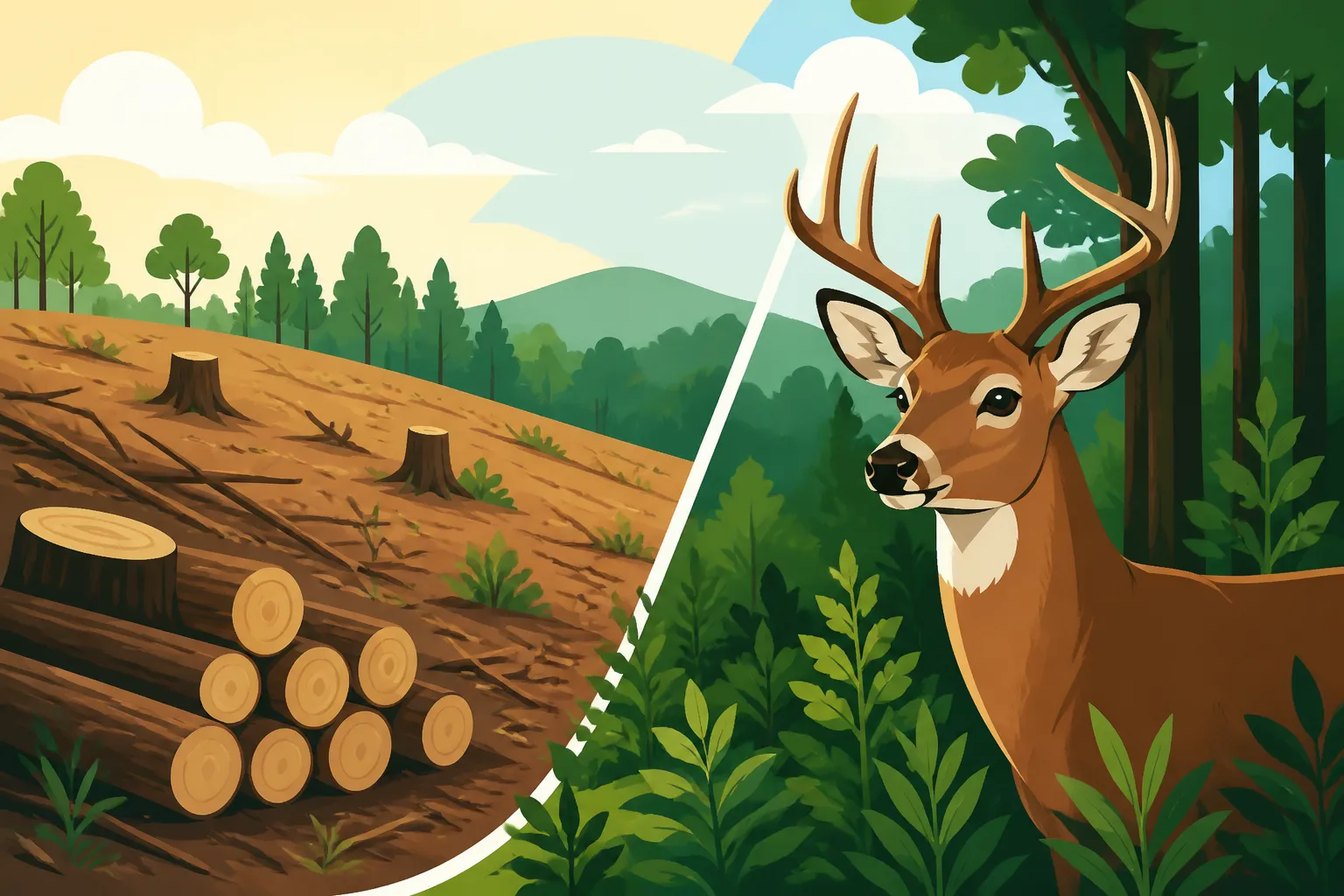
Think about it from a deer's perspective: their entire life revolves around food and cover. A mature, closed-canopy forest might look beautiful to us, but it's often a biological desert for deer. The sunlight can't reach the forest floor, so there's not much undergrowth, which means not much browse. Timber cuts, however, completely change that dynamic, transforming once-barren woodland into a bustling buffet and secure sanctuary.
The Immediate Boost of New Browse
When loggers come through and remove trees, even in a selective cut, the forest floor is suddenly exposed to sunlight. This is like flipping a switch for dormant seeds and existing vegetation. All sorts of new growth springs up: tender shoots, young saplings, briars, and a variety of forbs that deer absolutely relish. This explosion of new, succulent forage is incredibly attractive to deer, providing them with a highly palatable and nutritious food source that simply wasn't there before. It's not just a little nibble here and there; these areas can become dense thickets of preferred browse, especially in the first few years after a cut. This fresh growth is often much more digestible and nutrient-rich than the mature vegetation found elsewhere, making it a crucial component of a deer's diet, particularly during the critical periods of antler growth for bucks and fawn development for does.
Creating Ideal Thermal and Escape Cover
Beyond the food, timber cuts offer something equally vital: cover. The dense tangle of young trees, fallen limbs, and thick underbrush that regenerates after a cut provides incredibly secure bedding areas and escape routes. Deer, especially mature bucks, are masters of concealment. They want to be able to disappear quickly and easily, and a regenerating clear-cut or even a heavy selective cut offers just that. These thickets provide excellent thermal cover in both cold and warm weather, shielding deer from harsh winds in winter and offering shade in summer. This dense cover also offers a sense of security from predators, including human hunters. A deer can bed down in a thicket, knowing that any approach will likely be heard or seen well in advance, giving them ample time to slip away unnoticed. You'll often find deer using the edges of these cuts, particularly where they transition into more mature timber, as natural travel corridors and staging areas before they move out into more open feeding grounds or fields.
Types of Timber Cuts and Their Impact on Deer
Not all timber cuts are created equal, and understanding the different types can give you a significant advantage as a hunter. Each method of logging leaves the forest in a different state, offering varying benefits and challenges for deer and the hunters pursuing them.
Clear-Cuts: The Ultimate Habitat Reset
A clear-cut is exactly what it sounds like: nearly all trees are removed from a specific area, leaving behind what often looks like a barren landscape initially. While it can be jarring to see, a clear-cut is arguably the most beneficial type of timber cut for deer in the long run. In the first few years after a clear-cut, sunlight floods the forest floor, leading to an explosion of herbaceous growth, briars, and pioneer tree species that deer eagerly browse. Think of it as a huge, fresh salad bar. As these areas mature, they become incredibly thick with young trees and brush, creating impenetrable bedding cover and secure travel corridors. Hunting a fresh clear-cut can be tough due to the sheer density of the cover, but deer are absolutely in there. They're using it for bedding, feeding, and as a safe haven. Scouting these areas means looking for trails tunneling through the thickest parts, especially around the edges where the cut meets mature timber. Reading Sign in Maryland Mountain Timber can really help here, as deer will leave obvious trails and droppings.
Selective Cuts and Thinning: More Subtle, Still Beneficial
Selective cutting involves removing only certain trees, either individually or in small groups, while leaving the majority of the forest intact. Thinning, a type of selective cut, aims to reduce competition among remaining trees, promoting healthier growth. These types of cuts might not create the massive food plots of a clear-cut, but they still open the canopy, allowing more sunlight to reach the forest floor. This stimulates understory growth, albeit usually less intensely than a clear-cut. For deer, selective cuts create a patchwork of denser and more open areas. The remaining mature trees still drop acorns and other hard mast, while the new growth provides browse and cover. These areas can be excellent hunting grounds because they offer a mix of food and cover in close proximity, making deer movements more predictable. They provide a more continuous habitat, often without the extreme density that can make clear-cuts so challenging to navigate. You'll find deer often moving along the subtle transition lines within these partially cut areas.
Salvage Cuts and Storm Damage: Opportunities from Adversity
Sometimes, timber cuts aren't planned for habitat improvement but rather occur out of necessity. Salvage cuts are done to remove trees that have been damaged by events like wildfires, insect infestations, or severe storms before the wood loses its commercial value. While the primary goal isn't deer habitat, the effect is similar to other cuts: sunlight hits the forest floor, and new growth emerges. Storm-damaged areas, even without a formal salvage operation, can create natural "blowdowns" where trees have fallen. These downed trees and the subsequent new growth create incredible pockets of cover and new browse. Deer will quickly move into these areas, utilizing the tangled mess of downed limbs for cover and feeding on the fresh growth that sprouts up around and through it. These spots can be harder to find and navigate, but they often hold deer that are less pressured due to the difficulty of access. Using tools like onX Hunt or GoHunt with satellite imagery can help you pinpoint areas of recent disturbance or blowdowns, making your scouting much more efficient.
How to Effectively Hunt Timber Cuts in Maryland
Hunting timber cuts requires a slightly different approach than hunting mature timber or open fields. Their dense nature, combined with the dynamic shifts in deer behavior they promote, means you need to be strategic and adaptable.
Focus on Edges and Transition Zones
Deer are masters of using edges. The transition zone where a timber cut meets undisturbed mature forest, or even a different type of cut, is often where deer feel most comfortable moving and feeding. These edges offer the best of both worlds: dense cover from the cut for security, and access to more open areas for feeding or easier travel. Look for well-worn trails entering and exiting the cut, especially where they intersect with natural funnels or pinch points. These could be subtle depressions in the terrain, a narrow strip of timber between two cuts, or even a fenceline.
During the early archery season, deer might feed heavily within the cut itself, especially if it's full of new, succulent growth. As the season progresses and hunting pressure increases, they'll become more nocturnal and stick closer to the dense cover during daylight hours. Positioning yourself downwind of these edges, particularly at dawn and dusk, can be incredibly effective. Consider setting up on a subtle point or ridge that overlooks an edge, giving you a vantage point without silhouetting yourself. You might even find success Hunting a Maryland Farm Lease Your First Season by identifying these types of edges if the lease borders timber operations.
Still-Hunting and Driving Strategies
Given the dense nature of many timber cuts, especially clear-cuts, traditional stand hunting can be challenging if you don't have a clear understanding of deer movement within it. This is where still-hunting or carefully planned deer drives can shine.
- Still-Hunting: This involves moving slowly, deliberately, and quietly through the cut, pausing frequently to observe your surroundings. Take five steps, stop for five minutes, and scan every inch of visible cover. You're not trying to cover ground quickly; you're looking for deer that are bedded down or moving through the thick stuff. Pay close attention to wind direction, making sure it's in your favor. This method is incredibly effective for jumping deer out of their beds or catching them browsing. It requires patience and a keen eye, as deer in these areas are often hunkered down and well camouflaged. You might only get a fleeting glimpse, so be ready to react quickly.
- Deer Drives: On larger timber cuts, especially on private ground where you have a group, organized deer drives can be very productive. Designate a few "drivers" to push through the densest parts of the cut, moving quietly but steadily, while "standers" are strategically placed on the downwind side, typically along the edges or on known escape routes. Communication is key here, and safety paramount. Drivers should move slowly enough to avoid simply blowing deer out of the area at full speed, instead encouraging them to walk out past the standers. This is a common tactic during Maryland's firearms seasons, especially the late November and January reopenings, to move deer out of heavy cover. Deer Drives on Maryland Private Ground details some of the specifics.
Leveraging Topography and Technology
Even within relatively flat timber cuts, subtle changes in elevation, small ditches, or slight rises can become significant travel routes for deer. They will almost always choose the path of least resistance. Use your mapping apps like onX Hunt to identify these minor topographical features, as well as the overall shape and size of the timber cut. Look for saddles, drainages, or benches if the cut is on hilly terrain. Deer will use these features to move from bedding to feeding areas, or simply to get from one part of the cut to another without expending unnecessary energy.
Furthermore, use the aerial and satellite imagery on your mapping apps to identify different stages of timber regeneration. A clear-cut from five years ago will look different from one done last season, and deer will use them differently. Older cuts, thick with young poles, provide excellent bedding. Newer cuts offer prime browse. Understanding these distinctions from your couch before you even step foot in the woods can save you hours of wasted scouting time. Many hunters also use these apps to mark fresh sign, rub lines, and scrape lines along the edges, building a comprehensive picture of deer movement. Scouting Maryland Public Land With Aerial Photos offers even more tips on this.
Finding and Scouting Timber Cuts for Deer in Maryland
Locating these productive areas is the first step, and it often starts long before you ever step foot in the woods. Modern technology has made this process much more accessible, but on-the-ground scouting remains irreplaceable.
Digital Reconnaissance with Mapping Apps
Gone are the days when you needed to pore over paper topo maps and forest service blueprints. Today, apps like onX Hunt and GoHunt are indispensable tools for identifying timber cuts. Their satellite and aerial imagery layers allow you to zoom in and spot areas of recent logging activity. Look for distinct boundaries, lighter patches of ground, or areas with a uniform pattern of disturbance. Most modern forestry operations leave very clear lines that are visible from above.
- Recent Cuts: These will often appear as large, irregularly shaped patches with little or no canopy cover, sometimes with distinct logging roads or skid trails visible. They typically have a lighter color in aerial photos compared to the surrounding mature forest.
- Older Cuts (5-15 years): These areas will show dense, uniform growth of young trees. They'll look significantly thicker and often darker green than a fresh cut but still distinguishable from very old growth. These are often prime bedding areas.
Cross-reference these visual cues with public land boundaries and ownership information available on these apps. This allows you to identify accessible areas and even gives you clues about the management style of different forests. For example, some state forests might have a more aggressive timbering program than others.
Here's a quick comparison of what to look for:
| Feature/Cut Type | Fresh Clear-Cut (1-3 years) | Regenerating Cut (4-10 years) | Selective/Thinning Cut |
|---|---|---|---|
| Appearance (Aerial) | Light brown/tan, open ground, few trees | Dense green, uniform brush/small trees | Mixed canopy, some gaps, darker green overall |
| Primary Deer Use | Heavy browse, initial bedding | Primary bedding, travel routes | Browse, travel, staging, some bedding |
| Hunter Accessibility | Very difficult, tangled, open lines of sight | Very difficult, dense, poor visibility | Moderate, navigable lanes, mixed visibility |
| Food Availability | Abundant pioneer species, briars | Young saplings, some remaining briars | Understory browse, hard mast (from remaining trees) |
| Cover Availability | Excellent escape cover in dense growth | Superior thermal & escape cover | Good concealment, less thermal cover |
| Sign of Deer | Trails tunneling through, fresh droppings | Heavily used trails, rubs on young trees | Trails along edges, occasional rubs |
On-the-Ground Scouting: Confirming Your Intel
While digital tools are powerful, nothing beats boots-on-the-ground scouting. Once you've identified potential timber cuts on your maps, it's time to visit them. This is where you confirm what you saw from above and gather critical details.
- Walk the Edges: Pay close attention to the perimeter of the cut. Look for established deer trails, fresh tracks, droppings, and rubs. Where are deer entering and exiting? Are there any natural funnels that guide their movement?
- Penetrate the Interior: Don't be afraid to venture into the cut itself, especially the densest parts. This is where deer often bed. Look for flattened grass or leaves where deer have lain, and listen for the sounds of crunching acorns or rustling leaves that might indicate feeding. You'll likely encounter a lot of thick, sometimes impenetrable, vegetation. But by pushing into it, you'll discover the hidden pathways deer use.
- Check for Food Sources: What specific plants are growing in the cut? Are there briars, honeysuckle, or young oak sprouts? Identify the primary food sources and how heavily they are being browsed. This can tell you how consistently deer are using the area.
- Wind and Thermals: Observe how the wind and thermals move through the cut at different times of day. This is crucial for stand placement. In mountainous regions of Western Maryland, like those in Still-Hunting Western Maryland Mountain Timber, wind and thermals can be highly unpredictable due to topography. In flatter areas, understanding prevailing winds is key.
- Deer Sign and Activity: Look for signs of rutting activity if it's the right time of year. Rubs on saplings, especially along the edges of a cut, can indicate buck activity. Scrape lines might also be found along the more open transition areas. Scrape Lines Along a Maryland Field Edge are often very pronounced and easy to spot.
Finding and hunting timber cuts successfully requires a combination of modern mapping technology and traditional woodsmanship. By understanding why deer love these areas and how to approach them, you can unlock some of Maryland's most productive deer hunting grounds. Remember, patience and persistence are your greatest assets.
Disclaimer
This article is for general informational purposes only and does not constitute professional advice. Laws, prices and regulations vary by location and change over time. Consult a qualified professional for guidance on your specific situation.