How Much Public Hunting Land Maryland Has
One of the biggest hurdles many hunters in Maryland face isn't finding deer or geese, but simply finding a place to hunt them. With so much private ground, it can feel like public access is a needle in a haystack. But I'm here to tell you that while it might not be as vast as some western states, Maryland actually offers a respectable amount of public hunting land if you know where to look and how to navigate it, and this guide will walk you through exactly that.
The Scope of Maryland's Public Hunting Access
It's easy to get discouraged when you look at a map of Maryland and see how much of it is developed or privately owned. For a hunter without a lease or personal farm access, the idea of finding a place to pursue game can feel daunting. However, the Old Line State actually has a surprising amount of acreage set aside for public hunting, distributed across various state and federal agencies. It's not always in massive, contiguous blocks, which can be a frustration, but it's there, and often holds excellent hunting opportunities if you're willing to put in the work.
Understanding the Overall Acreage
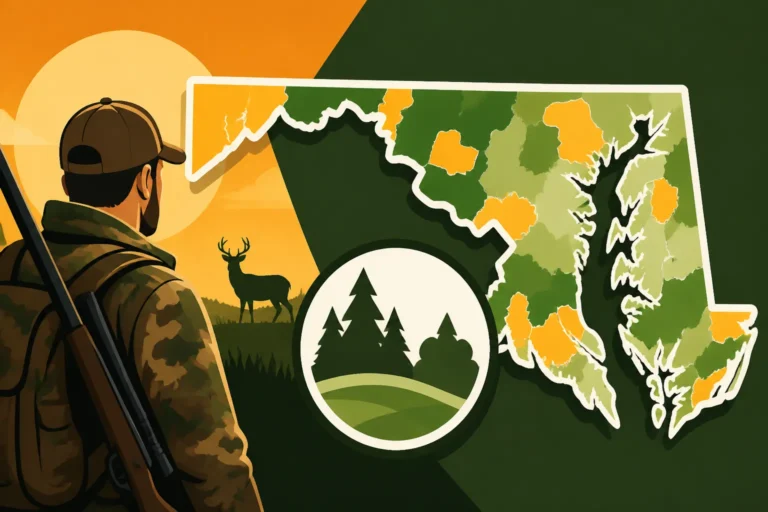
When you hear "public land," it's easy to picture millions of acres stretching to the horizon like out west. Maryland isn't that, not by a long shot. But don't let that dissuade you. The total public hunting land available in Maryland typically hovers around 400,000 acres, give or take, depending on how you count certain managed areas and whether federal lands like national wildlife refuges are included. That's a significant chunk of real estate when you consider Maryland's overall size. While it might sound like a lot, it's often broken up into smaller, more manageable parcels.
What this means for you as a hunter is that instead of vast wilderness, you're more likely to encounter a mosaic of opportunities. This can range from expansive state forests in the west, like Savage River, to smaller, strategically acquired wildlife management areas (WMAs) tucked into agricultural regions or along the Chesapeake Bay. It requires a different scouting mindset than big western hunts; you're often looking for overlooked pockets, linear features like stream corridors, or blocks of timber surrounded by private farms.
Regional Distribution and What That Means for Hunters
The distribution of Maryland's public hunting land isn't uniform, and understanding these regional differences is key to planning your hunts. Generally speaking, the western part of the state — Garrett, Allegany, and Washington counties — offers the largest contiguous blocks of public land, primarily in the form of state forests. Here, you can find thousands of acres that feel more like true wilderness, perfect for Hunting Maryland's Western Mountain Forests.
Conversely, the Eastern Shore, while incredibly productive for deer and waterfowl, has less public acreage overall, and what exists is often fragmented. These areas are typically focused around wetland habitats, tidal marshes, or specific WMAs carved out of old farmland. Southern Maryland also has some state forests and WMAs, but again, they tend to be smaller and more scattered. This regional variation means your tactics, target species, and even the type of equipment you bring will shift dramatically depending on where you choose to hunt.
The Mix of State and Federal Opportunities
Maryland's public hunting opportunities come from both state and federal agencies, each with its own set of rules, benefits, and challenges. The majority of publicly accessible land for hunting falls under the Maryland Department of Natural Resources (DNR), managing state forests, state parks, and its extensive network of Maryland's Wildlife Management Areas. These lands are generally regulated under state hunting laws, though specific WMA rules can vary.
Beyond state lands, federal properties also contribute. National Wildlife Refuges, such as Blackwater on the Eastern Shore or Patuxent Research Refuge in central Maryland, often have special hunt programs. These are typically permit-only, drawing hunters through a lottery system for specific dates or zones. While these federal lands can offer incredible, often less pressured opportunities, they require advance planning and adherence to very specific regulations that can differ significantly from state rules. Don't forget that military installations, like Aberdeen Proving Ground, also offer hunting programs, usually for active duty, retired military, and sometimes civilians, through a permit system.
Navigating Maryland's Diverse Public Land Categories
Maryland doesn't have a one-size-fits-all public land experience. Instead, it's a patchwork of different land designations, each with its own character, management objectives, and most importantly, specific hunting regulations. Understanding these distinctions is crucial; what's legal and effective in a state forest might be completely out of bounds or ineffective in a WMA or state park. It can feel like a maze, but once you learn the categories, it becomes much clearer.
Wildlife Management Areas (WMAs)
Maryland's Wildlife Management Areas are arguably the most focused public hunting grounds. These lands are specifically acquired and managed by the DNR to enhance wildlife habitat and provide recreational opportunities, with hunting being a primary focus. You'll find WMAs scattered across the state, from the tidal marshes of the Eastern Shore like Hunting Maryland's Lower Eastern Shore Marshes to the agricultural fringes of the Piedmont.
WMAs are often smaller parcels compared to state forests but are intensively managed for specific game species. This might mean active timber management, food plot plantings, or controlled burns to improve deer, turkey, or small game habitat. Hunters exploring WMAs should always check the specific rules for that area, as some might have special archery-only zones, specific check-in procedures, or limitations on vehicle access. They're often fantastic spots, but they can also see considerable hunter pressure, especially on opening days.
State Forests and Their Unique Rules
For those seeking a more expansive, immersive hunting experience, Maryland's State Forests are your best bet. Located predominantly in the western counties, places like Savage River State Forest and Hunting Maryland's Green Ridge State Forest offer thousands of acres of mountainous, timbered terrain. These are multi-use lands, meaning logging, hiking, camping, and other recreational activities also occur, but hunting is a cherished tradition here.
Hunting in state forests often feels more like a wilderness hunt. You can get away from roads and find remote pockets that see less pressure. However, navigating these vast tracts requires good map skills (like using onX Layers for Maryland Land Status) and physical stamina. Regulations here are generally broader than WMAs, often mirroring statewide rules, but always confirm any specific area restrictions, such as permit requirements for certain zones or limitations on motorized vehicles on gated roads. These forests are prime spots for Muzzleloader Deer Hunting in Maryland or Still-Hunting Western Maryland Mountain Timber.
State Parks and Federal Refuges: Niche Opportunities
While not primarily managed for hunting, some Maryland State Parks and Federal Refuges offer unique, albeit often limited, hunting opportunities. State Parks typically have very restricted hunting seasons or specific managed hunts, often for deer population control. These can be incredible opportunities for hunters seeking access to areas with lower hunting pressure or close to urban centers, like Hunting a Suburban Woodlot in Montgomery County, but they almost always require special permits obtained through a lottery or application process.
Federal Refuges, as mentioned, are another avenue. Places like Blackwater National Wildlife Refuge or Eastern Neck National Wildlife Refuge have managed hunts, primarily for deer or waterfowl. These hunts are highly regulated, with strict rules on weapons, hunting zones, and access. Applying for these permits requires vigilance for application deadlines and familiarity with specific federal regulations, which can be more complex than state rules. However, success in these hunts can lead to exceptional experiences, often in pristine habitats.
Tools and Strategies for Locating Huntable Public Ground
Finding public land in Maryland is one thing, but finding huntable public land that holds game and isn't overrun with other hunters is another challenge entirely. The key to unlocking these opportunities lies in effective scouting and utilizing modern mapping tools that put a wealth of information at your fingertips. Gone are the days of relying solely on paper maps (though they still have their place!), as digital resources have revolutionized how we find and understand public access.
Digital Mapping Applications as Your Best Friend
In today's hunting world, digital mapping applications like onX Hunt or GoHunt are absolutely indispensable, especially when tackling Maryland's fragmented public land. These apps layer public and private land boundaries directly onto aerial imagery, topographic maps, and even parcel data. This means you can identify state forests, WMAs, and state parks, and instantly see their boundaries relative to private property. This is crucial for avoiding trespass and maximizing your time on legal hunting ground.
Beyond just boundaries, these applications allow you to mark waypoints for potential stand sites, scout access points, measure distances, and even track your movements in real-time. You can analyze terrain, identify pinch points, look for old logging roads, and pinpoint potential food sources or bedding areas from your couch before ever stepping foot in the woods. This type of detailed pre-scouting dramatically increases your efficiency and helps you develop a solid plan for your hunt, moving beyond just knowing "where the WMA is."
Interpreting Public Land Maps and Boundary Markers
While digital maps are powerful, it's also vital to understand how to read and interpret traditional public land maps provided by the DNR, and how to identify boundary markers on the ground. DNR often provides detailed maps for WMAs and State Forests, sometimes highlighting specific rules, parking areas, or even habitat types. These maps, combined with your digital tools, offer a comprehensive view.
When you're actually in the field, look for physical boundary markers. These can be painted trees (often yellow or blue for state land), signs, or survey markers. Public land can sometimes abut private property with no fence, relying entirely on these subtle markers. It's your responsibility to know where you are, and a GPS unit or your phone app is critical here. Don't take chances; if you're unsure, assume it's private and back out. This diligence not only keeps you legal but also builds goodwill with landowners adjacent to public lands.
Scouting Beyond the Pavement
The biggest frustration with public land, particularly smaller parcels, is often the number of other hunters you encounter. The key to success often lies in Finding Maryland Ground Others Walk Past. This means going deeper, literally. Most hunters will stick close to roads, parking areas, and easy access trails. If you're willing to walk further, navigate thicker cover, or cross a challenging swamp, you dramatically increase your chances of finding less pressured game.
Scouting doesn't just happen during the season. Off-season exploration is invaluable. Look for old overgrown logging roads, deer trails leading into thickets, natural funnels between different habitat types, and distinct terrain features that might concentrate game. Don't be afraid to put in the miles. Even in smaller WMAs, a 1-2 mile walk can take you into an entirely different hunting experience than what's found within a quarter-mile of the parking lot. Use your mapping apps to identify these remote pockets and devise strategies to access them.
The Realities of Hunting Maryland's Public Lands
Hunting public land in Maryland isn't always easy; it comes with its own set of challenges, from navigating other hunters to understanding a labyrinth of regulations. But it also offers immense satisfaction and a connection to the landscape that's hard to beat. Being realistic about these factors will set you up for success and help manage expectations.
Managing Hunter Pressure and Competition
Let's be frank: public land in Maryland, especially the easily accessible spots, can get crowded. Opening days of deer and turkey seasons, or prime waterfowl days, often see parking lots overflowing. This Hunting Pressure on Maryland Public Land is a reality you have to contend with. It can be frustrating when you arrive at your spot only to find another hunter already there, or when game gets pushed around by too much activity.
The best way to deal with pressure is to anticipate it and adjust your strategy. Hunt during weekdays if possible, when fewer people are out. As mentioned, walk further than others. Hunt less desirable cover, or areas that are harder to access. Consider overlooked species, like small game, if deer season feels too crowded. Understand that competition is part of the game on public land, and adaptability is your greatest asset. Sometimes, hunting near pressure can even be effective, as it can push game your way if you're positioned correctly.
Understanding Specific Public Land Regulations and Permits
One of the most critical aspects of public land hunting in Maryland is the need to thoroughly understand the specific regulations for the area you're hunting. While statewide hunting laws apply, many WMAs, State Forests, and especially federal lands, have their own additional rules. These can include:
- Permit Requirements: Some areas, particularly State Parks and federal refuges, require special permits, often issued through a lottery, to hunt specific zones or dates. Maryland Public Land Registration Requirements might involve online applications or even physical check-in stations.
- Weapon Restrictions: Certain WMAs or suburban public lands may be archery-only or limit firearms to specific calibers or types.
- Access Restrictions: Gated roads, designated parking areas, or walk-in-only zones are common. Motorized vehicle use is often restricted.
- Tree Stand/Blind Rules: Limitations on semi-permanent stands, dates for placement/removal, or requirements for identification tags are frequent. Treestand Rules on Maryland Public Land can vary significantly.
- Shooting Hours: While statewide shooting hours exist, some areas might have slightly different rules, especially for waterfowl.
Always check the DNR website for the specific WMA or forest you plan to visit. Ignorance of the rules is not an excuse, and violations can lead to fines or loss of hunting privileges.
The Reward of Persistence on Public Ground
Despite the challenges, hunting public land in Maryland offers a deeply rewarding experience. There's a unique satisfaction in earning your harvest from ground accessible to everyone, knowing you've outsmarted not only the game but also often the crowds. Public land forces you to become a better hunter—more adaptable, more patient, and more skilled at scouting and reading the land.
The wildlife management areas and state forests are truly incredible resources. They protect vital habitats, provide crucial recreational access for all citizens, and allow hunters to pursue their passion without needing extensive private land leases. For many, public land is the only option, and learning its nuances opens up a lifetime of hunting adventures, whether you're chasing whitetails in the mountains, sika deer in the marshes, or turkeys in a state forest. The moments of solitude, the thrill of discovery, and the taste of a hard-earned meal from public ground are priceless.
Regional Highlights: Public Land Opportunities Across Maryland
Maryland's varied geography means that public hunting land isn't just about total acreage, but also about the type of land and the species it supports. From the rugged Appalachian ridges to the expansive tidal marshes, each region offers distinct challenges and rewards for the public land hunter. Knowing these regional characteristics can help you tailor your expectations and tactics, making your scouting efforts more efficient and your hunts more successful.
Western Maryland's Mountain Forests
For hunters who love big woods and challenging terrain, Western Maryland is the crown jewel of public land. Counties like Garrett, Allegany, and parts of Washington are home to vast tracts of state forests, including Savage River, Green Ridge, and Garrett State Forests. These areas provide thousands of acres of contiguous habitat, offering a true big-woods hunting experience. Here, you'll find primarily white-tailed deer, black bears (during the limited season), and wild turkeys. Black Bear Hunting in Western Maryland is a dream for those who draw a permit.
Hunting these mountain forests means dealing with elevation changes, thick laurel patches, and sometimes long walks from the nearest road. Deer density might be lower than on the Eastern Shore, but the opportunity to chase mature bucks that have rarely seen a human is very real. You'll need to focus on reading topography, finding natural funnels, and identifying food sources like acorns. Public access here often extends far beyond vehicle accessible roads, making Still-Hunting Western Maryland Mountain Timber an effective, albeit strenuous, method.
Eastern Shore Marshes and Farmland Edges
The Eastern Shore, while rich in game, presents a different public land puzzle. The majority of public hunting opportunities here are found within the numerous Wildlife Management Areas (WMAs) and certain federal refuges, often centered around tidal marshes, swamps, and fragmented timber blocks adjacent to vast agricultural fields. This region is famous for its dense populations of white-tailed deer and, of course, the elusive Sika Deer Hunting in Maryland's Tidal Marshes. It's also a prime destination for Waterfowl Hunting Maryland's Chesapeake Bay.
Hunting public land on the Eastern Shore often means dealing with water – lots of it. Marsh WMAs like Fishing Bay or Deal Island are boat-access heavy, requiring specialized gear like chest waders and a shallow-draft boat. Terrestrial hunting in these areas might involve navigating ditch banks, small pine islands, and thick phragmites. For upland spots, you'll often find smaller public timber tracts nestled against private corn or soybean fields, where deer movement patterns are dictated by agricultural cycles. Success here depends on understanding tides, cover, and how game uses these unique habitats.
Central and Southern Maryland's Green Spaces
Central Maryland, encompassing the areas around Baltimore and Washington D.C., and Southern Maryland, stretching down to St. Mary's County, offer a mix of state forests and WMAs that cater to a different kind of public land hunter. While less expansive than the western mountains, these areas often provide important green corridors and accessible hunting opportunities closer to population centers. Species targeted here include white-tailed deer, wild turkeys, and various small game. Hunting Maryland's Suburban Deer Management Hunts are often found in this region.
Hunting in these areas frequently involves navigating smaller, more fragmented parcels, sometimes with residential areas nearby. This means stricter regulations on weapon types (often archery-only or shotgun/muzzleloader restricted) and shorter hunting hours. State Forests like Cedarville or Doncaster in Southern Maryland offer larger blocks of timber, while smaller WMAs provide pockets of cover in more developed landscapes. Successful hunting in these regions requires diligent scouting for overlooked corners, understanding local deer movement through suburban corridors, and being highly conscious of safety zones and property lines.
| Public Land Category | Primary Purpose | Typical Location | Key Species | Access Notes |
|---|---|---|---|---|
| Wildlife Management Areas (WMAs) | Habitat management, public recreation | Statewide, varied habitats | Deer, Turkey, Waterfowl, Small Game | Specific area rules, some permit/check-in reqs |
| State Forests | Timber, recreation, wildlife | Western MD, Southern MD | Deer, Bear, Turkey, Small Game | Large blocks, multi-use, some permit zones |
| State Parks | Recreation, natural preservation | Statewide | Deer (managed hunts) | Highly restricted, lottery permits common |
| National Wildlife Refuges | Wildlife protection, limited recreation | Eastern Shore, central MD | Deer, Waterfowl | Federal rules, lottery permits, strict zones |
| Chesapeake Forest Lands | Timber, public access | Lower Eastern Shore | Deer, Sika Deer, Turkey | Leased for timber, public hunting allowed |
Disclaimer
This article is for general informational purposes only and does not constitute professional advice. Laws, prices and regulations vary by location and change over time. Consult a qualified professional for guidance on your specific situation.