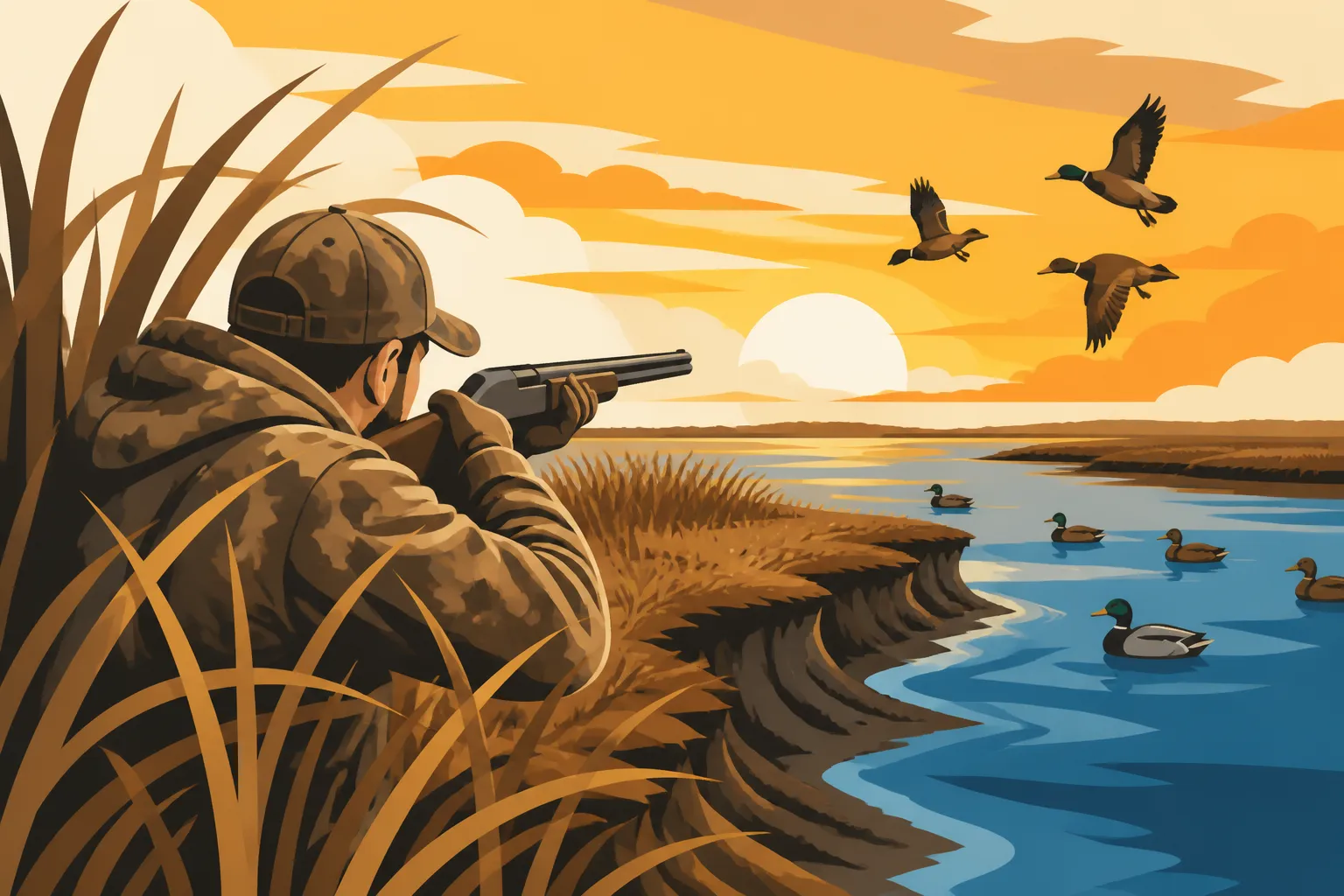
Hunting a Sinking Maryland Marsh Edge
Hunting a marsh edge in Maryland is an experience unlike any other, offering unique opportunities but also presenting significant challenges. Many hunters feel a deep frustration when they return to a favorite marsh only to find the landscape subtly, or sometimes dramatically, altered by the relentless forces of tides and erosion. This guide aims to help you navigate these ever-changing, "sinking" marsh edges, providing practical advice on gear, strategy, and safety to ensure a successful and rewarding hunt in Maryland's dynamic coastal wetlands.
Understanding the Dynamic Marsh Edge Ecosystem
Maryland's tidal marshes, particularly those on the Eastern Shore, are incredibly vibrant but also profoundly unstable environments. What appears to be solid ground one season might be open water or a deep mud flat the next. This constant flux requires hunters to adapt, observe, and respect the power of nature.
The Impact of Rising Tides and Subsidence
When we talk about a "sinking marsh edge" in Maryland, it's not just a poetic phrase; it's a stark reality shaped by both global sea level rise and local land subsidence. Over generations, these twin forces have reshaped our cherished hunting grounds, gradually eroding shorelines, deepening guts, and converting higher ground into soggy expanse. You might remember a particular hummock where you always saw deer, only to return years later and find it submerged or washed away entirely. This constant transformation means that traditional stand locations or well-worn game trails can vanish, forcing hunters to scout and adapt continuously.
The impact isn't just about losing land. It's about how the entire ecosystem responds. New channels can form, old ones can silt in, and the salinity of the water can shift, affecting vegetation like phragmites and spartina grasses. These changes directly influence where game feeds, beds, and travels. The frustration of returning to a familiar honey hole only to find it completely unrecognizable is a common lament among those who hunt these coastal zones. Understanding that this is an ongoing, natural process, albeit accelerated, is the first step to successful adaptation. For more on this critical issue, you might want to read Why Chesapeake Marshes Are Sinking.
Key Habitat Features and How Game Use Them
Despite the challenges, these sinking marsh edges remain prime hunting territory for several species, especially the elusive Sika deer and various waterfowl. The key is to understand how these animals use the perpetually changing landscape. Sika deer, often called "marsh elk" by locals, are incredibly adept at navigating the wet, soft terrain. They'll browse on specific marsh grasses and shoots, especially in areas where freshwater runoff dilutes the salt. They frequently use the higher ground along the edges of ditch banks or small pine islands as travel corridors, especially during low tide.
During higher tides, Sika deer often get pushed to the sparse, slightly elevated islands or higher ground patches that offer a temporary refuge from the encroaching water. These become critical pinch points and bedding areas. Phragmites, while an invasive species, offers incredibly dense cover for Sika, providing both concealment and a windbreak. Ducks and geese, of course, utilize the open water and feed in the shallower vegetated areas, making the marsh edge a prime location for decoy spreads or jump-shooting. Learning What Sika Deer Eat in a Tidal Marsh can help you pinpoint feeding areas, while understanding How Sika Deer Use Phragmites for Cover will guide you to bedding zones.
Essential Gear and Preparations for Marsh Edge Hunting
Successfully hunting a marsh edge is as much about your preparation and gear as it is about your strategy. The environment demands specific equipment choices to ensure your safety, comfort, and success.
Footwear and Wading Gear: Staying Dry and Safe
Forget your typical upland hunting boots; they simply won't cut it in a Maryland marsh. Here, the choice between hip boots and chest waders isn't just a matter of preference; it's a critical safety decision. For truly "sinking" marsh edges, with unpredictable depths and soft bottoms, chest waders are almost always the superior and safer choice. You never know when you might step into a hidden ditch or a particularly soft depression that could easily go over the top of hip boots.
Look for waders made from durable, puncture-resistant materials like heavy-duty neoprene for colder weather or breathable GORE-TEX-style fabrics for warmer hunts or long treks. The boots themselves should have aggressive lug soles to provide traction on slick mud and submerged obstacles. Beyond the waders, always pack an extra set of dry clothes in a waterproof bag, stored in your vehicle. Cold water immersion is a serious hazard, and being able to change into dry gear immediately can be life-saving. Even a small hole or a splash can make for an incredibly uncomfortable and potentially dangerous situation when the temperatures drop. This is why many experienced marsh hunters swear by the complete protection offered by chest waders. For a deeper dive into your options, check out Hip Boots Versus Chest Waders in Sika Country.
Navigation and Safety Tools for Shifting Landscapes
The dynamic nature of a sinking marsh edge makes reliable navigation tools non-negotiable. Traditional compass-and-map skills are valuable, but modern technology has revolutionized how we traverse these challenging landscapes. A GPS device or a robust mapping app like onX Hunt on your smartphone is absolutely crucial. Before you even set foot in the marsh, spend time studying aerial imagery on onX Hunt to identify subtle elevation changes, deeper channels, potential crossing points, and areas of dense cover. Mark your vehicle's parking spot, your intended access route, and any potential stand locations or pinch points. The satellite imagery can reveal changes in the marsh that even recent visits might not show on the ground.
Always carry a fully charged phone, but understand that service can be spotty in remote marsh areas. A portable power bank is a smart addition. A reliable headlamp with fresh batteries (and spares!) is essential for early morning entries and late evening exits, especially when navigating soft, uneven ground in the dark. In truly remote or hazardous areas, consider carrying a satellite messenger for emergency communication. A simple whistle can also be invaluable for signaling your location to hunting partners or in an emergency. These tools aren't just for convenience; they are vital for your safety when the landscape itself is constantly trying to confuse you. Remember, Scouting Maryland Public Land With Aerial Photos before you go is one of the best preparations you can make.
Strategies for Hunting a Sinking Marsh Edge
Hunting a sinking marsh edge requires a strategic approach that accounts for the unique dynamics of the environment, particularly the tides and the natural movement patterns of game.
Reading Tides and Planning Your Access
The tide chart is your most important planning tool when hunting a marsh edge. Tides dictate everything: when you can access certain areas, where game will be concentrated, and your exit strategy. A high tide might allow you to boat into areas inaccessible at low tide, but it can also cut off walking routes or submerge your preferred hunting spots. Conversely, a low tide exposes more mud flats and creates defined channels, but it can leave your boat high and dry or make for incredibly strenuous wading through deep, sticky muck.
Always check local tide charts meticulously before planning your hunt. Factor in wind direction and strength, as strong winds can either push more water into the marsh (super-high tides) or pull it out (super-low tides) beyond what the charts predict. Consider a hypothetical scenario: you plan to wade into a Sika hotspot at low tide, expecting an easy walk, only for an unexpected surge tide to come in, cutting off your return path through a previously shallow gut. This isn't a rare occurrence and can leave you stranded or facing a dangerous, deep-water crossing. Understanding Reading Tide Charts Before a Marsh Hunt is not just helpful, it's non-negotiable. If you plan to use a boat, understanding Boating Into a Sika Marsh at Low Tide will prevent you from getting stuck and having to drag your vessel through the mud.
Positioning for Success: Ambush Points and Cover
Once you've deciphered the tides and planned your access, the next step is strategic positioning. Sinking marsh edges, with their constantly changing water levels, often create natural pinch points and funnels that concentrate game. Look for slight elevations, narrow strips of higher ground between water features, or the edges of dense phragmites stands that butt up against open water or deeper guts. These are often where Sika deer will travel, especially when higher tides force them off lower ground.
Portable ground blinds are often more practical than permanent treestands in these environments, as finding stable ground for a treestand can be incredibly challenging, and even if you do, the landscape might change around it. Utilizing the natural cover of thick marsh grass or the edges of loblolly pine islands provides excellent concealment. A prime example would be setting up along a well-used ditch bank where Sika tracks are evident, knowing that the rising tide will force deer to cross that particular section. Positioning yourself on a slight rise or an "island" of higher ground will not only give you a better vantage point but also keep you drier and more comfortable. Remember, a good setup takes into account the wind, sun, and the anticipated direction of game movement. Hunting a Marsh Ditch Bank at Sunrise or Hunting a Loblolly Pine Island in the Marsh are classic strategies that leverage these natural features.
Here's a quick comparison of common wading gear for marsh hunting:
| Gear Type | Pros | Cons | Best For |
|---|---|---|---|
| Hip Boots | Lighter, less restrictive, easier to get on/off, good for shallow water | Limited depth, easier to get wet in unexpected dips, less protection | Very shallow water, stable bottoms, short distances, quick entry/exit |
| Chest Waders | Maximum depth protection, greater warmth, more storage (pockets) | Heavier, more restrictive, can be hot in warm weather, harder to don/doff | Deep, unpredictable water, soft bottoms, cold weather, long periods of standing in water, safety is paramount |
Overcoming Unique Challenges and Maximizing Your Hunt
Hunting a sinking marsh edge offers an incredible sense of adventure and challenge. To truly maximize your experience, you must be prepared for its unique difficulties and approach the environment with respect and a strong ethical compass.
Dealing with Soft Bottoms and Unexpected Hazards
The "sinking" aspect of these marsh edges isn't just about water levels; it's also about the ground beneath your feet. Marsh bottoms can be notoriously soft, ranging from ankle-deep muck to waist-deep quicksand-like mud that can literally suck the boots off your feet. This isn't just an inconvenience; it's a genuine safety hazard. Beyond the mud, hunters can encounter submerged hazards like old oyster shells (sharp!), tangled roots, fallen branches, or even remnants of old duck blinds or forgotten gear.
The best defense against these hazards is a slow, deliberate approach. Use a sturdy walking stick or a wading staff to probe the ground ahead of you, testing for stability and depth before committing your weight. This "sounding" technique can prevent a nasty fall or getting stuck in deep mud. Never underestimate the marsh; it can change rapidly and unexpectedly. Always communicate your hunting plan to someone reliable back home, including your exact location and expected return time. Hunting with a partner is always recommended in such challenging environments. When the unfortunate happens, and you do get a deer, extracting it from soft, muddy terrain presents another formidable challenge, one that can be simplified by knowing Recovering a Deer From a Tidal Marsh.
Ethical Considerations and Environmental Awareness
Hunting in these sensitive, dynamic marsh environments comes with a heightened responsibility for ethical conduct and environmental awareness. Every hunter should strive to minimize their impact on this fragile ecosystem. This means practicing strict "leave no trace" principles: pack out everything you pack in, including spent shotgun shells, food wrappers, and any discarded gear. Avoid disturbing sensitive vegetation unnecessarily.
The unique conditions of a marsh—warm, wet, and often remote—also demand a commitment to quick and ethical game recovery. A wounded animal left in the marsh can be incredibly difficult to track and recover, especially as the tides change. Your shots need to be precise, and your follow-up swift. Furthermore, consider the broader ecological context. Learning about the different species that rely on the marsh, and being aware of conservation efforts, makes you a more informed and responsible hunter. While I can't access live data, general knowledge resources, like those that GoHunt provides through their platform's historical information and expert articles, can offer valuable insights into habitat health and specific species' needs in these areas, helping you understand the bigger picture of the marsh you're hunting. The future of hunting in Maryland's marshes depends on all of us acting as responsible stewards of this incredible natural resource.
Disclaimer
This article is for general informational purposes only and does not constitute professional advice. Laws, prices and regulations vary by location and change over time. Consult a qualified professional for guidance on your specific situation.