How Far to Walk From a Maryland Forest Road
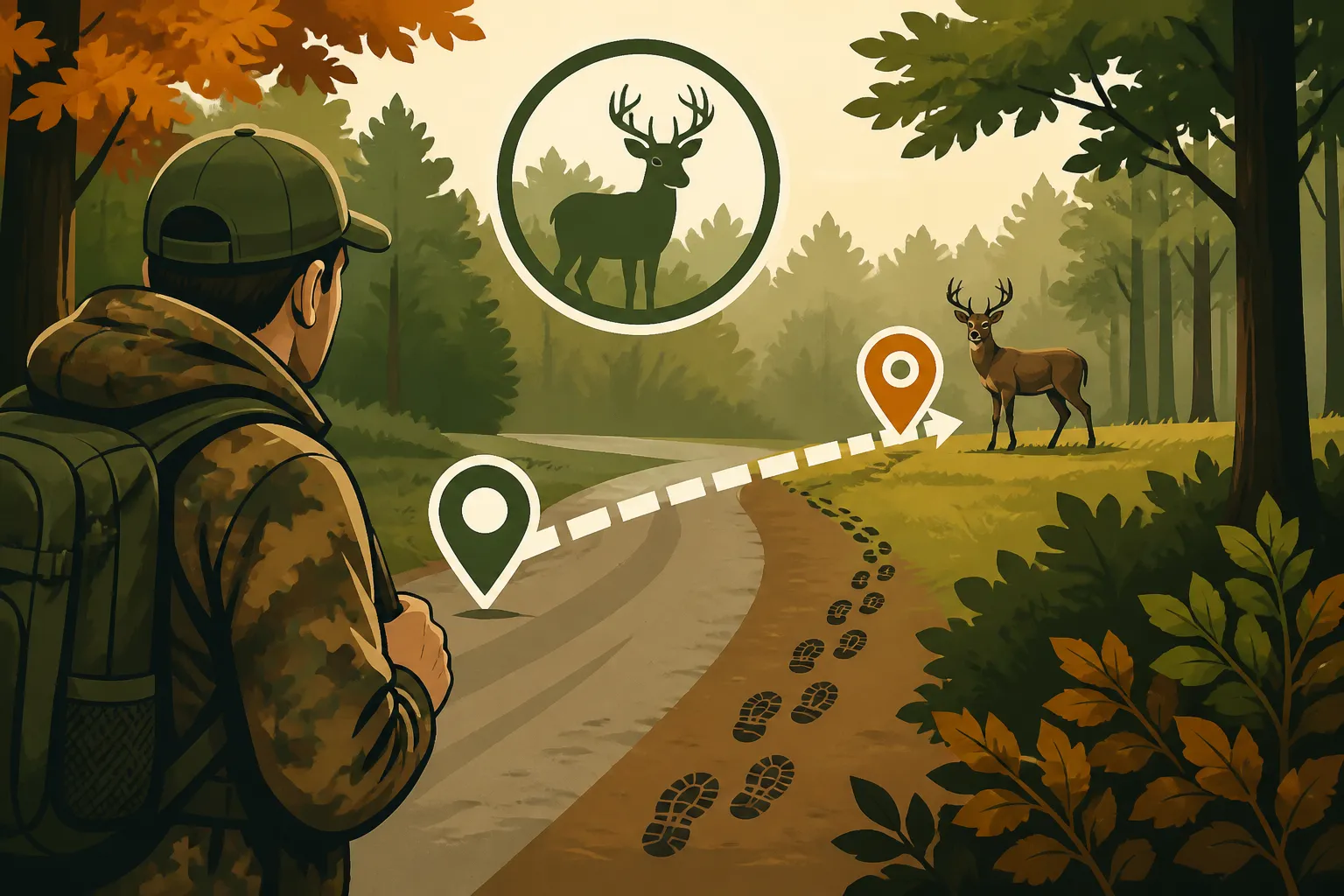
Ever stared down a long, gravel forest road in Maryland, backpack heavy, wondering just how far you really need to walk to shake off the crowds and find some deer? It's a universal struggle on public land, and that question often decides the success or failure of your hunt. Pushing too far can burn you out before the sun is up, while not going far enough often means bumping into other hunters or spooking game already on edge. This guide is all about helping you figure out the optimal distance to put between yourself and easy access, tailored specifically for hunting Maryland's diverse landscapes.
The Invisible Pressure Line: Why Distance Matters on Maryland Public Land
It’s an unfortunate truth that convenience often comes with a crowd, and nowhere is this more apparent than on public hunting lands in Maryland. Every paved parking area, every well-maintained forest road, every obvious trail head acts like a magnet, drawing hunters who, understandably, want to get to their spot with minimal fuss. The problem is, deer, turkeys, and even sika deer aren't oblivious to this pattern. They quickly learn to associate human presence with these easy access points. This creates what I like to call "the invisible pressure line."
Think about it from a deer's perspective. If every morning, a dozen trucks pull up to the same parking lot, and hunters start fanning out within a quarter-mile, where do you think those deer are going to be? They're not going to hang out browsing acorns right next to the gravel. Instead, they'll often retreat to thicker cover, steeper terrain, or simply further away from the commotion, seeking out pockets of quiet that most hunters deem "too far" or "too difficult." Your goal as a savvy hunter is to push past that invisible pressure line and find those quieter sanctuaries. This is why when you're Hunting Pressure on Maryland Public Land, walking a bit further often yields better results. The deer haven't been constantly harassed, their movement patterns are more natural, and they're less likely to bolt at the slightest sound.
This isn't just about deer, either. Wild turkeys on heavily hunted public ground can be incredibly difficult to call in if they're constantly seeing or hearing people near primary access points. Sika deer, especially in the marshes, might use the very remoteness of certain areas as their primary defense. While it might feel like a chore to add extra miles to your boots, the reward of finding unpressured game, or even just enjoying a truly solitary morning in the woods, is often well worth the effort. It's about changing your mindset from finding the easiest way in, to finding the best way to escape the crowds.
Factors Defining Your Public Land Trek in Maryland
So, how far is far enough? There’s no magic number, unfortunately, as the ideal walking distance from a Maryland forest road is a dynamic calculation influenced by several key factors. Understanding these will help you make a more informed decision each time you step out.
Species You’re Pursuing
The behavior of the game you’re after plays a huge role in how much ground you need to cover. A wary whitetail buck in Western Maryland's steep mountains might require a significantly deeper penetration into the woods than, say, a pheasant released on a designated Maryland's Released Pheasants and Where They Go hunting area.
- White-tailed Deer: These intelligent animals are highly sensitive to pressure. In heavily hunted areas, especially during firearms season, deer will often seek refuge in the thickest, most inaccessible cover they can find. If you’re hunting whitetails in a popular WMA, particularly near agricultural fields or suburban edges, a walk of 0.75 to 1.5 miles can often get you into less disturbed areas. For deep woods in state forests like Green Ridge or Savage River, pushing 1.5 to 2.5 miles (or even more in rugged terrain) might be necessary to truly leave other hunters behind and find unpressured deer. When you're thinking about White-Tailed Deer in Maryland, remember they are masters of using topography and cover to their advantage.
- Sika Deer: Ah, the elusive sika of Maryland’s Eastern Shore marshes! These creatures are smaller, incredibly tough, and masters of concealment. While many hunters focus on boat access, if you're working from a forest road or public access point along the marsh edge, your "walk" might involve a lot of wading or slogging through mud and phragmites. Sika are often found in thick, unforgiving cover where most people won't venture. A half-mile walk through that kind of nasty stuff can feel like two miles on solid ground, and it will often put you right where the sika are hiding. They don’t necessarily run from human presence in the same way whitetails do; they just melt into the dense cover, relying on it for security. Knowing Where Sika Deer Bed in Phragmites will give you a huge advantage.
- Wild Turkeys: Turkeys, especially gobblers in the spring, can be very responsive to calling, but they also get "educated" quickly by hunting pressure. If you're hunting an area with good timber and roost trees that's easily accessible, those birds might be pressured right off the roost or fly down away from traditional calling spots. Walking a half-mile to a mile into quieter timber, away from the immediate road, can put you in a better position to intercept birds that haven't been called to multiple times already that morning.
Terrain and Habitat Characteristics
Maryland's landscape is incredibly diverse, from the tidal marshes of the Eastern Shore to the steep Appalachian ridges in the west. This variety directly impacts how far you can and should walk.
- Flat, Open Woods/Farm Edges: In areas like parts of the Eastern Shore or Southern Maryland with flatter terrain and more open woodlots, hunters tend to spread out more easily. However, this also means deer can detect pressure from further away. Here, even a one-mile walk might not feel like much, but it can make a difference. If you're on the edge of private land that connects to public, those deer might just be taking a few hundred yard jaunt into the timber.
- Dense Thickets/Marshes: These are your friends for finding unpressured game. A half-mile walk through a briar patch or a sika marsh can take twice as long and be twice as difficult as a mile walk through open hardwoods. Hunters often shy away from truly dense cover, making these areas natural sanctuaries. Don't underestimate the effort required to cover ground in these environments. When you're Hunting a Loblolly Pine Island in the Marsh, that half-mile trek could be your golden ticket.
- Steep, Mountainous Terrain: Western Maryland offers challenging, rewarding hunting. The steep hills and hollows naturally funnel hunters along contours or up drainages. Pushing beyond these obvious travel lanes, especially up an extra ridge or down into a deeper hollow, can pay dividends. A mile on a flat trail is vastly different from a mile uphill through thick timber. Consider the elevation gain and loss when planning your distance. Areas like Savage River State Forest or Green Ridge State Forest are perfect examples where Still-Hunting Western Maryland Mountain Timber far off the main roads can pay off with a big buck.
Time of Season and Day
Pressure isn't constant; it ebbs and flows with the calendar and the clock.
- Early Season (Archery Opener, September): With less pressure, deer might still be closer to food sources and less wary. A 0.5 to 1-mile walk might be enough. However, as the season progresses, and particularly during the firearms seasons, increasing pressure means you'll need to go further.
- Firearms Seasons: This is when pressure is at its peak. Expect to walk significantly further—1.5 to 3 miles or more—to find areas that haven't been disturbed. The sheer volume of hunters dictates a deeper push.
- Late Season: By late season, deer are often exhausted and have been pushed around. They'll be seeking security cover close to winter food sources. A deep walk might still be necessary, but sometimes a shorter, strategic walk into a bedding area adjacent to an obscure food source can be effective.
- Mid-day Lull: Most hunters are back at their trucks by late morning. The mid-day can be a fantastic time to penetrate deeper, especially if you're still-hunting or planning to sit a fresh sign area. Deer will often move in these quieter hours.
Mapping Your Miles: Tools and Techniques for Smart Access
Blindly walking until you're tired isn't a strategy; it's a recipe for exhaustion and frustration. Effective scouting and the use of modern tools are essential to wisely choose your walking distance from a Maryland forest road.
Harnessing Digital Mapping Applications
Forget the old paper maps and compass (though it’s still wise to have a backup!). Today’s digital mapping apps are game-changers for public land hunting. Brands like onX Hunt and GoHunt have revolutionized how hunters scout and navigate. These apps allow you to view aerial imagery, topo maps, and even public/private land boundaries right on your phone. This is crucial for planning your trek.
- Pre-Season Scouting with Aerial Photos: Before you even lace up your boots, spend time digitally scouting. Look for areas away from obvious access points. Identify bottlenecks, funnels, thick cover, and potential bedding areas that are a good distance from forest roads or parking lots. Mark these waypoints. Look for anomalies: small pockets of timber surrounded by fields, draws that lead away from main trails, or overlooked benches on steep hillsides. Scouting Maryland Public Land With Aerial Photos is an incredibly effective way to find these spots.
- Identifying "No-Go" Zones: These apps help you see where private land abuts public land. Sometimes, what looks like a deep woods public access point is actually a thin strip bordering vast private parcels. You don’t want to walk two miles only to realize you’re right on a property line you can’t cross. Using onX Hunt to clearly see these boundaries is invaluable.
- Measuring Distance and Elevation: Both onX Hunt and GoHunt allow you to draw lines and measure distances, as well as view elevation changes. This is vital for calculating not just linear distance, but also the actual effort required. A mile over flat ground is very different from a mile with 500 feet of elevation gain. This helps you set realistic expectations for your trek.
Ground Scouting and Boot Leather
While digital tools are amazing, nothing replaces putting boots on the ground.
- Walk Potential Routes: During the off-season or before the hunt, walk potential routes to your chosen spots. Note stream crossings, steep sections, impenetrable thickets, and any areas that might be noisy or difficult to navigate in the dark. This also helps you assess how far other hunters are likely to go. If a particular patch of woods looks daunting during broad daylight, chances are fewer people will penetrate it pre-dawn.
- Look for Old Logging Roads or Faint Trails: Many public lands, especially state forests, have networks of old logging roads or faint game trails that aren’t obvious on standard maps. These can offer slightly easier travel and a path to deeper cover. If you find one, mark it on your onX Hunt or GoHunt app. Just be aware that these can also be used by other hunters, so continue pushing past the most obvious segments.
- Check for Previous Sign: Look for older rubs, scrapes, bedding areas, and scat. The deeper you go into the woods and still find abundant, unpressured sign, the better. Conversely, if you're a mile in and still seeing boot tracks and candy wrappers, you might need to go further. This kind of Reading Sign in Maryland Mountain Timber is critical.
Consider Your Entry and Exit Strategy
The distance you walk isn't just about getting in; it's about getting out, especially if you're successful. Recovering a deer a mile and a half into a steep hollow or a sika from a marsh at low tide is no small feat.
- Drag Routes: Always have an exit plan. Are there flatter routes you can take out? Will you need help? If you’re hunting solo and punch a tag two miles deep, you might be looking at a multi-trip pack-out or a very long drag. Factor this into your maximum penetration distance.
- Time and Energy: Starting a long walk in the dark is one thing; making that same walk out, potentially with game, after a long day of hunting, is another. Don't overcommit yourself to a distance that you can't reasonably manage, especially if you're by yourself.
Striking the Balance: When to Push Further, When to Hold Back
The art of knowing how far to walk isn't just about raw mileage; it's about making smart, calculated decisions that maximize your chances of success while minimizing wasted effort and ensuring your safety.
The Trade-Off: Effort Versus Reward
Every step you take beyond the pavement is an investment. You're investing energy, time, and sweat. The potential reward is access to less pressured game, but there's a point of diminishing returns.
- The "Half-Mile Hump": Often, pushing just a half-mile to a mile past the easily accessible areas can dramatically reduce hunter encounters. This might not sound like much, but it's enough to deter a significant percentage of casual hunters. If the terrain is particularly nasty (think thick briars, steep inclines, or swampy ground), even this seemingly short distance can put you into prime, unpressured territory. In many Hunting Maryland's Wildlife Management Areas, this initial push can make all the difference.
- The Sweet Spot: For most public land deer hunting in Maryland, especially outside of the peak firearms season, finding a "sweet spot" around 1 to 1.5 miles from the nearest main access point often hits a good balance. This distance typically puts you beyond the initial wave of hunters while still being manageable for a single day hunt, particularly if you’re still-hunting or plan to move your stand.
- Pushing the Limits: There will be times and places where pushing 2, 3, or even more miles is warranted. If you're after a mature buck in a highly pressured area, or specifically targeting areas identified by onX Hunt as remote sanctuaries, the extra effort can pay off. This is especially true in big timber country like Garrett or Allegany counties. Just make sure you are in good physical condition and have a clear plan for packing out any game. Remember, Finding Maryland Ground Others Walk Past often means literally walking further than them.
Reading the Sign and Adapting
Your initial plan might be to walk a certain distance, but always be ready to adapt based on what you encounter.
- Hunter Sign: If you’ve walked a mile and are still seeing fresh boot prints, discarded snack wrappers, or hearing other hunters, you haven’t gone far enough. Keep pushing, or adjust your direction to a less obvious travel corridor.
- Game Sign: Conversely, if you hit significant, fresh game sign (heavy trails, fresh rubs, abundant scat) at only three-quarters of a mile in, and you haven't detected recent human activity, you might have found your spot. There’s no need to walk an extra mile just because you set an arbitrary goal. The deer are telling you they're comfortable here.
- Scouting in Real-Time: Use your mapping app, like GoHunt, to constantly assess your location against topo features and potential holding areas. If you find a hidden bench or a thick draw that wasn't obvious from the road, it might be worth investigating, even if it's a slight detour from your planned route.
- Weather Conditions: Snow or heavy rain can deter many hunters, making shorter walks more effective as the general pressure decreases. Conversely, ideal hunting weather might mean you need to walk further to escape the increased competition.
Practical Considerations for Deeper Penetration
Venturing further from the forest road demands extra preparation and smart choices. This isn't just about being tough; it's about being smart.
Gear and Pack Weight
Every extra item you carry adds weight, and that weight becomes a burden faster the further you walk.
- Lighten Your Load: Be ruthless with what you pack. Do you really need that extra call, or those five different broadheads? Every ounce adds up. Focus on essentials: water, safety gear, navigation tools (and a charged phone with mapping apps like onX Hunt), first-aid, field dressing kit, and enough food for the duration.
- Comfortable Footwear: Your feet are your most important asset. Invest in high-quality, broken-in boots that are suitable for the terrain. Blisters two miles deep are a nightmare.
- Layering: Maryland weather can be fickle. Dress in layers that you can easily add or shed to manage your body temperature as you exert yourself walking in and then cool down sitting on stand.
Safety and Preparedness
The deeper you go, the more isolated you become, increasing the importance of safety.
- Tell Someone Your Plan: Always let a trusted person know exactly where you’re going, your planned route, and when you expect to be back. This is non-negotiable for deeper penetration hunts.
- GPS/Navigation: A fully charged phone with a reliable mapping app is essential. Carry a portable charger. Consider a handheld GPS unit as a backup, especially in areas with spotty cell service. Knowing Where to Get a Maryland Public Land Map and understanding how to use it, digitally or physically, is paramount.
- First Aid: A well-stocked first-aid kit, including items for cuts, blisters, and allergic reactions, is a must.
- Water and Snacks: Dehydration and low blood sugar can quickly sap your energy. Carry more water and calorie-dense snacks than you think you'll need.
- Signaling Device: A whistle, bright orange flagging tape (for marking trails or blood), or even a satellite communicator like a Garmin inReach can be a lifesaver if you get lost or injured.
- Blaze Orange: Even when not legally required for your specific season or weapon (though often wise to wear regardless), always wear blaze orange when walking in or out of your hunting spot on public land, especially during firearms seasons, to make yourself visible to other hunters.
Table: Recommended Walking Distances by Species and Terrain (Approximate)
| Species / Terrain Type | Low Pressure (e.g., Early Archery) | Moderate Pressure (e.g., Mid-Archery/Muzzleloader) | High Pressure (e.g., Firearms Season) |
|---|---|---|---|
| Whitetail Deer | |||
| Flat, Open Woods / Farm Edges | 0.5 – 0.75 miles | 0.75 – 1.25 miles | 1.25 – 2 miles |
| Dense Thickets / Rolling Hills | 0.75 – 1 mile | 1 – 1.5 miles | 1.5 – 2.5 miles |
| Steep Mountains / Rugged Timber | 1 – 1.5 miles | 1.5 – 2.5 miles | 2.5+ miles |
| Sika Deer | |||
| Tidal Marsh (Wading/Slogging) | 0.5 – 1 mile (feels like more!) | 0.75 – 1.5 miles | 1 – 2 miles |
| Pine Thickets / Marsh Edges | 0.5 – 0.75 miles | 0.75 – 1.25 miles | 1.25 – 2 miles |
| Wild Turkeys | |||
| Open Woods / Agriculture | 0.5 – 0.75 miles | 0.75 – 1 mile | 1 – 1.5 miles |
| Remote Timber / Hilly Areas | 0.75 – 1 mile | 1 – 1.5 miles | 1.5 – 2 miles |
Note: These are general guidelines. Always scout your specific area and adapt to real-time conditions and hunter pressure.
Walking further from a Maryland forest road isn't just about putting miles behind you; it's about strategic thinking, understanding animal behavior, and using modern tools to your advantage. It means less competition, less educated game, and ultimately, a more rewarding and often more successful hunting experience. So next time you pull up to that trailhead, consider pushing just a little bit further than you normally would. You might be surprised at what you find.
Disclaimer
This article is for general informational purposes only and does not constitute professional advice. Laws, prices and regulations vary by location and change over time. Consult a qualified professional for guidance on your specific situation.