Hunting an Old Maryland Field Growing Back Up
Hunting in Maryland can sometimes feel like an endless search for that perfect, undisturbed pocket of woods, especially when you’re constantly battling pressure or limited access. One frustration many of us face is overlooking prime deer habitat simply because it doesn't look like a classic mature timber stand or a manicured field edge. But let me tell you, those old fields that are slowly but surely growing back up, often forgotten and left to return to nature, are absolute goldmines. This guide will walk you through how to identify, scout, and effectively hunt these unique transitional areas in Maryland, turning overlooked spots into your next honey hole.
Why Old Fields Are Deer Magnets (and More!)
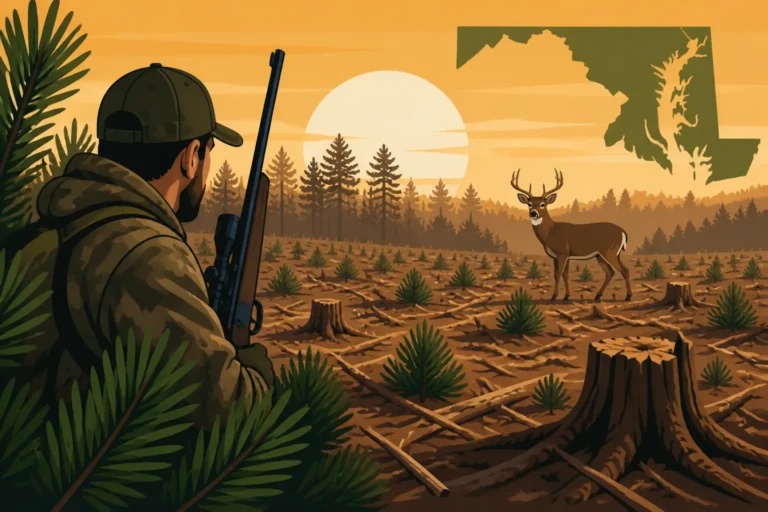
When you drive past an old field that’s no longer actively farmed or mowed, it might just look like a messy patch of weeds and brush. But to a deer, and indeed to many other game animals, it's a five-star hotel with an all-you-can-eat buffet. These areas represent a crucial stage in ecological succession, where open ground starts to revert to forest, and it creates a perfect storm of food, cover, and bedding opportunities that mature woods or open fields often lack.
Think about it: a mature forest might have a good acorn crop in the fall, but beyond that, natural browse can be sparse and sunlight struggles to reach the forest floor. A wide-open agricultural field provides food, sure, but little to no cover during daylight hours. An old field growing back up, however, hits that sweet spot. You'll find a thick tangle of briars, multiflora rose, young saplings like sumac and sassafras, and a host of herbaceous plants that are incredibly palatable to deer. This dense, often thorny growth provides unparalleled security cover, making deer feel safe to bed down close to their food source. It’s a perfect refuge, especially on public lands or smaller private parcels where deer face constant pressure. They can feed on the tender shoots and leaves, then melt into the thicket just a few yards away when they need to hide or chew their cud. Beyond deer, these thickets are also fantastic for rabbits, providing excellent cover and forage, and you might even jump a pheasant or find a spot a gobbler used for dusting.
Scouting and Interpreting Old Field Sign
Finding these spots is the first step, and it often starts long before you ever set foot in the woods. Aerial maps are your best friend here. Services like onX Hunt or GoHunt allow you to zoom in and identify areas that appear "brushy" or unkempt, often adjacent to more defined timber blocks or active farmlands. Look for irregular shapes, areas that don't quite fit the typical agricultural grid, or sections that look different from the surrounding mature woods. Once you've pinpointed a few promising locations, it's time for some boots-on-the-ground scouting, preferably during the late winter or early spring when vegetation is down, making it easier to see trails and sign. You might be surprised at how much ground you can cover, even in seemingly impenetrable cover, if you know what you're looking for.
When you're out there, pay close attention to the edges where the old field meets more open woods or agricultural fields. These transition zones are almost always heavily used. Look for distinct deer trails cutting through the thick brush, often forming a network of tunnels that deer use religiously. Inside the thicket, seek out pockets of slightly taller trees or even just denser patches of briars – these are prime bedding areas. You'll often find flattened spots where deer have laid down, and in the rut, don't be surprised to find rubs and scrapes, especially along the more defined travel corridors within the field. The density of sign in these areas can be astounding because deer feel so secure here. Remember, you're not just looking for a deer; you're looking for where deer feel safe. Utilizing tools like onX Hunt can help you mark these finds, track your scouting routes, and identify property boundaries, which is crucial when you're dealing with mixed public and private land. For more on finding these spots, check out Scouting Maryland Public Land With Aerial Photos.
Strategies for Hunting Old Field Edges and Interiors
Hunting these overgrown fields requires a slightly different approach than sitting over a food plot or in big timber. Your stand placement is critical. Often, the best spots aren't deep inside the thickest part, but rather along the edges where deer filter in and out, or where a slight opening or natural travel corridor exists within the field itself. Think about where deer might enter the old field from a bedding area in the deeper woods to feed, or vice-versa. Funnel points where two distinct types of cover meet, or where the field narrows, are excellent choices. You might find success by setting up on a subtle ridge or high point within the field that offers a vantage over a dense pocket below.
Consider the wind and thermals carefully. Even in dense brush, deer are hyper-sensitive to scent. On a still morning, thermals will typically drop down into low spots before rising as the sun warms the air. In the evening, the opposite is true. Understanding how these air currents move through the varied terrain of an old field is paramount. Your entry and exit routes are also crucial; you don't want to bump deer as you come and go. Consider using a ditch line, a creek bed, or even a less-used path that allows you to approach your stand undetected. Hunting pressure is a real factor here, particularly on public land. These areas can become sanctuaries, so be mindful of how much you disturb them. You might be better off making a single, well-planned hunt rather than repeatedly intruding. If you're hunting in the early archery season, deer might be less nocturnal, offering daytime opportunities. During firearms season, the dense cover becomes even more valuable to deer seeking refuge. And in the late season, with other food sources dwindling, the persistent browse in an old field can be a major draw. For a deeper dive into how deer move through transitional areas, take a look at Hunting a Funnel Between Two Grain Fields.
| Season | Primary Appeal of Old Fields | Best Tactics | Key Considerations |
|---|---|---|---|
| Early Archery | Abundant green browse, security cover, comfortable beds | Stand on edges or internal travel lanes, morning/evening | Watch for thermal shifts, gentle entry/exit. |
| Rut (Mid-Nov) | Bucks cruising edges for does, secure sanctuary | Scrapes/rubs along interior trails, calling | Bucks may stage in thickets before entering open areas. |
| Firearms Season | Dense refuge from pressure, safe travel routes | Stand over escape routes, strategic drives if permitted | Be aware of other hunters; focus on midday movement. |
| Late Season | Persistent browse, thermal cover in cold weather | Stand near remaining food sources, midday ambush | Deer are often concentrated, highly pressured. |
Gear and Tactics for Success
Hunting an old field isn't always glamorous, and it demands a specific set of gear and tactics. First, forget your quiet, lightweight stalking clothes for deep timber. You're going to be pushing through thorns, briars, and thick brush, so durable, briar-proof pants or chaps are almost a necessity. A sturdy pair of boots that can handle mud and tangled roots is also essential. For bowhunters, consider a shorter axle-to-axle bow if you plan on shooting in tight quarters, and make sure your broadheads are sharp and robust enough to handle any stray twigs. For firearms hunters, a shotgun with slugs or a brush gun might be more appropriate than a long-range rifle, depending on the density of the cover and county regulations. Maryland has specific Maryland's Legal Weapons by County guidelines you should always check.
When it comes to tactics, both still-hunting and stand hunting can be effective. If you’re still-hunting, move incredibly slowly, pausing often, and using the dense cover to your advantage to pick apart the terrain ahead. You'll want to be extra vigilant, as deer can seemingly appear out of nowhere. If you prefer to sit, as mentioned before, choose stand locations that provide a clear shooting lane into a travel corridor or a small opening within the field. You might also find success using grunt calls, especially during the rut, as the sounds can carry well within the thickets and entice a buck looking for a rival or a receptive doe. For more on calling, read Grunt Calls in Maryland Hardwoods. Be mentally prepared for a challenging tracking job if you make a kill in these thick areas; a good blood trail is critical, and sometimes bringing a friend along to help is a wise move, particularly if you're dealing with dense cover. For guidance on tricky recovery situations, check out Blood Trailing in Marsh Grass After Dark. Ultimately, persistence, patience, and a willingness to embrace the tangles are what will lead to success in these overlooked Maryland gems.
Disclaimer
This article is for general informational purposes only and does not constitute professional advice. Laws, prices and regulations vary by location and change over time. Consult a qualified professional for guidance on your specific situation.