Booking a Western Maryland Deer Hunt
Hunting for deer in Western Maryland can feel like stepping into a different world compared to the flat farmlands of the Eastern Shore or the suburban woodlots around the Beltway. The rolling hills, steep ridges, and dense timber of Garrett and Allegany counties present unique challenges and rewards, and navigating how to best approach a hunt there, especially if you're not a local, can be daunting. This guide is here to walk you through everything you need to know about booking, planning, or embarking on a Western Maryland deer hunt, whether you're looking for a guided experience or prefer to go it alone.
Understanding Western Maryland's Deer Hunting Landscape
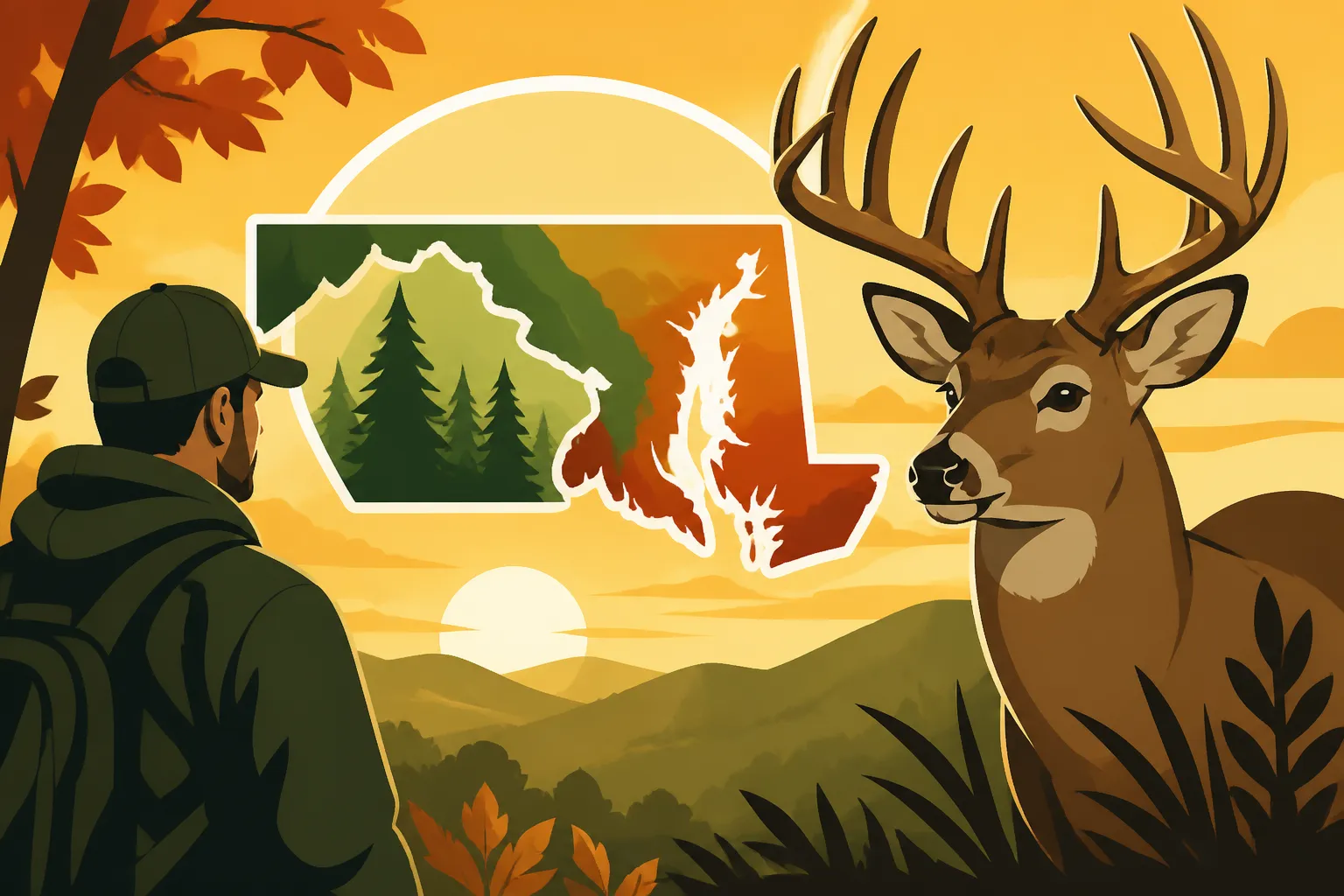
Western Maryland's topography is a dramatic shift from much of the rest of the state, defining how deer live and how hunters approach them. You're trading flat fields and tidal marshes for hardwood forests, steep hollers, and rugged ridges. This isn't just a scenic change; it profoundly impacts deer behavior and hunting strategies.
The Rugged Terrain and Whitetail Behavior
The Appalachian foothills dominate Western Maryland, particularly in Garrett and Allegany counties. Here, deer aren't concentrated in agricultural fields as much as they are in the expansive timber. They rely on mast crops like acorns, browse on various forest plants, and utilize thick clear-cuts and mountain laurel patches for bedding cover. Deer movement often follows terrain features – saddles, benches, and creek bottoms become natural travel corridors. Understanding these patterns is key. For instance, deer will often cross a saddle between two peaks to move from bedding to feeding areas, especially during the rut. Hunters who learn to read the contours of the land and identify these natural funnels will have a significant advantage. The weather can also be a major factor; early season hunts can be warm and require careful scent control, while late season hunts often bring snow and bitter cold, completely altering deer movement and requiring different gear and tactics.
Public Land vs. Private Land Opportunities
Western Maryland boasts a significant amount of public land, a real draw for hunters. Places like Savage River State Forest, Green Ridge State Forest, and numerous Wildlife Management Areas (WMAs) offer vast tracts of huntable ground. While these areas provide incredible access, they also come with increased hunting pressure, especially during opening weekends and the firearms season. Learning to scout thoroughly and venturing deeper into these public lands, away from road systems, can pay off. Hunting Maryland's Savage River State Forest offers some true wilderness experiences, but it demands effort. On the flip side, private land access, while harder to secure, can offer less pressured deer and more consistent opportunities. Farmers in the valleys might be open to granting permission, especially if deer are causing crop damage, but it often requires knocking on doors and building relationships, something that's tough to do if you're traveling from a distance.
Key Counties for Western Maryland Deer
When you're thinking about hunting Western Maryland, Garrett and Allegany counties are usually at the top of the list. These are the strongholds for the state's largest continuous tracts of forest and, consequently, its largest deer populations outside of the more suburban areas. While Washington County also offers some mountain terrain in its western reaches, it quickly transitions to more agricultural and suburban areas to the east.
Allegany County, with Green Ridge State Forest at its heart, provides a mix of steep, rugged terrain and some flatter ridge tops, often with a good blend of hardwoods and pine plantations. Deer here are often tough, wise animals that know their home range intimately. Garrett County, Maryland's westernmost county, is even more mountainous, featuring places like Savage River State Forest. It's colder, gets more snow, and has an even more remote feel. Both counties are part of Maryland's Region A for deer management, which typically has different bag limits and antler restrictions than Region B, so it’s crucial to understand Maryland's Deer Bag Limits and Antler Rule before you go. Hunters often report seeing larger-bodied deer in these mountain counties compared to the coastal plain, a testament to the abundant natural forage and less fragmented habitat.
Deciding Between a Guided Hunt and a DIY Adventure
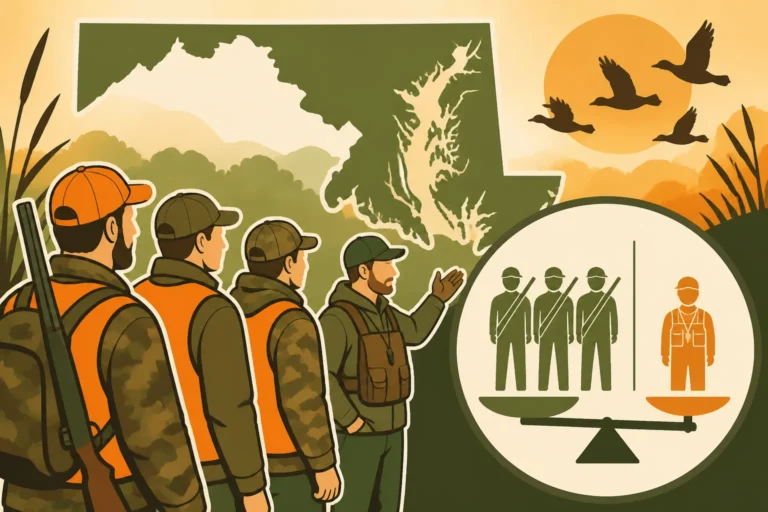
The choice between hiring a guide or tackling Western Maryland on your own is a big one, often dictated by budget, experience level, and how much time you have to invest. Both options offer unique experiences, and understanding the trade-offs is crucial.
Pros and Cons of Guided Deer Hunts
For many, a guided hunt is the path of least resistance and often the most reliable way to tag a deer, especially if you're unfamiliar with the area. Outfitters provide expertise, access to private land, and can drastically cut down on your scouting time. They know where the deer are, what they're eating, and how they're moving based on current conditions. The pros are clear: increased success rates, less planning hassle, and access to prime ground you couldn't get otherwise. You're also often benefiting from years of a guide's local knowledge about deer behavior, weather patterns, and specific stand locations. They might offer full-service packages, including meals and lodging, which can make the trip seamless.
However, guided hunts come with a significant cost. This investment can range widely, and while it often includes valuable services, it’s a factor to seriously consider. Another potential con is the reduced sense of personal accomplishment for some hunters. While a guided hunt is certainly a challenge, some prefer the satisfaction of finding and harvesting a deer entirely on their own terms. Plus, the schedule is often set by the outfitter, meaning less flexibility in your hunting style.
The Appeal of Self-Guided Exploration
The do-it-yourself (DIY) hunt is the quintessential adventure for many hunters. It’s a chance to truly test your skills, research abilities, and resilience in the field. Western Maryland offers ample public land for this, and it can be incredibly rewarding when you piece together a successful hunt from scratch. The financial outlay is primarily for your license, travel, and personal gear, which is often much less than a guided trip. The sense of freedom to explore, move stands, and adapt your tactics daily is a huge draw. You're also gaining invaluable experience in land navigation, reading deer sign, and problem-solving in real-time.
However, DIY hunting in Western Maryland's rugged terrain is not for the faint of heart. It requires extensive pre-season scouting, often relying on aerial maps and tools like onX or similar mapping applications, followed by boots-on-the-ground reconnaissance. You need to be self-sufficient, capable of navigating challenging terrain, and comfortable with the possibility of not seeing many deer, especially on heavily pressured public ground. Packing out a deer from a deep hollow far from a road can be an epic undertaking, and you need to be physically prepared for it. For non-residents, understanding Maryland's Legal Weapons by County and other local nuances can be a steep learning curve.
Semi-Guided Options: A Middle Ground
For those caught between the two extremes, semi-guided hunts can be an excellent compromise. These typically involve the outfitter providing access to private land, pre-scouted stand locations, or general guidance on where to hunt, but you're responsible for your own transportation to the stand, actual hunting, and often your own lodging and meals. This can significantly reduce the cost compared to a fully guided hunt while still giving you a leg up on access and local knowledge. You still get some of that independent hunting feel, but with the benefit of being on productive ground that someone else has spent time finding.
A semi-guided trip might mean the outfitter drops you off at a pre-hung stand or directs you to a specific area on a map, then you take it from there. You still need to be competent in your hunting skills and comfortable making your own decisions in the field, but you're not starting completely from scratch. It's a great option for hunters who want to save money but also want to maximize their chances and avoid the steepest learning curve of a purely DIY public land hunt. This middle-ground approach can be particularly attractive for those who have some hunting experience but are new to the specific challenges of Western Maryland's mountain deer.
Finding and Vetting Western Maryland Outfitters
Once you've decided a guided or semi-guided hunt is right for you, the next step is finding a reputable outfitter. This process requires diligence, as a good guide can make your trip, and a bad one can ruin it. Western Maryland might not have as many deer outfitters as some other states, so knowing where to look and what to ask is critical.
Where to Start Your Search
Begin your search by looking at dedicated hunting booking platforms and online forums. Websites like BookYourHunt.com often list outfitters by region and species, making it a good starting point to see what's available in Western Maryland specifically for deer. You can filter by state and even by the type of hunt you're looking for. Similarly, GoHunt.com, while often focused on western states, sometimes has resources or articles that can point you to reputable guides or at least provide tips for vetting any outfitter you find. Online forums dedicated to Maryland hunting or general deer hunting can also be a goldmine of information, as past clients often share their experiences, good and bad.
Don't underestimate the power of word-of-mouth. Ask fellow hunters if they have recommendations or know someone who has hunted in Western Maryland. Local tackle shops or outdoor retailers in towns like Cumberland, Oakland, or Grantsville might also have business cards or recommendations for local guides they trust. Once you have a few names, visit their websites, scour their social media, and start compiling a list of potential candidates. Look for professionalism, clear communication, and consistent messaging across their platforms.
Key Questions to Ask Potential Guides
Before you commit any money, arm yourself with a list of pointed questions. This isn't about being rude; it's about making an informed decision for a significant investment.
- What type of land do you hunt? Is it private, public with special permits, or a mix? How much acreage do you have access to?
- What are your typical success rates and shot opportunities? Be wary of guarantees. A good guide will give realistic percentages, not absolutes.
- What's included in the price? This is huge. Does it cover food, lodging, transportation during the hunt, field dressing, caping, or tracking? What about airport pickup if you're flying in?
- How many hunters do you take at one time, and what's your guide-to-hunter ratio? This impacts the personalized attention you'll receive.
- Can you provide references from recent clients (last 1-2 seasons)? This is perhaps the most important question. Don't just take their word for it; call those references and ask detailed questions about their experience.
- What happens if I wound a deer? Understand their policy on tracking and recovery.
- What's your cancellation and refund policy? Life happens, and you need to know what your options are.
- What specific gear do you recommend or require? This helps you prepare and ensures you're on the same page.
- Are you licensed and insured? A reputable guide will readily provide proof of this.
Reading Between the Lines of Outfitter Claims
When reviewing outfitter websites and social media, it's easy to get swept up in impressive photos and success stories. However, you need to develop a discerning eye. Look for consistency in their reported harvests. Are all the deer giant Boone & Crocket monsters, or do they show a realistic range of animals? While every outfitter wants to show off their best, a steady stream of nothing but trophy photos might be a red flag, potentially indicating a high-fence operation or an exaggeration of typical results.
Pay attention to the details in their photos. Do the backgrounds consistently look like Western Maryland terrain, or do they seem generic? Read testimonials carefully; look for specific details rather than vague praise. If an outfitter claims "100% success," ask what that "success" means – is it 100% opportunity, 100% harvest, or something else? These nuances are critical. A guide may guarantee a shot opportunity, but not a kill, which is a significant difference. Also, consider how long they've been in business. Longevity often speaks to reliability and client satisfaction.
What to Expect from a Western Maryland Deer Hunt Package
Booking a guided hunt is an investment, and understanding what's typically included (and what's not) will prevent surprises and help you budget appropriately. Western Maryland outfitters, especially those focusing on deer, often tailor packages to the local hunting conditions.
Typical Services Included
Most guided Western Maryland deer hunt packages aim to make your experience as smooth as possible. You can generally expect the outfitter to provide access to prime hunting ground, often private land that sees less pressure than public areas. They will have pre-scouted areas and potentially pre-set stands, whether they are ladder stands, hang-on stands, or ground blinds, strategically placed based on deer sign, travel corridors, and current food sources. Transportation to and from the hunting area, or at least to the stand locations, is usually part of the deal.
Field dressing of your harvested deer is a common inclusion, and some outfitters will assist with caping for taxidermy or quartering the animal for transport. Communication and guidance during the hunt itself are paramount; a good guide will explain the hunting plan, answer questions, and offer advice. Depending on the package, meals and lodging might also be provided, ranging from simple camp fare and bunkhouse accommodations to more upscale options. Always clarify these details before booking.
Costs, Deposits, and Payment Structures
The cost of a guided deer hunt in Western Maryland can vary significantly based on the duration of the hunt (typically 3-5 days), the services included, the time of year (e.g., rut hunts might be pricier), and the outfitter's reputation. Day rates for a guided deer hunt often start in the mid-hundreds and can climb much higher for multi-day, all-inclusive packages. It's essential to get a clear, itemized breakdown of costs.
Most outfitters require a non-refundable deposit to secure your booking, often 30-50% of the total hunt price. The remaining balance is typically due either a certain number of days before the hunt or upon arrival. Understand their cancellation policy thoroughly. What happens if you have to cancel? What if they have to cancel due to unforeseen circumstances (like extreme weather)? Always clarify these terms in writing to avoid any misunderstandings. Also, remember to budget for additional expenses like your hunting license and stamps, meat processing, taxidermy, travel expenses, and, importantly, tips for your guide. What a Maryland Guided Deer Hunt Costs can give you a general idea, but always get specific quotes.
Essential Gear and Preparation
A Western Maryland deer hunt requires specific gear to cope with the varied terrain and often unpredictable mountain weather. Expect significant temperature swings, from chilly mornings to warm midday sun, and sudden cold fronts. Layering is absolutely critical. Start with a moisture-wicking base layer, add insulating layers like fleece or wool, and top with a waterproof and windproof outer shell. Good quality, broken-in hiking boots with excellent ankle support are non-negotiable for navigating steep, uneven ground.
Beyond clothing, you’ll need your weapon of choice (bow, muzzleloader, or rifle, depending on the season and county regulations), ammunition, optics (binoculars are a must for glassing timbered hillsides), a headlamp, a sharp knife, and a small backpack with essentials like water, snacks, first-aid, and an emergency shelter. Always check the specific blaze orange requirements for the season you'll be hunting, as these vary. Maryland Blaze Orange Requirements outlines when and how much you need to wear. If you’re hunting later in the season, traction devices for your boots might be a lifesaver if there’s snow or ice. Don't forget a way to carry out your game; a robust game bag and perhaps a frame pack or deer cart (if the terrain allows) can be vital.
Navigating Maryland's Hunting Regulations and Licensing
Hunting in any state requires adherence to local regulations, and Maryland is no exception. Before you even set foot in the woods of Western Maryland, you need to understand the state's licensing, bag limits, and safety rules.
Obtaining Your Maryland Hunting License and Stamps
To hunt deer in Maryland, every hunter, including non-residents, must possess a valid Maryland hunting license. This isn't just a formality; it's a legal requirement that supports wildlife conservation. You'll need a basic hunting license, and then depending on your chosen weapon and the species, specific stamps may also be required. For deer hunting, this typically includes a "Bay, Migratory Game Bird, and Furbearer Stamp" and an "Archery Stamp" or "Muzzleloader Stamp" if you're hunting with those weapons. If you plan to take more than one antlered deer, you'll also need a "Bonus Antlered Deer Stamp."
Licenses and stamps can be purchased online through Maryland's COMPASS system, which is generally the easiest and most convenient method, or at various licensing agents throughout the state, such as sporting goods stores or county clerk offices. It's crucial to purchase these well in advance of your hunt, especially if you're traveling from out of state, to ensure everything is in order. Remember, you must carry proof of your license and stamps while hunting. Checking Maryland Hunting Licenses and What They Cost will give you the current figures for these necessary items.
Understanding Deer Bag Limits and Antler Rules in Region A
Maryland divides the state into two deer management regions: Region A (Western Maryland) and Region B (the rest of the state). For deer hunting in Western Maryland (Garrett and Allegany counties), you'll be operating under Region A rules, which are generally more conservative due to the terrain and deer populations. The antlered deer bag limit in Region A is typically lower than in Region B, and there's a strict "one buck" rule, meaning you can only harvest one antlered deer per license year. However, there's often an exemption for one antlered deer that does not need to meet the three-point antler rule, which is useful for hunters targeting smaller bucks or those where antler development isn't paramount.
The famous Maryland "three-point antler rule" is generally in effect for antlered deer, meaning a buck must have at least three points on one antler (with specific exceptions). This rule is designed to allow younger bucks to mature. Always double-check the current year's hunting guide for the precise bag limits and antler restrictions for Region A, as these can be updated annually. Understanding these regulations is paramount to a legal and ethical hunt. Maryland's Three-Point Antler Restriction explains this in more detail.
Blaze Orange and Safety Requirements
Safety is always the top priority when hunting, and Maryland has specific requirements for wearing blaze orange, especially during firearms seasons. Hunters must wear a cap or outer garment that displays at least 250 square inches of solid fluorescent orange or fluorescent pink visible from all sides. This applies to both deer and bear firearms seasons, as well as during muzzleloader season when firearms deer season is also open. The only exceptions are typically for archery hunters in certain periods when firearms seasons are closed, or for waterfowl hunters.
Beyond blaze orange, always follow standard hunting safety practices: treat every firearm as if it's loaded, be sure of your target and what is beyond it, keep your finger off the trigger until ready to shoot, and never climb into a treestand without a safety harness. If you're a new hunter or haven't taken a course in a while, it's a good idea to refresh your knowledge with a hunter education course, which is mandatory for most first-time hunters in Maryland. Maryland Hunter Education Requirements will outline who needs to take the course and how to do so. In the rugged terrain of Western Maryland, good communication with hunting partners, carrying a whistle, and having a fully charged phone (though service can be spotty in some areas) are also smart safety measures.
Making the Most of Your Guided or Self-Guided Hunt
Whether you've hired a seasoned outfitter or meticulously planned a DIY adventure, maximizing your time and effort in the Western Maryland deer woods comes down to preparation, adaptability, and responsible post-harvest practices.
Pre-Hunt Scouting and Communication
For a guided hunt, this means excellent communication with your outfitter well before your arrival. Share your hunting experience, physical capabilities, and what kind of deer you're hoping to harvest. Ask questions about typical shot distances, terrain difficulty, and what current conditions are like. This allows the guide to tailor the hunt to your expectations and abilities. The more information you provide, the better they can prepare for your arrival.
For a self-guided hunt, pre-season scouting is your secret weapon. Use topographic maps, satellite imagery (GoHunt.com and onX Hunt are great tools for this), and weather patterns to identify potential bedding areas, food sources, and travel corridors. Look for features like saddles, benches, creek crossings, and changes in timber type. Then, if possible, put boots on the ground to confirm these spots, look for fresh sign like rubs, scrapes, and tracks, and identify potential stand locations or still-hunting routes. Even if you can't scout in person, studying maps and understanding the terrain ahead of time is invaluable for Still-Hunting Western Maryland Mountain Timber.
Adaptability in the Field
The mountains are unpredictable. Weather can change in an instant, deer patterns can shift due to pressure or food availability, and your carefully laid plans might need to be adjusted. A successful hunter, guided or DIY, needs to be flexible. If a stand isn't producing, don't be afraid to ask your guide to move, or if you're self-guided, move it yourself. Pay attention to fresh sign, wind direction, and other environmental factors that might indicate a better spot.
During the hunt, listen to your guide's advice. They spend countless hours in those woods and understand the local deer better than anyone. If you're solo, trust your instincts but also be willing to try new approaches. Sometimes, moving slowly through cover (still-hunting) can be more effective in dense timber than sitting in a fixed location. Persistence is key, as is the ability to stay positive even when the deer aren't cooperating. This mental toughness is as important as any physical skill in the challenging Western Maryland mountains.
Post-Harvest Considerations: Processing and Taxidermy
Once you've successfully harvested a deer, the work isn't over. Field dressing immediately is crucial, especially in warmer weather, to preserve the meat. If you're with a guide, they will typically assist with this. For DIY hunters, be prepared to do it yourself, and consider how you'll get the deer out of the woods. A dragging harness, game cart (if accessible terrain), or even quartering the animal for pack-out might be necessary in rugged areas.
Next, you'll need to decide on meat processing. There are numerous reputable Maryland Deer Processors and Butchers across the state, and many operate near popular hunting areas in Western Maryland. It's wise to research these ahead of time and know their hours and services. If you plan to have your trophy mounted, you'll need to properly cape the deer and get it to a taxidermist. Discuss this with your guide beforehand, as they often have preferred taxidermists or can help with the initial caping to ensure the hide is prepared correctly. Don't forget to register your deer with the Maryland Department of Natural Resources (DNR) as required; this can typically be done online or by phone shortly after harvest.
Lodging and Travel Considerations
Planning your trip involves more than just the hunt itself. Where you'll lay your head, how you'll get there, and what amenities are available all contribute to the overall experience, especially for out-of-state hunters.
Accommodation Options Beyond the Outfitter Lodge
While some outfitters provide lodging as part of their package, many hunters, particularly those on semi-guided or DIY hunts, will need to arrange their own accommodations. Western Maryland offers a range of options to suit various budgets and preferences. You'll find standard hotel and motel chains in larger towns like Cumberland, Oakland, or Grantsville. These offer reliable comfort and are typically close to amenities like restaurants and grocery stores.
For a more rustic or private experience, consider renting a cabin or a vacation home through platforms like Airbnb or local rental agencies. This can be a great option for groups, offering more space, a kitchen for preparing your own meals, and often a more secluded setting, perfect for winding down after a day in the woods. State parks and forests in the region, such as New Germany State Park or Deep Creek Lake State Park, also offer cabins or campgrounds, though these may require advance booking, especially during peak seasons. Lodging Near Maryland's Western Mountains can offer more specific recommendations, but exploring these options can significantly enhance your trip.
Traveling with Firearms and Gear
For hunters traveling from out of state, understanding the rules for transporting firearms is critical. Generally, federal law allows you to transport unloaded firearms in a locked case in your vehicle. However, state and local laws can vary widely, and it's essential to research Maryland's specific regulations before you travel. If you're flying, airlines have strict rules about transporting firearms and ammunition; they must be declared, unloaded, and secured in a locked, hard-sided case as checked baggage. Ammunition must be in original packaging or an approved container, separate from the firearm.
Maryland is generally a gun-friendly state for hunting, but knowing the nuances is crucial. Ensure your firearm is legal for the county and season you're hunting in. For example, some counties in Maryland have restrictions on centerfire rifles, sometimes only allowing shotgun slugs or straight-wall cartridges for deer hunting. Always check the current Maryland hunting regulations guide for the most up-to-date information. Packing your hunting gear efficiently and labeling everything can also streamline your travel, especially if you have multiple bags or are combining your gear with others in a vehicle.
Local Amenities and Supplies
Even on a guided hunt, you'll likely need access to local amenities. Groceries, gas, ice, and possibly forgotten gear are all things you might need during your trip. Western Maryland's towns, while smaller than those in other parts of the state, typically have what you need. Cumberland is the largest city in the region and offers the widest selection of stores, restaurants, and services. Smaller towns like Oakland, Grantsville, or Hancock will have essential services.
It’s a good idea to bring most of what you need from home, but knowing where the nearest grocery store or sporting goods shop is can be a lifesaver for last-minute needs. Don't rely solely on cell service, especially deep in the mountains; a physical map or downloaded offline maps on your phone are excellent backups. Supporting local businesses is also a great way to give back to the communities that host hunters. Whether it's grabbing a coffee at a small diner or picking up some snacks from a local market, these interactions add to the overall hunting experience and foster positive relationships between hunters and local residents.
Disclaimer
This article is for general informational purposes only and does not constitute professional advice. Laws, prices and regulations vary by location and change over time. Consult a qualified professional for guidance on your specific situation.