How Sika Guides Handle Tides and Access
Venturing into Maryland's famous sika deer marshes can be an incredibly rewarding experience, but it’s also undeniably daunting, especially when you consider the constantly shifting tides and tricky terrain. Many hunters find themselves staring at a map, scratching their heads, wondering how on earth they're supposed to get to a prime sika bedding area without getting stuck in the mud or cut off by rising water. This guide is all about peeling back the curtain on how experienced sika guides navigate these dynamic environments, ensuring a safe and successful hunt.
Understanding the Tidal Marsh Environment
The tidal marshes of Maryland's Eastern Shore, particularly in Dorchester County, are a unique and complex ecosystem. They are the heart of sika deer country, but also a formidable challenge for anyone not intimately familiar with their rhythms. The sika deer thrive here, using the dense phragmites and Spartina grass as cover and the abundant aquatic vegetation as food. But what makes it great habitat also makes it incredibly difficult to access.
The Relentless Influence of Tides
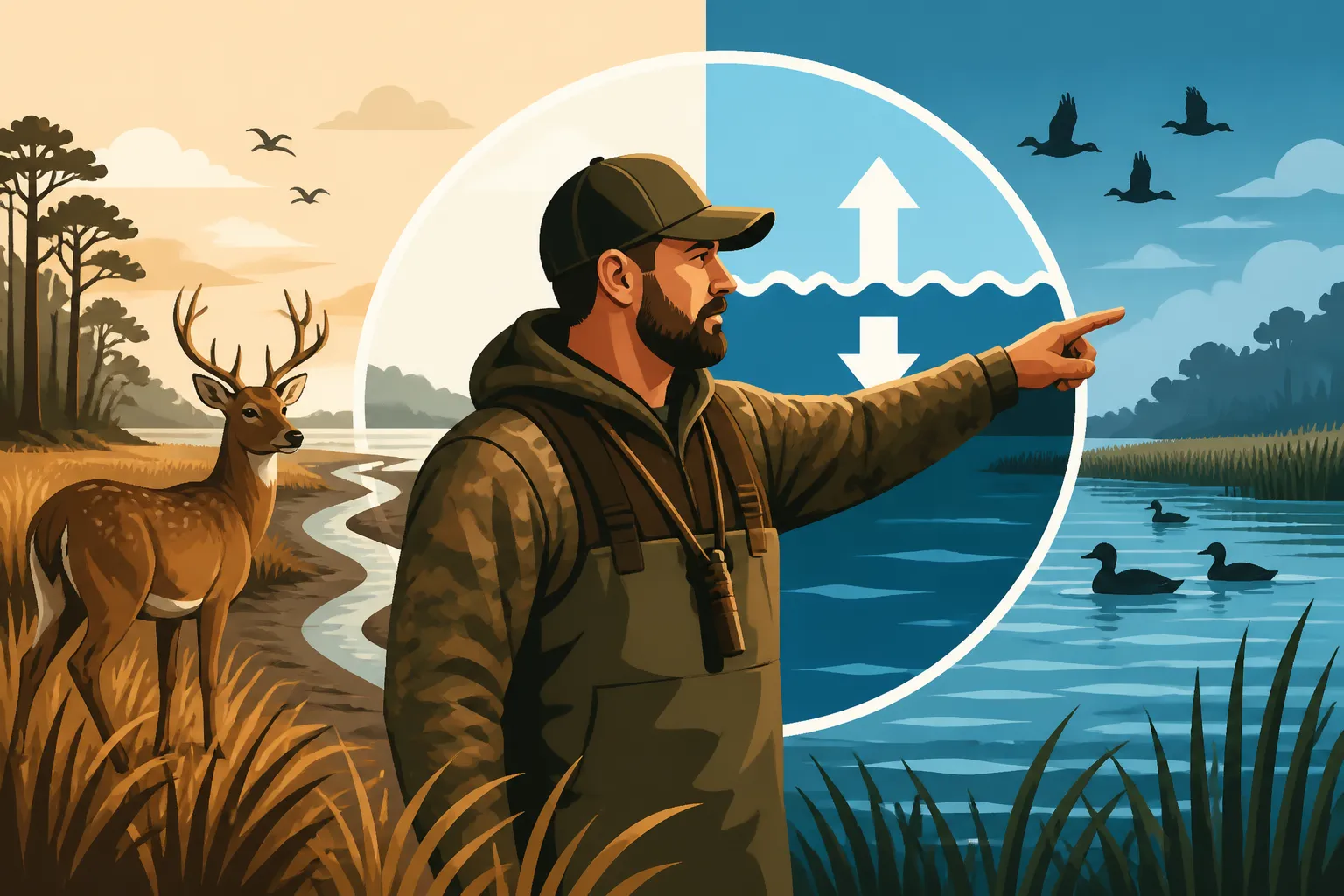
Tides are the ultimate game-changer in a marsh hunt. What might be a walkable, ankle-deep flat at low tide can transform into a chest-deep, impassable channel just a few hours later. Many hunters have found themselves high-and-dry, literally, or worse, stranded by rising water that cuts off their exit route. Guides spend their lives studying these tidal patterns, understanding not just the published high and low tide times, but also how wind direction and moon phases can dramatically alter those predictions. A strong northwest wind during a falling tide, for instance, can push water out even further, exposing vast mudflats that usually remain submerged. Conversely, a prolonged southeast wind can stack water up, making areas accessible by foot suddenly boat-only. Understanding this nuanced dance between water and land is the guide's superpower. They know precisely when the water will be low enough to slip into a hidden gut or high enough to float a boat over a shallow bar. This deep knowledge helps them plan their entry and exit routes with pinpoint accuracy, minimizing the risk of a hunter getting into a precarious situation.
Navigating the Maze of Marsh Terrain
Beyond the tides, the physical landscape of the marsh itself presents a labyrinth of challenges. Imagine miles of dense, chest-high marsh grass, broken up by winding guts, hidden potholes, and treacherous mudflats. It’s a place where you can easily lose your bearings, even on a sunny day. The ground can be firm in one spot, then suddenly give way to knee-deep, sticky mud. Guides have an intimate knowledge of these hidden dangers. They know which seemingly solid-looking hummocks are actually floating mats that will swallow a wader, and which narrow ditches hold enough water at low tide to allow a sneak-in. They've spent countless hours, often in the off-season, exploring these areas, creating mental maps, and sometimes even physically marking routes that only they truly understand. They’ll identify the subtle signs of a Marsh Hunting Sika Deer by Boat route, perhaps a slight indentation in the grass or a specific set of distant trees, that would be completely invisible to an untrained eye. This isn't just about getting to a hunting spot; it's about doing so quietly, efficiently, and most importantly, safely.
A Guide's Mastery of Access Planning
For a sika guide, access isn't just about driving to a boat ramp; it's a multi-layered strategy that involves meticulous planning and specialized equipment. Their entire operation hinges on getting you to where the sika are, even if "where the sika are" feels like the middle of nowhere.
Strategic Entry and Exit Routes
Every sika hunt begins long before dawn with a precise plan for how to get in and out. This plan is heavily dictated by the tides. Guides will analyze the tide charts for the specific day and area, often using local knowledge that goes beyond what's publicly available. They'll know the specific "windows" of opportunity: a two-hour period during a dropping tide when a certain flat is exposed, or a short high-tide surge that allows passage over a shallow channel. They consider factors like how much time it will take to walk or pole through a certain area, when the sun will rise, and how long you'll need to be in position before legal shooting light.
Consider a scenario where the best bedding cover is deep within a large marsh, only accessible by boat at high tide. A guide might plan to leave the dock on a rising tide, navigate a shallow creek, and drop hunters off on a marsh island before the tide peaks. The boat might then be tucked away, or even retrieved and re-launched hours later when the tide allows for extraction. If hunting a Loblolly Pine Island in the Marsh, they'll coordinate the hunt duration with the ebb and flow of the water, ensuring hunters aren't trapped by incoming water or left with an impossible task of dragging a deer through thick mud. This foresight saves valuable hunting time and prevents dangerous situations.
Specialized Equipment and Techniques
The average jon boat won't cut it in many sika marshes. Guides invest in specialized equipment designed for the extreme shallows and thick vegetation.
- Marsh Boats: These are typically flat-bottomed, often wider than standard boats, and built tough to handle bumping through shallow guts and over submerged humps. They're designed for stability in shallow water and for carrying gear and hunters.
- Mud Motors: This is perhaps the most crucial piece of equipment. Unlike traditional outboards, mud motors (either longtail or surface drive) are built to propel a boat through inches of water, thick mud, and heavy vegetation. Their props are designed to churn through muck without getting tangled or damaged, making areas completely inaccessible to regular boats suddenly within reach. A guide with a reliable mud motor can navigate winding marsh ditches that are barely wider than the boat itself, getting you deep into productive areas where sika feel safe from conventional pressure.
- Waders and Boots: While not boat-specific, guides will often insist on specific footwear. Hip Boots Versus Chest Waders in Sika Country is a common discussion. For most marsh hunting, especially if you're getting out of the boat to stalk or retrieve, chest waders are non-negotiable. Guides know that a momentary lapse in judgment or an unexpected dip can quickly put a hunter in cold, wet conditions. They'll often carry extra dry bags or even a spare set of waders for emergencies.
This combination of knowledge and gear allows guides to execute intricate access plans. They know exactly how much water their boat draws, what kind of mud it can churn through, and where the hard bottoms are hidden beneath the water. This tactical advantage is something a do-it-yourself hunter can spend years trying to learn, often through trial and error (and getting stuck a lot!).
Scouting and Real-Time Adjustments
A guide's work isn't just about the hunt day itself; it's a continuous process of scouting, observation, and real-time adaptation to conditions. They're constantly reading the marsh, much like a seasoned chess player reads the board.
Reading the Marsh for Sika Sign
Guides are masters at interpreting sika sign in this unique environment. While whitetail hunters look for rubs and scrapes on trees, sika sign in the marsh is different. They look for flattened trails through the phragmites, fresh droppings on dry hummocks, browse lines on preferred vegetation, and wallows (muddy depressions where stags roll during the rut). They understand how Where Sika Deer Bed in Phragmites can influence their movement patterns at different times of day, and how specific wind directions push deer to certain feeding or bedding areas.
They also pay close attention to water lines on vegetation, indicating recent tide levels, and the subtle changes in mud texture that tell them if a spot is frequently traveled by deer. This isn't just about finding a sika, it's about finding the best sika, often a mature stag that has mastered the art of survival in this challenging habitat. Tools like online mapping platforms or services like BookYourHunt, which helps hunters connect with guides, can provide initial overviews, but it's the guide's boots-on-the-ground (or waders-in-the-mud) knowledge that truly makes the difference. GoHunt, for example, is often used by hunters for advanced scouting, but a guide will already have this intimate local knowledge.
Adapting to Unpredictable Conditions
Maryland weather and water conditions can change on a dime. A guide's plan isn't set in stone; it's a dynamic strategy that adapts to what the marsh throws at them. Heavy rains upriver can push more freshwater downstream, altering salinity and water levels. Sudden high winds can create chop on open water, making certain routes dangerous. Cold snaps can freeze shallow channels, completely blocking access.
A good sika guide has multiple backup plans. If the initial plan to access a certain marsh gut is thwarted by an unexpectedly low tide, they'll pivot to an alternative route they've scouted. If a fog rolls in, making boat navigation unsafe, they might switch to a more conservative hunt plan involving still-hunting a known high ground accessible by foot. They are constantly monitoring weather forecasts, wind shifts, and tidal patterns, sometimes making last-minute adjustments to ensure safety and maintain the highest chance of success. This level of responsiveness is something an individual hunter, especially one unfamiliar with the area, simply cannot replicate. Their priority is always to get you to your quarry and then back safely, regardless of how the day unfolds.
Safety and Hunter Education in the Marsh
Hunting the sika marshes of Maryland isn't just about knowing where the deer are; it's about staying safe in an unforgiving environment. A guide's role extends significantly into ensuring the well-being of their clients.
Navigating Hazardous Terrain and Conditions
The challenges of the marsh go beyond simply getting stuck. Uneven footing, hidden drop-offs, deep mud that can suction your boots off, and swift tidal currents in guts are all real dangers. A guide's extensive experience means they know where these hazards lie and how to avoid them. They'll instruct you on how to walk safely, what to do if you sink into mud, and how to cross deeper channels. They’ll emphasize the importance of following their exact footsteps, especially in low light.
Beyond the terrain, weather conditions add another layer of risk. Cold, wet conditions can quickly lead to hypothermia if a hunter gets soaked. Storms can blow in rapidly, creating dangerous waves on open water segments. A good guide will equip you with the right knowledge and often some backup gear. They’ll also monitor the weather continuously and make the call to adjust or even cancel a hunt if conditions become too dangerous, prioritizing safety above all else. This kind of nuanced, real-time risk assessment is invaluable, especially for hunters new to marsh environments.
Emergency Preparedness and Protocols
When you're miles into a remote marsh, far from easy access, emergency preparedness is paramount. Sika guides carry essential safety gear and are trained to handle emergencies.
Essential Safety Gear:
- First-Aid Kits: Comprehensive kits designed for remote environments, capable of treating everything from minor cuts to more serious injuries.
- Communication Devices: Satellite phones or marine radios are standard, as cell service is often unreliable in many marsh areas. This ensures they can contact emergency services if needed.
- Navigation Tools: GPS devices are crucial, not just for finding hunting spots, but for pinpointing your location for emergency responders. Even with GPS, a guide's intimate knowledge of the marsh's landmarks and channels is critical.
- Rescue Equipment: Depending on the guide, this could include ropes, anchors, or even spare personal flotation devices (PFDs) if water crossings are involved.
Emergency Protocols:
Guides have established protocols for various emergencies, whether it’s a twisted ankle, a sudden fall into deep water, or a lost hunter. They know the fastest routes out of the marsh and how to direct emergency services to their precise location. They'll instruct clients on basic safety rules, like staying together, communicating clearly, and notifying the guide of any issues immediately. This comprehensive approach to safety provides immense peace of mind, allowing hunters to focus on the thrill of the hunt rather than worrying about the inherent dangers of the wild marsh. When you're considering a guided sika hunt, especially from platforms like BookYourHunt or GoHunt that list many outfitters, always ensure to ask about their safety procedures and what emergency gear they carry.
Here's a quick comparison of the challenges and solutions in tidal marsh hunting:
| Feature | DIY Hunter Challenges | Guided Hunt Advantages |
|---|---|---|
| Tidal Knowledge | Misinterpreting charts, getting stranded, lost access | Expert local knowledge, real-time adjustments, safe windows |
| Marsh Navigation | Getting lost, stuck in mud, falling into guts | Known routes, avoidance of hazards, efficient movement |
| Equipment | Standard boat limitations, lack of mud motor | Specialized marsh boats, mud motors, appropriate waders |
| Sika Sign Interpretation | Difficulty finding subtle signs, misreading patterns | Experienced eye for trails, browse, bedding, and wallows |
| Safety | Risk of hypothermia, injury, no communication in remote areas | Comprehensive first-aid, comms, rescue plan, weather monitoring |
| Deer Retrieval | Extremely difficult, exhausting, potential for spoilage | Experienced crew and equipment for efficient recovery |
Engaging a knowledgeable guide removes so much of the logistical headache and potential danger from a sika hunt. They truly are the keymasters to unlocking these incredible, wild places. When you think about Getting a Stag Out of the Marsh With a Guide, you'll quickly realize the value of their expertise and specialized gear. They make the impossible task of navigating these dynamic environments not just possible, but enjoyable and safe.
Disclaimer
This article is for general informational purposes only and does not constitute professional advice. Laws, prices and regulations vary by location and change over time. Consult a qualified professional for guidance on your specific situation.