Travel and Lodging for a Maryland Hunt
One of the biggest hurdles when planning a hunting trip to Maryland, especially if you're coming from out of state or even just a different part of the Free State, is figuring out the logistics of getting here and where you'll lay your head at night. It can feel like a maze, between understanding the unique geography, navigating weapon transport rules, and finding accommodations that truly fit a hunter's needs. This guide aims to unravel all those complexities, helping you smoothly plan your travel and lodging so you can focus on the thrill of the hunt.
Planning Your Journey to Maryland
Getting to Maryland for a hunt involves more than just plugging an address into your GPS. You've got to consider the diverse landscapes, the sheer distance, and of course, the ever-important rules about traveling with your gear. It’s not just about arrival; it’s about making the journey part of your well-thought-out hunting plan.
Choosing Your Mode of Transportation
Your choice of transportation will largely depend on where you're coming from and the type of hunt you're embarking on. Driving yourself offers the most flexibility, allowing you to haul all your gear, from treestands to waders, without worrying about airline baggage restrictions or extra fees. This is often the preferred method for hunters, especially those heading to more remote areas or planning extensive trips with a lot of equipment. You can pack your coolers, your calls, your entire setup, and have it all ready at your fingertips.
However, for hunters coming from further afield, flying might be the only practical option. Maryland has several airports, with Baltimore-Washington International Thurgood Marshall Airport (BWI) being the largest and most central, offering easy access to both the Eastern Shore and Western Maryland via major highways. Other regional airports like Salisbury-Ocean City Wicomico Regional Airport (SBY) on the Lower Eastern Shore or Hagerstown Regional Airport (HGR) in Western Maryland can get you closer to your specific hunting grounds. Keep in mind that flying with firearms involves strict TSA regulations, including declaration, specific cases, and sometimes waiting for inspection at the baggage counter. Always check the airline's specific policies well in advance of your flight, as they can vary. Consider also the cost and logistics of renting a vehicle that can accommodate your gear once you land. For more specific flight planning, you might want to look into Which Airport to Fly Into for the Hunt.
Navigating Maryland's Regions and Distances
Maryland might be a small state, but it packs a punch in terms of diverse hunting regions, each with its own unique terrain and travel considerations. The state is broadly divided into two deer management regions: Region A (Western Maryland's Appalachian Mountains) and Region B (the rest of the state, including the Piedmont, Coastal Plain, and Eastern Shore). If you're heading to Region A for Black Bear Hunting in Western Maryland or chasing whitetails in the mountains, you're looking at winding roads, significant elevation changes, and potentially challenging winter driving conditions. Expect longer travel times than a glance at the map might suggest.
Conversely, a hunt on the Eastern Shore, particularly for Sika Deer Hunting in Maryland's Tidal Marshes or Waterfowl Hunting Maryland's Chesapeake Bay, involves flatter terrain but often rural two-lane roads that can be slow-going, especially during peak season or holiday weekends. Many of the prime Sika hunting areas, for instance, are deep in Dorchester and Somerset counties, requiring extra driving after you leave the main highways. Southern Maryland also has its own unique mix of woods and agricultural fields, often requiring navigation through smaller towns. Understanding these regional differences is crucial for accurate travel time estimates and ensuring you don't waste precious hunting time stuck in transit.
Traveling with Firearms: Rules and Considerations
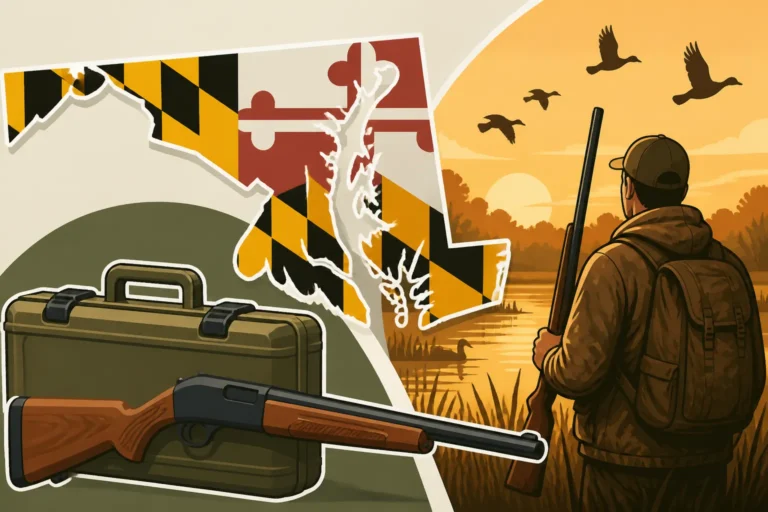
Traveling with firearms in Maryland, whether by car or plane, requires strict adherence to state and federal laws. When driving, all firearms must be unloaded and encased. For handguns, they should be transported in an enclosed case or compartment. While Maryland generally honors the Second Amendment for firearm owners legally possessing them, it's critical to understand the nuances, especially when transiting through different counties or if you are a nonresident. Always verify the most current regulations from the Maryland Department of Natural Resources (DNR) and the Maryland State Police.
When flying, firearms must be unloaded, declared to the airline at check-in, and transported in a locked, hard-sided container as checked baggage. Ammunition must also be securely packed in original manufacturer packaging or appropriate containers and separated from firearms. Never pack ammunition in your carry-on luggage. Beyond firearms, consider other hunting implements like bows. While usually less restricted than firearms, bows and arrows should also be cased for transport to prevent damage and ensure safety. Don't forget that if you're successful, you'll also need to consider Bringing a Deer Carcass Into Maryland and how to transport it, which might include specific packaging for plane travel or coolers for driving.
Deciphering Lodging Options for Hunters
Once you've sorted out how you'll get to Maryland, the next big question is where you'll stay. Maryland offers a spectrum of lodging choices, from the familiar comfort of chain hotels to rustic hunting lodges and private vacation rentals, each with its own advantages and drawbacks for the traveling hunter.
Hotels, Motels, and Chain Accommodations
Hotels and motels are often the default choice for many travelers, and Maryland has plenty, especially along major interstates and in larger towns. Brands like Marriott, Hilton, Choice Hotels, and Wyndham often have properties in areas accessible to hunting grounds, particularly on the Eastern Shore or near the Western Maryland mountains. The main advantage here is predictability: you generally know what to expect in terms of amenities, cleanliness, and service. Many offer complimentary breakfast, Wi-Fi, and sometimes even a small fridge, which can be handy for storing snacks or small game. They also tend to be located close to services like gas stations and restaurants.
However, hotels might not always be ideal for hunters. Dealing with muddy boots, wet gear, and the need to process game can sometimes be a challenge. While some hotels are "hunter-friendly" and might offer outdoor hose-offs or understanding staff, others might have strict policies against bringing game into rooms or cleaning equipment on premises. It's always a good idea to call ahead and inquire about their specific policies if you anticipate needing to clean gear or store anything game-related. Also, depending on the location, hotels can sometimes be a bit of a drive from the more remote public lands or private leases, adding travel time to your daily routine.
Hunting Lodges and Specialty Stays
For an experience tailored specifically to hunters, a dedicated hunting lodge or specialty stay often hits the mark. Maryland, particularly on the Eastern Shore for waterfowl and Sika, and in Western Maryland for deer and bear, has a number of these establishments. These lodges are designed with hunters in mind, frequently offering amenities like dog kennels, large mudrooms for gear, processing facilities or partnerships with local butchers, and communal areas for sharing stories. Many lodges also offer guided hunt packages, streamlining your entire trip. If you're looking for a comprehensive experience where the details are handled, a lodge can be an excellent choice. You can find more information on these types of stays in Maryland Hunting Lodges and Where to Stay.
The downside, of course, can be the cost, which is often higher than a standard hotel, especially if it includes meals or guiding services. Availability can also be a challenge, as popular lodges book up far in advance, sometimes a year or more, particularly for prime dates during the rut or peak waterfowl season. However, the camaraderie with fellow hunters and the convenience of being immersed in a hunting environment can make it well worth the investment. Some outfitters, which you can often find listed on platforms like BookYourHunt, will include lodging as part of their comprehensive packages, simplifying your booking process significantly.
Vacation Rentals: Airbnb, VRBO, and Local Alternatives
In recent years, vacation rentals through platforms like Airbnb and VRBO have become incredibly popular, offering a more home-like experience. For a hunting trip, this can be a game-changer. Imagine having a full kitchen to cook your own meals, a washer and dryer to clean your gear, and a private space where you don't have to worry about muddy boots or early morning departures disturbing other guests. Many rentals, especially in rural areas, might even offer more space for vehicle parking, potentially a garage for gear storage, or even a small yard for a well-behaved hunting dog (with prior permission, of course). This can be particularly appealing if you're traveling with a group, as you can split the cost and enjoy shared living spaces.
The key to a successful vacation rental hunt is careful selection. Look for properties that explicitly state they are hunter-friendly or are located in areas where hunting is common. Read reviews to see if previous hunters have had positive experiences. Pay close attention to rules regarding pets, cleaning fees, and checkout procedures. While these platforms offer a vast array of options, including cabins, farmhouses, and even secluded cottages, finding one close to your specific hunting parcel can sometimes require a bit of digging. Websites like GoHunt might offer resources or partner with local listings that cater specifically to hunters, making your search a little easier.
Local Amenities and Logistics Near Hunting Areas
Beyond just a bed to sleep in, a successful hunting trip relies heavily on access to everyday amenities. Being prepared for your Maryland hunt means knowing where to grab a bite, stock up on provisions, and refuel your vehicle, especially when you're deep in rural territory.
Dining Options: From Quick Bites to Local Flavors
After a long day in the woods or marsh, few things are as satisfying as a good meal. Your dining options in Maryland will vary greatly depending on your hunting location. In more populated areas or along major routes, you'll find familiar fast-food chains and family restaurants. These are convenient for quick, no-fuss meals when you just need to refuel and get back to scouting or resting. However, in truly rural hunting areas, particularly on the lower Eastern Shore or in Western Maryland's mountains, options can be sparse. It's not uncommon to find yourself miles from the nearest open restaurant, especially outside of lunch and dinner hours.
This is where planning comes in. If you're staying in a cabin or a vacation rental with a kitchen, consider cooking most of your meals. It’s often healthier, more cost-effective, and ensures you have food when you need it. Local diners, pizza places, or small-town eateries can offer a taste of local Maryland culture and are often appreciative of hunter business, but check their hours of operation. For early morning starts, having quick breakfast items like oatmeal, granola bars, and coffee prepped is essential. Don't underestimate the appeal of a hearty sandwich made at your lodging before heading out to Hunting the Rut in Early to Mid November.
Grocery Stores and Supply Runs
Stocking up on groceries and other supplies is a critical part of a multi-day hunting trip. Major grocery chains like Giant, Safeway, Weis Markets, and Food Lion are prevalent in most towns of moderate size. You'll find everything you need there, from fresh produce and meat to paper goods and ice. However, if your hunting grounds are deep in a remote area, the nearest full-service grocery store could be a significant drive away. Smaller towns might have local general stores or convenience stores, but their selection will be limited, and prices can sometimes be higher.
Before heading out to your hunting destination, especially for a week-long trip to a remote camp in, say, Hunting Maryland's Western Mountain Forests, make a comprehensive list of all the food, drinks, toiletries, and cleaning supplies you'll need. Consider bringing non-perishable items from home to save a trip to the store once you arrive. Don't forget hunting-specific supplies like extra batteries, hand warmers, insect repellent, and first-aid items. Having a well-stocked cooler for drinks and perishable food is also a must, especially if you plan to keep any harvested game cool before heading to a processor.
Fuel and Essential Services in Rural Areas
Running out of gas in a remote hunting area is a hunter's nightmare. Rural Maryland, particularly on the Eastern Shore and in the mountainous western counties, has long stretches between gas stations. While major interstates and state highways will have plenty of options, venturing onto county roads and into state forests or WMAs can quickly put you in areas with limited services. Always keep an eye on your fuel gauge and fill up whenever you have the opportunity, even if your tank isn't completely empty.
Beyond fuel, consider other essential services. Cell phone service can be spotty or non-existent in many of Maryland's more remote hunting locations. Inform someone of your hunting plans, including your general location and expected return time. If you’re reliant on GPS for navigation, download offline maps before you lose signal. For any unexpected vehicle trouble or minor emergencies, knowing the location of the nearest auto repair shop, hardware store, or urgent care clinic can provide immense peace of mind. A little bit of pre-trip research on the services available in the closest town to your hunting spot can save you a lot of headaches later.
Special Considerations for Different Hunt Types
Maryland offers a fantastic variety of hunting experiences, but each type of hunt comes with its own unique logistical considerations for travel and lodging. What works for a mountain whitetail hunt won't necessarily cut it for a marsh Sika adventure.
Waterfowl and Sika Hunts: Marsh-Specific Logistics
Hunting the tidal marshes of Maryland's Eastern Shore for waterfowl or Sika deer presents a distinct set of challenges and demands when it comes to travel and lodging. Access to prime marsh locations, particularly in Dorchester and Somerset counties, often requires a boat. This means you need to consider where you can launch, park your boat trailer, and store your boat overnight. Many lodges and private rentals in these areas cater to boat owners, offering suitable parking and sometimes even dock access. If you're using an outfitter, they will typically handle the boat logistics, but it’s still wise to confirm. Consider checking out resources on Marsh Hunting Sika Deer by Boat for more details.
Your lodging choice also needs to accommodate the unique gear required for marsh hunting: chest waders, waterproof bags, and potentially muddy or salty clothing. You'll want a place with ample space to dry gear, possibly a hose-off area, and certainly a resilient floor plan. Humidity can be an issue, so good ventilation is key. Moreover, the tide schedule dictates much of marsh hunting, meaning very early starts or late returns are common. Lodging that allows for flexible entry and exit times without disturbing others is a huge plus. Finding accommodations that are both convenient to boat launches and within a reasonable driving distance of your Hunting Fishing Bay's Marsh Guts by Boat location is paramount.
Western Maryland Mountain Hunts: Remote Access and Supplies
When your sights are set on the sprawling public lands of Western Maryland – places like Savage River State Forest or Green Ridge State Forest – your travel and lodging plans shift dramatically. The mountainous terrain means that many hunting areas are remote, accessed by gravel forest roads that may not be well-maintained, especially after rain or snow. A reliable vehicle, preferably with four-wheel drive or all-wheel drive and good ground clearance, becomes almost a necessity. Cell service can be extremely spotty, making offline maps and a satellite communication device vital for safety.
Lodging in these areas often leans towards rustic cabins, state park rentals, or more basic motels in towns like Oakland, Grantsville, or Hancock. If you’re considering Still-Hunting Western Maryland Mountain Timber, you’ll likely want lodging that’s warm and comfortable after a cold day on the ridge. These accommodations should ideally have heating for drying wet clothes and sturdy enough floors to handle muddy boots and heavy packs. Access to a kitchen is particularly valuable here, as restaurant options can be very limited, and packing in your own food becomes crucial. Planning your routes, understanding the specific public land access points, and confirming road conditions before you go can save you a lot of grief. Don't forget to pack according to What to Pack for a Maryland Mountain Hunt.
Suburban Deer Hunts: Blending In and Local Rules
Hunting in Maryland's suburban corridors, a common practice in counties surrounding Baltimore and Washington D.C., offers unique opportunities but also distinct logistical considerations. These hunts often take place on managed park lands, private parcels, or through specific deer management programs. While you might be hunting close to urban centers, it doesn’t mean you’ll be staying in a high-rise hotel. Instead, you might find yourself needing lodging in a suburban hotel or a rental house within a residential area.
The key here is discretion and understanding local ordinances. You'll need to be mindful of transporting firearms or bows through suburban neighborhoods and ensure your lodging choice is appropriate. Many suburban hotels are accustomed to travelers and might be more lenient about hunting gear if stored discreetly. A vacation rental might offer more privacy, but again, ensure it's in a location where a hunting vehicle and gear won't cause alarm. Access to these hunting areas might involve specific parking instructions or even shuttle services, so understanding these details in advance is crucial. Because these hunts are often tightly regulated and might involve specific check-in procedures, staying relatively close to your hunting site minimizes travel time and reduces the risk of being late.
Budgeting for Travel and Lodging
A successful hunting trip isn't just about bagging your quarry; it's also about managing your resources, and budgeting for travel and lodging is a significant piece of that puzzle. Unexpected costs can quickly add up, so a clear understanding of potential expenses is crucial.
Estimating Transportation Costs
Transportation costs can vary wildly depending on your starting point and chosen method. If you're driving, the primary expenses will be fuel, potential tolls (Maryland has numerous toll roads and bridges, especially approaching the Chesapeake Bay), and wear and tear on your vehicle. Fuel prices fluctuate, so use current averages for your calculations, considering the round trip distance. For a long drive, factor in an overnight stop if necessary, which would add lodging costs.
If flying, your airfare is just the beginning. You'll also need to budget for baggage fees (which can be significantly higher for firearms), airport parking at your departure location, and potentially car rental at your destination. Car rental rates can vary widely based on vehicle type and time of year, so book in advance for the best rates. Remember to consider fuel costs for your rental car as well. A shuttle service or ride-share might be an option from the airport to certain areas, but for hunting, a rental car usually offers the necessary flexibility and cargo space.
Comparing Lodging Expenses
Lodging is often one of the largest budget items after transportation. As discussed, hotels, hunting lodges, and vacation rentals each come with different price points and value propositions.
- Hotels/Motels: Generally offer a predictable price per night. Look for deals online or consider booking through loyalty programs. Be aware of potential "resort fees" or parking fees that might not be immediately obvious.
- Hunting Lodges: Often higher upfront costs, but they might include meals, guiding services, or special amenities, which can represent good value if you factor in everything you'd otherwise pay for separately. Always clarify what's included in the package price.
- Vacation Rentals: Pricing can be per night, but also factor in cleaning fees, service charges, and security deposits. These can be very cost-effective for groups, as the per-person cost decreases with more occupants.
Creating a simple comparison table can help you visualize the different costs:
| Lodging Type | Avg. Daily Rate (Shape of Cost) | Typical Additional Fees | Ideal For | Pros | Cons |
|---|---|---|---|---|---|
| Hotels/Motels | Moderate to High | Taxes, Parking, Pet Fees | Solo hunters, short trips | Predictable, common amenities, services | Less hunter-friendly, limited space |
| Hunting Lodge | High (often package-based) | Tip, extra services | Guided hunts, full-service experience | Tailored to hunters, camaraderie, amenities | Expensive, less flexibility, booked quickly |
| Vacation Rental | Moderate (per unit) | Cleaning, Service, Deposit | Groups, longer stays, self-sufficiency | Privacy, kitchen, laundry, space for gear | Booking process, specific rules, no services |
Hidden Costs to Anticipate
Beyond the obvious, several "hidden" costs can creep into your hunting budget. Licensing and permits are a definite upfront cost; make sure you've budgeted for your Maryland hunting license, stamps, and any special permits, which can be found by researching Maryland Hunting Licenses and What They Cost and Maryland's Sika Deer Stamp and Bag Limits. Food and drink expenses can add up quickly, especially if you're eating out frequently. Consider packing your own snacks and drinks for the field to save money.
Equipment failures or unexpected weather can also lead to additional expenses. A torn piece of gear might require a quick stop at a sporting goods store, or a sudden cold snap could mean buying extra layers. Contingency funds for these kinds of surprises are always a good idea. Finally, don't forget gratuities for guides if you're using an outfitter. While not mandatory, it's customary to tip for good service, and it's a cost you should factor into your overall budget to ensure your guide is properly acknowledged for their hard work.
Disclaimer
This article is for general informational purposes only and does not constitute professional advice. Laws, prices and regulations vary by location and change over time. Consult a qualified professional for guidance on your specific situation.