Guided Diver Hunts on Open Bay Water
There’s nothing quite like the raw, invigorating experience of hunting diver ducks on Maryland’s wide-open bay waters. It’s a challenge that many waterfowlers dream of, yet the logistics of getting out on big water, understanding the birds, and setting up an effective spread can feel incredibly daunting, especially if you don't own a specialized boat or have years of experience reading the Chesapeake. This guide is here to walk you through what to expect when you embark on a guided diver hunt, helping you understand the process and make the most of your time on the bay.
Understanding Maryland's Diver Duck Hunting
Diver duck hunting on Maryland’s open bay waters is a truly distinct experience from sneaking into a marsh for puddle ducks or setting up in a cut cornfield for geese. It requires specialized knowledge, equipment, and a particular kind of grit to face the elements. The Chesapeake Bay, with its vast expanses and rich aquatic vegetation, provides prime wintering grounds for these incredible birds, making it a legendary destination for diver enthusiasts.
What Makes Diver Ducks Different for Hunters?
Unlike their puddle duck cousins, divers are built for life on the open water. Species like Canvasbacks, Redheads, Bluebills (scaup), Goldeneyes, and Buffleheads have legs set further back on their bodies, making them agile swimmers and deep divers, but a bit clumsy on land. This anatomical difference means they feed on submerged vegetation and invertebrates found deeper underwater, often far from shore. They also tend to fly in tighter, faster flocks, often skimming low over the waves, presenting a challenging target.
Their habits dictate the hunting strategy. Divers typically shy away from shorelines and timber, preferring the expansive, unobstructed views of open water. This means hunters need to meet them on their turf – out on the bay itself. They are often less wary of large decoy spreads than puddle ducks, frequently committing fully once they decide to work a rig. However, their speed and erratic flight paths, especially with the wind whipping over the open water, demand quick reflexes and accurate shooting. It’s a fast-paced, high-adrenaline hunt that tests a hunter’s mettle. For a deeper dive into the specific species, check out Diving Ducks of the Chesapeake.
The Allure of Open Bay Water Hunting
There's a certain romance and wildness to hunting on the open bay. Far from the hustle and bustle of land, you're truly immersed in nature's raw power. The vastness of the water, the sweeping skies, and the constant movement of the bay itself create an atmosphere unmatched by other hunting pursuits. You're often miles from the nearest shore, sometimes in specialized boats like layout blinds, which put you right at water level, making the incoming birds appear immense against the horizon.
This type of hunting isn't for the faint of heart. Weather can change in an instant, and what started as a calm morning can quickly become a choppy, wind-swept ordeal. But for many, this challenge is precisely the allure. It’s a test of endurance, skill, and patience. The sight of a flock of Canvasbacks banking hard into a massive decoy spread, their white backs flashing against the gray water, is a memory that sticks with you long after the hunt is over. It's truly a bucket-list experience for many waterfowlers who appreciate the traditional aspects of this demanding pursuit, embodying a deep connection to the rich waterfowl heritage of the Chesapeake.
What to Expect from a Guided Diver Hunt
Booking a guided diver hunt takes much of the logistical headache out of this specialized pursuit, especially if you're not equipped with a dedicated layout boat and tender boat setup. A good guide provides the expertise, the expensive gear, and the critical knowledge of local waters and bird movements that are essential for success.
Typical Hunt Setup and Gear
When you book a guided diver hunt, you're essentially stepping into a pre-established operation designed for safety and success on big water. Most diver hunts involve a "tender boat" – a larger, stable vessel that transports hunters, gear, and a substantial decoy spread to the chosen hunting grounds. Once on site, the guide will deploy a massive spread of decoys, often hundreds, arranged in specific patterns designed to mimic a raft of resting divers. You'll often be hunting over some impressive rigs, and if you want to understand how those rigs are set up, you should definitely read Decoying Divers on Maryland's Open Bay.
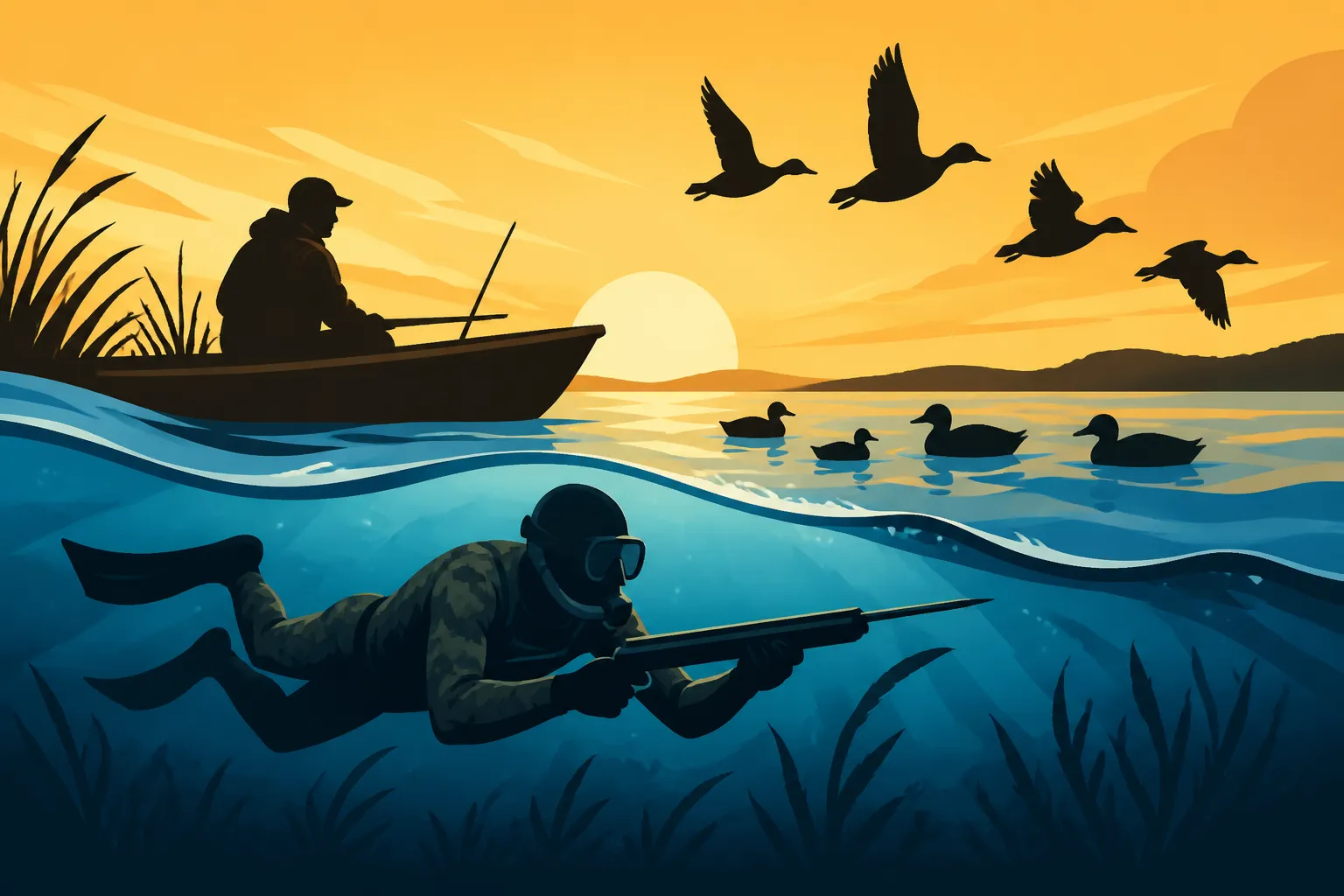
The actual shooting takes place from specialized "layout boats" or "sink boxes." Layout boats are low-profile, coffin-like boats that float right at water level, making you nearly invisible to incoming birds. Hunters lie on their backs, then sit up to shoot when the birds are working the decoys. Sink boxes are similar but are often anchored to the bottom and filled with water to sit even lower, creating a truly submerged blind. The tender boat then motors away to a safe distance, often out of sight, acting as a retrieve boat and a warm refuge between shoots. You'll stay in radio communication with your guide, who will often position themselves to watch the birds and direct the tender boat for retrieves.
The gear you’ll need to bring yourself is primarily personal warmth and safety. Think multiple layers of clothing, waterproof outer shells, a quality life vest (often provided by the guide, but it's good to have your own if you prefer), waterproof boots, and of course, your shotgun and ammunition. Ammunition must be steel shot or other approved non-toxic shot. Given the frigid temperatures often encountered, hand warmers, a thermos of hot coffee, and plenty of snacks are highly recommended.
The Role of Your Guide
Your guide on a diver hunt is much more than just a boat driver; they are your navigator, meteorologist, bird expert, and safety officer all rolled into one. They possess an intimate knowledge of the bay, including currents, depths, and shifting sandbars, which is crucial for safe travel and successful decoy placement. They’ll have been scouting to know where the birds are concentrating, what they're feeding on, and how they’re flying, which is a constant, evolving puzzle on the bay. Many guides will be able to share stories and local lore that make the experience even richer.
Before the hunt, a good guide will communicate clearly about meeting times, what to bring, and what to expect. On the water, they will make all the critical decisions: where to set the spread, how to position the layout boats based on wind and wave direction, and when to call the shot. They're also responsible for deploying and retrieving the extensive decoy spread, a labor-intensive task, and for retrieving any downed birds with the tender boat. Their focus is always on your safety first, then on putting you on birds. They'll ensure you understand the shooting lanes, how to get in and out of the layout boat safely, and any specific communication signals used during the hunt. This experience is why having a reputable and licensed professional is so critical. For more on guide requirements, see Maryland's Licensed Waterfowl Guides.
Navigating Weather and Water Conditions
Hunting on open bay waters means being at the mercy of Mother Nature. Conditions can range from calm, sunny days to blustery, bone-chilling cold with significant chop. Guides are constantly monitoring weather forecasts, wind direction, and wave height. They understand that strong winds can make shooting incredibly difficult and even dangerous, turning a thrilling hunt into a miserable ordeal if not properly managed.
Your guide will be the one to decide if a day is safe to hunt. This isn't just about comfort; it's about safety. Operating a boat on choppy water, especially with hunters in layout boats, requires extreme caution. Be prepared for early morning departures, often well before dawn, and a full day out on the water. It’s imperative to dress in layers, with a focus on waterproof and windproof outerwear. Even on a clear day, the constant spray from waves and the biting wind can quickly lead to hypothermia if you’re not properly prepared. The experience of navigating these conditions is part of what makes guided hunts so valuable. They know how to handle situations that would leave a less experienced hunter in serious trouble. Consider reading Boat Safety on the Chesapeake in December to get a better sense of what guides contend with.
Choosing and Booking Your Diver Guide
Finding the right guide for a diver hunt can make or break your experience. Maryland has a strong tradition of waterfowl guiding, and many excellent professionals operate on the Chesapeake Bay. However, like any service, quality can vary, and it's essential to do your homework.
Vetting a Reputable Outfitter
The first step in securing a memorable guided diver hunt is to vet potential outfitters thoroughly. Start by looking for guides who specialize in diver hunting specifically, as this requires unique gear and expertise. Websites and social media pages can offer a good initial impression, showcasing photos, testimonials, and details about their operations. However, don't stop there.
Word-of-mouth recommendations from other hunters are invaluable. Ask around at your local sporting goods store or hunting club. You want to hear about guides who prioritize safety, have clean and well-maintained equipment, and are known for their professionalism and bird knowledge. When you find a few possibilities, don't hesitate to reach out directly. A good guide will be happy to answer your questions thoroughly and transparently. In your research, you might come across platforms like BookYourHunt or GoHunt, which can be useful resources for finding and comparing different outfitters. Just remember to still do your personal vetting, regardless of where you initially find a guide. Ask about their experience, particularly with diver hunts on the specific waters you're interested in. Inquire about their vessel types, safety protocols, and what permits and licenses they hold. A truly professional guide will be properly licensed to operate commercial trips on the water.
Costs and Inclusions to Consider
Guided diver hunts are an investment, and prices will reflect the specialized equipment, extensive preparation, and professional expertise involved. When discussing pricing with an outfitter, make sure you understand exactly what is included and what is not.
Typically, the guide fee covers the use of their boats (tender and layout), the massive decoy spread, the guide's time and expertise, and often, the retrieval of birds. What's usually not included are your hunting licenses and stamps (which are mandatory and must be purchased in advance, like your Federal Duck Stamp Rules for Bird Hunters and Maryland Migratory Game Bird Stamp Cost), ammunition, meals (beyond perhaps a thermos of coffee), gratuities for the guide, and bird processing. It's crucial to clarify these details upfront to avoid any surprises.
Some guides might offer package deals that include lodging or multiple days of hunting, which can be a good option for travelers. Always ask about their deposit requirements and cancellation policies, especially given how weather-dependent diver hunts are. Understanding these financial aspects allows you to budget correctly and ensures a smooth experience.
Maximizing Your Guided Hunt Experience
Once you've booked your hunt, there are several things you can do to ensure you have the best possible experience. First and foremost, communicate with your guide. Be honest about your hunting experience and physical capabilities. If you've never been in a layout boat before, let them know. They can provide instructions and ensure you're comfortable.
Before the hunt:
- Practice shooting: Diver ducks are fast. Spend some time at the range with your shotgun, focusing on passing and crossing shots.
- Gear check: Double-check all your clothing and equipment. Make sure batteries are charged, and your shotgun is clean and functioning.
- Licenses & Stamps: Ensure all your Maryland hunting licenses and necessary stamps are valid and readily accessible. This often includes a base hunting license, a Maryland migratory game bird stamp, and a federal duck stamp. You cannot hunt without them.
- Physical preparation: While not overly strenuous, getting in and out of a layout boat, especially in choppy water, requires some agility.
- Respect the guide's expertise: Your guide has spent countless hours on the water. Trust their judgment regarding locations, decoy spreads, and safety.
During the hunt:
- Listen carefully: Pay attention to all instructions, especially concerning safety and shooting etiquette in the layout blind.
- Stay alert: Birds often come in fast and silently. Keep your head up and eyes scanning.
- Shoot straight: Make every shot count. Nothing is more frustrating than missing an easy bird on the open water.
- Be a team player: Waterfowl hunting is often a group effort. Be mindful of others in the blind and their shooting lanes.
- Gratuities: It's customary to tip your guide for a job well done. If you're wondering how much, How Much to Tip a Waterfowl Guide offers some helpful insights. A successful and enjoyable day is often the result of immense effort on their part, and a gratuity is a great way to show your appreciation for their hard work and dedication.
A guided diver hunt on Maryland’s open bay is an unforgettable adventure. By understanding the unique challenges and preparing properly, you’ll be well on your way to experiencing one of the most exciting forms of waterfowl hunting available.
Disclaimer
This article is for general informational purposes only and does not constitute professional advice. Laws, prices and regulations vary by location and change over time. Consult a qualified professional for guidance on your specific situation.