Boat Safety Standards for Maryland Charters
There's nothing quite like the excitement of heading out onto Maryland's incredible waterways for a hunting adventure, whether it's setting decoys in a marsh or running out into the open Chesapeake Bay. But let's be honest, the water, especially here, can be a serious beast, and it often feels like you're putting a lot of trust into your captain and their vessel. Understanding the boat safety standards for Maryland charters isn't just about adhering to rules; it's about making sure your day on the water is safe, enjoyable, and doesn't end in a preventable disaster. This guide is here to walk you through what to expect and what to look for when booking a charter.
Why Boat Safety Matters Beyond the Hunt
It's easy to get caught up in the thrill of the hunt—the anticipation of a sika stag whistling from the marsh or a flock of canvasbacks diving into your spread. But before you even think about the shot, you absolutely have to consider the journey itself. Maryland's diverse waterways, from the vast Chesapeake Bay to intricate tidal creeks and even the open Atlantic coast, present unique challenges. A successful hunt isn't just about bagging game; it's about everyone returning to shore safely.
The Unpredictable Nature of Maryland Waters
One minute you might be enjoying a flat-calm morning, the sun rising over the Eastern Shore, and the next, a squall can blow through, kicking up a nasty chop that can turn a pleasant ride into a white-knuckle experience. The Chesapeake Bay, in particular, is notorious for its rapidly changing conditions. A strong wind against an outgoing tide can build steep, unforgiving waves in a matter of minutes, even in relatively shallow areas. Beyond the weather, you have to contend with strong currents in some areas, shifting shoals that can ground a boat, and heavy boat traffic, especially during peak seasons. Imagine navigating a dense fog after daylight, with other vessels — commercial freighters, fishing boats, and other hunters — all trying to reach their destinations. It’s a dynamic environment that demands constant vigilance and respect.
If you're heading out to the open ocean for sea ducks, the stakes rise even higher. The swells can be significant, and being far from shore means any issue becomes magnified. Even in the more sheltered tidal marshes and rivers where we often pursue sika deer or jump-shoot ducks, shallow water, submerged stumps, and narrow guts can pose serious navigation hazards if the captain isn't intimately familiar with the area. It’s not just about avoiding rocks; it’s about understanding how the tides affect your access and egress, and ensuring the boat can handle the terrain without getting stuck or damaged, potentially leaving you stranded.
The Responsibility of the Captain and Crew
When you step aboard a charter boat, you are quite literally placing your safety in the hands of the captain and their crew. They hold a profound legal and ethical responsibility to ensure every passenger's well-being. This isn't just a casual job; it requires specific licensing, extensive training, and a deep understanding of maritime law and safety protocols. A licensed captain has undergone rigorous examination, proving their competency in navigation, emergency procedures, rules of the road, and vessel management. This license isn't a suggestion; it's a legal requirement for carrying paying passengers.
Beyond simply having the right paperwork, a good captain and crew are constantly assessing the conditions, the boat's integrity, and the behavior of everyone on board. They should be proactive, not reactive. This means having the foresight to cancel or postpone a trip if the weather forecast looks dicey, even if it disappoints hunters eager to get out. It means conducting thorough safety briefings before leaving the dock, making sure everyone knows where the life jackets are and how to use them. Their professionalism extends to maintaining all safety equipment, conducting regular drills, and being prepared for any eventuality, from a sudden storm to a medical emergency. You should feel confident that your captain is not only skilled at finding game but also an expert in keeping you safe. Why a Guide's Captain Credential Matters is something every hunter should research.
Key Safety Standards for Maryland Charter Boats
When you're considering a hunting charter in Maryland, it's absolutely vital to know that the vessel and its crew are operating under strict safety guidelines. These aren't arbitrary rules; they're in place to protect lives. Federal and state regulations combine to create a framework that, when followed, drastically reduces the risks associated with being out on the water.
US Coast Guard Regulations and Compliance
The United States Coast Guard (USCG) is the primary authority governing commercial vessels, including charter boats carrying passengers for hire. Any boat taking paying customers, even for a hunting trip, falls under their purview if it operates on navigable waters. This means that your charter boat needs to meet specific structural and equipment requirements and undergo periodic inspections. For instance, small passenger vessels carrying six or fewer passengers (often the case for hunting charters) must be operated by a captain holding at least an Operator of Uninspected Passenger Vessels (OUPV) license, sometimes called a "six-pack" license, or a higher-level Master's license. For larger vessels or those venturing further offshore, a Master's license becomes mandatory, often coupled with more stringent vessel inspection criteria.
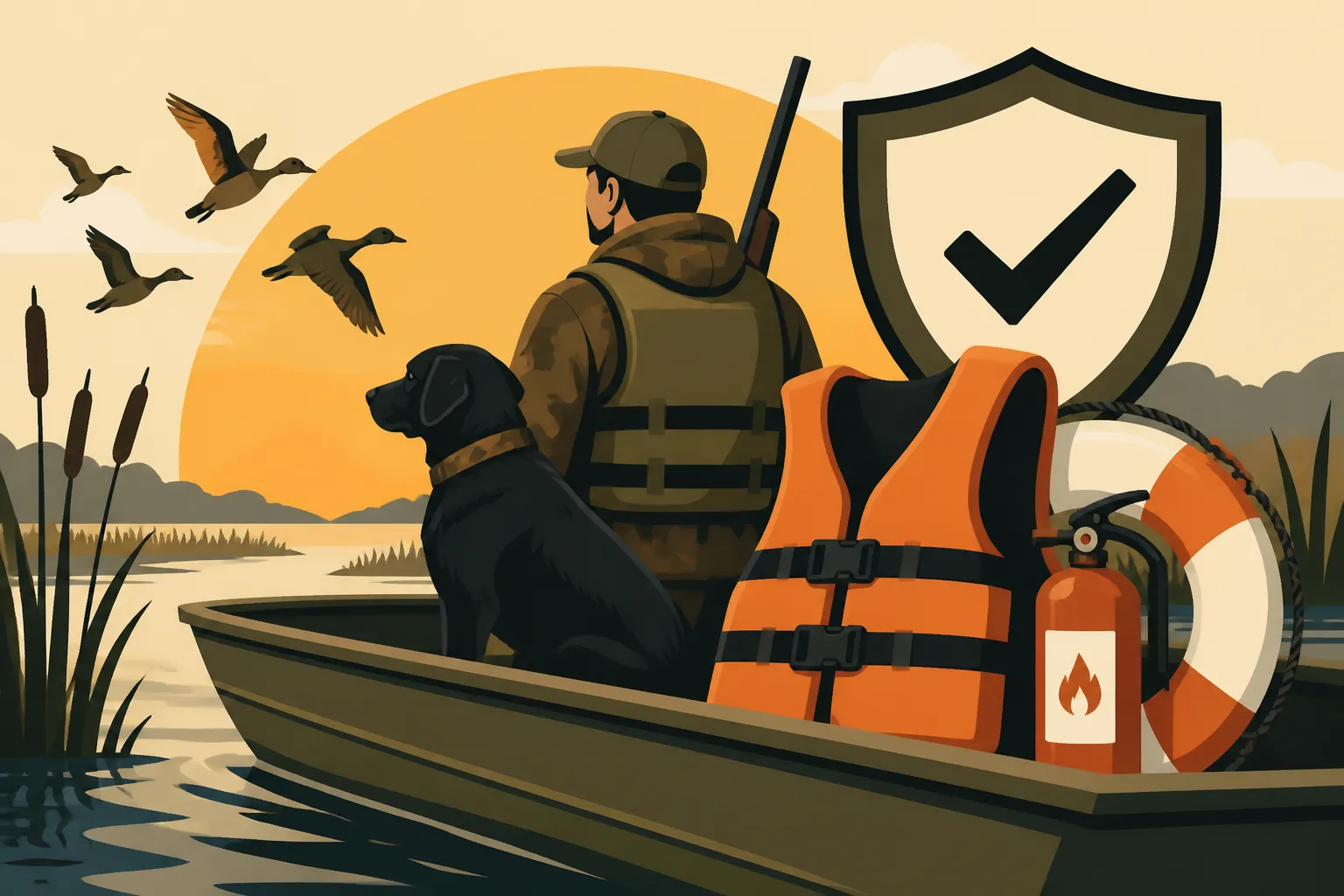
Crucially, every charter vessel must carry a range of mandatory safety equipment. This includes an adequate number of U.S. Coast Guard-approved personal flotation devices (PFDs or life jackets) for every person on board, including specialized PFDs for children if any are present. These PFDs must be readily accessible, not stowed away under a pile of gear. Other essential items include visual distress signals (like flares or flags), a sound-producing device (horn or whistle), fire extinguishers that are charged and easily accessible, and a first-aid kit. The boat itself must be structurally sound, with proper navigation lights, working bilge pumps, and a designated capacity limit that the captain must never exceed. It's not uncommon for the Coast Guard to conduct random checks or respond to calls, ensuring these standards are met. Boat Safety on the Chesapeake in December can often hinge on these basic requirements.
Navigation and Communication Essentials
In the vast and often complex waters of Maryland, robust navigation and communication systems are non-negotiable for any charter operation. Modern electronics play a huge role in ensuring safe passage. Every professional charter boat should be equipped with reliable GPS (Global Positioning System) technology, allowing the captain to know their exact location, plot courses, and navigate safely around hazards like shoals or submerged oyster beds, especially critical when Wading Into a Dorchester Marsh Before Daylight or traversing unfamiliar waters. Many boats will also have radar, which is invaluable for detecting other vessels, buoys, and shorelines in low visibility conditions such as fog, rain, or at night.
Beyond knowing where they are, a safe charter needs to be able to communicate effectively. A VHF (Very High Frequency) marine radio is absolutely essential. This allows the captain to communicate with other boats, marine authorities like the Coast Guard, and shore stations. It’s also the primary means of sending out a distress call in an emergency. While cell phones can be useful backups, they are not reliable as a sole means of communication on the water, especially in remote areas or offshore where signal strength can be weak or non-existent. A proper float plan, though not always physically filed, should at least be verbally communicated by the captain to someone on shore, detailing the intended route, estimated return time, and number of people onboard. This ensures that if the boat doesn't return, authorities have a starting point for a search.
Emergency Procedures and Drills
Knowing you have the right equipment is one thing; knowing how to use it in a crisis is another entirely. A truly safe charter operation emphasizes preparedness through clear emergency procedures and regular drills. Before the boat leaves the dock, or at least before entering active waterways, your captain should provide a concise yet thorough safety briefing. This briefing isn't just a formality; it should cover the location and proper use of PFDs, fire extinguishers, first aid kits, and emergency exits. You should also be informed about the boat's stability, what to do in case of a man overboard situation, how to respond to a fire on board, or if the vessel needs to be evacuated.
While passengers don't typically participate in drills, the crew should be proficient in them. Imagine a "man overboard" scenario: the captain and crew should have a practiced routine for quickly stopping the boat, deploying a recovery device, and safely bringing someone back on board. In the event of a fire, they should know exactly how to activate the fire suppression system or use extinguishers. If the vessel is taking on water, they should be able to identify the source, attempt to mitigate it, and prepare for evacuation if necessary, all while maintaining calm and clear communication with passengers. This level of preparedness instills confidence and can make all the difference when seconds count.
What Hunters Should Look For in a Safe Charter
Deciding to book a hunting charter is a big step, and you want to make sure it's an investment in a great experience, not a risky venture. Beyond finding a guide who knows where the game is, it's absolutely crucial to pick one who prioritizes your safety. You have a role to play too, both in vetting your choices and acting responsibly once you're on board.
Asking the Right Questions Before Booking
Before you commit your hard-earned money and precious hunting time, you need to be an active participant in vetting your chosen charter. Don't be shy about asking direct questions. Start by inquiring about the captain's credentials: "Captain, what kind of USCG license do you hold, and how long have you had it?" A reputable captain will be proud to share this information. Also, ask about their experience on the specific waters you'll be hunting. Someone who guides for Sea Duck Hunting Maryland's Offshore Zone will have a different skillset and vessel than someone primarily focused on Marsh Hunting Sika Deer by Boat.
Then, dive into the specifics of safety equipment: "What kind of PFDs do you carry, and do you have sizes for everyone in my group, especially if we have kids?" "Where are the fire extinguishers and first aid kit located?" You might also ask about their communication equipment and their protocol for checking weather. Don't forget insurance – a professional guide should carry liability insurance. It’s reasonable to ask if they've ever had a significant safety incident or a Coast Guard inspection. Platforms like BookYourHunt or GoHunt can be excellent starting points for finding guides, but always follow up with these direct questions. Look for reviews that specifically mention safety, professionalism, and preparedness, not just hunting success. Checking Whether a Guide Is Actually Licensed is a critical step.
Onboard Vigilance and Personal Responsibility
Once you're on the boat, your role in safety doesn't end. First and foremost, pay close attention during the safety briefing. It might sound like a broken record if you've been on charters before, but every boat is different, and the location of critical safety gear can vary. Understand where the life jackets are and how to properly put one on. If you're going out in rough conditions or are uncomfortable in any way, don't hesitate to ask to wear a PFD for the entire trip. It's far better to be safe than sorry, and a good captain will never discourage this.
Stay aware of your surroundings. Understand the boat's motion, especially if it's choppy, and always maintain three points of contact when moving around the vessel. Keep an eye out for potential hazards, like lines on the deck that could cause a trip, or equipment that isn't properly stowed. If you notice something amiss, or if you have any concerns, voice them calmly and respectfully to the captain or crew. Never ignore your gut feeling. Knowing your own physical limits is also key; if you're prone to seasickness, take preventative measures before you board. It's your responsibility to inform the captain of any medical conditions that might require special attention in an emergency.
Reading the Signs of a Potentially Unsafe Operation
Sometimes, the red flags aren't obvious until you're already there, stepping onto the boat. It's crucial to be able to identify these warning signs of a potentially unsafe operation. One of the most glaring issues would be a lack of readily available, USCG-approved PFDs for all passengers, or PFDs that appear old, damaged, or poorly maintained. Similarly, if fire extinguishers are clearly expired or seem neglected, that's a huge problem. Overcrowding the boat, meaning there are more people than the vessel is rated to safely carry, is an immediate deal-breaker and a serious violation of regulations.
Beyond equipment, observe the captain's demeanor and actions. Is he distracted, overly casual, or seem to be cutting corners? Does he skip a safety briefing entirely? Is he operating the vessel at an unsafe speed for the conditions, or ignoring other boat traffic? Does the boat itself seem poorly maintained, with obvious structural issues, excessive leaks, or faulty navigation lights? Trust your instincts. If something feels off, or if the captain's behavior makes you uncomfortable, it's okay to voice your concerns or, in extreme cases, refuse to board. No hunting trip is worth compromising your safety.
Navigating Maryland's Specific Waterways with Safety in Mind
Maryland's diverse geography means we have a variety of unique waterways, each with its own set of challenges and safety considerations for charter boats. What works for a calm river might be disastrous on the open bay or ocean. A good charter captain doesn't just know the general rules; they are intimately familiar with the specific nuances of the waters they operate on.
Chesapeake Bay Challenges
The Chesapeake Bay is a majestic body of water, but it demands respect. Its sheer size means that a short run can quickly turn into a significant journey across open water. The bay is relatively shallow in many areas, which means that even moderate winds can quickly kick up steep, uncomfortable, and potentially dangerous chop. Imagine a brisk northwest wind blowing against an outgoing tide; those conditions can make even a large boat pound and spray, leading to unpleasant and even risky situations. Commercial traffic, including enormous cargo ships, barges, and tugs, is constant, especially in the shipping channels. A smaller charter boat needs to be hyper-aware of these larger vessels, as they cannot maneuver quickly and have extensive blind spots. Hunting a Chesapeake Bay Blind at First Light means navigating in the dark, adding another layer of complexity. Hypothermia is also a real threat in the cooler months, as the water temperature can drop rapidly. Proper attire, including survival suits for the crew on offshore runs, becomes essential.
Coastal Ocean and Inlet Considerations
For those venturing out into the Atlantic for species like sea ducks, the dynamics change dramatically. Here, you're dealing with oceanic swells, which are much larger and more powerful than anything the bay can produce. Navigating inlets, like the Ocean City Inlet, can be particularly treacherous, especially during strong tides or after a storm when waves can break violently. A charter boat operating in this environment needs to be specifically designed and equipped for offshore conditions, capable of handling heavy seas. Safety equipment requirements are often more stringent, including EPIRBs (Emergency Position Indicating Radio Beacons) or PLBs (Personal Locator Beacons) that transmit a distress signal to satellites, and often a liferaft. The captain's experience in offshore navigation and emergency procedures becomes paramount, as help can be much farther away. Weather forecasts become even more critical, with less room for error than in more sheltered waters.
River and Marsh Hunting by Boat
Even seemingly calmer rivers and vast tidal marshes present their own unique safety considerations. In places like Dorchester County, where you might be hunting Sika Deer Hunting in Maryland's Tidal Marshes, boats often operate in very shallow water, navigating narrow guts and channels. Submerged obstacles like stumps, logs, or even old duck blinds can pose a significant threat to propellers, lower units, and even the hull of the boat. A prop strike in a remote marsh could leave you stranded for hours, or even overnight, if communication is limited. Tides play a crucial role here; a captain must know the tidal charts intimately to avoid getting stuck on a mud flat as the water drops. Isolation is another factor; in many marsh areas, cell service is spotty, and other boat traffic is minimal. The ability to self-rescue or communicate a precise location becomes vital. A good marsh captain will use shallow-draft boats, often with surface drive engines, and always carry extra fuel, a well-stocked tool kit, and a satellite communication device for true emergencies. Boating Into a Sika Marsh at Low Tide is a skill that requires great care and knowledge of the area.
Here’s a quick overview of some mandatory safety equipment you should expect to see on any legitimate Maryland charter boat:
| Equipment Item | Purpose | Notes |
|---|---|---|
| USCG-Approved PFDs | Personal flotation for every person | Must be readily accessible and fit passengers. |
| Visual Distress Signals | Signal for help (flares, flags) | Required for daytime and nighttime use. |
| Sound-Producing Device | Alert other vessels (horn, whistle) | Used for signaling and collision avoidance. |
| Fire Extinguishers | Suppress onboard fires | Must be charged, accessible, and of appropriate type/size. |
| First-Aid Kit | Address injuries and medical emergencies | Should be well-stocked and waterproof. |
| VHF Marine Radio | Communication with other vessels/authorities | Primary emergency communication, not just a cell phone. |
| Navigation Lights | Visibility during low light/night | Must be functional and used as required by maritime rules. |
| Anchor and Line | Secure the vessel | Must be appropriate for the boat's size and operating conditions. |
| Bilge Pump(s) | Remove water from the hull | Essential for preventing sinking due to leaks or waves. |
Disclaimer
This article is for general informational purposes only and does not constitute professional advice. Laws, prices and regulations vary by location and change over time. Consult a qualified professional for guidance on your specific situation.