Hanging a Stand on a Maryland Farm Edge
Hunting deer successfully from a stand along a Maryland farm edge can feel like a constant puzzle, especially when you’re dealing with ever-changing crops, deer pressure, and unpredictable wind shifts. It’s easy to feel frustrated when you scout tirelessly, hang a stand you think is perfect, only for the deer to ghost you entirely. This guide aims to unravel the complexities of setting up deer stands on Maryland farm edges, offering practical, in-depth advice to help you strategically place your stand for consistent success.
Understanding Deer Movement Along Farm Edges in Maryland
Maryland's landscape is a patchwork of dense timber, suburban sprawl, and agricultural fields, making deer behavior along farm edges particularly dynamic. Deer here are often patterned by food sources, cover, and, unfortunately, human disturbance. To effectively hang a stand, you first need to become a student of these movements.
Reading Crop Cycles and Deer Preferences
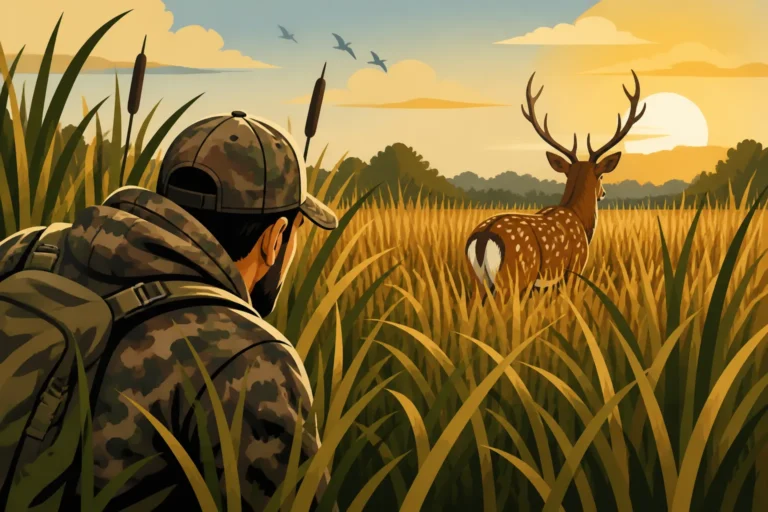
Different crops offer different appeal to deer throughout the year, and understanding this is foundational to successful farm edge hunting in Maryland. In the spring and early summer, young, tender soybean and alfalfa fields are absolute magnets, offering protein-rich forage. Deer will often browse these fields extensively during low-light hours. As summer progresses, cornfields provide not just food but also incredible cover. Deer will bed down deep inside standing corn, emerging only at dusk or under the cover of darkness. By late summer and into the fall, after corn is cut, the waste grain becomes a prime attraction, especially as temperatures drop. Similarly, cut soybean fields will see deer picking through the stubble for any remaining beans.
Consider a hypothetical scenario on the Eastern Shore: a large cornfield bordered by a strip of mature hardwoods. In August, deer might be invisible, tucked away in the standing corn during the day. However, come late September and October, once that corn is harvested, they’ll shift their focus to the waste grain, moving from the safety of the woods directly into the field. This transition creates predictable travel patterns right along the edge. Or imagine a wheat field planted in the fall. Deer will nibble on the young shoots through late fall and early winter, making those edges hot spots. Once that wheat is harvested in early summer, the deer might shift to nearby clover or alfalfa fields, or simply utilize the remaining cover in the woodlot. This ever-evolving buffet means your "perfect" stand location might only be perfect for a few weeks, or even days, at a time. It highlights why understanding Late Season Food Sources for Maryland Deer is so crucial.
Impact of Pressure and Wind Direction
Deer in Maryland, especially those residing near agricultural areas, are highly sensitive to hunting pressure. Even light pressure can quickly alter their routines, turning daytime movement into nocturnal activity. If a farm edge has been hunted heavily during the early archery season, deer might start avoiding it during daylight hours, opting for thicker cover and only venturing out into fields after dark. This is particularly true on properties that see multiple hunters or public lands bordering private farms. Always consider how much other hunting activity might be influencing the deer you're trying to target.
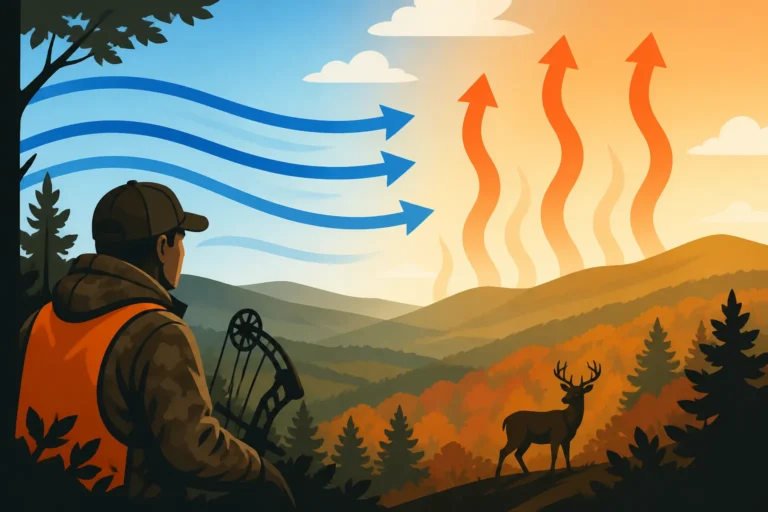
The role of wind direction cannot be overstated when placing a stand on a farm edge. Deer rely heavily on their sense of smell, and any human scent blowing into their travel corridors or feeding areas will alert them to your presence long before you ever see them. For a stand on a field edge, you ideally want the wind blowing from the field towards your stand, or parallel to the field edge, carrying your scent away from where deer are likely to approach or feed. Never, ever allow your scent to blow into their anticipated travel path or into the feeding area you're watching. This often means having multiple stand locations for different wind directions, or at least a clear understanding of when a particular stand is huntable. Hunting around a particular field edge when the wind is wrong is often worse than not hunting at all, as you'll likely educate deer and make them even more wary.
Strategic Stand Placement Considerations for Maryland Farm Edges
Once you understand the general patterns, it's time to get down to the nitty-gritty of stand placement. This isn't just about picking any tree; it's about dissecting the landscape for the best opportunities.
Identifying Key Funnels and Travel Corridors
Deer, like most creatures, are creatures of habit and efficiency. They will almost always choose the path of least resistance or the route that offers the most security. Along farm edges, this translates into natural funnels and travel corridors. Look for pinch points where a woodlot narrows between two fields, forcing deer through a smaller area. Fence lines, especially older ones with overgrown brush, often serve as linear travel routes. Creek bottoms or drainage ditches that run perpendicular or parallel to a field edge can also act as highways for deer, providing both cover and easy navigation. Even a subtle change in topography, like a low ridge or a slight elevation, can dictate how deer move from bedding areas to feeding grounds.
Modern mapping tools, like those offered by GoHunt, can be incredibly useful for identifying these funnels and corridors without ever setting foot on the property. By studying aerial photos, you can pinpoint where a small finger of woods extends into a field, or where a thick hedgerow connects two larger timber blocks. These are goldmines. Imagine a 20-acre soybean field in Kent County with a small, unkempt woodlot cutting diagonally through its center, creating two distinct fields. That woodlot edge, especially where it pinches down, will be a high-traffic zone. Similarly, a small creek winding its way through the back of a farm near Frederick can be a hidden travel artery. Understanding Hunting a Funnel Between Two Grain Fields is paramount to maximizing your chances here. Look for old rub lines or established deer trails that confirm these suspected travel routes during your scouting trips.
Optimal Tree Selection and Concealment
Choosing the right tree for your stand is just as important as choosing the right location. First and foremost, safety is paramount. The tree must be healthy, sturdy, and large enough to safely support your stand and you. Beyond safety, consider cover. You want a tree that offers natural camouflage, breaking up your silhouette. Conifers like pines or cedars can offer excellent year-round cover, while hardwoods with multiple branching limbs or thick vines climbing them can work during the early season and into the fall as leaves thin. Aim for a height that gives you a good vantage point over the field edge, typically 15-25 feet, but also allows for an ethical shot. Too low, and deer will spot you; too high, and your shot angle becomes too steep.
Think about your shooting lanes from the stand. Are there branches that will obstruct your bow or rifle shot at various distances? Clear these before the season, making minimal cuts to avoid alerting deer. Also, consider the sun's position throughout your hunt. An evening hunt facing west might put you directly into the setting sun, making it hard to see and potentially silhouetting you. Orient your stand so the sun is at your back or to the side, allowing you to see clearly without being blinded or casting long, obvious shadows. On a Maryland farm, you might find a perfect oak tree with a strong trunk and good branching structure right on the edge of a woodlot overlooking a fresh cut corn field. This tree might offer the perfect blend of height and cover, especially if there's some dense undergrowth around its base to help hide your approach.
Practical Steps for Hanging Your Stand and Managing Access
Once you've identified your ideal stand location and chosen the perfect tree, the actual process of hanging the stand and managing your presence becomes crucial for long-term success.
Pre-Season Scouting and Trail Cam Deployment
Effective stand placement starts long before opening day with thorough pre-season scouting. Start early in the summer, even while crops are still growing. Walk the edges of fields, looking for tracks, droppings, rub lines, and especially well-worn trails entering and exiting the woods. Pay attention to how deer are using different sections of the farm. Are they hitting a specific corner more than others? Is there a particular funnel they seem to prefer? This is where tools like GoHunt can layer property lines, topo maps, and aerial imagery, helping you visualize deer movement patterns even before you hit the ground. For instance, if you're scouting a farm near Centreville in Queen Anne's County, you might notice a small drainage ditch with thick brush that leads from a bedding area in a swampy woodlot directly to a soybean field. This is a prime location to investigate further.
Once you've narrowed down potential stand sites, deploy trail cameras strategically. Don't just hang them randomly; place them on confirmed deer trails, at the mouth of funnels, or overlooking scrapes and rubs you've found. This intel will confirm deer activity, help you identify specific bucks, and tell you when they are using the area. Aim to check cameras sparingly to minimize disturbance. A cardinal rule for Maryland farm deer is minimal intrusion. The less time you spend stomping around, spraying scent, and making noise, the more comfortable deer will be using that farm edge during daylight. Your scouting efforts are key to pinpointing specific Scrape Lines Along a Maryland Field Edge that could be hot spots during the rut.
Minimizing Scent and Entry/Exit Routes
Scent control is paramount when hunting farm edges, perhaps even more so than in dense timber, simply because deer often have more open areas to approach from and a wider range of sensory input. Before heading into your stand site, take all possible scent precautions: shower with scent-eliminating soap, wear clean hunting clothes stored in carbon-lined bags, and spray down with a scent killer. Even your boots need attention, as you'll be walking through fields and potentially across trails. When approaching your stand, plan an entry route that minimizes crossing known deer trails or bedding areas. This might mean walking along a ditch bank, using a fence line as cover, or even walking a longer route around the downwind side of the field. The key is to leave as little trace of your presence as possible.
Consider the time of day and the specific wind direction for both your entry and exit. For an evening hunt, you might approach the stand with the wind in your face as you walk from your vehicle to the stand. Once in the stand, you want the wind carrying your scent away from the field. For morning hunts, especially when Entry Routes Through Cut Corn Before Daylight are necessary, you'll need to be even more meticulous. You don't want to bump deer out of the field as you walk in. Similarly, your exit should be planned to avoid disturbing deer that might have moved into the field during the evening or morning. Sometimes, this means staying in your stand until full daylight, or even longer, waiting for deer to clear out naturally before you descend.
Choosing the Right Stand for Maryland Farm Edge Hunting
The type of stand you choose can significantly impact your hunting experience and success on a Maryland farm edge. Each has its pros and cons, and selecting the right tool for the job is essential.
Types of Stands and Their Advantages
For farm edge hunting in Maryland, several stand types shine, each with distinct advantages.
Hang-on Stands: These are incredibly versatile and a favorite among many experienced hunters. A hang-on stand, like those from popular brands such as Millennium or Lone Wolf, consists of a small platform that you bolt or strap to a tree, typically requiring separate climbing sticks or screw-in steps to get up to it.
- Pros: Lightweight, portable, and can be set up in almost any suitable tree, including trees with unusual shapes or multiple trunks that a climbing stand wouldn't accommodate. They offer excellent concealment when strategically placed, as you can often tuck them into cover or use multiple trees to break up your outline. You can also leave them in place for extended periods if you have permission.
- Cons: Requires more physical effort to install, as you're typically carrying the stand and climbing aids in. It's not ideal for quickly moving spots within a single hunt.
Climbing Stands: These stands are self-contained units that allow you to "walk" up a straight tree by alternating steps with your arms and legs.
- Pros: Highly mobile and great for quick, silent adjustments during a hunt or for moving between different properties. You only need one piece of equipment (the climber itself) and don't need to install climbing sticks separately. They are excellent for hunting different wind directions from day to day on a property with multiple access points.
- Cons: Limited to trees that are relatively straight and free of limbs up to your desired hunting height. They can be noisy if you're not careful, and the setup process can be more involved if the tree isn't perfectly suited.
Ladder Stands: These are probably the most comfortable and stable option, consisting of a platform and a ladder section that leans against the tree.
- Pros: Very comfortable for long sits, incredibly stable, and easy to get in and out of. They're excellent for hunters who prioritize comfort and stability or for youth and beginner hunters. Many come with shooting rails, which can aid in steadying a shot.
- Cons: Bulky, heavy, and very difficult to move once set up. They also tend to be more visible to deer due to their size and the ladder component, meaning they require more ambient cover around the tree. They are often best suited for permanent or semi-permanent setups in high-confidence areas that you plan to hunt frequently.
When selecting a stand, consider the specific farm edge you'll be hunting. If you're targeting a subtle funnel that might only be hot for a few days, a hang-on or climber offers flexibility. If you have a consistently productive field corner on private land where deer always emerge, a comfortable ladder stand might be the ticket. Many hunters also find that using a high-quality harness and robust climbing sticks, available from outfitters like Bass Pro Shops or Cabela's, makes hanging any stand much safer and more efficient.
Essential Accessories and Safety
No matter what type of stand you choose, a few essential accessories are non-negotiable for safety and effectiveness.
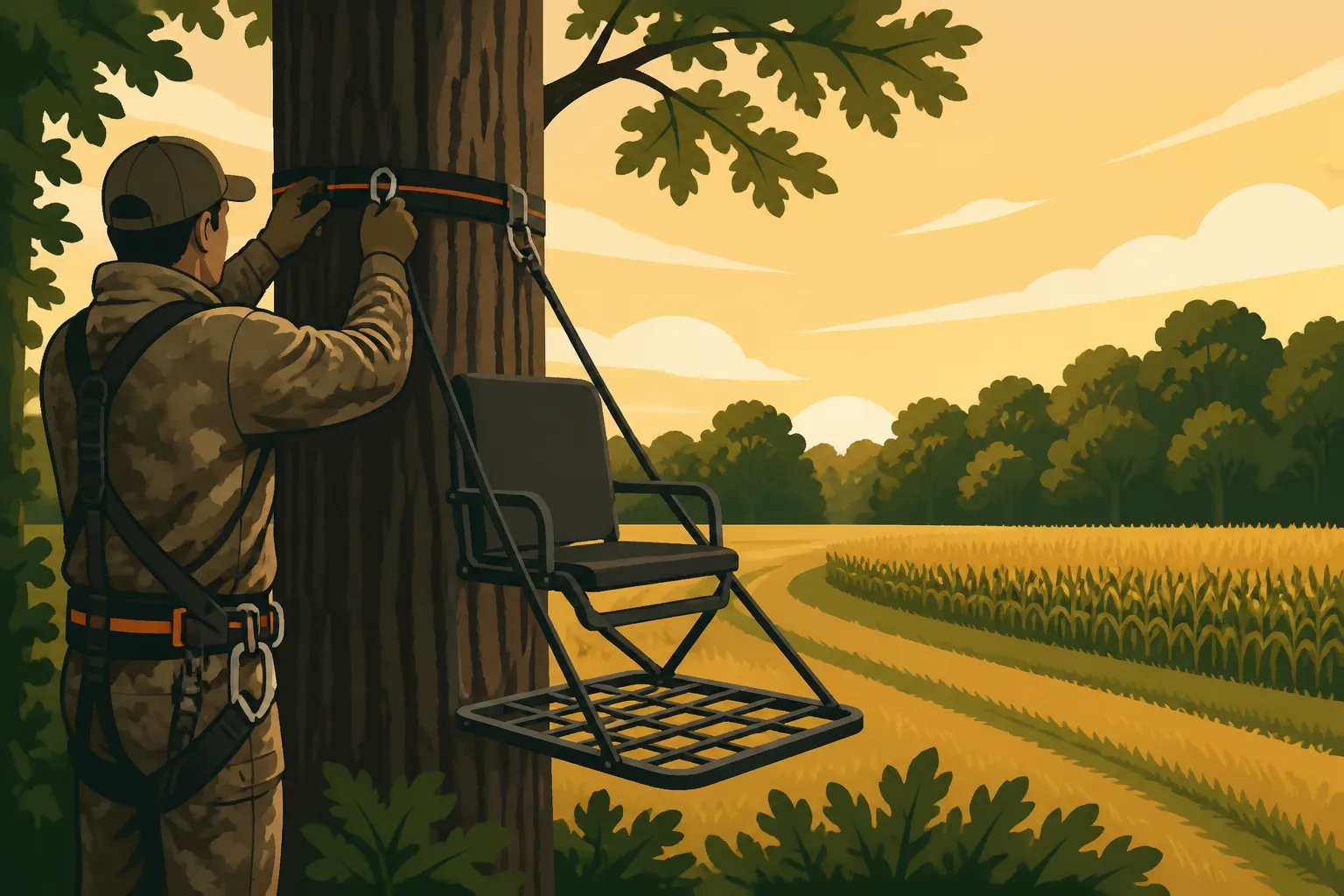
Full-Body Harness: This is not optional. Every time you leave the ground, you should be wearing a full-body harness, properly attached to the tree from the moment your feet leave the ground until they return. Far too many accidents happen during the ascent or descent, not just while in the stand.
Lineman's Belt: This specialized belt allows you to attach yourself to the tree while you're ascending with climbing sticks or setting a hang-on, keeping both hands free to work safely.
Haul Rope: Use a strong rope to pull up your bow, backpack, or firearm once you're safely in your stand. Never climb with equipment in your hands; it's dangerous and can lead to falls.
Screw-in Steps or Climbing Sticks: These are essential for accessing hang-on stands. Choose sturdy, reliable options and ensure they are securely fastened.
Lifeline/Safety Rope: For permanent or semi-permanent stands, a safety rope that runs from the base of the tree to your stand platform allows you to remain connected to the tree at all times, including during ascent and descent.
When hanging a stand, always check the integrity of the tree, looking for dead limbs or rot. Clear any debris from around the base of the tree where you might land if a catastrophic failure occurred (though a harness should prevent this). Always inform someone of your hunting location and when you expect to return. This is especially vital when hunting alone or in remote areas. A quick check of your gear before each hunt, and regular inspections throughout the season, can prevent critical failures. Investing in quality equipment and never cutting corners on safety is the smartest thing any Maryland hunter can do.
| Stand Type | Key Advantages | Best Use Case | Considerations |
|---|---|---|---|
| Hang-on | Lightweight, portable, versatile, good concealment | Diverse trees, varied terrain, permanent sets | Requires climbing sticks/steps, more involved setup |
| Climber | Highly mobile, self-contained, quick relocation | Straight, limbless trees, adaptable hunting | Limited to certain trees, can be noisy, less stable |
| Ladder | Stable, comfortable, easy access, safe for beginners | Permanent sets, open areas, visibility/comfort | Bulky, heavy, less concealed, difficult to move |
Disclaimer
Hunting is an inherently dangerous activity. Always prioritize safety, follow all local and state regulations, and ensure you have proper training and equipment. The information provided here is for educational purposes only and should not replace professional guidance or personal judgment.