Late Season Food Sources for Maryland Deer
As the crisp bite of winter truly settles in across Maryland, many deer hunters find themselves scratching their heads, wondering where all the deer have gone. It feels like the woods have emptied out after the rut, and those easy patterns you might have seen in September or even early November are just a distant memory. This frustration is real; deer behavior changes dramatically when the temperatures plummet and natural food sources become scarce. This comprehensive guide is here to help you unravel the mysteries of late-season deer movement by zeroing in on the critical food sources that keep them alive through the lean months, helping you punch that final tag.
The Late Season Shift: Understanding Deer Behavior
When winter winds whip through the Maryland landscape, deer aren't just looking for any old snack; they're on a mission for survival. Their entire existence revolves around finding enough calories to maintain body temperature and avoid starvation, all while staying safe from predators and, of course, hunters. This fundamental shift in priorities means their patterns become far more predictable, but only if you know what to look for.
Energy Conservation and Survival Instincts
Deer in late season are like highly efficient, calorie-counting machines. Gone are the days of chasing does or randomly browsing. Every movement is calculated to conserve energy. This means they'll choose the path of least resistance, hunker down in dense thermal cover during the coldest parts of the day, and only move when absolutely necessary to feed. Their metabolic rate slows, and they rely on fat reserves built up during the abundant fall, but those reserves only last so long.
Think about it from a deer's perspective: trudging through deep snow or fighting a bitter wind burns precious calories. So, they'll seek out sheltered areas, often on south-facing slopes that catch the meager winter sun, or dense thickets of evergreens that block the wind. When they do move to feed, they'll pick the quickest route to the most calorie-rich food available, often traveling along natural funnels or creek bottoms that offer some protection. Understanding this drive for efficiency is the first step to pinpointing their late-season haunts and knowing what Maryland deer eat through winter.
Impact of Hunting Pressure and Weather
Beyond the internal drive for survival, external factors like hunting pressure and drastic weather changes play a huge role in dictating where deer will be. If an area has been hammered hard during the earlier firearms seasons, deer will become incredibly wary and nocturnal, seeking refuge in the nastiest, most overlooked cover available. They'll only venture out for food under the cover of darkness or during periods of reduced human activity, like a midweek snowstorm.
Severe cold snaps or heavy snowfalls can compress deer into even smaller areas. A sudden drop in temperature or a significant accumulation of snow can trigger an immediate shift to prime thermal cover adjacent to their most preferred food source. This can actually be a boon for hunters, as deer become concentrated. However, you need to be prepared to hunt those same harsh conditions. Many hunters give up when the weather gets tough, but that's often when the deer are most predictable, albeit challenging to access. This is particularly true during something like the Maryland's Split Firearms Deer Season or the Hunting the January Firearms Reopening, when both pressure and weather can be intense.
Natural Late Season Forages
While agricultural fields often grab the spotlight for late-season deer food, many natural sources are absolutely vital for deer survival, especially in areas where row crops aren't prevalent or have been completely consumed. These are often overlooked by hunters but can be goldmines if you know what you're looking for.
Mast Crops That Linger
Not all acorns are created equal, especially when it comes to their availability late in the season. While white oak acorns are a deer favorite and usually disappear quickly in the fall, red oak acorns contain more tannins, making them less palatable initially. However, these tannins also mean they don't rot as quickly and can often persist on the ground well into winter, especially if covered by leaves or light snow. A good crop of red oak acorns can draw deer from a wide area, making an oak flat a prime spot for still-hunting Western Maryland mountain timber.
Beyond acorns, other hard mast like beechnuts or even lingering soft mast, if a mild fall has allowed it, can provide critical calories. Always check under leaf litter, especially after a fresh snow, to see if deer have been digging for these hidden treasures. Look for disturbed leaves and tracks indicating where they've been rooting around. Even if the nuts are mostly gone, the deer's habit of checking these areas can continue for a while, providing a natural travel corridor.
Persistent Browse and Evergreens
When acorns and crops dwindle, deer turn to browse – the twigs and leaves of woody plants. While not as calorie-dense as mast or agricultural crops, browse is a crucial staple. Deer will nibble on a wide variety of species, but some are preferred. Greenbrier, with its thorny vines, offers not only a food source but also incredibly dense thermal and escape cover, making it a prime location to find deer bedded or browsing during the day. Honeysuckle, if present, also holds its green leaves well into winter, providing a readily available food source that deer will actively seek out.
Evergreen trees like hemlock, pine, and cedar, while not primary food sources, provide essential emergency browse during the harshest conditions. More importantly, their dense canopy offers invaluable thermal cover, shielding deer from brutal winds and heavy snow. Deer will often bed down in these evergreen thickets, venturing out only a short distance to feed on nearby browse or other available food. When scouting, pay close attention to the edges of these evergreen stands, especially where they meet a more open area or a potential food source. The combination of secure bedding and nearby food is a powerful magnet for late-season deer. If you're using a mapping tool like GoHunt, look for those dark green patches on the satellite imagery adjacent to potential feeding areas.
Agricultural Offerings
In Maryland's more agricultural regions, particularly the Eastern Shore and portions of the Piedmont, farm fields can be absolute magnets for late-season deer. These fields offer concentrated, high-energy food sources that deer can't resist, making them prime spots for hunters during the Hunting the Late November Firearms Split or when Sitting a Field Edge in Maryland's January Firearms Days.
Standing or Leftover Row Crops
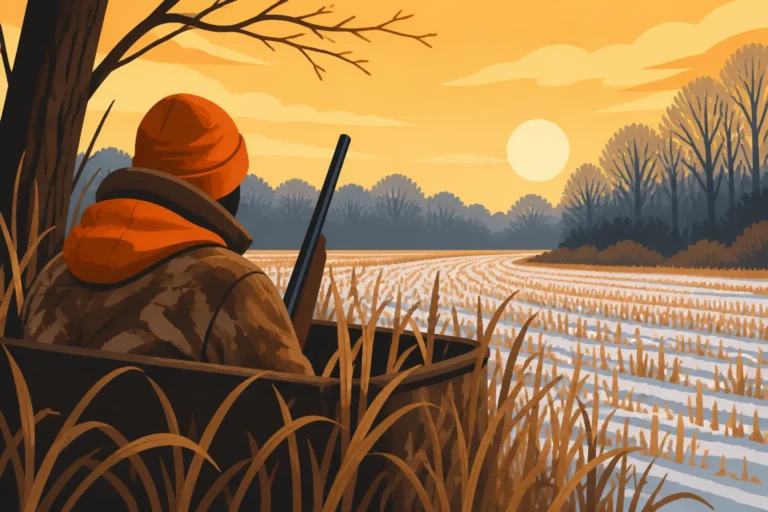
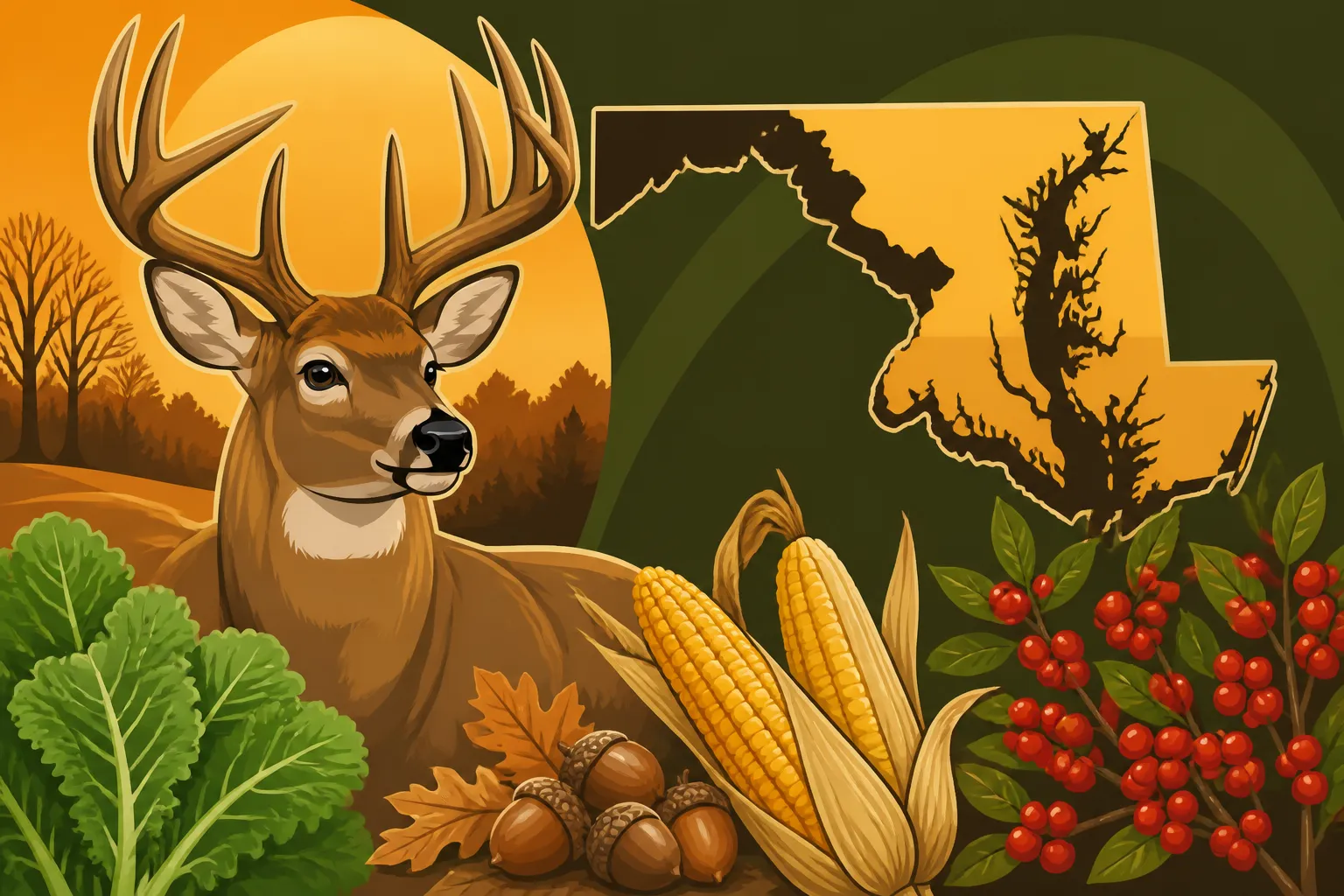
Unharvested or partially harvested cornfields are undoubtedly the king of late-season food sources. Corn is incredibly calorie-dense, providing the energy deer desperately need to combat the cold. If a farmer has left some corn standing, whether intentionally or due to machinery issues or late harvest, deer will flock to it. The standing stalks also provide excellent cover from both the elements and prying eyes, making deer feel secure while feeding.
Even in fields that have been harvested, a significant amount of grain often remains on the ground. Combines aren't 100% efficient, and dropped ears or kernels can provide a consistent buffet for deer. Similarly, soybean fields, even after harvest, can offer leftover pods and beans, which are rich in protein and fat. Deer will spend hours pawing through stubble to find these remnants. When using a tool like GoHunt, you can often identify these fields from aerial photos, then confirm on the ground for leftover grain. Look for concentrated tracks and droppings within the field itself, indicating consistent use.
Winter Food Plots and Cover Crops
Dedicated winter food plots are designed specifically to attract and hold deer through the colder months, making them incredibly effective late-season hunting spots. Brassicas, such as kale, turnip, and rape, are fantastic choices. Their leaves become sweeter after a few hard frosts, making them highly palatable to deer just when other options are scarce. Deer will literally dig through snow to get to these plants.
Winter wheat, rye, and clover plots, though less calorie-dense than brassicas or corn, provide a consistent source of green forage. These plots offer digestible protein and carbohydrates, which are crucial for maintaining health when other greens are long gone. Farmers sometimes plant these as cover crops, and deer will readily utilize them. If you're on private land, planting a fall food plot on Maryland ground can significantly enhance your late-season success. On public land, while planting isn't an option, understanding that deer might be drawn to nearby agricultural fields or naturally occurring green areas is key.
Here's a quick comparison of popular late-season food sources:
| Food Source Type | Examples | Calorie Density | Availability | Cover Provided | Common Location |
|---|---|---|---|---|---|
| Hard Mast | Red Oak Acorns, Beechnuts | High | Variable (lingers) | Low | Hardwood Forests |
| Browse | Greenbrier, Honeysuckle, Maple Twigs | Medium | Consistent | High (greenbrier) | Woodlots, Thickets |
| Evergreen Browse/Cover | Hemlock, Pine, Cedar | Low (emergency) | Consistent | Very High | Conifer Stands |
| Standing Row Crops | Corn, Soybeans | Very High | Limited | High | Agricultural Fields |
| Leftover Row Crops | Dropped Corn/Soybeans | High | Variable | Low | Harvested Fields |
| Winter Food Plots | Brassicas, Winter Wheat, Clover | High | Consistent (if planted) | Low | Private Land, Managed Areas |
Scouting and Strategy for Late Season Foods
Finding these late-season food sources is only half the battle. You need a solid strategy to locate them, confirm their use, and then set up for a successful hunt. This means combining diligent boots-on-the-ground scouting with modern tools and a keen understanding of deer movement.
Using Topography to Your Advantage
Deer, especially in late season, are creatures of efficiency and security. They'll often bed in thick cover that offers thermal protection and a good escape route, and then move directly to a reliable food source. Understanding the topography of an area allows you to predict these travel corridors. Look for funnels created by terrain features like narrow strips of woods between open fields, saddles on ridges, or creek bottoms. These natural choke points are ideal for intercepting deer moving between bedding and feeding areas.
South-facing slopes are critical to identify in colder weather. They receive more direct sunlight, melting snow faster and warming the ground, making them preferred bedding areas. Deer will often bed just below a ridgetop on these slopes, allowing them to survey the terrain below before venturing out to feed. Conversely, north-facing slopes, which tend to be colder and hold snow longer, might offer less food but could have dense conifer stands for thermal cover. Knowing how to read a topo map and then verifying it on the ground is paramount. A good example is understanding how deer use a funnel between two grain fields to move between cover and food.
Leveraging Technology and Boots-on-the-Ground
Modern hunting has been revolutionized by technology, and late-season scouting is no exception. Mapping applications like GoHunt provide invaluable aerial imagery, topographic maps, and property lines, allowing you to identify potential food sources and bedding areas from your couch. You can pinpoint standing corn, identify dense evergreen thickets, and locate those crucial south-facing slopes. This allows you to plan your scouting trips efficiently, focusing your efforts on high-probability areas. Many hunters use these tools to scout Maryland public land before season, but they are just as effective for late-season reconnaissance.
However, technology is only a starting point. Nothing replaces putting boots on the ground. Once you've identified potential areas on your map, you need to verify them. Look for fresh deer sign: tracks in snow or mud, droppings (especially large piles indicating consistent feeding), browse lines on woody plants, and fresh rubs or scrapes (though rut activity will be minimal, some bucks will still rub). Pay close attention to entry and exit trails leading into feeding areas. These trails will often be well-worn, even in snow, as deer consistently use the most efficient routes. When the snow is fresh, it's an incredible canvas for reading sign and identifying exactly where deer are concentrating their efforts. It also helps to see where others have been Hunting Pressure on Maryland Public Land, as that will influence deer movement.
Setting Up for Success Near Late Season Food
Once you’ve identified those critical late-season food sources and the travel corridors deer are using, the next step is to strategize your hunt. Late-season hunting often means fewer daylight deer movements, making precise stand placement and careful entry/exit routes more critical than ever.
Strategic Stand Placement and Entry/Exit
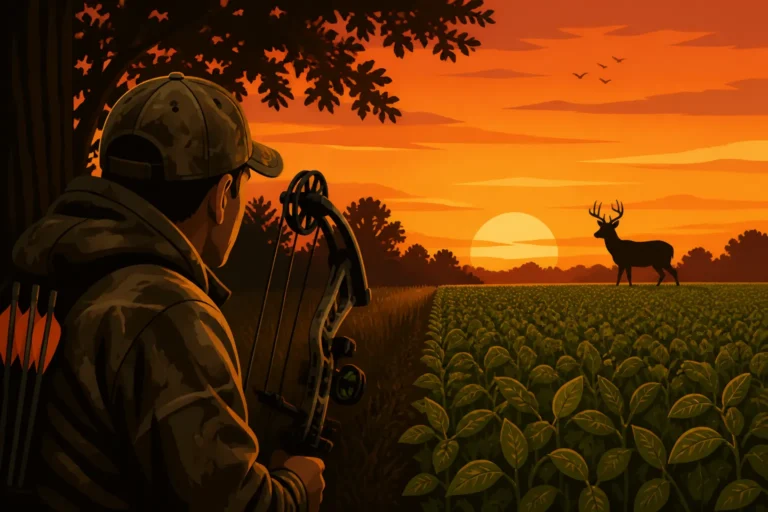
In the late season, deer are often moving just before dark and just after dawn, maximizing their time in cover during daylight hours. This means your stand or blind must be positioned to intercept them during these low-light periods. A common mistake is setting up too close to the actual food source. Deer are wary, and often they'll stage just inside the cover, scent-checking the field before committing. Consider setting up 50-100 yards back from a field edge, along a well-used trail leading into the food. This allows you to catch them before they step out into the open, increasing your shot opportunities.
Your entry and exit routes are paramount. You absolutely cannot spook deer entering or leaving your stand. Use topographical features, creek beds, or dense cover to conceal your approach. Always consider the wind; late-season deer are hyper-sensitive to scent. A single errant swirl of wind can ruin a hunt. For instance, when Hunting a Loblolly Pine Island in the Marsh, the wind direction can shift subtly, so having an alternative entry or exit plan is vital. Plan your approach so that you're walking into the wind, or at least cross-wind, and away from where you expect deer to be. This diligence becomes even more important during the colder months when deer are grouped up and easily spooked.
All-Day Sits and Patience
The late season can test even the most dedicated hunter's patience. With deer often moving only during short windows, all-day sits become a powerful strategy. Instead of making multiple noisy entries and exits, staying put in your stand from before dawn until after dusk allows you to be present for any unexpected mid-day movement. While less common, deer will sometimes move during the day, especially on overcast, blustery days when hunting pressure is low, or during a slight weather break.
During an all-day sit, deer might move between smaller, secondary food sources or shift bedding areas. Being in your stand allows you to capitalize on these less predictable movements. Pack plenty of warm layers, hand warmers, and hot drinks. Staying comfortable and alert for hours in the cold is crucial. Think about the reward: a hard-earned late-season deer often carries the best meat and represents a true testament to persistence and strategic hunting. Remember to check Maryland's Deer Bag Limits and Antler Rule to know what you can harvest.
When hunting in colder conditions, it is also smart to consider Deciding Which Weapon Season to Spend Your Buck Tag, as different weapons perform differently in the cold, and some require more specialized gear to stay warm and functional.
The Role of Cover in Late Season
You can't talk about late-season food sources without deeply discussing cover. These two elements are intrinsically linked, especially when the landscape is barren and the temperatures are frigid. Deer prioritize safety and warmth above almost all else once the food search is complete.
Thermal and Security Cover Integration
In the deep cold of winter, thermal cover is just as important as food. Deer expend significant energy just staying warm, so finding areas that block the wind and trap what little warmth there is becomes paramount. Dense conifer stands, thickets of multiflora rose or greenbrier, and even deep creek bottoms with heavy canopy cover all serve this purpose. These spots are often impenetrable to humans, which is exactly why deer love them. They offer a sanctuary where deer can bed down, out of the wind, and conserve vital energy.
Security cover is equally important. After months of hunting pressure, deer are extremely wary. They will gravitate towards the nastiest, thickest cover they can find during daylight hours. This often means bedding in tangles of blown-down trees, overgrown clear-cuts, or swamps that are difficult for hunters to navigate. The best late-season hunting spots combine robust thermal and security cover within close proximity to a reliable food source. When you find that perfect mix – a dense pine thicket bordering a standing cornfield, or a greenbrier swamp adjacent to an oak flat – you've found a late-season honey hole.
Travel Corridors to and from Cover
Deer, despite their wariness, still need to move between these secure bedding areas and their food sources. These travel corridors are your best bet for intercepting them. Look for pinch points or funnels that naturally occur between a thick bedding area and a preferred food source. These could be narrow strips of woods, draws, fencerows, or even subtle changes in topography that guide deer along a specific path.
These travel routes will often show heavy deer sign – well-worn trails, fresh tracks, and droppings. Because deer are trying to conserve energy, they will take the most efficient path, which is usually the easiest path of travel through the cover. Use your mapping tools to identify these potential corridors, then confirm them with boots on the ground. Be mindful of scent control and approach routes when scouting these corridors, as deer will be using them frequently. Remember, the goal is to position yourself along one of these corridors where you can intercept a deer as it transitions from its thermal cover to its feeding grounds, or vice-versa, without alerting it. This is a tactic often employed successfully when still-hunting a Savage River oak flat.
Final Thoughts on Maryland's Late Season Deer
Hunting Maryland's late season can be tough, no doubt about it. The weather is often unforgiving, and the deer are at their wariest. But for those willing to put in the effort, understand the subtle shifts in deer behavior, and meticulously scout for those crucial late-season food sources and associated cover, it can be incredibly rewarding. The deer you harvest during this period are a testament to your dedication and skill. It's about being patient, being smart, and knowing that every calorie counts for those animals.
Remember to leverage every tool at your disposal, from aerial maps on apps like GoHunt to tracking fresh sign in the snow. Stay warm, stay focused, and understand that by keying into what deer absolutely need to survive – high-energy food and dense, secure cover – you dramatically increase your chances of success during these challenging but highly fulfilling final weeks of the season.
Disclaimer
Please note that hunting regulations, season dates, and specific rules can change. Always consult the most current Maryland Department of Natural Resources (DNR) hunting guide before planning any hunt to ensure you are in compliance with all state laws.