Working a Fencerow for Late Season Deer
As the late season grinds on here in Maryland, many deer hunters find themselves facing a real challenge: deer have seen it all, they’re wary, and finding a consistent pattern feels impossible. Food sources are picked over, bedding areas have been bumped, and those big, open fields that were hot earlier in the fall now feel like barren wastelands. But don't despair! This guide is all about shedding light on an often-overlooked late-season hotspot: the humble fencerow. We're going to dive deep into why these linear strips of cover can be absolute magnets for deer when the mercury drops, and how you can effectively work them to put venison in the freezer.
Why Fencerows Become Late Season Deer Magnets
When the leaves are off the trees and winter's chill sets in, deer priorities shift dramatically. Survival becomes the name of the game, and that means finding secure thermal cover and consistent, accessible food sources with minimal exposure. This is where fencerows truly shine, offering a perfect blend of safety, warmth, and travel convenience that deer simply can't ignore.
Thermal Cover and Security Blankets
Imagine you're a deer, trying to stay warm and safe from predators, human or otherwise, in the biting wind and cold rain of a Maryland December or January. An open woodlot might offer some protection, but it’s still exposed. That thick, tangled fencerow, however, with its dense briars, cedars, honeysuckle, and downed limbs, acts like a natural insulated tunnel. The vegetation creates a microclimate that can be several degrees warmer than the surrounding open areas, blocking wind and trapping what little solar radiation there is.
Furthermore, this dense cover provides an incredible sense of security. Deer can bed down right in these thickets, feeling almost invisible, even when hunters are pushing through nearby woods. They can hear and smell approaching danger long before it sees them, allowing them to slip away undetected. You might walk within yards of a bedded deer in a fencerow and never know it, that’s how good the cover can be. This security blanket makes fencerows prime real estate for deer seeking refuge from hunting pressure and harsh weather. It's often the last place they feel safe before hitting open ground, and it’s a critical component of why they choose these narrow corridors.
Connectors to Scarce Food Sources
By late season, the smorgasbord of acorns and lush green growth has largely vanished. Deer are now concentrated on the most calorie-dense, accessible food left, which often means agricultural fields. Think standing corn that never got cut, patches of winter wheat, forgotten soybeans, or even browse from young saplings that managed to survive the early fall feeding. The problem is, these fields are often exposed, and a wary deer is hesitant to step out into them during daylight.
Fencerows serve as crucial arteries, connecting dense bedding cover to these valuable food sources. A deer can stage up in the security of a fencerow, browse on whatever woody stems and briars are available within its confines, and then make a quick dash into a field under the cloak of darkness or low light. They act as a protected highway, allowing deer to move between their daytime hideouts and their nighttime feeding grounds without having to cross wide-open spaces. If a farmer has a small, overlooked corner of standing corn, or a patch of brassicas, you can bet a fencerow leading to it will see heavy traffic. For more on how deer utilize these late-season offerings, check out our guide on Late Season Food Sources for Maryland Deer.
Undetected Travel Corridors
Deer are masters of efficiency and stealth. They prefer to travel with as much cover as possible, and fencerows provide just that. Instead of walking across a barren field, they'll weave through the dense brush and saplings of a fencerow. This allows them to move from one woodlot to another, or from bedding to feeding, without exposing themselves to predators, including hunters.
In pressured areas, this behavior becomes even more pronounced. Deer learn quickly that open spaces are dangerous, especially during daylight hours. Fencerows offer a compromise: they can move, often quite a distance, while still remaining largely hidden. This makes them excellent ambush points. Whether you're trying to intercept a buck slipping between two properties or an antlerless deer headed to a winter wheat field, a well-chosen fencerow can be the perfect funnel. Understanding these travel patterns is key to positioning yourself for success, whether you're planning on Sitting a Field Edge in Maryland's January Firearms Days or setting up for a brief morning hunt.
Scouting Fencerows for Deer Activity
Effective scouting is paramount to success in late season, and fencerows are no exception. You can’t just walk up to any old brush line and expect deer to be there. You need to know how to read the subtle (and sometimes not-so-subtle) clues deer leave behind, how to utilize modern tools, and where to focus your efforts.
Reading the Scrapes, Rubs, and Tracks
Even in late season, deer leave behind plenty of sign if they're using a fencerow. The most obvious, of course, are tracks. Look for well-worn trails running through the thicker parts of the fencerow, especially where it meets field edges or other cover. In snow or mud, these trails will be very apparent, showing heavy traffic. Pay attention to track size; bigger tracks could indicate a mature buck. Sometimes, deer will "pile up" tracks, meaning multiple deer are using the same corridor repeatedly, leaving a well-defined path.
Rubs and scrapes, while not as fresh as during the rut, can still tell a story. Fresh rubs on saplings within the fencerow indicate a buck recently passed through. Active scrapes might be scarce, but if you find a new one, it’s a clear indicator that a deer is still marking its territory or checking for does. Also, don't overlook browse lines. Look for nipped off buds, twigs, and leaves on low-hanging branches within the fencerow. This shows what deer are currently eating and how much time they're spending in the area. For a broader understanding of how to interpret these clues, our guide on Reading Sign in Maryland Mountain Timber can provide valuable context, even if the terrain is different.
Leveraging Mapping Tools and Observation
Modern technology has made scouting infinitely easier. Digital mapping applications, like GoHunt, are indispensable for identifying potential fencerows, understanding property lines, and visualizing terrain. Before you even step foot in the woods, use GoHunt to zoom in on your hunting areas. Look for those long, linear strips of dense cover that connect woodlots, shelter field edges, or run between different agricultural fields. Identify where these fencerows intersect with known bedding areas, water sources, or late-season food plots. This kind of aerial reconnaissance can save you countless hours of walking.
Once you have a few promising fencerows identified, a good pair of binoculars or a spotting scope can be your best friend. From a distant vantage point, spend time glassing these fencerows during prime deer movement hours (first and last light). Look for deer entering or exiting, moving along their length, or even bedding down within the thicker pockets. Observe their entry and exit points, and how they react to different winds or pressures. This real-time observation often confirms what your maps suggested and helps you pinpoint the exact spots where deer are most active. This is particularly useful for Scouting Maryland Public Land With Aerial Photos before you hit the ground.
Pinpointing Key Intersections and Bottlenecks
Not all fencerows are created equal. Deer, like us, will choose the path of least resistance or the one that offers the most security. Therefore, you need to identify the "hot spots" within a fencerow system. These are typically:
- Intersections: Where two fencerows meet, or where a fencerow meets a woodlot. These corners often act as natural staging areas or transition points where deer might pause before committing to an open field.
- Bottlenecks/Funnels: Any narrowing in the fencerow, or a spot where the cover forces deer into a tighter path. This could be where a stream crosses, a fence gap, or a section of particularly dense brush. These are classic ambush points.
- Concealed Entry/Exit Points: Deer won't always enter a field at the most obvious spot. Look for subtle, hidden openings in the fencerow where they might slip out, especially if there’s a dip in the terrain or a small ditch offering additional concealment.
- Proximity to Heavy Bedding: The closer a fencerow is to known, unpressured bedding areas, the more likely it is to be used as a primary travel route.
By focusing your scouting efforts on these strategic locations, you significantly increase your chances of encountering a deer. You’re essentially looking for where the deer's highway narrows or where they have to make a choice about their next move, creating an opportunity for you. These can often resemble Hunting a Funnel Between Two Grain Fields in their function.
Effective Hunting Strategies for Maryland Fencerows
Once you've done your scouting homework and identified a promising fencerow, it's time to think about how to hunt it. Late season deer are hyper-sensitive to pressure, so stealth and smart tactics are crucial. You'll need to consider everything from wind direction to how you approach your stand.
Strategic Stand Placement and Wind Considerations
The wind is your most important hunting tool, especially when dealing with linear cover like a fencerow. Deer will almost always try to travel with the wind in their favor, or quartering into it, using their superior sense of smell to detect danger ahead. This means you need to position your stand (whether it's a tree stand, ground blind, or just a well-concealed sitting spot) to intercept them.
Ideally, you want the wind blowing across the fencerow, or slightly in your face if you expect deer to be coming from a specific direction. Avoid at all costs placing your stand with the wind blowing directly down the fencerow in the direction deer are expected to come from. They will smell you a mile away. Consider prevailing winds for your area and then confirm with a local weather app or a simple wind checker on hunt day.
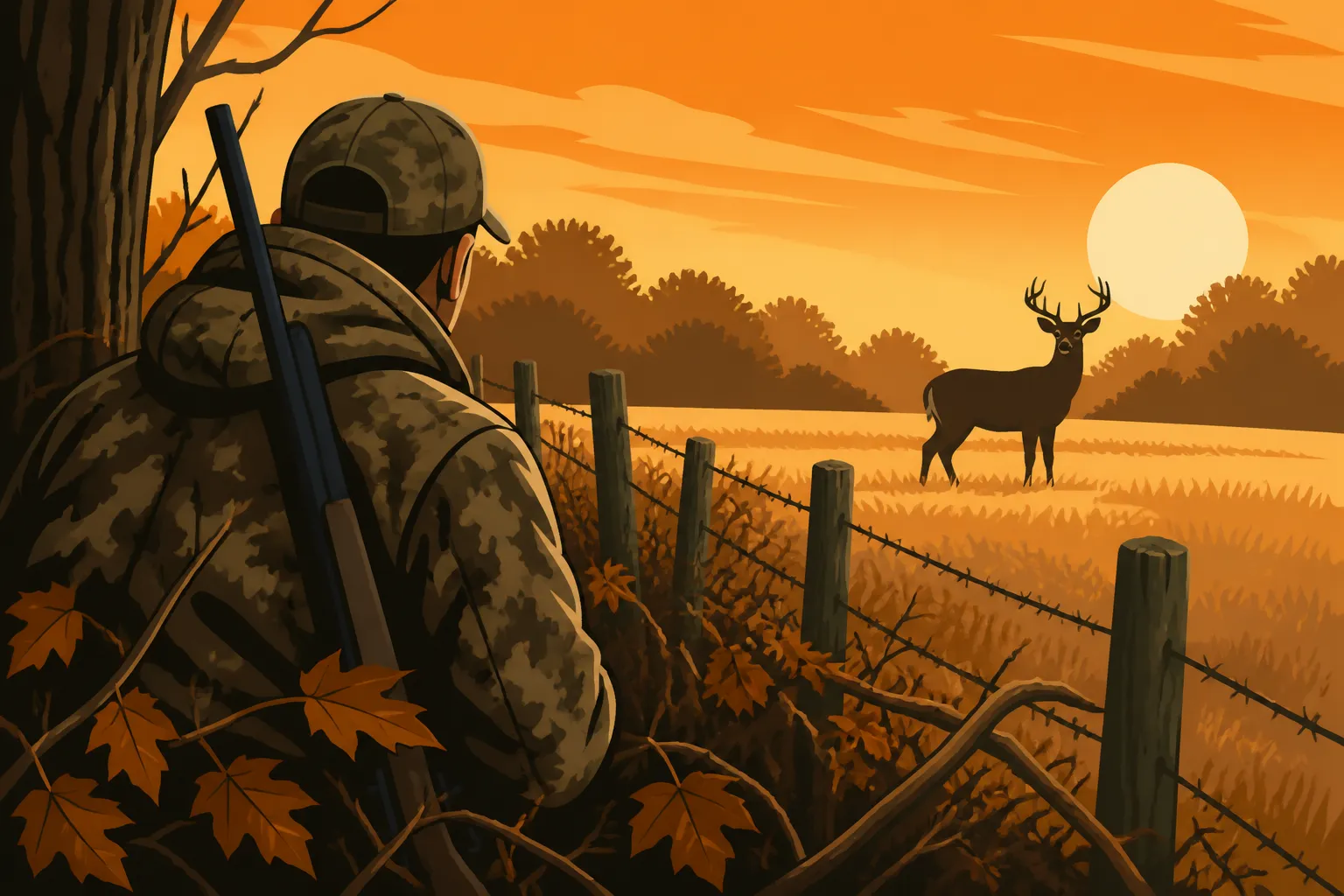
When it comes to the stand itself, look for natural breaks or openings in the fencerow. A tree stand placed just inside the edge of a woodlot where a fencerow originates or terminates can be deadly. If the fencerow itself has mature trees, consider hanging a stand where you can see a good stretch of the linear cover, as well as any adjacent field edges. For ground blinds, utilize natural brush piles or thick cedars within the fencerow for concealment. Remember, late season cover is sparse, so concealment is paramount. The goal is to be invisible and scent-free.
The Art of Still-Hunting Along the Edge
Still-hunting a fencerow can be incredibly effective, especially if you're exploring new ground or if conditions (like a light snow) are ideal for silent movement. This isn't about covering ground quickly; it's about moving at a snail's pace, truly hunting every step of the way. Think five steps, stop, look, listen, scan. Repeat.
Focus on moving into the wind or with a crosswind. Use the fencerow itself as cover, staying just inside the thickest part where you can peek out but remain concealed. Pay close attention to any breaks in the cover, any dips in the terrain, or any areas that might offer a deer a bedding spot or a quick escape route. Look for horizontal lines (a deer's back) in the vertical tangle of branches. Keep your gun or bow ready, as encounters can be sudden and close-range.
This method requires immense patience and discipline. It's easy to get distracted or rush, but the key is to be constantly aware, constantly scanning. You might cover only a few hundred yards in an hour, but those few hundred yards could put you on a bedded buck that would have slipped away if you'd moved any faster. Our guide on Still-Hunting Western Maryland Mountain Timber shares similar principles, emphasizing patience and observation that translate well to fencerow hunting.
Coordinated Mini-Drives for Challenging Spots
Sometimes, a fencerow is simply too thick, too long, or too narrow to effectively still-hunt alone, or perhaps you know a buck is bedded deep within it and won't budge. This is where a small, coordinated mini-drive can be incredibly effective, especially on private land or with a trusted hunting buddy. The idea isn't to blast through the cover like a freight train, but to apply just enough pressure to encourage deer to move predictably.
A common strategy involves one or two "pushers" slowly, quietly, and deliberately walking through the fencerow, while one or two "standers" are strategically placed ahead, where the fencerow meets a field, another woodlot, or a known escape route. The pushers should walk slowly, pausing frequently, even rattling a stick or making soft vocalizations to simulate natural movement without alarming the deer into a full sprint. The goal is to make the deer feel uneasy enough to move, but not so terrified that they burst out wildly.
Communication is key here. Walkie-talkies can be invaluable. Ensure everyone knows their role, where standers are positioned, and what directions are safe to shoot. For more on coordinating group efforts, consider reading up on Deer Drives on Maryland Private Ground. This tactic can be particularly effective in those long, winding fencerows that connect separate pieces of cover, pushing deer out into a clear shooting lane for the standers.
| Hunting Method | Best Conditions | Advantages | Disadvantages |
|---|---|---|---|
| Still-Hunting | Light snow, calm wind, dense cover, solo hunter | Highly adaptable, stealthy, intimate experience, can cover more ground | Requires extreme patience, easily busted by scent/sound, low visibility |
| Stand Hunting | Any weather, known travel routes, established deer patterns | Good visibility, scent control from height, less movement needed | Fixed position, dependent on deer movement, requires pre-scouting |
| Mini-Drive | Thick cover, multiple hunters, known bedding areas | Can move stubborn deer, covers difficult terrain, higher success rate | Requires coordination, noisy, can push deer too fast, safety concerns |
Essential Gear for Fencerow Hunting
Just like any specialized hunting method, working fencerows effectively in late season requires the right gear. Beyond your chosen weapon, a few key items can make or break your hunt, ensuring comfort, stealth, and safety.
Layering for Warmth and Maintaining Stealth
Late season Maryland hunting means cold. Often very cold, especially in the mornings and evenings when deer are most active. You’ll be sitting still for long periods or moving slowly, so proper layering is absolutely non-negotiable. Start with a moisture-wicking base layer to manage sweat, add insulating mid-layers like fleece or down, and top it off with a windproof and waterproof outer shell. Look for quiet fabrics that won't rustle or make noise as you move through brush.
Don't forget your extremities! A warm hat, insulated gloves (maybe even hand warmers), and insulated, waterproof boots are critical. Cold hands and feet will end your hunt faster than anything. Beyond warmth, scent control is still vital. Even in cold weather, deer can pick up human odor. Use scent-eliminating sprays on your clothes, store them properly, and hunt with the wind in your favor. This combination of warmth and stealth will allow you to stay out longer and increase your chances of success. When hunting in this colder weather, especially after a cold front, deer will seek out the densest cover, making fencerows even more attractive. If you want to know more about how deer react to changes in weather, check out Hunting After a Maryland Cold Front.
Optics, Mapping Apps, and Navigation Aids
A good set of binoculars is invaluable, whether you’re still-hunting or sitting on stand. They allow you to pick apart the dense cover of a fencerow, identifying deer long before they identify you. Look for movement, an antler tip, or the flick of an ear. In low light, good quality optics can extend your effective hunting time.
As mentioned before, a robust mapping application like GoHunt is essential. It helps you identify fencerows, property boundaries (crucial for staying legal!), and your route in and out. Many apps also allow you to mark sign, stand locations, and potential deer sightings. Supplement this with a physical compass and a basic understanding of your surroundings, especially if hunting unfamiliar public land. Cell service can be spotty in some remote Maryland locations, so don't rely solely on your phone. Carrying a fully charged power bank is also a smart move to keep your devices running. For information on general hunting license needs, check out Maryland Hunting Licenses and What They Cost.
Ethical Shot Placement and Recovery Tools
When hunting in dense cover like a fencerow, shot opportunities can be fleeting and tight. It's crucial to be proficient with your chosen weapon, whether it’s a bow, rifle, shotgun, or muzzleloader. Practice shooting in similar conditions – from a kneeling position, through small lanes, or with limited visibility – to prepare yourself. Always prioritize an ethical shot placement. If you don't have a clear, vital shot, pass on it. A wounded deer in a thick fencerow can be incredibly difficult to recover.
In terms of recovery tools, a good quality tracking light is a must for blood trailing, especially as darkness falls quickly in late season. While not required for every weapon, it's always wise to be familiar with Maryland Blaze Orange Requirements, especially if hunting with firearms or during a mini-drive where visibility to other hunters is key. A sharp knife, game bags, and perhaps a small drag rope will also be invaluable once you’ve recovered your deer. Be prepared for a potentially tough recovery in thick brush, and never push a deer immediately after the shot if you suspect a marginal hit; give it time.
Disclaimer
Please note: Hunting regulations and laws can change frequently. Always consult the official Maryland Department of Natural Resources (DNR) website and current hunting guide for the most up-to-date information on seasons, bag limits, licensing, and specific weapon restrictions before planning any hunt. Safety should always be your top priority in the field.