Maryland Shooting Hours for Deer
One of the trickiest parts of deer hunting in Maryland isn't just finding a good spot or patterning a big buck – it's knowing exactly when you can legally pull the trigger or release an arrow. With different seasons, weapon types, and even nuanced Sunday hunting rules, it's easy to feel overwhelmed and worry about accidentally breaking a regulation. This comprehensive guide will meticulously break down Maryland's specific shooting hours for deer across all seasons, empowering you to hunt confidently and ethically.
Understanding Maryland's Core Shooting Hours for Deer
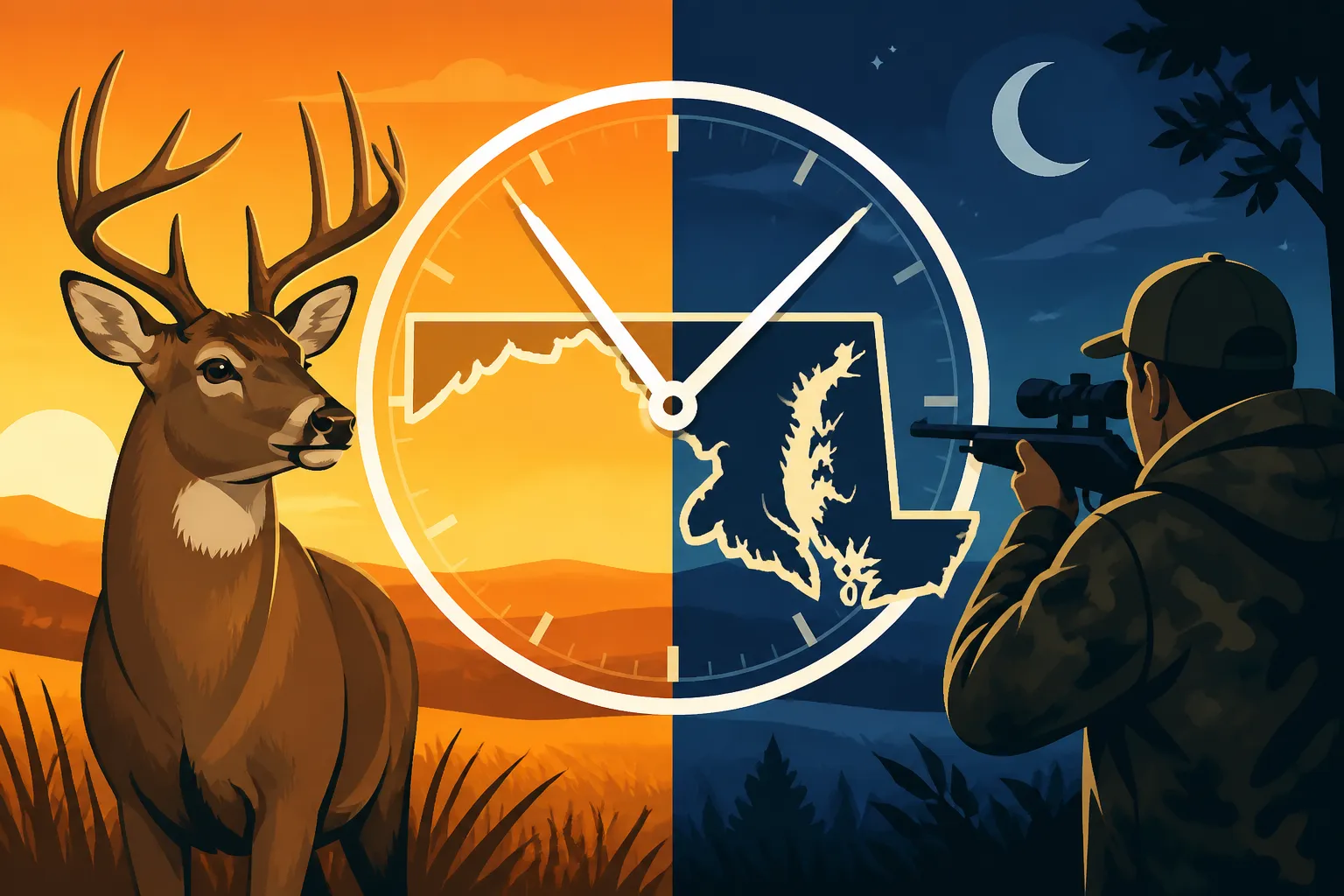
Navigating the regulations for legal shooting hours in Maryland might seem like a maze at first glance, but the foundational rule is actually quite straightforward. For the vast majority of deer hunting seasons and weapon types, hunters are permitted to shoot deer from one half-hour before sunrise until one half-hour after sunset. This standard timeframe is what most seasoned Maryland hunters live by, and it's designed with safety and fair chase in mind.
General Legal Hunting Hours
This "half-hour before sunrise to half-hour after sunset" rule is your golden standard across the board. Whether you're planning to be in a tree stand with a compound bow, stalking through the timber with a muzzleloader, or waiting patiently with a shotgun during firearms season, these are the bookends of your legal hunting day. It's not just a suggestion; it's a strict regulation enforced by the Maryland Department of Natural Resources (DNR). Ignoring these times can lead to serious legal repercussions, not to mention ethical concerns about making a clean shot in insufficient light.
For example, imagine a crisp November morning. The sun might officially rise at 7:00 AM. This means you could legally begin shooting as early as 6:30 AM. Conversely, if sunset is at 5:30 PM, you could continue hunting until 6:00 PM. These precious minutes on either end of the day, often referred to as "legal light," are frequently some of the most productive times for deer movement. Deer are crepuscular, meaning they are most active during dawn and dusk, making these low-light periods prime hunting opportunities. To stay compliant, many hunters rely on reliable weather apps or dedicated hunting apps like GoHunt to get precise sunrise and sunset times for their specific hunting location each day. These apps often update based on your GPS coordinates, taking out the guesswork you'd face trying to calculate it from a generic newspaper report.
Why These Hours Exist
The reasoning behind Maryland's prescribed shooting hours is rooted in a combination of safety, ethical hunting practices, and a respect for both wildlife and the public. These rules aren't arbitrary; they serve several critical purposes that benefit everyone involved.
Firstly, and perhaps most importantly, safety is paramount. Hunting in insufficient light drastically increases the risk of misidentifying your target. You need to be absolutely certain of what you're shooting at, not just that it's a deer, but also its size, sex (especially with Maryland's antler point restrictions), and what lies beyond it. The half-hour before sunrise and after sunset provides enough ambient light for most hunters to make a confident identification and a safe shot, reducing the chance of accidents involving non-target animals or, tragically, other people. This is particularly crucial in areas with higher hunter density or near residential zones.
Secondly, these hours uphold the principles of fair chase. Hunting is about skill, patience, and understanding animal behavior. While thermal or night vision optics exist, allowing their use for deer hunting would give hunters an overwhelming advantage, arguably removing the "chase" from the equation and making the hunt less challenging and, for many, less satisfying. By limiting shooting to periods of natural light, the DNR ensures that deer have a reasonable chance to evade detection and escape, maintaining a healthy balance within the ecosystem and respecting the animals we pursue. Lastly, these regulations consider public perception and landowner relations. Most non-hunters or landowners without hunting permission would be understandably uncomfortable with continuous shooting activity throughout the dark hours. These established shooting times help to define when hunting activity is expected and acceptable, minimizing potential conflicts and fostering a more positive relationship between hunters and the broader community.
Specific Season and Weapon Variations
While the core "half-hour before/after" rule forms the backbone of Maryland's shooting hours, it's important to understand how this applies across different seasons and weapon types. Each method of take comes with its own considerations, but the legal light remains a constant.
Archery Season Nuances
For the dedicated bowhunter, those low-light periods at dawn and dusk during the long archery season are often the most thrilling and productive. Deer are notoriously wary, and their comfort level with moving in the open often peaks when the sun isn't at its brightest. The standard half-hour before sunrise to half-hour after sunset rule applies consistently to archery season, which is great news for those who embrace the challenge of bowhunting. If you're out there for Bowhunting Maryland's Long Archery Season, you'll find that many of your opportunities arise in these critical windows.
Imagine sitting in your stand, the woods slowly waking up around you before dawn. The first legal minute to shoot often finds deer already on their feet, moving from nighttime feeding areas back to bedding cover. Conversely, in the evening, they begin to stir and move out into fields or feeding grounds as the light fades. This makes good quality optics, like binoculars with excellent low-light performance, and illuminated pins on your bow sight absolutely invaluable. Having an illuminated pin allows you to maintain a precise aiming point even when the sight picture is dim. However, even with the best gear, always prioritize a clear, ethical shot. If you can't confidently identify your target and the kill zone, it's always best to wait for more light.
Muzzleloader Season Specifics
Maryland's muzzleloader season also adheres to the standard half-hour before sunrise to half-hour after sunset shooting hours. While muzzleloaders offer a unique challenge and a powerful punch, they share the same legal light constraints as other weapon types. If you're preparing for Muzzleloader Deer Hunting in Maryland, you'll be setting up your stand or beginning your stalk with the same time window in mind as an archer.
The single-shot nature of most muzzleloaders makes careful planning and shot placement even more critical, especially in low light. Unlike a modern rifle, a quick follow-up shot isn't typically an option. This means your decision to shoot must be even more deliberate. If a deer appears in the fading light just before legal shooting hours end, you need to be confident you can make that shot count. The time it takes to reload a muzzleloader, even under ideal conditions, can be significant, making it challenging to get a second opportunity if your first shot isn't perfect, particularly as darkness encroaches. Practicing with your muzzleloader in varying light conditions, safely, before the season is a smart move to understand your comfort level and capabilities.
Firearms Season Considerations
For those participating in Maryland's Split Firearms Deer Season, the general shooting hours remain the same: half-hour before sunrise to half-hour after sunset. This applies whether you're hunting in a rifle-legal county in Western Maryland or a shotgun-only zone on the Eastern Shore. The power and range of firearms, however, add another layer of responsibility to hunting during these low-light periods.
While a rifle bullet travels faster and farther than an arrow or a muzzleloader projectile, the core principle of target identification remains paramount. In the dim light of dawn or dusk, backgrounds can become obscured, and shadows can play tricks on your eyes. It's not just about seeing the deer; it's about being able to discern its full outline, distinguish antler points (if applicable to your buck tag), and confirm there are no structures, livestock, or other hunters in the line of fire. Always use your binoculars to confirm your target before raising your firearm. Even a high-powered scope, while gathering light, can distort distances or make it harder to see obstacles beyond your immediate target in low visibility. The firearms season often brings more hunters into the woods, so extra vigilance during these low-light times is always a good idea to ensure everyone's safety.
Sunday Hunting and Shooting Hours
Sunday hunting in Maryland is a topic that often creates confusion, but when it comes to shooting hours, the rule is largely consistent: if Sunday hunting is permitted in your county and for your chosen weapon, the legal shooting hours are still from half-hour before sunrise to half-hour after sunset. The real nuance here isn't when you can shoot on a Sunday, but if you can hunt at all, and where. Maryland has made significant strides in expanding Sunday hunting opportunities, but it's not a blanket allowance across the entire state.
Historically, Sunday hunting was severely restricted, and while those restrictions have eased, they haven't disappeared entirely. The key is knowing your county's specific rules. Many counties now allow Sunday deer hunting on private land, often with specific weapon restrictions. Some counties have also opened up public lands for Sunday hunting, but these often come with their own set of specific dates or zones. For instance, Maryland's Sunday Hunting Rules by County outlines these variations, noting that during the October muzzleloader week, Sunday bowhunting might be permitted, or during specific firearms splits, certain counties allow Sunday firearm hunting on private ground. There might also be specific time limits on public lands (e.g., stopping by 10:30 AM), so always check the latest DNR regulations for the precise area you intend to hunt. Even with these expansions, the core principle of legal light remains. So, if you're out on a permitted Sunday, you'll still be looking for those familiar pre-sunrise and post-sunset windows.
Practical Tips for Maximizing Your Time Within Legal Hours
Knowing the legal shooting hours is one thing; effectively utilizing every minute of that time to boost your hunting success is another. Smart planning and the right tools can make all the difference, especially during those crucial low-light periods when deer are most active.
Using Technology for Precision
In today's hunting world, technology isn't just a convenience; it's an essential tool for staying legal and maximizing your time in the field. Relying on an outdated newspaper or a general "sunrise/sunset" search simply won't cut it when you need precision for legal shooting hours. Smartphone apps are your best friend here. Apps like GoHunt, AccuWeather, or various dedicated hunting apps provide highly accurate, location-specific sunrise and sunset times. They use your phone's GPS to give you the exact times for your tree stand, ground blind, or even boat blind location.
I personally use an app that lets me mark my stand locations, and it then automatically calculates the legal shooting light for that exact spot, even sending me a notification a few minutes before legal shooting begins or ends. This takes all the guesswork out of it. However, it’s critical to remember that while apps are incredibly helpful, they should always be cross-referenced with the official Maryland DNR regulations, especially if there's any doubt or if you're hunting a new area with potentially unique rules. Double-checking ensures you're always on the right side of the law.
Pre-Dawn and Post-Dusk Strategies
The period just before legal shooting light and just after it expires are gold mines for deer activity. However, moving into and out of your hunting spot during these low-light hours requires a specific strategy to avoid spooking game. Deer are incredibly sensitive to unusual sounds and movements, especially in the quiet darkness. For your morning hunt, plan your Entry Routes Through Cut Corn Before Daylight or through the woods so you get to your stand well before legal light. This means using trails that are less likely to hold bedding deer, moving slowly, quietly, and using a headlamp with a red light setting. Red light is less disruptive to both your own night vision and, potentially, to the deer's.
In the evening, consider how you'll exit your stand without alerting deer that might be moving into your area. Often, waiting a bit longer after legal shooting light has passed, allowing complete darkness to settle, can be beneficial. This gives deer a chance to disperse from nearby feeding areas before you begin your walk out. If you've been fortunate enough to harvest a deer, the challenges of low light continue. Retrieving downed game after dark can be tricky and requires careful planning. While it's legal to track a deer after shooting hours, you must unload your weapon. If you're tracking a deer into thick cover or onto neighboring property, knowing the specifics of Blood Trailing in Marsh Grass After Dark or other terrain-specific recovery tactics is crucial. Always bring a powerful flashlight or headlamp and mark your last blood trail spot carefully with bright colored flagging to help you pick it up again.
Equipment for Low-Light Success
Having the right gear is non-negotiable for maximizing your opportunities during those critical low-light periods. Good quality optics are at the top of this list. A solid pair of binoculars, perhaps 8×42 or 10×42, with excellent light-gathering capabilities will make a huge difference in distinguishing deer from shadows in the half-hour before and after sunset. Brands like Vortex, Leupold, and Zeiss offer fantastic options across different price points. If you're hunting from a blind, as many do when Hunting a Chesapeake Bay Blind at First Light for waterfowl, the same principles apply to deer.
A reliable headlamp is another absolute must. As mentioned, one with a red light setting is highly preferable for minimizing disturbance. You'll need it for navigating to and from your stand, setting up, packing out, and blood trailing. For firearms hunters, scopes with illuminated reticles can provide a distinct aiming point without obscuring your view of the animal. Bowhunters should invest in good quality illuminated pins for their sights. Finally, carry bright colored flagging tape. This is not only useful for marking blood trails but also for marking your path back to the truck or for identifying your stand location in the dark.
Avoiding Common Pitfalls and Staying Legal
Even with the best intentions, it's easy to fall into traps that could lead to a violation or an unethical hunting situation. Being proactive and understanding the nuances beyond the basic timeframes will keep you out of trouble and ensure a successful, responsible hunt.
Local Variations and Public Land Rules
While the statewide legal shooting hours are consistent, never assume that every piece of hunting ground operates under identical rules. This is especially true when venturing onto Maryland's extensive public lands, such as Wildlife Management Areas (WMAs) or State Forests. Each of these areas can have specific regulations that might add layers to the standard rules. For example, some managed hunts or specific WMAs might have different access times, or particular areas might be closed during certain hours or seasons.
It's absolutely paramount to check the specific regulations for the public land you plan to hunt. The Maryland DNR website provides detailed information for each WMA and State Forest. Often, these areas will have kiosks with maps and posted rules, but relying on what you find online before you go is always the best practice. When Scouting Maryland Public Land Before Season, make sure to not just look for deer sign, but also to download or print out the regulations specific to that area. Don't be that hunter who gets a ticket because you assumed the rules were the same everywhere. Always prioritize clarity, and if in doubt, contact the local DNR office or a public land manager for clarification.
Ethical Considerations Beyond the Law
While legal shooting hours dictate when you can shoot, ethical hunting often asks a deeper question: should you shoot? Just because the sun is still technically above the horizon by a sliver, allowing you to legally shoot, doesn't always mean conditions are ideal for an ethical shot. Making a clean, humane kill is the paramount responsibility of every hunter. This requires crystal-clear visibility of the animal, its vitals, and a clear path for your projectile.
Consider a scenario where a deer steps out just as legal shooting light is fading. You can technically see the deer, but perhaps its body is partially obscured by brush, or the light is so low that you can't confidently discern the exact location of the shoulder or vitals. In such a situation, choosing not to take the shot, even if it's "legal," is the ethical choice. Wounding an animal and losing it causes unnecessary suffering and is a failure of our responsibility as hunters. Sometimes, waiting for a better opportunity on another day, or even just another minute, is the most responsible action. Remember, our actions reflect on all hunters, and upholding a high ethical standard helps ensure the future of our hunting heritage. If you do make a shot and need to retrieve your deer, knowing how to properly handle Field Dressing a Deer in Warm September Weather or colder conditions is another crucial aspect of ethical hunting.
Summary of Maryland Deer Shooting Hours
To help keep all these nuances straight, here's a quick summary of the general shooting hours for deer across Maryland's various seasons and weapon types. Always remember to check specific local regulations for public lands and unique Sunday hunting allowances.
| Season/Weapon Type | Standard Daily Shooting Hours | Notes |
|---|---|---|
| Archery Season | Half-hour before sunrise to half-hour after sunset | Applies throughout the entire archery season, including during the popular early to mid-November rut period when deer movement peaks. Confirm specific Sunday hunting dates for bowhunting in your county. |
| Muzzleloader Season | Half-hour before sunrise to half-hour after sunset | Applies to both early and late muzzleloader seasons. Limited to specific weeks, always check your exact county for late-season allowances. |
| Firearms Season | Half-hour before sunrise to half-hour after sunset | Applies to all firearms splits, whether hunting with a rifle, shotgun, or straight-wall cartridge. This includes the Hunting the Late November Firearms Split and Hunting the January Firearms Reopening. Confirm county-specific weapon restrictions. |
| Sunday Hunting (if permitted) | Half-hour before sunrise to half-hour after sunset | While the hours are consistent, Sunday hunting is allowed only in specific counties and often with weapon restrictions. Some public lands may have specific time limits (e.g., 10:30 AM close for hunting on certain Sundays or specific areas). ALWAYS verify locally. |
Disclaimer
Please remember that hunting regulations can change. While this guide provides comprehensive and up-to-date information based on current Maryland DNR guidelines, it is your responsibility to consult the most recent official Maryland Hunting and Trapping Guide or visit the Maryland Department of Natural Resources website before engaging in any hunting activity. Local ordinances, specific property rules, or temporary emergency regulations may also apply.