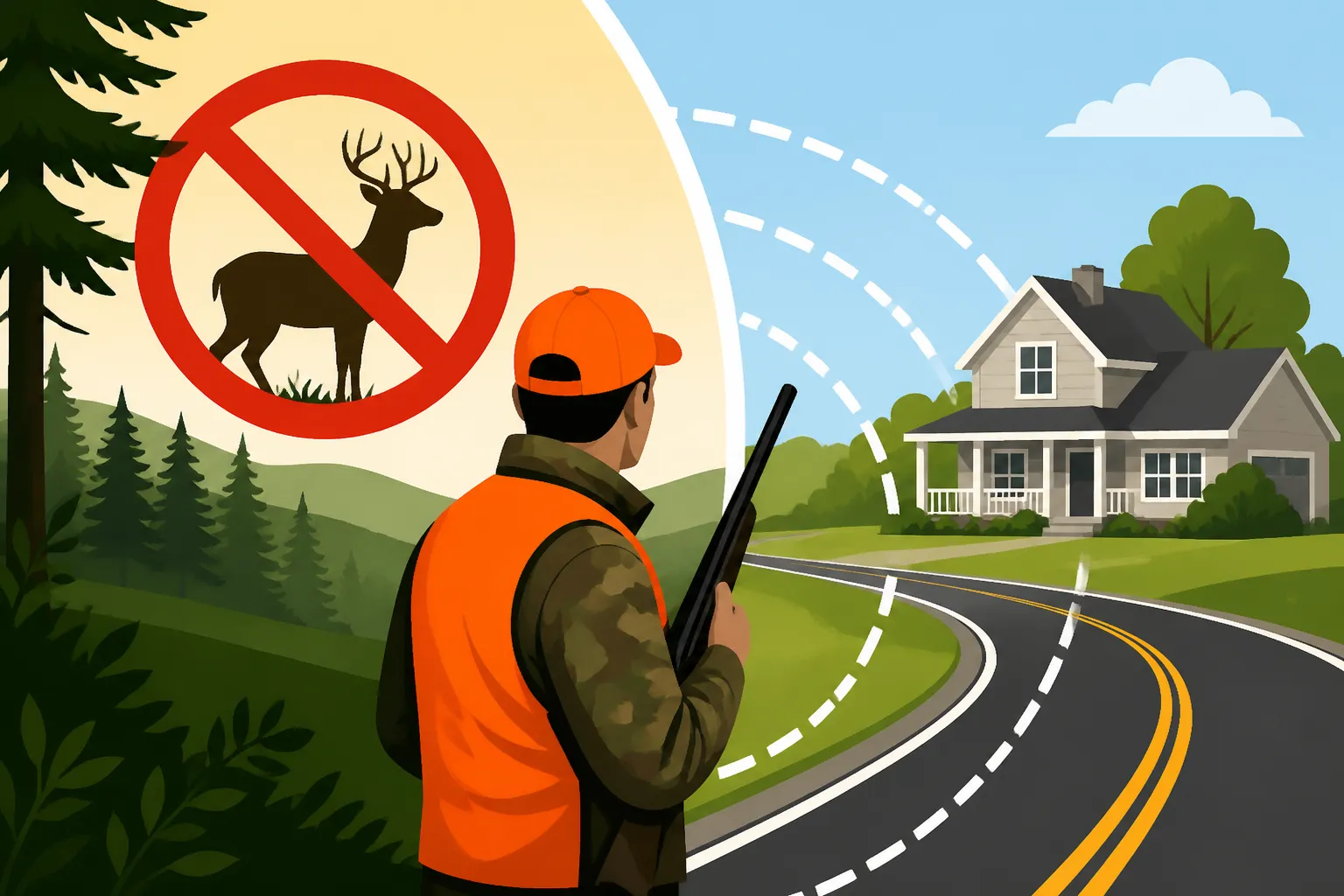
Setback Rules Near Homes and Roads
It can be incredibly frustrating to find promising hunting ground in Maryland, only to realize that a nearby house or busy road throws a wrench into your plans. That feeling of spotting fresh deer sign or a perfect funnel, then having to pack up because of an unseen safety zone, is a common headache for many hunters, especially in our state where development often bumps right up against prime wildlife habitat. This guide is here to walk you through Maryland's crucial setback rules near homes and roads, helping you understand the regulations, navigate those tricky boundaries, and ensure you're hunting safely and legally, without constantly worrying if you're too close to comfort.
Understanding Maryland's Setback Regulations
Maryland's regulations regarding setback distances for hunting are designed primarily for public safety. They create "safety zones" around places where people live, work, and travel, minimizing the risk of accidental injury or property damage from hunting activities. For any hunter, new or seasoned, truly understanding these rules is non-negotiable before heading afield. Ignoring them, even unintentionally, can lead to serious legal trouble and, more importantly, can erode public trust in our hunting heritage.
The Basics of Safety Zones
At its core, a safety zone in Maryland is a designated area where the discharge of a firearm or bow is generally prohibited. Think of it as an invisible bubble around specific structures or thoroughfares. These zones aren't just arbitrary lines drawn on a map; they are critical buffers that protect homeowners, commuters, and even pets from stray projectiles. This is especially relevant in a state like Maryland, where agricultural fields and dense woodlands often abut residential developments, making these boundaries a constant consideration.
The concept behind these zones is simple: reduce the chance of an errant shot traveling too far or impacting an unintended target. While the rules might seem restrictive at times, they are fundamental to maintaining a positive relationship between hunters and the non-hunting public. A single incident can have far-reaching negative consequences for all hunters, potentially leading to more stringent regulations or even outright bans in certain areas. It's our collective responsibility to know and respect these zones.
Specific Distances for Different Situations
Maryland law clearly defines the minimum distances you must maintain. For most hunting with firearms, the rule of thumb is a 150-yard safety zone around any occupied dwelling, building, or camp. This means you cannot discharge a firearm within 150 yards of an occupied structure without the express permission of the owner or occupant. This isn't just about the building itself; it includes the immediate area that would reasonably be considered part of the property where people reside.
When it comes to roads, the rule is slightly different but equally important. You cannot shoot a firearm from, on, or across a public road or highway. Furthermore, discharging a firearm within 100 yards of a public road or highway is generally prohibited unless you are shooting in a direction away from the road and parallel to it, or if you are hunting on your own property or property where you have specific permission and reasonable precautions are taken. Navigating these road rules can be particularly tricky, as many rural properties are bisected or bordered by public roads. Tools like Using onX Layers for Maryland Land Status can be invaluable for pinpointing these exact distances.
Here's a quick overview of the primary setback rules:
| Category | Weapon Type | Minimum Setback Distance | Conditions |
|---|---|---|---|
| Occupied Dwellings | Firearms | 150 yards | No discharge within this zone unless explicit permission from owner/occupant. |
| Bow/Crossbow | 50 yards | No discharge within this zone unless explicit permission from owner/occupant and shot is away from dwelling. | |
| Public Roads | Firearms | 100 yards | No discharge from, on, or across. Discharge within 100 yards only if shooting away/parallel & with precautions. |
| Bow/Crossbow | None specified | Generally allowed to shoot from or across a road if no occupied dwelling is within 50 yards and safe. | |
| Hunting in Blind | Firearms | 150 yards | Applies even if you are in a blind, unless on your own land or with permission. |
| Public Land | All Weapon Types | Varies | Public lands may have additional specific regulations, always check WMA/State Forest rules. |
Note: This table provides general guidance. Always consult the most current Maryland DNR hunting guide for specific, legally binding details.
Public vs. Private Land Implications
These setback rules apply universally, whether you're hunting on private land or public property. However, how they're enforced and the nuances of permission can differ. On private land, obtaining written permission from the landowner or occupant to hunt within the 150-yard safety zone of their own dwelling allows you to do so with a firearm. This is a critical distinction, as it means a landowner can legally hunt near their own home or grant permission for others to do so, provided the necessary precautions are in place. If you're granted permission to hunt on private land, ensure you understand the boundaries and any specific requests from the landowner regarding these safety zones. Always check Do You Need Written Permission in Maryland? for clarity on permission laws.
On public lands, such as Wildlife Management Areas (WMAs) or State Forests, you do not have the ability to obtain "permission" from an occupant for a dwelling that isn't yours. This means the 150-yard safety zone from any occupied dwelling always applies rigorously, and you must respect it without exception. These areas are generally well-marked, and it's your responsibility to be aware of any nearby private residences. Similarly, road setbacks apply strictly to public roads running through or adjacent to public hunting areas. It is vital to consult maps and regulations for specific public land parcels, as some may have unique local ordinances or stricter rules than the statewide minimums. Planning your hunt by Scouting Maryland Public Land With Aerial Photos is a great way to identify potential conflicts before you ever set foot on the ground.
Navigating Setback Challenges in Populated Areas
Hunting in Maryland often means dealing with a patchwork of private land, public access, and varying degrees of human development. It’s a reality of our densely populated state, and it requires hunters to be more diligent than ever. That feeling of uncertainty, wondering if a distant rooftop or a barely visible road could jeopardize your hunt, is something we all grapple with. The key is proactive planning and using the right tools to gain confidence in your hunting location.
Identifying and Avoiding Safety Zones
Successfully avoiding safety zones begins long before you step into the woods. Detailed mapping applications are your best friend here. Services like GoHunt provide invaluable satellite imagery, topo maps, and often, property boundary lines that can help you visualize potential safety zones. Before your hunt, overlay public land boundaries with satellite views, looking for any structures or roads within 150 yards of your planned hunting spot. Use the measurement tools within GoHunt to precisely determine distances from potential houses or roads. This preemptive scouting is crucial for hunting deer in Maryland's suburban neighborhoods or when Hunting a Suburban Woodlot in Montgomery County.
Don't just look at the map; think about the terrain. A house hidden by a ridge or dense woods might still be within a safety zone, even if it’s not immediately visible from your stand. Always consider the maximum effective range of your chosen weapon and factor in any potential overshoots. When in doubt, err on the side of caution. It's always better to give a little extra buffer than to find yourself in a precarious situation. Identifying these zones isn't just about legality; it's about ethical hunting and respecting your non-hunting neighbors.
Permission and Hunter Responsibility
Even with excellent mapping tools like GoHunt, there's no substitute for direct communication when hunting on or near private land. If you're fortunate enough to have permission to hunt private property, always have a clear conversation with the landowner about neighboring properties, potential structures, and any specific areas they want you to avoid. It might seem tedious, but verifying Maryland Trespass and Permission Law can save you a world of trouble.
As hunters, we bear the primary responsibility for knowing and adhering to all regulations. Ignorance of the law is never an excuse. This means not only understanding the statewide setback rules but also checking for any local ordinances that might impose stricter requirements. Some counties or specific management areas may have additional rules or limitations on weapon types, as detailed in Maryland's Legal Weapons by County. Your due diligence extends beyond just your property lines to the safety and well-being of the surrounding community. Being a responsible hunter means being a good neighbor, and that starts with respecting these safety zones.
Special Considerations for Archery Hunting
Archery hunting offers a bit more flexibility in terms of setback rules, which is why it's such a popular option in more developed parts of Maryland, including for Bowhunting Maryland Suburbs Where Rifles Are Banned. For bows and crossbows, the safety zone around an occupied dwelling is generally reduced to 50 yards, provided the hunter has the express permission of the owner or occupant, and the projectile is discharged in a direction away from the dwelling. This significantly opens up opportunities for urban and suburban deer management hunts that would be impossible with firearms.
While the shorter distance is an advantage, it doesn't diminish the responsibility of the archer. An arrow can still cause significant damage or injury. Precision, shot placement, and a thorough understanding of your hunting area are paramount. Always ensure you have a safe backdrop and that your shot opportunity presents no risk to people, pets, or property outside of your intended target. Remember, the road setback rule (shooting from, on, or across a public road) also generally applies to archery, but the 100-yard from the road rule for firearms is typically not applied to bows and crossbows, allowing for more flexibility near roadsides, again, assuming safety. Always double-check current regulations for any local exceptions.
Consequences of Violating Setback Rules and Best Practices
Ignoring Maryland's hunting setback rules isn't just a minor infraction; it carries significant legal and ethical weight. As hunters, our actions are constantly under scrutiny, and violations of safety zones can have a ripple effect, damaging the reputation of all hunters and potentially leading to harsher regulations for everyone. It's crucial to understand both the penalties and the proactive steps we can take to prevent such issues.
Legal Ramifications and Public Perception
The legal consequences for violating Maryland's setback rules can be severe. Depending on the nature and severity of the offense, penalties can range from substantial fines to the forfeiture of hunting equipment, loss of hunting privileges, and even criminal charges. If property damage or, tragically, personal injury occurs, the legal ramifications escalate dramatically, potentially including civil lawsuits, felony charges, and significant jail time. Maryland's Natural Resources Police (NRP) take these violations very seriously, and they have the authority to investigate and enforce these laws vigorously.
Beyond the legal system, there's the equally damaging impact on public perception. When a hunter is cited for shooting too close to a home or a road, it often makes local news and fuels negative stereotypes about hunting. This can lead to increased anti-hunting sentiment, calls for stricter regulations, or even bans on hunting in specific areas. We've all heard the stories, and none of us want to be "that hunter." Every responsible hunter understands that we are ambassadors for our sport. Upholding safety and respect for non-hunters is fundamental to preserving our hunting traditions for future generations. For more on general hunting conduct, consider reviewing topics like Maryland Hunter Education Requirements.
Best Practices for Ethical Hunting Near Development
To avoid violating setback rules and maintain a positive image, adopting a proactive and ethical approach is key. First, never assume. Always verify distances. Use your mapping tools extensively, and if you're on private land, walk the property with the landowner to clearly mark safe hunting zones. This collaborative effort can prevent misunderstandings and ensure everyone is on the same page. Second, choose your stand locations and shooting lanes with extreme care. Always have a clear, safe backdrop for your shots. Consider elevated stands to direct projectiles downward, especially in areas where shot distances might be tighter.
Third, be mindful of your visibility. If you're hunting near a road or residential area, ensure your vehicle is parked legally and consider minimizing your presence during non-hunting hours to avoid causing alarm. Adhering to legal shooting hours, as outlined in Maryland Shooting Hours and Legal Light, also helps ensure you're not out at times that might raise concerns. Finally, if you encounter non-hunters, whether hikers, dog walkers, or property owners, be polite, respectful, and always answer any questions clearly and calmly. Your demeanor can often de-escalate potential conflicts and foster understanding.
Utilizing Mapping Tools for Precision
Modern technology has revolutionized how we can identify and respect setback rules. Mapping applications like GoHunt are no longer just a luxury; they are an essential piece of equipment for any serious Maryland hunter. These tools allow you to:
- Pinpoint Property Lines: See exactly where private and public land boundaries lie, helping you avoid accidental trespass and identify parcels that might be too close to dwellings. This ties directly into topics like Finding Maryland Property Lines Before You Hunt.
- Measure Distances Accurately: Use built-in measurement features to draw circles or lines representing the 150-yard or 50-yard safety zones around structures you identify on satellite imagery. This takes the guesswork out of estimating distances.
- Identify Occupied Structures: Satellite views clearly show houses, barns, and other buildings that might trigger a safety zone. You can mark these points on your map and plan your approach and stand locations accordingly.
- Mark Roads and Highways: Clearly distinguish public roads from private access lanes, ensuring you never shoot from, on, or across a public thoroughfare and maintain the necessary buffer.
- Scout from Home: Before you even leave the house, you can conduct thorough virtual scouting to identify suitable hunting spots that are well outside all safety zones, saving you valuable time and preventing frustration in the field.
By embracing and mastering these digital tools, hunters can gain an unprecedented level of confidence and precision, ensuring they are always within legal boundaries and upholding the highest standards of safety and ethical conduct. It's a game-changer for hunting responsibly in a state with a complex landscape like Maryland.
Disclaimer
Please note: The information provided in this guide is for general informational purposes only and does not constitute legal advice. Hunting regulations can change, and local ordinances may vary. It is the individual hunter's responsibility to consult the most current Maryland Department of Natural Resources (DNR) hunting regulations and any applicable local laws before engaging in hunting activities. Always prioritize safety and ethical conduct.