Where Maryland Deer Yard in Deep Snow
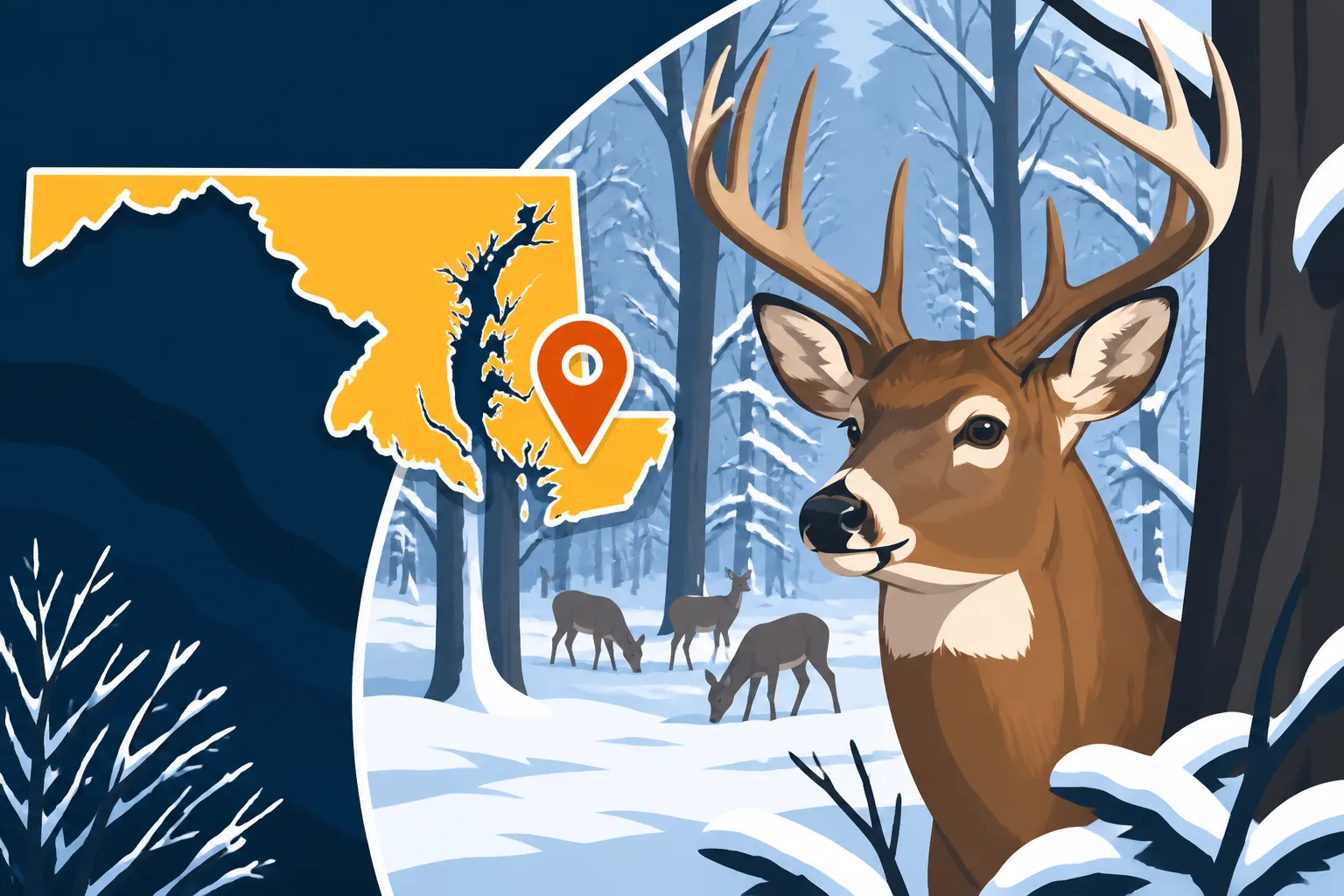
When heavy snow blankets Maryland, transforming familiar woods and fields into a dazzling white landscape, it can feel like every deer in the county has simply vanished. You might strap on your boots, eager to brave the cold, only to find faint tracks here and there, a few nibbled twigs, but no real concentrated activity. That can be incredibly frustrating, leaving you wondering where on earth those whitetails went. This guide is all about pulling back the curtain on this winter mystery, helping you understand why deer change their behavior so drastically in deep snow, where they seek refuge, and how you can identify these critical wintering grounds to better understand their movements and even find success during those challenging late-season hunts.
Understanding Deer Behavior in Deep Snow
Deer aren't just taking a winter vacation when the snow flies; they're actively working to survive. Deep snow presents a unique set of challenges that force them to adapt their daily routines, often leading them to congregate in specific areas that offer the best chance of making it through the leanest months. It's not just about comfort; it's about pure energy conservation and survival.
Why Deer Seek Winter Yards
Imagine trying to walk through waist-deep snow all day long – it's exhausting, right? For deer, every step through deep snow expends precious calories they desperately need to stay warm and alive. This is the primary driver behind "yarding" behavior. A deer yard isn't necessarily a physical fence, but rather an area where deer gather and confine their movements to a smaller, more manageable space.
Firstly, these yards are chosen for energy conservation. By limiting their travel, deer reduce the amount of energy spent pushing through snow. Instead of ranging widely for food, they concentrate their browsing to what's available within or immediately adjacent to the yard. Secondly, these areas offer crucial protection from the elements. Think about biting winds and frigid temperatures; dense cover acts like a natural insulated blanket, keeping them warmer than open woods or fields. This thermal cover is absolutely vital. Lastly, grouping up can offer a measure of safety from predators, though in Maryland, this is less about wolves and more about coyotes or even stray dogs. More eyes and ears mean an increased chance of detecting a threat, even if deep snow makes escape more difficult. It's a combination of practical survival instincts that dictates their choice of winter haven.
The Challenges of Deep Snow for Deer
It’s easy for us to romanticize a snowy winter wonderland, but for a deer, it’s a constant battle. Their lives revolve around calories, and deep snow adds a significant hurdle to their daily caloric intake and expenditure. The deeper the snow, the more difficult their mobility becomes. A deer's relatively short legs are simply not built for consistent travel through drifts, and they can quickly become bogged down, becoming easy targets for predators or simply burning through their fat reserves at an alarming rate.
Beyond mobility, foraging becomes incredibly difficult. Their primary food sources, like acorns, green browse, and agricultural crops, often get completely buried under a thick blanket of snow. They might resort to stripping bark or browsing on less palatable woody stems, which offer fewer nutrients. If you're wondering What Maryland Deer Eat Through Winter, you'll see how crucial readily available browse and mast crops are. The act of pawing through snow to reach buried forage also requires significant energy. This leads to what we call thermal stress. When deer expend too much energy fighting the snow and not enough finding nutritious food, their body temperatures can drop, leading to frostbite or even death in extreme conditions. A long, cold snap can push deer to their absolute limits, and understanding Hunting After a Maryland Cold Front takes on new meaning when you consider the impact on these animals. They are genuinely fighting for survival with every passing day of heavy snow.
Identifying Key Yarding Habitat in Maryland
When you're trying to figure out where Maryland deer might "yard" up during a heavy snowfall, you need to think like a deer. What offers the most shelter, the easiest movement, and some semblance of food? It's usually a combination of specific habitat features that provides these benefits, allowing them to ride out the worst of winter.
Dense Coniferous Cover
Without a doubt, dense coniferous cover is the number one sanctuary for deer when the snow gets deep. Think about those stands of loblolly pines, particularly on the Eastern Shore, or the scattered pockets of hemlock and other evergreens you might find in Western Maryland. These trees, with their thick needles, do an incredible job of intercepting snowfall, preventing it from reaching the ground directly. This means the snow is often much shallower under a conifer canopy than in open hardwoods, making movement much easier for deer.
Beyond just intercepting snow, the dense canopy acts as a fantastic windbreak, reducing the chilling effects of winter winds and helping deer conserve body heat. It's like finding a natural lean-to in a blizzard. You can often spot these areas on aerial maps – they appear as dark green blocks of forest, standing out from the leafless deciduous woods. For a hunter using mapping tools like GoHunt, identifying these dense green patches is a huge first step in pinpointing potential wintering areas. A good example would be scouting a Hunting a Loblolly Pine Cutover area; even older clearcuts that have regenerated into dense young pines can create this critical thermal cover, drawing deer like a magnet during a snow event.
South-Facing Slopes and Leeward Sides
Topography plays a massive role in deer survival during deep snow. When you're looking at a topographic map or out in the woods, always consider the orientation of slopes. South-facing slopes get more direct sunlight throughout the day, which helps melt snow faster and provides a warmer microclimate. Imagine the sun beating down on a snowy hillside, slowly revealing patches of bare ground or less-deep snow – that's a huge advantage for deer trying to find food or simply move with less effort.
Coupled with south-facing aspects are the leeward sides of ridges and hills. These are the sides that are protected from the prevailing winter winds, typically out of the northwest in Maryland. The wind whips over the top of a ridge and then drops, leaving the leeward side calmer and often with less wind-blown snow accumulation. A combination of a south-facing aspect and a leeward position can create a veritable haven for deer, providing both warmth and easier travel. When you're Hunting a Hillside Bench Above a Mountain Stream, remember that deer aren't just using those benches for easy travel; they're also using them for thermal advantage in tough conditions. It’s all about finding those sheltered, warmer pockets.
River Bottoms and Creek Drainages
Don't overlook the humble river bottoms and creek drainages in your search for deer yards. These areas, particularly those with steep banks or dense riparian vegetation, can offer surprising shelter from winter's bite. The lower elevation in a drainage can sometimes lead to slightly milder temperatures compared to exposed ridge tops, and the banks themselves can provide a natural windbreak.
Often, creek bottoms are home to a more diverse mix of vegetation, including some evergreens like hollies or cedars, or thick tangles of briars and brush that offer good cover. They also tend to have more accessible browse, as plants along watercourses can stay greener longer or have shoots that are easier to reach. Deer might be found Working a Maryland Creek Bottom Late in the Season, not just because of residual food sources, but also because these low-lying areas provide better protection from the elements. While they might not be as obvious as a vast pine plantation, these linear travel corridors and pockets of dense cover along water features are definitely worth investigating when snow blankets the surrounding uplands.
Scouting for Deer Yards After a Snowfall
So, the snow has fallen, and you've got a good idea of where deer might want to be. Now comes the exciting part: actually finding those spots. Scouting after a fresh snowfall is arguably the best time to see exactly how deer are using the landscape, as their movements are etched clearly into the white canvas. It's like reading a diary of their daily struggles and survival tactics.
Reading the Snow for Sign
The snow doesn't lie. When you're out there, you'll want to pay close attention to every track, every disturbance. The key indicator of a deer yard isn't just a single set of tracks, but rather a concentration of tracks. Look for areas where numerous tracks crisscross, indicating multiple deer moving within a confined space. You might see trails that are almost beaten down, resembling miniature deer highways through the snow, leading from bedding areas to feeding spots within the yard.
Beyond tracks, look for concentrated bedding areas. These will appear as depressions in the snow, often surrounded by heavy cover, where deer have lain down to rest and chew their cud. If you find several beds close together, especially under a thick stand of pines, you're likely right on the edge of a yard. Finally, pay attention to browsing activity. In deep snow, deer will be stripping bark, nipping off the ends of woody stems, and pawing through snow to reach any accessible greens. The sheer volume of this activity in a small area, especially on preferred Late Season Food Sources for Maryland Deer, will confirm that deer are congregating there for survival. This is the evidence you need to confirm a wintering ground.
Utilizing Topographic Maps and Aerial Imagery
Before you even set foot in the woods after a big snow, your best friends are your topographic maps and aerial imagery. These tools allow you to do some crucial armchair scouting, saving you a ton of time and energy when temperatures are frigid. Start by looking for those dense, dark green sections on aerial photos – these indicate coniferous cover, your prime candidates for thermal refuges. You can even use features like those found on GoHunt to overlay different map types, identifying those evergreen blocks that stand out from the leafless hardwoods.
Next, switch to the topographic view and look for south-facing slopes. Trace the contour lines and identify where the terrain receives the most direct sunlight. Also, pinpoint the leeward sides of ridges, which will be the downwind side relative to prevailing winter winds. Combine these features: a dense pine stand on a south-facing, leeward slope is a goldmine. Look for drainages, creek bottoms, and thickets that run through these areas. Platforms like GoHunt allow you to mark these areas, create waypoints, and plan your approach, enabling you to Scouting Maryland Public Land With Aerial Photos more effectively and find those hidden winter hideaways.
Covering Ground Safely and Quietly
Scouting in deep snow requires a different approach than during other seasons. First and foremost, think about your own safety and efficiency. If the snow is truly deep, snowshoes or cross-country skis can be invaluable for covering ground with less effort and less noise. Post-holing through deep snow is exhausting and will make you loud, likely spooking any deer in the vicinity.
Move slowly and deliberately. The quiet of a snowy woods is profound, and sound carries a long way. Take your time to observe and listen. Stop frequently to scan for movement or listen for the crunch of deer walking. While you're looking for sign, be mindful of the deer themselves. They are already stressed by the conditions, so try to minimize your disturbance. Don't go crashing through the densest part of a yard unless absolutely necessary. The goal is to observe and understand their patterns, not to push them out of their critical survival habitat. Focus on the fringes and travel corridors leading into and out of these areas.
Ethical Considerations and Hunting Near Deer Yards
Finding a deer yard in deep snow can feel like hitting the jackpot, but it's crucial to remember the ethical implications. Deer are at their most vulnerable during these times, and our responsibility as hunters extends beyond just legal limits – it's about respecting the animals and ensuring the health of the herd.
Minimizing Disturbance to Stressed Deer
When deer are yarded up in deep snow, they are operating on a razor-thin energy budget. Every calorie counts. Any unnecessary disturbance, like repeatedly pushing them out of their thermal cover, forces them to burn precious energy they can't easily replenish. This can weaken them, making them more susceptible to disease, starvation, or even predation. It’s an ethical dilemma that sometimes trumps opportunity.
Imagine a group of deer holed up in a thick pine stand. If you bust into the middle of them, they'll scatter, having to fight through deep snow to find new cover, expending valuable energy. This is why many experienced hunters advocate for giving known deer yards a wide berth during the most extreme winter conditions. Instead of busting in, focus on understanding their movements around the yard. Where do they enter and exit? What small pockets of browse do they visit on the fringes? Respecting their critical survival habitat is paramount for the long-term health of Maryland's deer population.
Legalities and Season Timing
While ethical considerations are paramount, it's also important to be fully aware of the legalities surrounding late-season deer hunting in Maryland. Deep snow often coincides with the late archery, muzzleloader, or even the brief January firearms reopening. It's your responsibility to know the exact Maryland Deer Season Dates by Weapon for your chosen hunting method and location. Some counties have specific rules, and these seasons are often designed to target antlerless deer for population control.
However, just because it's legal doesn't always make it the most ethical choice, especially in extreme conditions. If temperatures are brutally cold and snow is exceptionally deep, and deer are clearly struggling, a hunter might choose to hold off, even if a tag is still in their pocket. This is a personal decision, but one rooted in conservation. Always check the specific regulations for your hunting zone, especially if you're hunting in areas like Region A or B, as antlerless bag limits and weapon restrictions can vary significantly.
Strategic Approach When Hunting Near a Yard
If you decide to hunt near a deer yard during snowy conditions, a strategic and low-impact approach is key. You definitely don't want to blast into the heart of the yard and scatter every deer, not only for ethical reasons but also because it’s counterproductive for a successful hunt. Instead, focus on the travel corridors leading into and out of the yard. Deer will often create well-used trails from their bedding areas within the yard to nearby food sources, even if those food sources are limited.
These funnel points or pinch points are ideal ambush locations. Set up on the edge of the yard, perhaps where a dense pine stand meets an open hardwood ridge, or where a creek bottom offers an obvious travel route. Approach silently, using the wind to your advantage, and get into your stand or blind well before daylight. The goal is to intercept a deer as it naturally moves, either leaving the yard to feed or returning to bed. This approach minimizes disturbance to the entire group and increases your chances of a clean, ethical shot without undue stress on the rest of the herd. Knowing how to read Reading Sign in Maryland Mountain Timber in these conditions, even subtle rubs or scrapes along the edge of a yard, can help you pick the perfect setup.
| Habitat Type | Benefits for Deer in Deep Snow | Key Characteristics | Hunting Strategy (if ethical) |
|---|---|---|---|
| Dense Coniferous Cover | Thermal insulation, snow interception, windbreak | Dark green areas on aerial maps, often pine or hemlock | Hunt access trails into and out of the cover |
| South-Facing Slopes | Warmer microclimate, faster snowmelt, direct sun | Visible on topo maps, receives more sunlight | Focus on travel corridors between these slopes and cover |
| Leeward Sides of Ridges | Sheltered from prevailing winds, less snow accumulation | Opposite side of ridge from primary wind direction | Intercept deer moving to/from these protected areas |
| Thick Creek Bottoms/Drainages | Shelter from wind, diverse browse, milder temperatures | Follows watercourses, dense riparian vegetation | Set up on trails leading through or along the drainage |
| Laurel/Rhododendron Thickets | Excellent hiding cover, some snow interception | Dense, often found on slopes in Western Maryland | Hunt pinch points or openings within these thickets |
Disclaimer
This article is for general informational purposes only and does not constitute professional advice. Laws, prices and regulations vary by location and change over time. Consult a qualified professional for guidance on your specific situation.