Hunting a Reclaimed Western Maryland Strip Mine
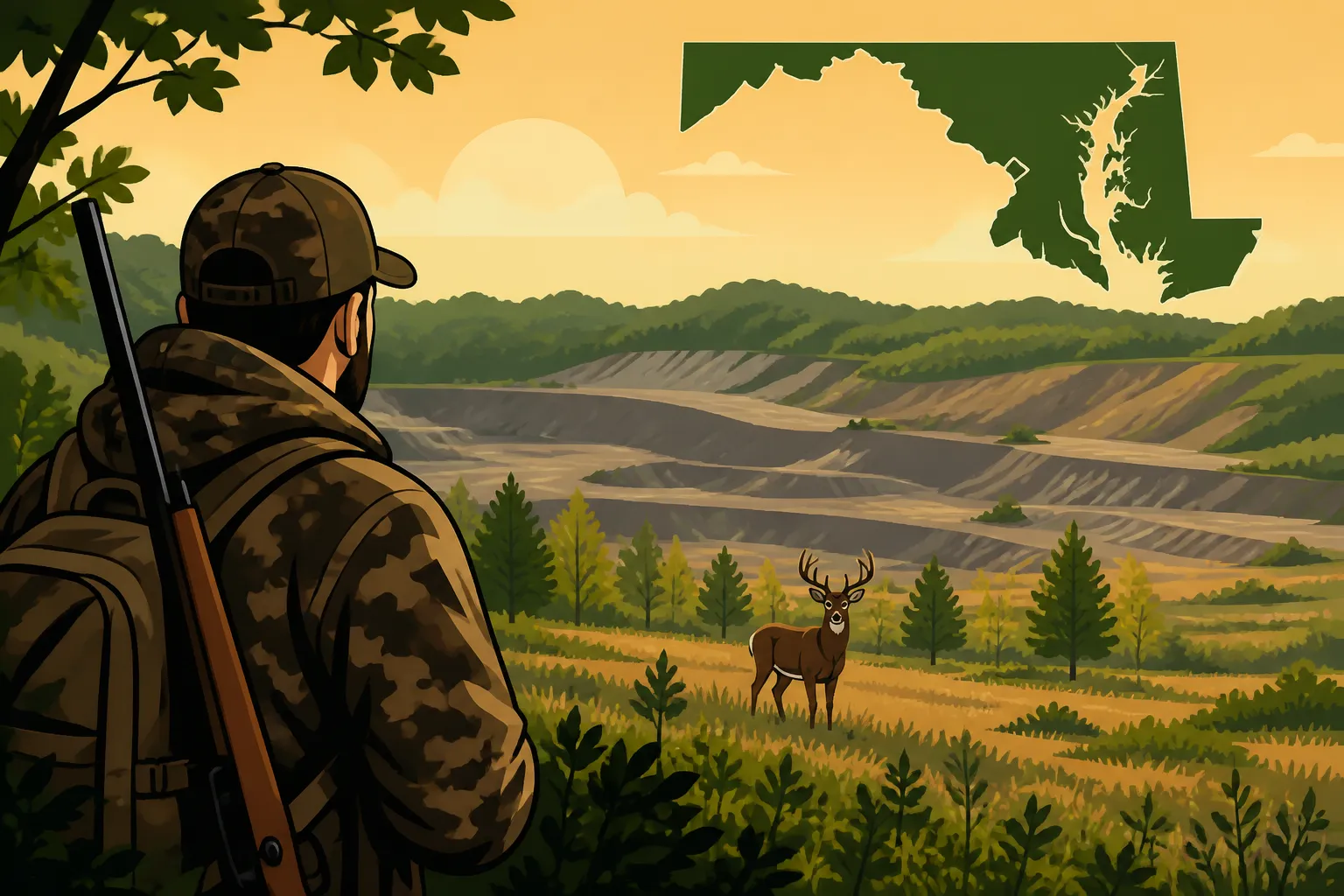
Western Maryland's landscape holds a unique beauty, but it also tells a story of industry, particularly coal mining. For hunters, this means some areas aren't your typical unbroken hardwoods or rolling farmlands; they're reclaimed strip mines, places where the earth has been moved, recontoured, and replanted. It can be incredibly frustrating to look at these areas on a map and wonder how on earth you'd ever hunt them, or even if it's worth the effort. But I'm here to tell you that these once-scarred lands can offer some fantastic, often overlooked, hunting opportunities if you know what to look for and how to approach them. This guide will walk you through unlocking the potential of these challenging yet rewarding reclaimed landscapes.
Understanding the Reclaimed Landscape
Hunting a reclaimed Western Maryland strip mine isn't like hunting any other piece of ground. These areas have a distinct personality, shaped by heavy machinery and then slowly, or sometimes rapidly, rewilded. You'll find a patchwork of old spoil piles, high walls, access roads, and diverse vegetation that creates a truly unique environment for both game and hunter.
The Scarred Earth and Its Transformation
Imagine an area where the earth was literally peeled back to get at the coal beneath. When the mining operations ceased, regulations often required reclamation – putting the earth back in place, recontouring the land, and replanting it. This process leaves behind a landscape that might initially look chaotic but, over time, develops into surprisingly productive habitat. High walls, the sheer faces of rock left after excavation, can become incredible natural blinds or create pinch points that funnel deer. The old spoil piles, those mounds of overburden that were dug up, become elevated vantage points or thick cover, providing crucial bedding areas for deer and other wildlife. Some of these areas might have been reclaimed decades ago and now boast mature secondary growth, while others are newer, showcasing early successional vegetation that's like a buffet for browsing animals.
The transformation isn't just aesthetic; it's ecological. Over many years, the soils begin to recover, and natural drainage patterns re-establish themselves, sometimes creating new seepages or small ponds in depressions. These often-overlooked water sources can be magnets for game, especially during dry periods. Understanding the history of the specific reclaimed mine you're hunting can give you a huge advantage, as older reclamation sites will have different characteristics and vegetation than more recently worked areas.
Vegetation Differences on Reclaimed Ground
One of the most striking features of a reclaimed strip mine is the incredible diversity of vegetation, often packed into a relatively small area. Unlike a homogeneous stand of mature hardwoods, you'll find a mosaic of plant life here. Early reclamation efforts often involved planting fast-growing, hardy species like various pine trees. These stands can grow incredibly thick, creating impenetrable thermal and security cover where deer feel safe to bed down. Alongside these planted pines, you'll see areas of natural regeneration, with pioneering species like sumac, briars, and various shrubs taking root. These provide a bounty of browse and soft mast, crucial food sources for deer, turkeys, and small game.
Then there are the areas that have been allowed to revert closer to their natural state, perhaps with a mix of young hardwoods, saplings, and native grasses. This varied menu and cover structure mean animals don't have to travel far to find everything they need. It also creates a challenge for hunters, as the thick, thorny tangles can make walking tough, but also provides excellent opportunities for still-hunting or setting up ambush points where game is forced to use narrower lanes of travel. Using mapping tools like onX Hunt can be incredibly helpful here, allowing you to examine aerial photos and topographic maps to predict where these different vegetation types converge and where game might naturally move between them.
Water Features and Drainage
The recontouring of strip mines drastically alters natural drainage, leading to a unique array of water features. You might find newly formed ponds in old pits, sometimes with acidic water that isn't ideal for consumption but still provides a barrier or a visual landmark. More importantly, the uneven topography can create countless small seepages, wet spots, and intermittent streams that trickle down the sides of spoil piles or through depressions. These small, clean water sources are vital to wildlife, especially in areas where larger, more stable water bodies are scarce.
Deer, in particular, will seek out these hidden water points, creating well-worn trails leading right to them. Similarly, the way water flows can erode new ditches and gullies, which often become natural travel corridors for game moving through thick cover. A deep, muddy ditch might be inconvenient for you to cross, but it might be the path of least resistance for a whitetail. Being able to identify these drainage patterns, both on a map and on the ground, can reveal key ambush points and help you understand how animals navigate the terrain. Pay close attention to any areas where fresh water collects, as these spots can often be overlooked by other hunters.
Deer and Other Game in Reclaimed Habitat
The diverse and often dense habitat of reclaimed strip mines makes them surprisingly attractive to a variety of game species. Far from being barren, these areas become havens for animals seeking food, cover, and refuge from human activity found elsewhere.
Whitetails and Their Adaptations to Unique Terrain
White-tailed deer absolutely thrive in these reclaimed environments. The mix of thick pine plantations, brushy clearings, and regenerating hardwoods provides them with everything they need. They'll bed down in the densest thickets, often on the leeward side of a spoil pile or tucked into a cluster of young pines, using the elevation and cover to their advantage. The varied vegetation offers a smorgasbord of browse, from tender new growth to berries and acorns, depending on the season and specific plant life present. You might find them browsing on the edges of old access roads or feeding heavily in successional growth where sunlight encourages robust plant diversity.
These deer become incredibly adept at using the irregular topography to their advantage. They'll use high walls as natural barriers, funneling their movement around them, or they'll travel along benches created by the reclamation process. You'll often find trails running along the base of a high wall or winding up and down the softer slopes of spoil piles. Being able to recognize these natural travel corridors is paramount. For instance, a deer might prefer to walk the top of a spoil pile ridge for a better view, or they might stick to the low ground in a reclaimed cut for maximum concealment. Understanding these subtle adaptations is key to success. This is quite different from Still-Hunting a Savage River Oak Flat, where the timber is more uniform.
Other Species That Thrive in Reclaimed Mines
While deer often take center stage, reclaimed strip mines are home to a host of other wildlife, making them excellent spots for a multi-species hunter. Wild turkeys, for example, love the mix of open clearings for strutting and bugging, dense cover for roosting, and diverse food sources like insects, seeds, and berries. You might find them scratching through leaf litter on gentler slopes or feeding along the edges of replanted areas. If you're looking to fill a spring turkey tag, don't overlook these spots, especially if they connect to larger wooded tracts. You might consider Roost Hunting Gobblers on Maryland Farmland as a different approach, but in these reclaimed areas, they'll be using different cover.
Small game like rabbits and squirrels also flourish in the thick cover and varied food sources. Rabbits will make their homes in briar patches and dense brush, while squirrels will seek out any stands of nut-bearing trees that have regenerated or been planted. If these reclaimed areas are extensive and connect to larger forest blocks, you might even encounter black bears, particularly in Western Maryland's bear country. Bears are always on the lookout for food, and the berries and nuts found in these diverse habitats are incredibly appealing. Scouting Bear Sign in Garrett County is crucial if you're targeting bears in these areas. Predators like coyotes and foxes will also frequent these areas, drawn by the abundance of prey.
Game Movement Patterns on Irregular Topography
The highly irregular topography of reclaimed strip mines dictates game movement in fascinating ways. Unlike flat ground where animals might wander more freely, the steep slopes, benches, and thick vegetation create natural funnels and pinch points. Deer will often choose the path of least resistance, which might be an old reclamation road that's mostly overgrown, a subtle bench halfway up a spoil pile, or a narrow strip of less dense vegetation between two thickets. They'll use high walls for security, often traveling just below the lip or along parallel trails that offer an escape route into dense cover.
Understanding prevailing winds is also critical here. The broken terrain can create swirling thermals and unpredictable wind currents, especially in valleys and draws. Animals will often adjust their bedding and travel routes to take advantage of these microclimates and ensure they have the wind in their favor for detecting predators. Paying attention to fresh sign – rubs, scrapes, tracks, and droppings – is vital for piecing together these complex movement patterns. Remember, these animals are masters of their environment, and they'll exploit every fold and feature of the land to their benefit. Scouting thoroughly using mapping apps like onX Hunt, and then verifying on foot, is the only way to truly unlock these secrets.
Hunting Strategies for Reclaimed Ground
Successfully hunting reclaimed strip mines requires a unique blend of patience, persistence, and specialized scouting. It's not a place for the faint of heart, but the rewards can be substantial for those willing to put in the effort.
Scouting the Unique Terrain Pre-Season
Pre-season scouting is absolutely non-negotiable when hunting reclaimed strip mines. Before you ever step foot on the property, dive deep into aerial imagery and topographic maps. Tools like onX Hunt are invaluable here. You can literally spend hours studying satellite views to identify old access roads, power line cuts, the distinct outlines of spoil piles and high walls, and variations in vegetation density. Look for natural funnels where two high walls narrow, or where thick cover meets a more open area. Identify potential water sources like ponds or seepages. Look for benches that might serve as deer highways. This digital scouting will save you countless hours of wandering aimlessly on the ground.
Once you have a few promising areas identified, it's time for boots on the ground. Walk the suspected travel corridors, paying close attention to fresh sign. Look for rub lines along the edges of planted pines or scrapes on old roadbeds. Check the bottoms of high walls for tracks where deer might be feeding or traveling. This terrain is physically demanding, so be prepared for steep climbs and thick brush. Think about how deer would move through these areas with minimal effort, and how they would use the cover for concealment. Don't be afraid to walk a little farther, Finding Maryland Ground Others Walk Past is often the key to success in these areas.
Stand Placement and Still-Hunting Tactics
Effective stand placement in reclaimed mines means thinking outside the box. Forget the perfect tree overlooking a manicured food plot; here, you're looking for natural bottlenecks and cover advantages. High walls can serve as incredible natural blinds, offering excellent concealment and a commanding view if you can position yourself on top or along their edge. Similarly, the tops of spoil piles can provide elevated positions, allowing you to glass large areas of broken terrain. Look for pinch points where deer are forced to travel through a narrow gap, perhaps between a thicket and a steep drop-off, or across an old roadbed that cuts through dense brush.
Still-hunting can be incredibly effective in these environments, especially in the thick pine plantations or brushy areas. Move slowly, taking one step at a time, pausing often to scan for movement. Use the irregular terrain to your advantage, slipping along the crest of a spoil pile or using the dense vegetation for concealment. The sound of crunching leaves will often be masked by the wind or the rustle of the brush, allowing you to get surprisingly close to game. This is a perfect scenario for Reading Sign in Maryland Mountain Timber as you move, adapting your pace to the terrain and the amount of sign you're finding. Be mindful of your scent control, as swirling winds can betray your presence quickly.
Access Points and Egress Planning
Accessing reclaimed strip mines can be one of the biggest challenges. Many of these areas might only have old, unmaintained logging or mining roads that are impassable by vehicle. You'll likely be doing a lot of walking, and often, you'll need to walk a significant distance past the initial entry points to get away from other hunters. Use onX Hunt to identify these old roads and trails, but be prepared for them to be overgrown or difficult to follow. Sometimes, the best access might involve a long hike through thick brush or a climb over a spoil pile.
Planning your egress is just as important as your entry, especially if you harvest an animal. Extracting a deer from steep, uneven terrain, through thick brush, or across old spoil piles is no easy feat. Consider bringing a game cart, even if you have to drag it some distance to get to more navigable terrain. Knowing your route in and out, and having a backup plan, is essential. Mark your way with your GPS or onX Hunt, especially if you're going deep into unfamiliar territory. The last thing you want is to be disoriented after dark with a deer on the ground in this complex landscape.
Safety and Regulations Specific to Reclaimed Mines
Hunting in reclaimed strip mines isn't just about strategy; it's also about recognizing the unique safety considerations and understanding the regulations that apply to these specific areas. Your safety, and adherence to the law, should always be your top priority.
Navigating Hazards in Reclaimed Areas
Reclaimed strip mines, by their very nature, present a range of unique hazards that hunters need to be aware of. The terrain can be incredibly deceptive. You might encounter unexpectedly steep slopes, loose rock slides on high walls or spoil piles, and unstable ground. Old mine features, such as abandoned culverts or water-filled pits, might be hidden by vegetation and pose serious risks. Always assume the ground is unstable until you've tested it. Wear sturdy boots with good ankle support to navigate the uneven footing.
Visibility can also be a challenge. The dense vegetation, especially in areas of young pines or briar thickets, can make it difficult to see other hunters or to be seen. Always adhere strictly to Maryland's blaze orange requirements, wearing the proper amount of visible orange during the designated seasons. How Much Blaze Orange Maryland Requires is important to know. Carrying a fully charged cell phone (though service can be spotty in some of these remote areas), a compass, a map, and a first-aid kit are essential. Let someone know where you're going and when you expect to return. This isn't the place to take unnecessary risks.
Public Versus Private Land Boundaries
Ownership can be notoriously fragmented in and around old mining regions. While some reclaimed strip mines fall within public lands like state forests or wildlife management areas, others might be privately owned. It is absolutely critical to know exactly where you are at all times. This is another area where a robust mapping application like onX Hunt becomes indispensable. Its property line layers can clearly show you public and private boundaries, and it can track your exact location in real-time. Do not rely solely on old paper maps, as property lines can be intricate and subtle on the ground.
Trespassing, even accidentally, can lead to serious legal consequences and damage the reputation of hunters. Always confirm permission if you intend to hunt private land, and respect all posted signs. If you're on public land, be aware of any specific permits or registration requirements that might apply to that particular area. Maryland Public Land Hunting Permits might be needed for certain managed areas, even if it's a reclaimed mine within them. When in doubt, err on the side of caution and verify your location and permission before you hunt.
Specific Regional Hunting Regulations
Beyond general statewide hunting regulations, there might be specific rules that apply to certain types of reclaimed land or particular counties in Western Maryland. For example, weapon restrictions can vary by county, with some areas limiting hunters to shotguns, muzzleloaders, or specific straight-wall rifle cartridges, while others allow general use of rifles. Always consult the current Maryland hunting regulations guide for the most up-to-date information for the specific county and game species you are pursuing. Maryland's Legal Weapons by County is a valuable resource.
If you're hunting in a designated Wildlife Management Area (WMA) that includes reclaimed lands, there might be additional rules regarding vehicle access, scouting times, or even specific hunt periods. Some WMAs require daily check-in or specific permits. It's your responsibility as a hunter to understand and follow all regulations, both statewide and site-specific. This ensures a safe and ethical hunting experience for everyone and helps to conserve these unique resources for future generations.
Table: Reclaimed Mine Hunting vs. Traditional Forest Hunting
Here's a quick comparison to help you understand the differences:
| Feature | Traditional Forest Hunting (e.g., Savage River Oak Flat) | Reclaimed Mine Hunting (Western MD) |
|---|---|---|
| Topography | Rolling hills, uniform slopes, distinct ridges/valleys | Highly irregular, spoil piles, high walls, benches, pits |
| Vegetation | More uniform mature timber (e.g., hardwoods, pines) | Patchwork of dense pines, briars, early successional growth |
| Game Cover | Canopy cover, understory, natural features | Dense thickets, high walls, spoil piles, ground-level cover |
| Food Sources | Acorns, nuts, natural browse, limited clearings | Diverse browse, berries, planted species, regenerating areas |
| Water Access | Streams, rivers, larger ponds | Seepages, small natural ponds, altered drainage |
| Scouting Ease | Easier to cover ground, follow natural contours | Challenging on foot, requires extensive map study (onX Hunt) |
| Access | Well-established trails, logging roads, forest roads | Often overgrown, unmaintained old mining roads, foot access |
| Safety Hazards | Slips, falls, getting lost | Unstable ground, steep drops, hidden pits, dense cover |
| Hunter Pressure | Can be high, especially on public land | Often lower due to difficulty and perceived lack of game |
Disclaimer
This article is for general informational purposes only and does not constitute professional advice. Laws, prices and regulations vary by location and change over time. Consult a qualified professional for guidance on your specific situation.