Maryland’s Elk History and Why They Are Gone
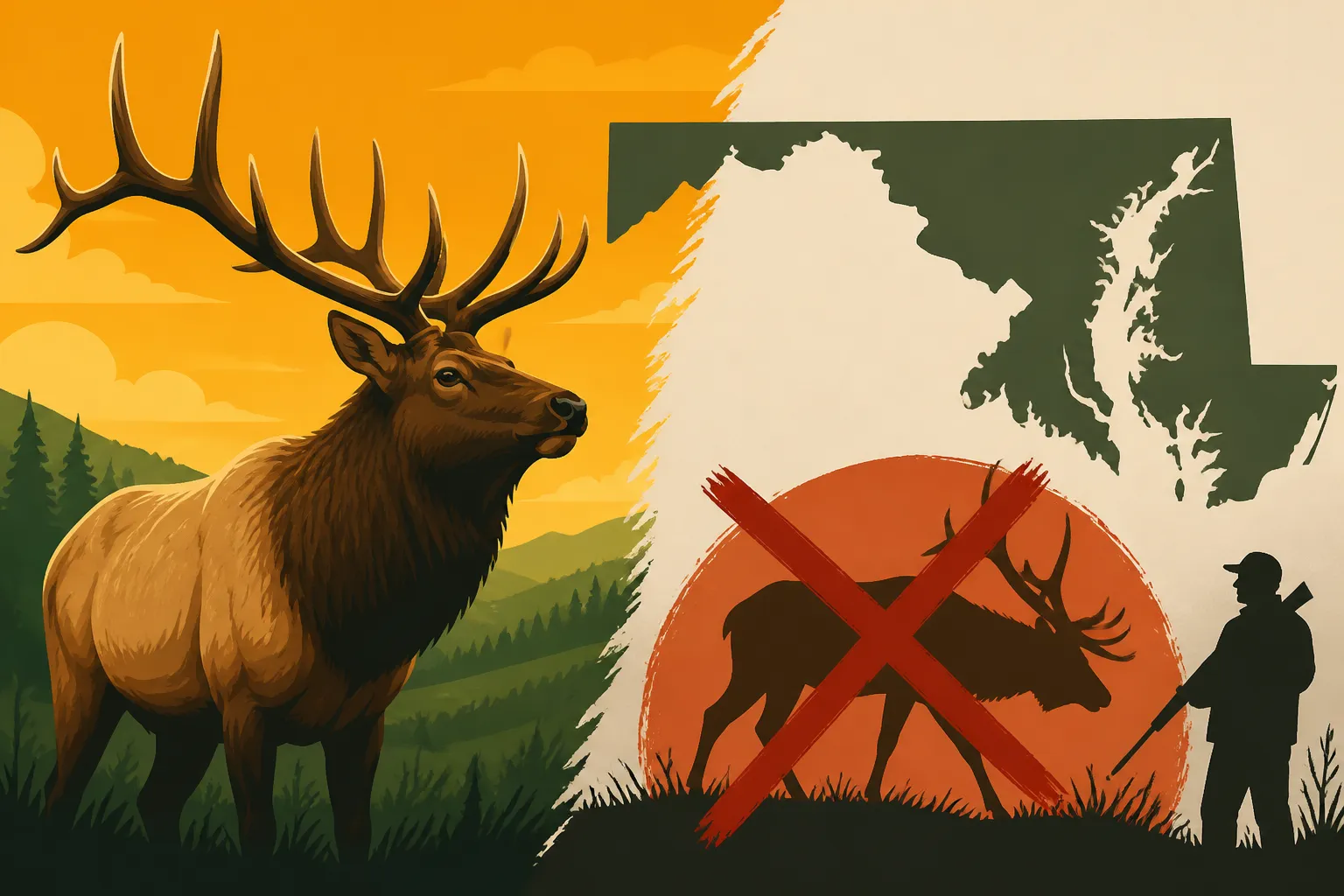
It's a bittersweet topic, isn't it? The thought of majestic elk roaming the very forests we hunt today stirs a sense of wonder, but also a pang of regret for what was lost. Many of us, while out scouting for deer or calling turkeys, might stumble upon a landscape that just feels like it could hold elk, only to remember that those days are long past for Maryland. This guide aims to take you on a journey through Maryland's fascinating, if mournful, elk history, exploring when they graced our lands, how they vanished, and the powerful lessons their absence has taught us about conservation.
The Majestic Past: Elk Roaming Maryland's Wilds
Imagine Maryland centuries ago, a landscape vastly different from what we know today. Before widespread European settlement, dense, unbroken forests stretched for miles, interrupted only by winding rivers, natural meadows, and the occasional clearing maintained by indigenous peoples. This was a wild, thriving ecosystem, and at the heart of its grandeur were the eastern elk (Cervus canadensis canadensis), a magnificent subspecies that once ranged across much of the eastern United States.
Historical Presence and Native American Connections
The eastern elk were truly a sight to behold. These animals were larger than our modern white-tailed deer, standing taller at the shoulder and carrying impressive racks of antlers. They were powerful, grazing animals, integral to the health of the forest and grassland mosaic. For thousands of years, Native American tribes lived alongside these animals, relying on them for sustenance, hides, tools, and spiritual connection. Evidence from archaeological sites across the state suggests that elk were a vital part of their diet and culture, hunted skillfully and sustainably, woven into the very fabric of their existence. Their vast territories encompassed not just the western mountains of Maryland, but also extended into the Piedmont and even parts of the coastal plain where suitable habitat existed. They were wanderers, constantly moving to find fresh browse and escape pressure, shaping the landscape as they went.
Early European Settlement and the Beginning of the End
When European settlers began arriving in Maryland in the 17th century, they encountered a land teeming with wildlife, including these impressive elk. For these new arrivals, the forests were not just homes for animals; they were resources to be harnessed. Timber was needed for building, land for farming, and game for food and trade. While early settlers undoubtedly harvested elk for subsistence, the commercial exploitation soon began. The demand for meat, hides, and even antlers in growing colonial towns and for export quickly outpaced sustainable harvesting practices. There were no game laws, no seasons, no bag limits – simply an endless resource to be exploited. Forested areas were cleared at an astonishing rate to create farmland and settlements, destroying the vast, connected habitats that elk needed to thrive. As farms expanded and roads were carved through the wilderness, the elk's preferred deep woods and large open clearings for grazing began to disappear. Even a modern hunter using a tool like GoHunt to scout current public land would be amazed to see how much the landscape has transformed since those days, making it clear why such a large animal could no longer find refuge.
The Grim Reality: Factors Leading to Extirpation
The disappearance of Maryland's elk wasn't a sudden event but a slow, agonizing decline driven by a perfect storm of factors. It's a sobering reminder of what can happen when human expansion and resource use go unchecked, a stark contrast to the careful management of species like White-Tailed Deer in Maryland today.
Habitat Loss and Fragmentation
This was arguably the single biggest nail in the coffin for Maryland's elk. Elk are creatures of vast landscapes. They require expansive, contiguous tracts of forest for cover and foraging, interspersed with open meadows or clearings for grazing. As European settlement accelerated, Maryland's once-grand forests were systematically cut down. Land was cleared for tobacco and other cash crops, towns sprang up along rivers, and industrial development chipped away at the wilderness. What remained were often fragmented patches of woods, too small and isolated to support a viable elk population. Imagine trying to manage a herd of animals the size of elk in modern-day central Maryland – it's simply inconceivable given the population density and land use. The sprawling farmlands of the Eastern Shore or the suburban development around Baltimore and Washington, D.C., represent the antithesis of elk habitat. Even in the relatively wild western counties, the pattern of settlement, logging, and farming made life increasingly difficult for a species requiring such extensive range.
Unregulated Hunting Pressure
While habitat loss created the stage for their demise, relentless, unregulated hunting delivered the final blow. In the absence of any wildlife management framework, elk were hunted year-round, without limits on how many an individual could take. "Market hunting" became a significant industry, where professional hunters killed vast numbers of animals to sell their meat, hides, and other parts. An elk represented a substantial amount of protein and a valuable hide, making it a prime target. Hunters didn't just take what they needed; they took what they could sell. This intense pressure, coupled with the shrinking habitat, meant elk had fewer places to hide and less chance to reproduce successfully. It's a stark contrast to today, where hunters must adhere to strict Maryland's Deer Bag Limits and Antler Rule and participate in hunter education.
Disease and Other Contributing Factors
While habitat loss and hunting pressure were the primary culprits, other factors likely contributed to the elk's decline, albeit to a lesser extent. As settlers brought livestock to Maryland, diseases common to cattle or other domestic animals could have been introduced to wild elk populations. With their immune systems potentially weakened by stress from shrinking habitat and constant hunting pressure, elk could have been more susceptible to these novel pathogens. Additionally, competition with other expanding species, or even environmental shifts not fully understood today, might have played a minor role. However, it's crucial to remember that the overwhelming evidence points to human activity – specifically habitat destruction and unchecked hunting – as the dominant forces behind their extirpation. The story of Maryland's elk is a cautionary tale of what happens when natural resources are viewed purely as commodities without a thought for ecological balance.
The Official Disappearance: When and How They Vanished
The exact date of the last native elk in Maryland is difficult to pinpoint with absolute certainty, as records from those early times were not always precise, nor was there a formal tracking system like we have today with modern game agencies. However, historical accounts and academic studies provide a clear picture of their final decline.
The Last Stand
By the late 18th and early 19th centuries, elk populations across Maryland were severely diminished. The relentless pressures had pushed them into the most remote and rugged corners of the state, primarily the mountainous regions of Western Maryland. These areas offered the last vestiges of expansive forest cover, places where a herd might still eke out an existence. Unfortunately, even these strongholds eventually fell. Most historical estimates place the extirpation of native elk from Maryland sometime in the early 1800s. There are accounts from that period detailing the last known sightings or harvests, usually isolated animals in the far western counties like Garrett or Allegany. It wasn't a dramatic last stand with a grand ceremony, but a quiet fading away, one magnificent animal at a time, until none were left. This loss was mirrored across much of the eastern United States, a sad testament to the frontier mentality of limitless resources. We have much better records for species now, allowing us to track things like Maryland's Black Bear Population Growth or Maryland's Wild Turkey Population Trends with precision.
Failed Reintroduction Attempts (and Modern Challenges)
The idea of bringing elk back to Maryland has certainly crossed the minds of many wildlife enthusiasts and even some conservationists over the years. However, actual large-scale reintroduction efforts for elk in Maryland have not materialized in a sustained way like they have in some other eastern states (e.g., Pennsylvania, Kentucky). The primary reason for this lies in the dramatic and irreversible changes to Maryland's landscape.
Consider the immense challenges:
- Habitat: Elk require thousands of acres of contiguous habitat. Maryland, while having some beautiful forests, particularly in its western counties like those found in Hunting Maryland's Western Mountain Forests, simply doesn't possess the vast, undeveloped tracts needed to support a free-ranging, healthy elk herd without significant conflict with human populations.
- Human Population Density: Maryland is one of the most densely populated states in the nation. Elk are large animals; they can damage crops, pose a significant hazard on roads, and require vast amounts of space. Introducing them into a landscape with so many people, farms, and roads would inevitably lead to intense human-wildlife conflicts.
- Disease: Modern wildlife management is highly concerned with disease transmission. Introducing elk could potentially bring diseases to existing livestock or even other wildlife populations, or conversely, elk could be susceptible to diseases already present.
- Cost and Logistics: A reintroduction program is incredibly expensive and complex, involving trapping and relocating animals, monitoring their health and movements, and managing public perception.
While the dream of elk bugling in the mountains of Maryland persists for some, the realistic challenges, especially concerning suitable habitat and human density, make it an incredibly difficult proposition compared to other regions. If you were even to consider such a thing, you'd need sophisticated tools like GoHunt to analyze land use patterns and private land owner information to even begin to map out potential corridors, highlighting just how different the landscape is now.
Lessons Learned and Maryland's Conservation Ethos
The story of the eastern elk in Maryland is more than just a historical footnote; it's a foundational chapter in the larger narrative of American conservation. Their disappearance, along with that of other species, served as a powerful wake-up call, directly influencing the development of the wildlife management principles we cherish today.
The Birth of Modern Conservation
The loss of elk, passenger pigeons, and the near-extinction of bison and white-tailed deer forced a fundamental shift in how Americans viewed their natural resources. It became painfully clear that unlimited exploitation led to irreversible loss. This realization gave rise to the conservation movement in the late 19th and early 20th centuries. Pioneering figures recognized the need for scientific management, legal protection, and dedicated funding for wildlife. This era saw the establishment of game laws, hunting seasons, bag limits, and the creation of state and federal wildlife agencies. It's why we have hunter education requirements today, ensuring that every generation understands ethical hunting and responsible resource use. The concept of Maryland Hunter Education Requirements and licensing for specific species directly stems from this historical understanding of what happens when there are no rules.
Maryland's Commitment to Wildlife Today
Maryland has come a very long way from those days of rampant exploitation. Today, our state boasts a robust and proactive wildlife management program. Through dedicated agencies, conservation organizations, and the financial contributions of hunters and anglers (through license fees and excise taxes on sporting goods), Maryland actively manages and protects its diverse wildlife. We've seen incredible success stories, particularly with white-tailed deer and wild turkeys, which were once in precarious situations. Species like Maryland's Black Bear Population Growth show that with careful management, even large mammals can make a significant comeback in certain areas. This commitment extends to habitat preservation, scientific research, and ongoing efforts to educate the public about the importance of biodiversity.
| Factor | Era of Elk Extirpation (18th-19th Century) | Modern Maryland Conservation (21st Century) |
|---|---|---|
| Dominant Philosophy | Resource Exploitation, Frontier Mentality | Conservation, Sustainable Use, Ecosystem Health |
| Hunting Regulations | None, Market Hunting Widespread | Strict Seasons, Bag Limits, Licensing, Hunter Education |
| Habitat Availability | Rapid Deforestation, Fragmentation for Agriculture | Habitat Restoration, Public Land Acquisition, Forest Management |
| Wildlife Agency Role | Non-existent | Central to research, management, enforcement, and education |
| Funding | Primarily private ventures (market hunting) | Hunter/Angler contributions (licenses, excise taxes), public funds, grants |
| Key Species Status | Elk extirpated, Deer/Turkey severely depleted | Deer/Turkey thriving, Bear expanding, focus on biodiversity |
| Public Land Access | Unregulated access, often private land | Managed public lands, specific Public Hunting Land in Maryland rules |
Looking Forward: The Ongoing Dream of Elk in Maryland?
While the direct reintroduction of elk to Maryland remains a monumental, if not impossible, challenge due to the reasons mentioned, the dream still resonates with many. It serves as a powerful symbol of what we once had and what we must strive to protect for current and future generations. The absence of elk in Maryland pushes us to appreciate the large tracts of wilderness we do still have, like those managed by the state forest service or wildlife management areas. It encourages us to support efforts that preserve and connect green spaces, even if those spaces can no longer accommodate an elk herd. Perhaps, the best way to honor the legacy of Maryland's vanished elk is to ensure that no other native species suffers the same fate, by championing strong conservation policies and responsible outdoor practices, whether you're chasing Sika Deer Hunting in Maryland's Tidal Marshes or simply enjoying a hike. Tools like GoHunt can help today's outdoor enthusiasts find and explore the remaining wild places, appreciating them for the incredible ecosystems they are.
Disclaimer
This article is for general informational purposes only and does not constitute professional advice. Laws, prices and regulations vary by location and change over time. Consult a qualified professional for guidance on your specific situation.