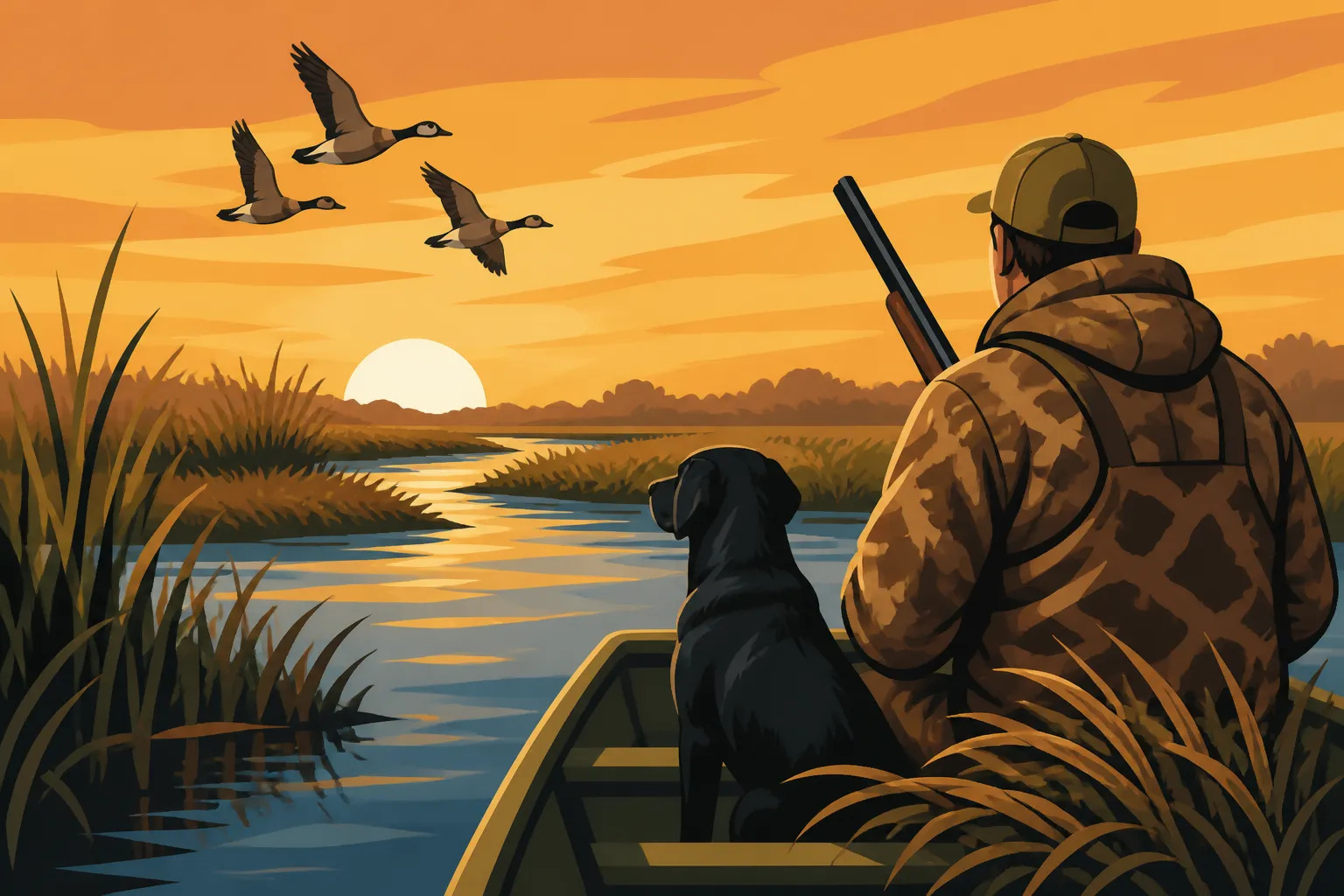
Hunting Fishing Bay’s Marsh Guts by Boat
Navigating the labyrinthine marsh guts of Fishing Bay by boat for a hunt presents a unique set of challenges and rewards. It's not like still-hunting a timber stand or sitting a field edge; the dynamic nature of these tidal environments demands specialized knowledge, gear, and a keen understanding of how water dictates wildlife movement. This guide is here to walk you through everything you need to know to successfully hunt Fishing Bay's marsh guts, whether you're after elusive sika deer or migratory waterfowl.
Understanding Fishing Bay's Unique Marsh Environment
Fishing Bay, nestled on Maryland's Eastern Shore, isn't just a body of water; it's a vast, intricate ecosystem dominated by tidal marshes. These marshes are crisscrossed by a network of "guts"—deep channels and smaller sloughs that fill and empty with the Chesapeake Bay's tides. For hunters, these guts are both highway and hideout, providing essential access to prime hunting areas and critical habitat for game.
The Dynamic Nature of Tidal Marsh Guts
Tidal marsh guts are constantly changing. What might be a narrow, barely navigable ditch at low tide can transform into a deep, flowing channel at high tide. This perpetual flux means that understanding the water is paramount. These guts act as natural funnels for game. Sika deer use the high ground along their edges, or even the guts themselves, as travel corridors, especially during the rut. Waterfowl, on the other hand, utilize the guts for feeding, loafing, and escape routes. The deep water provides security, and the mudflats exposed at low tide offer rich feeding opportunities. It's a dance between land and water, and as a hunter, you need to learn the steps. The vegetation, primarily phragmites and Spartina grasses, grows incredibly thick, creating visual barriers and dense cover that make spotting game challenging but also provide excellent ambush points. This environment is wild, raw, and unforgiving, but incredibly productive if you know how to read it.
Key Species You'll Encounter
When you venture into Fishing Bay's marsh guts, you're primarily targeting two incredible species: sika deer and various waterfowl. These two, while very different, are intrinsically linked to the marsh.
Sika deer, often called "Japanese elk" by locals, are masters of marsh survival. They are smaller than our native whitetails, but incredibly tough and elusive. They thrive in the thick phragmites and often use the gut edges for bedding and travel. During the fall, especially around the rut, they become particularly vocal, emitting their distinct "whistle" that can carry across the open marsh. Hunting them here often involves wading or boating in, finding high ground or cover, and patiently waiting, or slowly still-hunting the edges. Their small size makes them hard to spot, and their incredible hearing and scenting abilities demand extreme stealth. You can learn more about these fascinating animals in Maryland's Sika Deer, an Imported Herd.
Waterfowl hunting in the guts can be exhilarating. Puddle ducks like mallards, black ducks, and teal frequently use these sheltered waters for feeding and resting, especially on windy days when the open Bay is too rough. Divers like buffleheads and goldeneyes might also be found in deeper guts. Knowing the typical feeding patterns and flight paths of different species is key. Jump-shooting ducks as you slowly motor or pole through a gut is a classic tactic, but decoying can also be effective in the right spots. The dense cover provides natural concealment, and the intricate waterways allow for dynamic hunting strategies. Jump-Shooting Ducks on an Eastern Shore Gut offers great insights into one such technique.
Reading the Tides and Their Impact
Understanding the tides is not just helpful; it's absolutely critical for hunting Fishing Bay's marsh guts by boat. The tide dictates everything: your access, the movement of game, and your safety. A gut that's a wide, easy passage at high tide can become a muddy, impassable bog at low tide, leaving you stranded for hours or even days if you're not careful.
For waterfowl, tides can influence feeding patterns. As the tide falls, mudflats and shallow areas are exposed, allowing ducks to dabble for invertebrates and seeds. A rising tide pushes them into new feeding grounds or deeper into the guts. For sika deer, a high tide might force them onto higher, drier ground, potentially concentrating them in smaller cover pockets or along the edges of larger guts. A low tide, conversely, might expose more travel lanes within the marsh or allow them to cross areas that were previously submerged. Always check a detailed tide chart for Fishing Bay, or the specific area you plan to hunt, before you even leave the dock. Many apps, like onX Hunt, now integrate tide data, or you can find reliable NOAA charts. Pay close attention to the predicted highs and lows and, crucially, the times they occur. This knowledge is essential for both planning your entry and ensuring your safe exit. Reading Tide Charts Before a Marsh Hunt elaborates on this vital skill.
Essential Gear and Boat Considerations for Marsh Gut Hunting
Successfully navigating and hunting Fishing Bay's marsh guts requires more than just a hunting license and a shotgun. The environment itself demands specific equipment to ensure your safety, comfort, and effectiveness. Forget your typical dry-land setup; marsh hunting is a different beast entirely.
Choosing the Right Boat
Your boat is arguably your most important piece of equipment for hunting these guts. This isn't big water, open-bay boating; it's often shallow, muddy, and full of submerged obstacles.
Key considerations for a marsh boat:
- Shallow Draft: This is non-negotiable. You need a boat that can run in inches of water and get through tight spots without constantly running aground. Jon boats, specialized marsh boats, or even canoes and kayaks are excellent choices.
- Durability: You're going to hit mud, stumps, and oyster shells. A robust hull, usually aluminum or rotomolded plastic, is preferred over fiberglass.
- Maneuverability: The guts can be winding and narrow. A boat that can turn easily and be easily poled or paddled is a huge asset.
- Motor Type: A mud motor (surface drive) is king in these environments, designed specifically for shallow, vegetated water. A traditional outboard with a jack plate or a prop guard can work, but you'll be limited. Some hunters even use electric trolling motors for stealth in quieter areas.
- Capacity: Ensure your boat can safely carry all your gear, decoys, dog (if you have one), and any game you might take, without overloading.
Many local hunters rely on smaller, well-equipped Jon boats, often modified for optimal shallow-water performance. These provide a good balance of stability, capacity, and the ability to navigate tight quarters. For truly stealthy approaches, a canoe or kayak can be invaluable, allowing you to slip silently into areas a motorboat might spook. Boating Into a Sika Marsh at Low Tide offers more on this topic.
Navigation and Safety Gear
The marsh guts can look incredibly similar, especially on a foggy morning or a cloudy day. Getting disoriented is not just possible; it's a real danger.
Essential navigation and safety gear:
- GPS Unit/App: A reliable GPS is non-negotiable. Load your potential hunting spots, launch sites, and clear channels. Mapping apps like
onX Huntare incredibly powerful here, showing property lines, contour lines (even in marshes!), and satellite imagery that helps identify guts and cover.GoHuntalso offers excellent mapping capabilities that can be crucial for planning routes and identifying features in this terrain. - Physical Charts: Always carry paper charts as a backup. Electronics can fail. Mark your routes and key features.
- Compass: Another essential backup, and knowing how to use it with your chart is a critical skill.
- VHF Radio: Cell service can be spotty or nonexistent in remote marsh areas. A marine VHF radio for emergencies is vital.
- Life Jackets: Everyone on board, even good swimmers, should wear a life jacket. Cold water immersion is a serious risk.
- Anchor and Line: For holding position, especially in current.
- Push Pole: Even with a motor, a stout push pole (often aluminum or fiberglass) is essential for silent maneuvering in shallow water and getting unstuck from mud.
- First-Aid Kit: Stocked for cuts, scrapes, insect bites, and more serious injuries.
- Emergency Signaling Devices: Whistle, air horn, flares, or an EPIRB/PLB for true emergencies.
- Headlamp/Spotlight: For predawn entries and post-sunset exits.
Personal Gear for the Marsh
Once you leave the boat, you're entering a wet, often cold, and sometimes muddy world. Your personal gear needs to reflect this reality.
- Waders: Chest waders are almost always preferred over hip boots, as water depths can be unpredictable. Opt for breathable, durable waders. Neoprene is warm but can be cumbersome. Consider layers underneath. More on this in Hip Boots Versus Chest Waders in Sika Country.
- Waterproof Outerwear: A good quality, waterproof and windproof jacket and pants are essential. Layering beneath is key for adapting to changing temperatures.
- Waterproof Bag/Backpack: Keep your essentials dry: extra layers, food, water, calls, and sensitive electronics.
- Calls: For sika deer, a good sika whistle can be deadly during the rut. For waterfowl, a variety of duck calls is a must.
- Binoculars: Essential for spotting game in dense cover or identifying ducks at a distance.
- Weapon: Ensure your firearm (or bow) is appropriate for the conditions and the game you're pursuing. Waterfowl hunters need non-toxic shot. For sika, consider legal firearms or archery equipment suitable for thick cover. Always check Maryland's Legal Weapons by County for specifics.
- Insect Repellent: Mosquitoes and biting flies can be relentless, especially in warmer months.
- Hydration and Snacks: You'll be expending a lot of energy. Carry plenty of water and calorie-rich snacks.
Strategic Approaches to Hunting Fishing Bay's Marsh Guts
Hunting the marsh guts effectively isn't about brute force; it's about finesse, observation, and adapting your tactics to the unique environment and the behavior of the game. Whether you're chasing sika or ducks, a well-thought-out strategy is your best asset.
Scouting from the Water and Afloat
Your boat isn't just for transport; it's an invaluable scouting tool. Before opening day, or even during an active hunt, use your boat to survey the landscape, observe game movement, and identify potential hunting spots.
Tips for effective boat scouting:
- Slow and Steady: Don't blast through the guts at full throttle. Idle slowly, especially around bends, and continuously scan the banks and adjacent marsh.
- High Tide Scouting: Use the high tide to access areas that might be too shallow at other times. Look for game trails entering or exiting the water, fresh tracks along mudflats, and "beds"—depressions in the phragmites where sika deer have laid down.
- Low Tide Observation: Observe how the guts drain and which mudflats are exposed. These exposed areas are prime feeding grounds for waterfowl and might reveal sika crossing points.
- Use Your Optics: Binoculars are your best friend. Scan the edges of the marsh, look for small patches of higher ground, and try to pick out the subtle movement of game.
- Mapping Apps: Mark points of interest directly on your
onX HuntorGoHuntapp. Note water depths, current, cover density, and any game sightings. This digital breadcrumb trail will be invaluable when you return to hunt. - Listen: Listen for the distinctive whistle of sika stags, especially in early mornings or late evenings during the rut. Also, listen for duck chatter, which can give away their location.
This initial reconnaissance will save you countless hours of unproductive hunting and help you pinpoint the most promising areas. You're building a mental map, reinforced by your GPS, of where the game lives and how they use the guts.
Decoying and Blind Placement for Waterfowl
When targeting waterfowl in the marsh guts, setting up effectively can make all the difference. The cover is usually plentiful, but blind and decoy placement requires thought.
Waterfowl tactics for marsh guts:
- Natural Blinds: The dense phragmites and Spartina grass provide incredible natural concealment. Instead of hauling in a cumbersome blind, often you can simply trim a small opening in the existing vegetation to create a shooting lane. Use a small boat blind or lay-out blind only if the natural cover isn't sufficient.
- Decoy Spreads: In the narrow guts, you don't need massive decoy spreads. A dozen to two dozen decoys, primarily dabblers like mallards and black ducks, are usually sufficient. Place them strategically so that ducks have a clear landing zone in front of your hidden position. Leave an open "landing strip" in the gut itself, often in a slight bend or pocket, where ducks feel comfortable dropping in.
- Motion Decoys: A spinning-wing decoy or a jerk string can be highly effective in attracting attention in the still confines of a gut. Place them where they can be easily seen but don't look out of place.
- Tide Influence: Pay attention to how the tide affects your spread. At low tide, some decoys might be high and dry; at high tide, they might be pushed into cover. Adjust as necessary.
- Wind Direction: Always consider the wind. Ducks typically land into the wind. Position your decoys and blind so that incoming birds are facing you as they commit to the spread.
For jump-shooting, the strategy is different. Slowly pole or motor (if regulations allow and it's quiet enough) through the guts, staying vigilant. When ducks flush, be ready to shoulder your gun quickly. This is often an opportunistic style of hunting that rewards quick reflexes and accurate shooting.
Still-Hunting and Stand Placement for Sika Deer
Hunting sika in the marsh guts is a chess match against a ghost. Their camouflage is superb, and they are incredibly adept at slipping away unnoticed.
Sika hunting tactics for marsh guts:
- Still-Hunting the Edges: This is a popular and effective method. Move very slowly along the higher edges of the guts, pausing frequently to scan ahead and listen. Take five steps, stop for a minute, listen, look. Repeat. Look for antler tips, the flick of an ear, or the dark patch of a sika's body amidst the brown and green. Reading a Marsh Trail for Sika Sign is crucial here.
- Wind is King: Sika deer have an incredible sense of smell. Always hunt into the wind or with a crosswind. A swirling wind in the marsh can be your undoing. The open nature of the marsh means your scent can carry far.
- Elevated Stands (if applicable): If you find a patch of sturdy trees or a high bank overlooking a key gut intersection or travel corridor, a portable treestand or ground blind can be effective. However, finding suitable spots can be challenging in the marsh. Always check public land regulations regarding stand placement.
- Calling: During the rut, sika whistles can be incredibly effective. Mimic a challenge call to draw in a stag, but be prepared for them to come in quickly and quietly.
- Ambush Points: Identify bottlenecks or pinch points where sika deer are funneled, such as narrow crossings between guts or a small island of high ground. Set up patiently near these areas.
- Tidal Movement: Use the tide to your advantage. As mentioned, a high tide can push deer onto smaller, drier islands, concentrating them. Plan your hunt around these movements.
- Entry and Exit: Plan your approach and exit routes carefully to avoid spooking deer. The boat allows you to reach remote areas, but the walk from the boat to your hunting spot should be as stealthy as possible. Consider wading in Wading Into a Dorchester Marsh Before Daylight.
A successful sika hunt in the marsh often comes down to patience, meticulous scouting, and an intimate understanding of their behavior in this unique habitat.
Navigating Access and Regulations in Fishing Bay
Fishing Bay offers a mix of public and private lands, and knowing the rules for each is vital. Maryland's hunting regulations are thorough, and understanding them will prevent any unwanted surprises or legal troubles. Always consult the current Maryland Guide to Hunting & Trapping for the most up-to-date information.
Public Access Points and Launch Sites
Accessing Fishing Bay's marsh guts by boat typically means utilizing public boat ramps and designated access points. The area around Fishing Bay is part of the extensive Maryland's Wildlife Management Areas, specifically the Fishing Bay Wildlife Management Area and Deal Island Wildlife Management Area.
Common Access Points:
- Henry's Crossroads (Fishing Bay WMA): This area, accessible from Route 335, provides access to the northern parts of Fishing Bay. It's a popular launch site, especially for smaller, shallow-draft boats.
- Deal Island WMA: Further south, Deal Island offers various launch points that lead into the numerous guts and creeks of that marsh system, which is very similar to Fishing Bay. Hunting Deal Island's Tidal Marsh delves deeper into that specific area.
- Other smaller, unimproved ramps: Locals often know of lesser-known access points. A good mapping app like
onX Huntcan help you identify these, but always verify public access and parking.
Be aware that parking can be limited at some of these sites, especially during peak hunting seasons. Arrive early, particularly on opening days. Also, remember that some areas within the WMAs might have specific permit requirements for certain activities or seasons, so check ahead.
Understanding Waterfowl Blind Site Rules
For waterfowl hunters, Maryland has a long-standing and somewhat complex system of licensed blind sites. These are designated locations where a permanent or temporary blind can be legally established for hunting migratory waterfowl.
- Riparian Rights: Many areas of the Chesapeake Bay and its tributaries, including some parts of Fishing Bay, are subject to riparian landowners' rights to license blinds. This means a private landowner whose property borders the water might have the exclusive right to a blind site near their shoreline.
- Public Blind Sites: The Maryland Department of Natural Resources (DNR) also licenses public blind sites in certain areas not claimed by private landowners. These are typically applied for annually, often through a lottery system.
- Temporary Blinds: You can often hunt from a temporary blind or boat blind in unlicensed areas, provided you are a certain distance from any licensed blind or property line, and you are not obstructing navigation. The specific setback distances are outlined in the Maryland hunting regulations.
- Check Before You Hunt: It's absolutely crucial to know if you're hunting in a licensed blind area or if you're too close to a property line. Ignorance of these rules is not a defense. Use your mapping tools and consult the DNR's blind site maps if available.
This system is in place to manage hunting pressure and prevent conflicts, but it can be confusing for newcomers. Always do your homework before setting up a waterfowl blind. You can find more comprehensive details on these regulations by looking into Maryland Waterfowl Zones and Season Dates and Maryland's Chesapeake Shoreline Hunting Access.
Respecting Private Land Boundaries
While Fishing Bay is home to extensive public marshes within the WMAs, there is also significant private land intertwined with these public areas. Marsh islands, higher ground, or even strips of marsh adjacent to mainland farms are often privately owned.
- Know Your Boundaries: This is where
onX Huntand similar mapping apps are invaluable. They clearly overlay property lines onto satellite imagery, allowing you to see exactly where public land ends and private property begins. Trust me, you do not want to accidentally trespass in a remote marsh, especially with firearms. - No Trespassing is No Trespassing: Even if a sika deer runs onto private land, you cannot pursue it without explicit permission from the landowner. Attempting to retrieve game from private property without permission is trespassing.
- Be a Good Neighbor: If you're hunting near private land, be respectful. Avoid loud noises, don't leave trash, and always stay on the public side of the line. Building a good reputation for hunters benefits everyone.
- The 24-Hour Pass-Through Exception (for certain situations): Maryland does have a specific "24-hour carcass pass-through" exception for CWD management areas, but this typically applies to transporting an entire carcass through a specific zone, not necessarily retrieving game from private land. Always understand the nuances of the law before relying on any exceptions.
- Seek Permission: If you identify a promising private marsh area, consider trying to gain permission from the landowner. A polite, face-to-face request, offering to help with marsh maintenance or other tasks, can sometimes open doors to incredible hunting opportunities.
Hunting the marsh guts of Fishing Bay by boat offers one of Maryland's most challenging yet rewarding outdoor experiences. With the right preparation, equipment, and a deep respect for the dynamic environment, you can unlock some truly incredible hunting.
Disclaimer
This article is for general informational purposes only and does not constitute professional advice. Laws, prices and regulations vary by location and change over time. Consult a qualified professional for guidance on your specific situation.