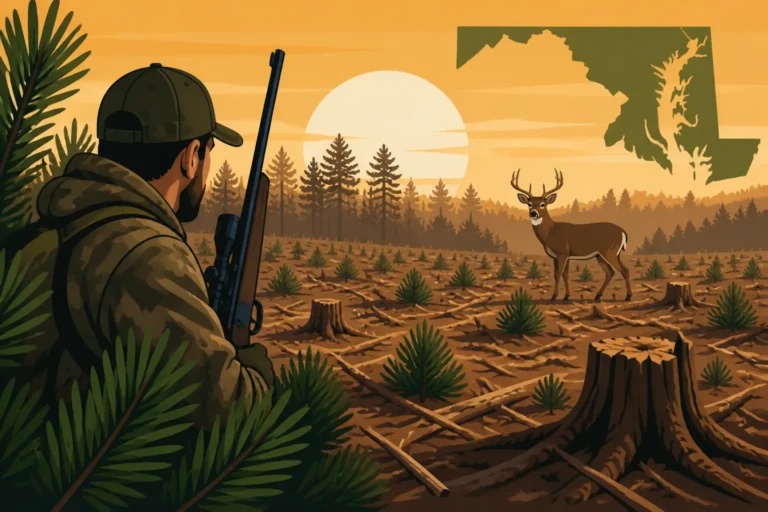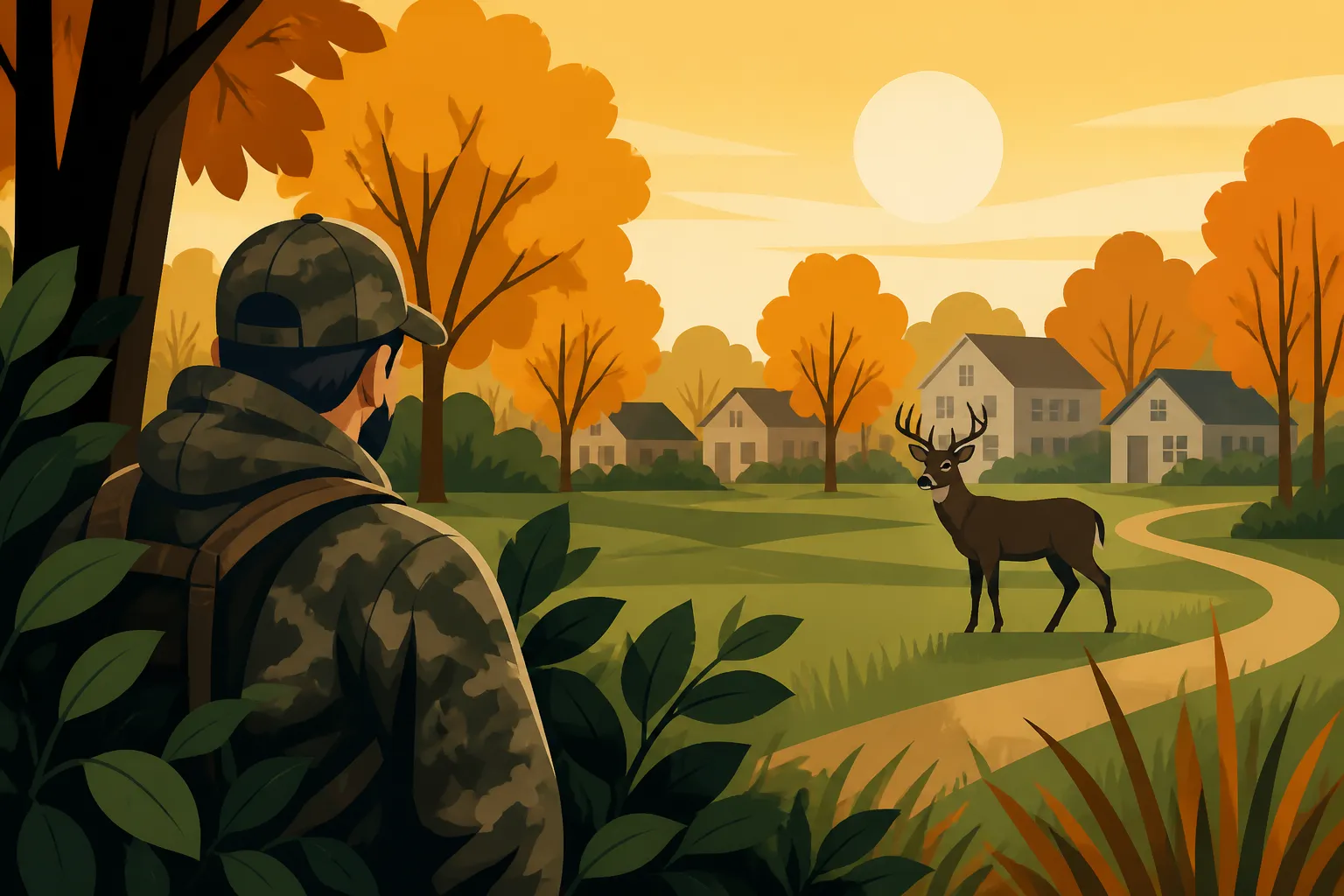
Hunting a Maryland Suburban Managed Park Hunt
Hunting in Maryland's suburban areas can feel like a contradiction. You're surrounded by homes, traffic, and parkgoers, yet often, there's a thriving deer population causing issues for residents and ecosystems alike. It's frustrating to know there are deer nearby but feel like there's no safe, legal way to pursue them. This guide will walk you through the specifics of participating in a Maryland suburban managed park hunt, helping you understand the unique rules, preparation, and strategies needed to successfully hunt in these often-overlooked opportunities.
Understanding Maryland's Suburban Managed Hunts
Let's face it, the idea of hunting in a "park" setting might conjure images of chasing deer past playgrounds. But Maryland's managed park hunts are far from that. They are carefully regulated programs designed to address specific wildlife management needs in areas where traditional hunting methods aren't feasible or safe. These aren't your typical sprawling public lands; they're often smaller, more contained, and come with a very particular set of rules to ensure public safety and a successful hunt.
What Makes These Hunts Unique?
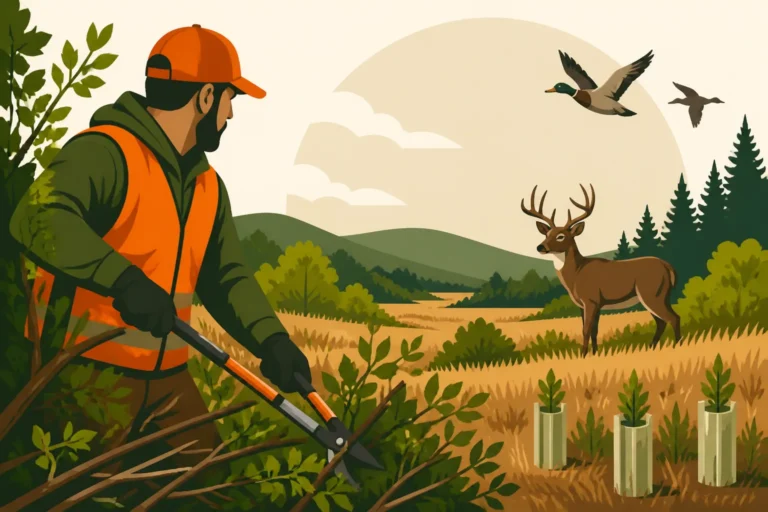
The primary driver behind most suburban managed hunts is population control. In many Maryland suburbs, deer populations can explode due to abundant food sources (hello, landscaping!) and a severe lack of natural predators. This leads to increased deer-vehicle collisions, damage to residential and park vegetation, and potential for disease spread within the herd. Traditional hunting, with its wider array of weapon choices and larger geographic scope, simply isn't an option in these densely populated zones. That's where managed hunts step in, providing a controlled environment for hunters to help manage these local populations responsibly.
These hunts often operate under strict conditions: specific weapon restrictions (usually archery-only), limited hunting days, designated hunting zones, and often a reduced number of hunters allowed at any given time. It’s a completely different ballgame than still-hunting vast tracts of timber in Western Maryland or waiting in a box blind on a large Eastern Shore farm. Hunters participating in these programs become part of a vital conservation effort, acting as a crucial component in maintaining ecological balance where human and wildlife populations intersect. The challenges are real, from navigating public perception to adapting hunting techniques, but the rewards—both in terms of venison and contribution to wildlife management—are significant.
Common Locations and Program Types
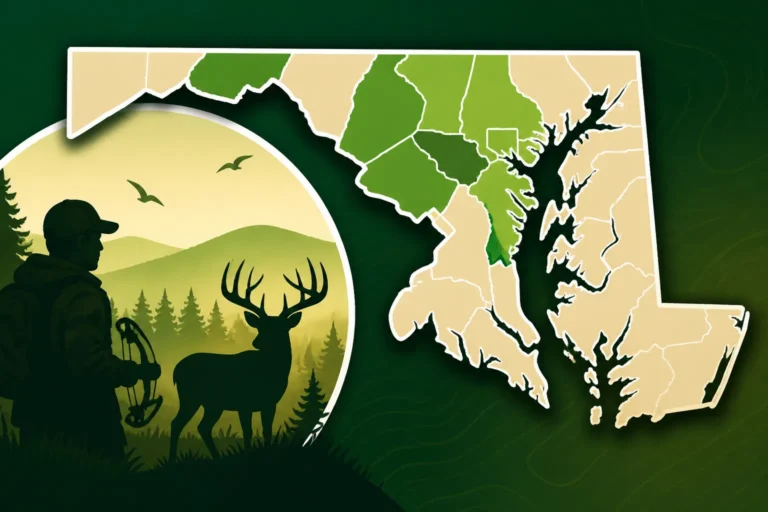
When we talk about "suburban managed park hunts" in Maryland, we're not just referring to your local swing set park. These programs are typically implemented in larger county parks, watershed lands, reservoir properties, conservation areas, or even private land parcels that have partnered with local jurisdictions. Think of places like parts of Montgomery County, Howard County, or even areas bordering Baltimore where green spaces intersect with housing developments. These are often areas where deer populations have grown unchecked, leading to significant ecological and property damage.
The programs themselves vary widely. Some might be archery-only hunts, often taking place outside of traditional park operating hours or in designated "hunting zones" within a larger park system. Others might utilize specialized shotgun or muzzleloader zones, particularly in larger county-owned forests or reservoirs that offer greater safety buffers. Many of these hunts are lottery-based, meaning you apply for a limited number of slots, much like Maryland's Black Bear Lottery. This ensures controlled hunter density and minimizes impact on non-hunting park users. You might find a specific park offering a limited two-week archery season in October, while another allows a handful of shotgun hunters during a short window in December. The key is that these are not open-access areas; participation is strictly controlled, and you'll need to research each specific program thoroughly.
The Permit and Application Process
Getting into a Maryland suburban managed park hunt isn't usually as simple as just buying a license and showing up. These are almost always limited-entry opportunities, often requiring a separate application process and specific permits beyond your standard Maryland Hunting Licenses and What They Cost. The application process can vary widely depending on the managing entity – it might be a county park and recreation department, a local conservation agency, or occasionally, a specific state agency managing designated lands.
You'll need to be vigilant about application deadlines, as these can be quite early in the year, sometimes even spring or summer for fall hunts. Many of these are lottery systems, where successful applicants are drawn from a pool of interested hunters. This helps manage hunter numbers and spread opportunities. Imagine the frustration of missing a deadline only to find out it was for a prime opportunity to hunt deer behind a Maryland housing development! It pays to check the websites of county park services, local government natural resource departments, and sometimes even the Maryland Department of Natural Resources (DNR) portal for announcements on these specialized programs. Read every instruction carefully, as application fees, specific hunter education requirements, and even background checks can be part of the process.
| Feature | Traditional Maryland Hunt | Suburban Managed Park Hunt |
|---|---|---|
| Primary Goal | Recreation, meat harvest, population management | Primarily population control, public safety, damage mitigation |
| Location | Farms, forests, WMAs, state forests | County parks, reservoirs, conservation areas, green spaces |
| Weapon Types | Broad range depending on county/season (Maryland's Legal Weapons by County) | Often archery-only; limited shotgun/muzzleloader in specific zones |
| Hunter Density | Variable, can be high on public land | Very low, limited by lottery or permit |
| Access | Often open access on public land, or private permission | Restricted access, specific permits, designated entry points |
| Scouting | Relatively unrestricted, can be extensive | Restricted, often limited to observation or specific pre-hunt dates |
| Public Interaction | Low to moderate | High potential for interaction with non-hunters |
| Safety Zones | Standard 150-yard/300-yard rules apply | Often expanded, highly emphasized, non-hunting areas strict |
| Logistics | Generally straightforward | More complex, discreet game retrieval, specific check-in/out |
Essential Gear and Preparation for Suburban Managed Hunts
Hunting in a suburban park calls for a slightly different approach to gear and preparation than you might be used to in the deep woods. While the core principles of ethical hunting remain, the proximity to non-hunters and residential areas means an even greater emphasis on safety, discretion, and minimizing disturbance. Forget the rattling antlers on an Eastern Shore farm—here, stealth is your absolute best friend.
Weapon Choice and Safety Considerations
For many Maryland suburban managed hunts, archery equipment is the weapon of choice, and often the only legal option. This is primarily due to safety. Arrows have a much shorter effective range and less potential for over-penetration compared to firearms, making them inherently safer in areas close to homes and public trails. You'll often find these hunts are explicitly Bowhunting Maryland Suburbs Where Rifles Are Banned. Vertical bows (compound or traditional recurve/longbow) are common, but crossbows are also widely accepted, particularly given their ease of use for many hunters and their shorter range capabilities. If you're new to crossbow hunting, ensure you're familiar with Maryland Crossbow Rules and Who Can Use One.
Even in archery-only hunts, don't be surprised if blaze orange is still required, particularly when moving to and from your stand or during specific times of the year. This isn't just about hunter safety in relation to other hunters; it’s about increasing your visibility to non-hunters who might be using adjacent trails or even just driving by. Always check the specific rules for the managed hunt you're attending. If shotgun or muzzleloader hunts are allowed, they are typically restricted to very specific, larger tracts of land within the managed area, often with very strict shot requirements (e.g., slug-only, no buckshot, or specific powder limits for muzzleloaders). The overriding theme here is safety above all else, making sure every shot is carefully considered and within a safe backdrop.
Scouting and Stand Placement in High-Density Areas
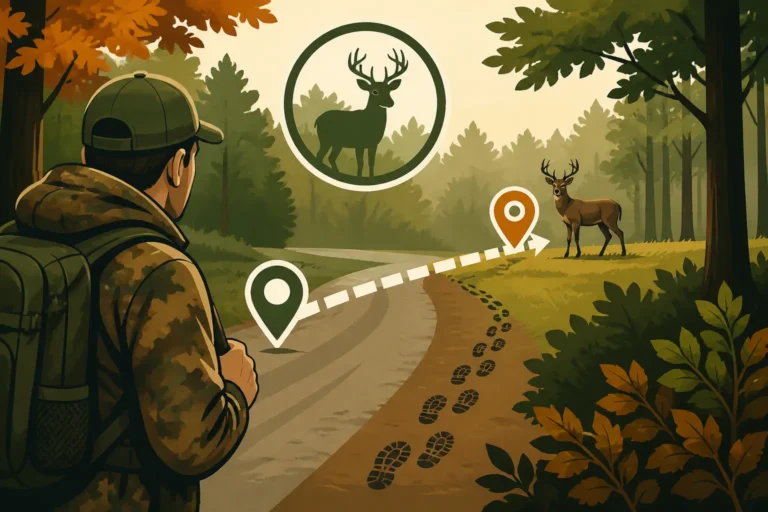
Scouting for a managed park hunt is a different beast entirely. You can't just wander freely like you might on a remote piece of public land. Access is often restricted to observation only, or to specific days pre-season. This makes digital scouting tools invaluable. Platforms like onX Hunt or GoHunt become critical assets, allowing you to pour over aerial photos and property boundary lines from the comfort of your home. You can identify natural funnels between housing developments and park interiors, pinpoint small patches of dense cover that deer will use for bedding, and locate potential access points that are discreet. Think about how deer might navigate a suburban woodlot in Montgomery County, using creek bottoms, fencelines, or even thick ornamental plantings for cover.
When it comes to stand placement, discretion and minimal impact are key. You'll likely be limited to hang-on or climber stands, or ground blinds that leave little to no trace. Forget elaborate ladder stands that stick out like a sore thumb. Your goal is to be as invisible as possible. Consider the prevailing winds, as scent control is paramount when you're close to residential areas and potentially, other park users. Your entry and exit routes should be planned to avoid public trails and to minimize noise. Finding that subtle scrape line along a Maryland field edge or a well-worn trail leading from a residential green space into thicker park cover can be the difference-maker. Remember, you're not just hunting deer; you're also managing your footprint in a very public space.
Noise, Scent, and Public Perception
In a suburban managed hunt, your actions are often on display, even if indirectly. This means everything from the clothes you wear to the way you extract your deer contributes to the overall public perception of hunting. Extreme scent control is non-negotiable. Deer in these areas might be accustomed to human smells from daily park use, but they are often highly tuned into foreign, predatory scents associated with hunters. Use scent-eliminating sprays, wash your clothes in scent-free detergent, and store them in airtight containers. Think about how you'd approach Hunting a Chesapeake Bay Blind at First Light – you wouldn't want human odor blowing into a marsh.
Noise is another huge factor. Your gear should be silent. Every buckle, zipper, and step should be quiet. Deer in these areas may be less skittish of distant traffic noise, but they are incredibly sensitive to sharp, unnatural sounds close by. Be mindful of conversations, especially if you're hunting with a partner. Most importantly, maintain a professional and respectful demeanor at all times. If you encounter non-hunters, offer a polite greeting, maintain distance, and avoid engaging in debates. Your actions represent all hunters. Discreet game extraction, often done after dark or in the very early morning, is crucial. Having a plan for Recovering a Deer From a Tidal Marsh applies here in spirit: a quiet, efficient, and respectful process is vital.
Strategies for Success in a Managed Park Setting
Hunting in a suburban managed park isn't about traditional "wilderness" hunting; it's about understanding and adapting to a unique set of circumstances. The deer here behave differently, the environment presents its own challenges, and your approach needs to be nuanced. It's a game of precision, patience, and often, an acute awareness of your surroundings beyond just the deer.
Deer Behavior in Suburban Environments
Deer living in suburban parks and green spaces often have a paradoxical nature. On one hand, they might seem less wary of human presence than their deep-woods counterparts because they encounter people (walkers, joggers, dog owners) on a daily basis. They might even browse gardens right next to homes. On the other hand, they are incredibly sensitive to actual hunting pressure. They quickly learn to avoid areas where hunters have been present and will pattern around the specific hunting windows. They thrive by exploiting the abundant food sources (ornamental plants, fertilized lawns, garden scraps) and often find sanctuary in small, dense thickets or overlooked ravines within park boundaries or even in tiny woodlots between housing developments.
Your strategy needs to account for this. Don't assume they'll act like deer pressured in a large state forest. They might move extensively at night, or stick to the densest cover during daylight hours, only emerging into more open areas when non-hunting activity is at its peak (e.g., mid-day when park users are around, making them feel "safe" from hunters who typically hunt dawn/dusk). Look for natural funnels – creek beds, fencelines, strips of woods connecting larger blocks of cover – that they will use to move discreetly. These small corridors can be excellent places for a stand, similar to Hunting a Funnel Between Two Grain Fields on a farm, just on a smaller, more intimate scale.
Maximizing Your Limited Opportunities
Managed park hunts are rarely lengthy affairs. You might have a few specific days, or a short, intense window to hunt. This means every moment counts. Pre-season scouting, even if limited to driving by and observing from public vantage points or using your digital tools, is absolutely crucial. You need to identify bedding areas, feeding zones, and travel routes before you ever step foot into the hunt area with your bow. This kind of preparation is essential for any successful hunt, whether you're hunting Maryland's September Archery Opener or a specific managed land permit.
Since the hunting windows are often short, focus your efforts on the highest probability times: early morning and late evening. Deer will often transition from bedding areas within the park or even suburban backyards to feeding zones during these low-light periods. Patience cannot be overstated. With limited hunter numbers and potentially smaller huntable acreage, you might not see dozens of deer. The ones you do see, however, are often the result of careful planning and holding tight. Avoid excessive movement, both on the ground and in your stand. Remember, these deer are accustomed to some human activity, but not necessarily a human sitting still with a weapon.
Post-Harvest Considerations and Logistics
Successfully harvesting a deer in a suburban managed park hunt brings its own unique set of logistical challenges, particularly concerning public visibility and discretion. Unlike a remote hunt where you might have the luxury of time and privacy, here you'll need a well-thought-out plan for field dressing and extraction. The goal is to be as discreet and respectful as possible, minimizing any potential discomfort for non-hunters who might encounter you.
Many managed hunts will have specific rules about when and how game must be removed. This might involve designated check-out points, specific times for vehicle access, or requirements for discreetly covering the animal during transport. Having a deer cart can be a godsend for quietly and efficiently moving a deer from the kill site to your vehicle, especially if you're navigating park trails or longer distances. Be prepared for Field Dressing a Deer in Warm September Weather if your hunt is early season, or a more chilly process if it's during the Hunting the January Firearms Reopening. Once the animal is out, ensure you are familiar with The Maryland Deer Registration Deadline After a Kill and register it promptly through the appropriate channels. Finding a local deer processor or butcher ahead of time, especially one used to handling game from managed hunts, can also simplify the post-harvest process. This thorough planning reflects your commitment to ethical hunting and helps ensure the continued success of these vital managed hunting programs.
Disclaimer
This article is for general informational purposes only and does not constitute professional advice. Laws, prices and regulations vary by location and change over time. Consult a qualified professional for guidance on your specific situation.