Hunting an Orchard Block in the Blue Ridge Foothills
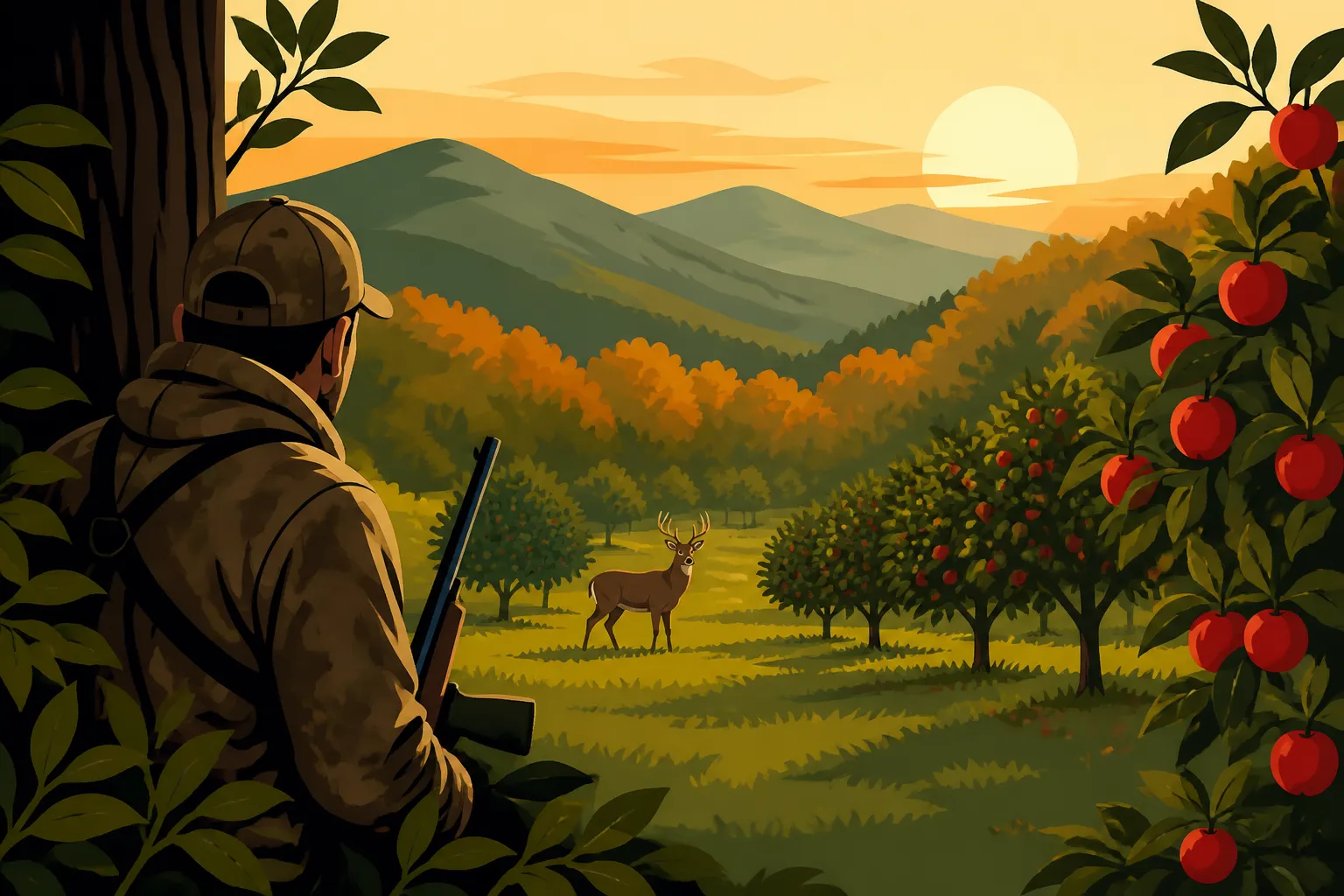
Hunting an orchard block in Maryland's Blue Ridge Foothills presents a unique challenge for deer hunters. You've found a spot that seems like a deer magnet – all those sweet, fallen apples or peaches! – but often, the open nature of an orchard or the constant human activity can make deer incredibly wary, turning what should be a slam-dunk into a frustrating game of hide-and-seek. This guide is all about equipping you with the knowledge and tactics to successfully pursue deer in these often-overlooked, yet highly productive, agricultural settings, helping you understand their patterns and outsmart those wary orchard whitetails.
Understanding Orchard Dynamics and Deer Behavior
Orchards aren't just pretty places; they're dynamic food sources that can draw deer from a wide area. To effectively hunt them, you first need to understand why deer are there and how they utilize these blocks of fruit trees throughout the season.
Why Orchards Attract Deer
It really boils down to an irresistible combination of food and cover, sometimes. Deer are primarily browsers, but they are also opportunists, and when a high-calorie food source like fruit becomes available, they're going to take advantage of it. Think about it: a mature apple orchard, for instance, provides not just the fruit itself but also tender new growth on lower branches and sometimes even cover if the trees are dense enough or intermixed with other vegetation. They're essentially a giant buffet, especially when fruit begins to drop from the trees in late summer and early fall. This sugar rush is exactly what deer need to pack on fat before the colder months hit, making an orchard a prime feeding location.
Beyond the obvious fruit, orchards also offer a diverse understory of weeds, grasses, and sometimes even clover or other forage crops planted between rows. These secondary food sources might not be as glamorous as a ripe apple, but they provide consistent nutrition. Deer don't just walk into an orchard, eat one apple, and leave; they'll graze on the surrounding vegetation, nip at tender twigs, and then settle in for a long meal of fallen fruit. It's a holistic dining experience for them, and one they'll travel for.
Seasonal Food Sources and Their Impact
The appeal of an orchard changes dramatically throughout the hunting season, mainly driven by the availability and ripeness of the fruit. In late summer and early fall, particularly during When Maryland's Archery Season Opens in September, you're often looking at apples, peaches, or even some early pears. The deer will be hitting these hard, often right as the fruit begins to ripen and certainly once it starts dropping. This is when the orchard can be a daytime hot spot, especially if it's secluded or offers quick access to dense cover. As the season progresses into late fall, after the main harvest, you'll still find dropped apples that are fermenting, which deer seem to absolutely love. These slightly rotten, sweet treats can keep deer coming back well into November.
By the time late season rolls around, especially in December and January, many orchards might not have abundant dropped fruit left, or it might be frozen solid. At this point, deer will shift their focus to browsing on dormant twigs, buds, and any lingering green forage in the rows. This is when their patterns might become less predictable within the orchard itself, and they'll likely be hitting the edges, seeking out thicker cover, or moving through on their way to other Late Season Food Sources for Maryland Deer. Understanding these seasonal shifts is key; hunting an orchard in September requires a different mindset and approach than hunting the same orchard in December.
Reading Deer Sign in an Orchard Block
Just like any other hunting environment, reading the sign deer leave behind is crucial in an orchard. However, the signs might manifest a little differently. Instead of rubs on big oak trees, you're more likely to see rubs on smaller, younger fruit trees within the rows, or on the larger trunks of mature trees, especially around the perimeter of the orchard. Look for fresh bark rubbed off, often with sap still visible. Scrapes will frequently appear along the orchard edges where it meets a woodline or thicket, serving as communication hubs.
The most telling sign, though, will be droppings. When deer are heavily feeding on fruit, their droppings will often be soft, clumped, and noticeably distinct from the harder, pelleted droppings you'd see when they're eating browse or acorns. Find concentrated piles of these soft droppings under specific trees, and you've found a primary feeding location. Also, keep an eye out for browsed branches – tender new shoots nipped off, especially on trees at the edge of the block or along deer trails leading in. Use tools like onX Hunt to pinpoint these areas on an aerial map, marking clusters of sign to review later when planning your stand sites.
Scouting and Stand Placement Strategies
Scouting an orchard block requires a delicate touch. You don't want to disturb the deer, but you need to understand their travel patterns and preferred feeding spots intimately.
Pre-Season Scouting for Success
Before the season even opens, dedicate time to walking the entire orchard block, ideally when trees are still leafed out but before fruit drop becomes heavy. Look for distinct trails leading into the orchard from adjacent woodlots, creek bottoms, or thickets. Deer rarely just materialize in an orchard; they use specific entry and exit points, often funnels that offer them the most cover or the quickest escape route. Pay close attention to these travel corridors. Are there low-hanging branches they're ducking under? Fences they're jumping? These little details tell a story.
Beyond entry points, identify the specific trees or sections of the orchard that seem to be getting the most attention. Maybe a particular variety of apple ripens earlier, or a section has older, more productive trees. Don't be afraid to quietly observe from a distance at dawn or dusk, watching how deer enter and exit, and where they tend to spend their feeding time. This observational scouting, combined with mapping tools from GoHunt or onX Hunt that show elevation changes and adjacent cover, can provide invaluable intel on deer movement before you ever step foot in the woods with your bow or gun. Remember, the goal is to pinpoint exactly where deer are most comfortable and vulnerable.
Ideal Stand Locations and Access Routes
Choosing a stand location in an orchard is a balancing act between being close to the action and remaining undetected. Your primary considerations should be wind direction, quiet access, and a clear shooting lane. The edges of the orchard where it meets a woodline or a brushy field are classic stand sites, as deer will often stage in the cover before venturing into the open to feed. Look for a natural funnel along this edge, perhaps where two distinct cover types meet or where a small ditch creates a natural barrier.
If you're looking to hunt deeper within the orchard, focus on those specific trees that showed heavy feeding sign during your scouting. Placing a stand in the interior is much trickier due to the open nature, but if you can find a cluster of productive trees or a well-worn trail cutting through a denser section, it can pay off. Make sure your access and exit routes are absolutely silent and concealed. Walking directly down a fruit row in plain sight at first light is a sure way to spook every deer in the vicinity. Instead, use terrain features, hedgerows, or even the shadows of the tree rows themselves to sneak in and out unnoticed, just as you would when Hanging a Stand on a Maryland Farm Edge.
Adapting to Orchard Management Practices
One often-overlooked aspect of hunting orchards is the human element. Orchards are working farms, and agricultural activities can significantly impact deer behavior. Farmers might be spraying, pruning, or harvesting, and all that machinery and human presence will push deer out temporarily or make them completely nocturnal. Pay attention to the farm's schedule if possible; understanding when equipment will be running can help you plan your hunts to coincide with quieter periods.
For instance, if you know the picking crew typically works a certain block in the mornings, it might be better to focus on an evening hunt on the opposite side of the orchard, or vice-versa. Also, consider the long-term impact of these practices. Heavy pruning might open up canopy cover, while new plantings could create fresh browse. Deer are remarkably adaptable, and they'll shift their patterns to avoid disturbance. Your ability to adapt your hunting strategy based on current and ongoing orchard management will be key to consistent success.
Hunting Tactics for Orchard Blocks
Once you've done your scouting and have a stand ready, it's time to put boots on the ground. But hunting an orchard isn't quite like hunting deep woods; it requires specific tactics to make the most of its unique characteristics.
Best Times to Hunt Orchards
Deer, especially in areas with human activity like orchards, are often creatures of low light. This means the prime hunting times in an orchard block are typically the first hour or two after sunrise and the last hour or two before sunset. During these periods, deer feel more secure moving from their bedding areas (likely in nearby woods or thickets) to feed on the fallen fruit. You'll often see them filtering into the orchard edges right at dusk, slowly working their way deeper into the rows as darkness approaches. Conversely, in the morning, they'll often be feeding until full daylight before retreating to cover.
However, don't rule out midday movement entirely, especially during the rut, when bucks are actively seeking does, or if the orchard provides substantial internal cover. A cloudy, drizzly day can also encourage deer to feed longer into the morning or start earlier in the afternoon. On crisp, cold days, like after a Hunting After a Maryland Cold Front, deer might move more frequently to fuel their metabolism. The key is to be in your stand well before these peak movement times, waiting patiently for the deer to arrive.
Utilizing Wind and Cover in Open Areas
Hunting an orchard can feel exposed, and that's often because it is. Unlike a dense forest, there might be limited visual cover once you're in a treestand overlooking rows of fruit trees. This makes playing the wind absolutely non-negotiable. Deer have an incredible sense of smell, and in an open environment, your scent will carry far. Always approach and position your stand so that your scent blows away from known deer travel corridors and feeding areas. A subtle shift in wind direction can ruin a hunt, so having alternative stand sites for different winds is a smart move.
Beyond wind, use the existing terrain and tree rows to your advantage. Even slight depressions in the land can offer a momentary break from a deer's direct line of sight. Tree rows themselves, while not dense cover, can create "lanes" that deer prefer to walk, offering a bit more perceived security. Consider using a ground blind if allowed and practical, but if elevated, choose a stand that offers a natural backdrop, like a thick tree line behind you, to help break up your silhouette. Remember, the goal is to be as invisible as possible in a relatively open setting.
Decoys and Calling in Orchard Settings
While often associated with more traditional woodlot hunting, decoys and calling can sometimes be effective in an orchard, particularly during the rut. A single doe decoy, placed strategically with the wind in mind, can be a visual magnet for a cruising buck checking for available mates. The relatively open sightlines in an orchard can make a decoy visible from a distance, drawing a curious deer into range. However, make sure the decoy is positioned far enough away from your stand so that any approaching deer focuses on the decoy, not on you.
Calling, such as soft Grunt Calls in Maryland Hardwoods or doe bleats, can also pique a deer's interest. During the pre-rut and rut, a buck might be drawn in by the sound of another deer, especially if it sounds like it's feeding or interacting in the orchard. The acoustics in an orchard can be interesting; the rows of trees might funnel sound, so adjust your calling volume accordingly. Experiment with different calls and volumes, but always be prepared for a deer to respond quickly and often from an unexpected direction. Remember, a little goes a long way, especially with wary orchard deer.
Challenges and Considerations for Orchard Hunters
Hunting an orchard is a privilege, and it comes with unique responsibilities and potential hurdles that are worth understanding before you head out.
Respecting Orchard Operations and Property Boundaries
Securing permission to hunt an orchard is often half the battle, and maintaining that access relies heavily on respect for the landowner's operation. These aren't just patches of woods; they are active businesses. Always communicate clearly with the landowner about your presence, where you'll be, and any specific rules they have. This includes respecting their equipment, avoiding damage to trees, and being mindful of any staff working in the orchard. A simple misstep, like driving on wet ground or leaving a gate open, can quickly lead to your hunting privileges being revoked.
Beyond the operations, property boundaries are paramount. In the Blue Ridge Foothills, orchards often border multiple landowners, and knowing where one property ends and another begins is critical to avoid trespassing. This is where tools like onX Hunt become invaluable. Use its mapping features to clearly identify property lines and ensure you're always on permitted ground. Familiarize yourself with Maryland's trespass laws; often, merely retrieving a deer that runs onto adjacent land requires permission from that landowner. Good communication and strict adherence to boundaries will ensure you can continue to enjoy hunting this unique habitat.
Pressure and Educated Deer
Orchards, due to their obvious food source appeal, can sometimes draw a lot of hunting pressure, either from the landowner themselves, other hunters with permission, or even poachers. Deer in these areas quickly become "educated" and incredibly wary. They'll often shift to primarily nocturnal feeding patterns, only entering the orchard under the cover of complete darkness, especially if they sense human presence during daylight hours. This can be one of the most frustrating aspects of hunting an orchard; knowing the deer are there but rarely seeing them in legal Maryland Shooting Hours and Legal Light.
To counter this, you might need to hunt smarter, not harder. Consider setting up farther away from obvious entry points, or focusing on trails leading to the orchard rather than in it, essentially ambushing deer before they get to the main feeding area. Hunting during less popular times, like during a light rain or on a weekday when others might be at work, can also increase your odds. Sometimes, an afternoon sit where deer move from a distant bedding area to an orchard can be more productive than a morning hunt if the deer are already deep in the orchard by dawn.
Ethical Shot Placement and Recovery in Orchards
The relatively open nature of an orchard can provide clear shooting lanes, which is a definite advantage. However, it also means you might have a longer shot than you're used to in dense woods. Always ensure you are comfortable and proficient with your chosen weapon at the expected distances. Ethical shot placement is always paramount, aiming for the vital organs to ensure a quick, clean kill.
If a deer does run after the shot, recovery can present its own set of challenges. While you might have seen the deer run into a specific row, tracking can be surprisingly difficult among the repetitive tree lines and often tall grass or cover crops between rows. If the deer leaves the orchard and enters a dense woodlot or thicket, the challenge only increases. Always take your time, mark the spot of the shot, and carefully follow the blood trail. Having a good tracking dog (if legal and with permission) or a friend to help grid-search can be invaluable. It's crucial to always follow up on a shot and make every effort to recover your animal, no matter where it goes.
Disclaimer
This article is for general informational purposes only and does not constitute professional advice. Laws, prices and regulations vary by location and change over time. Consult a qualified professional for guidance on your specific situation.