Getting a Stag Out of the Marsh With a Guide
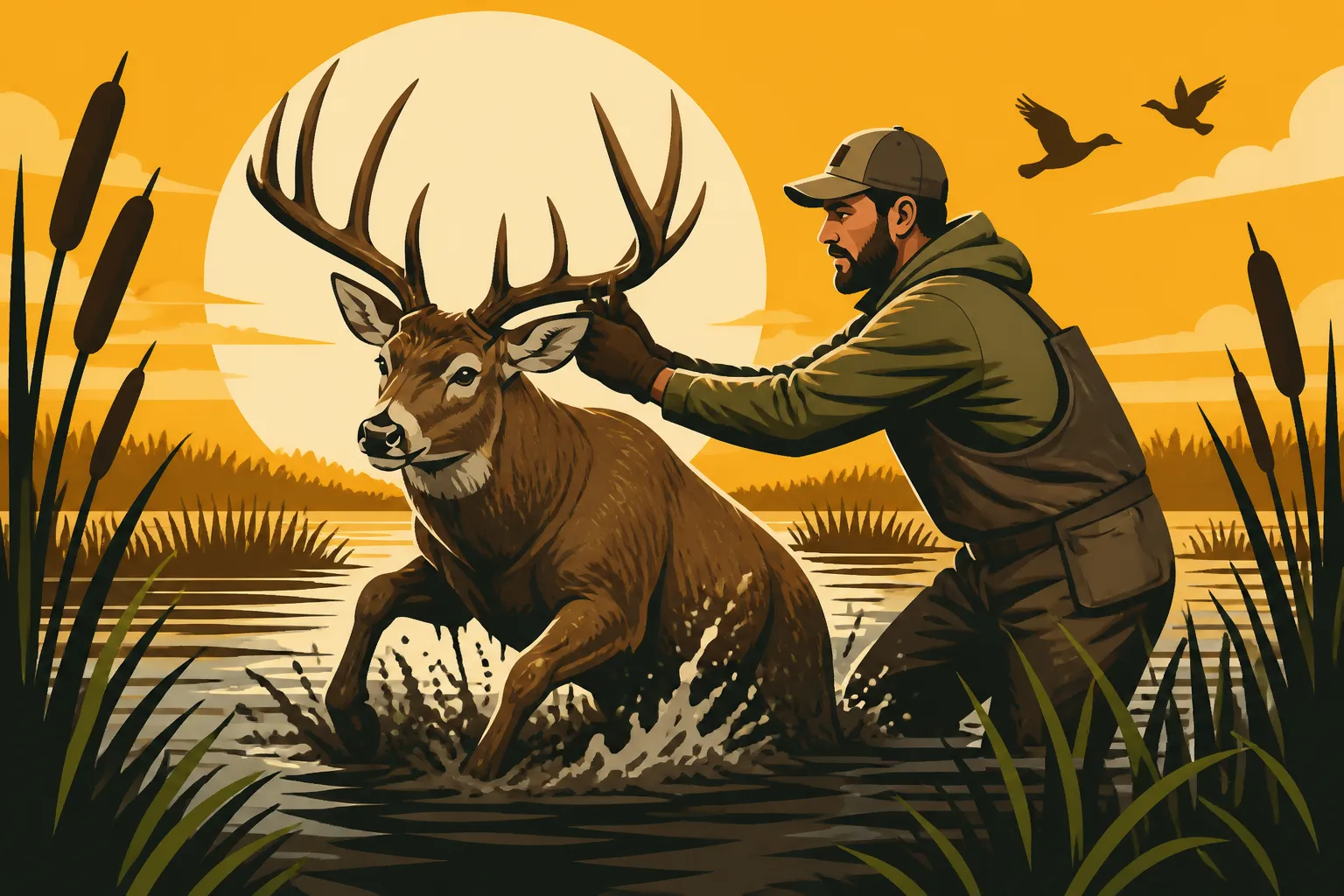
You've just put in all the hard work, made the shot, and now your magnificent Maryland Sika stag is down in the marsh. That triumphant feeling can quickly turn to dread, though, when you realize the monumental task ahead: actually getting that animal out of the unforgiving, mucky, and often water-logged terrain. This guide is here to assure you that with a skilled Maryland Sika guide by your side, recovering your hard-earned trophy from the marsh becomes a manageable, safer, and far less strenuous endeavor than trying to go it alone.
The Unique Challenges of Marsh Recovery
Hunting Sika deer in Maryland's tidal marshes is an experience unlike any other, thrilling and rewarding. But for every success story, there's a memory of the grueling, back-breaking labor involved in deer retrieval. These marshes are beautiful, but they don't give up their treasures easily.
Navigating the Terrain
Imagine trying to move a dead weight, typically a 70-100 pound animal, across terrain that actively tries to swallow your boots, much less a deer. The mud in these marshes can be incredibly deep, sometimes sucking at your waders with an almost impossible grip. You're not just walking; you're often wading through thick, tangled phragmites and Spartina grass that can reach above your head, obscuring your vision and snagging every step. Beneath that deceptive surface, there are hidden ditches, submerged logs, and uneven ground that can turn a simple walk into a precarious balancing act.
Trying to single-handedly drag a Sika stag through this labyrinthine environment for any significant distance is an exhausting and potentially dangerous undertaking. You could get disoriented, stuck in deep mud, or even injure yourself. It's a situation that quickly saps your strength and tests your resolve, especially if you're alone and far from any solid ground.
Dealing with the Tidal Influence
Maryland's Sika marshes are intimately connected to the Chesapeake Bay and its tributaries, meaning they are constantly impacted by the tide. What might be a relatively dry, albeit muddy, path at low tide can transform into a waist-deep channel just hours later. This tidal flux adds another layer of complexity to deer recovery.
If you shoot a stag at low tide and then spend time tracking, field dressing, and preparing for extraction, the incoming tide can quickly alter your planned route. Suddenly, what was a drag across firm(ish) mud becomes an attempt to float the deer through deep water, or worse, navigate through rapidly deepening channels that weren't there before. Conversely, a stag downed in deeper water at high tide might become stranded in thick, soupy mud as the water recedes, making it harder to pull. A guide's deep understanding of How Sika Guides Handle Tides and Access is absolutely critical here; they'll know the subtle signs of changing water levels and how to use them to your advantage or, at the very least, avoid getting you into a bind.
How a Sika Guide Facilitates Retrieval
This is where a professional guide truly earns their keep. Their primary goal is to put you on game, but their expertise in the intricate dance of marsh navigation and animal recovery is equally vital. They turn a daunting chore into a well-executed plan.
Specialized Equipment and Local Knowledge
A seasoned Sika guide comes equipped with not just a wealth of local knowledge but also the right tools for the job. Forget trying to rig up a makeshift drag out of an old tarp; guides often have specialized equipment designed for these challenging conditions. This might include sturdy, flat-bottomed jon boats or skiffs that can navigate shallow guts and channels, sometimes even outfitted with mud motors for truly tricky spots. Some might even have specialized marsh buggies or ATVs with tracks that can tackle surprisingly soft terrain.
Beyond motorized transport, they often utilize heavy-duty game carts or sleds designed to glide (or at least drag with less friction) over marsh grass and mud. They know the subtle nuances of the marsh—where the hidden ditches are, where the firmer ground lies, and the most efficient routes to get in and out, whether that's through a labyrinth of Reading a Marsh Trail for Sika Sign or by following barely discernible tidal guts. Their intimate understanding of the local landscape and its hidden arteries, often gleaned from years of Boating Into a Sika Marsh at Low Tide, is simply invaluable.
Teamwork and Safety
Let's be honest, dragging a whole deer by yourself is a miserable experience. With a guide, you've got at least two people, often more, working together. This teamwork significantly reduces the physical burden and makes the process much faster and safer. Imagine the difference between one person trying to heave a stag over a ditch bank versus two or three working in sync.
Safety is paramount in the marsh. A good guide isn't just focused on the deer; they're constantly assessing the environment for hazards. They know the risks of deep water, unstable ground, and even the potential for hypothermia if conditions are cold and wet. They'll advise on the best footwear (often recommending Hip Boots Versus Chest Waders in Sika Country depending on conditions) and ensure everyone is aware of their surroundings. Furthermore, guides are adept at field dressing an animal efficiently under challenging circumstances, ensuring the meat cools properly and making the deer lighter for transport. This collective effort and focus on safety provides a level of peace of mind that's impossible to achieve when you're facing the marsh alone.
The Recovery Process: Step-by-Step with a Guide
Once your Sika is down, the guide's role shifts from finding the animal to getting it out. This isn't just brute force; it's a methodical process that prioritizes efficiency, meat quality, and safety.
Locating and Assessing the Stag
The first step, naturally, is finding the animal. Sika deer are incredibly tough, and even with a good shot, they can often run a surprising distance into thick cover. A guide, often having spent countless hours Tracking a Sika Stag Into Thick Marsh Grass, will be an expert tracker, adept at finding subtle signs in the dense phragmites or Spartina that you might miss. They'll lead the way, reading bent grass, disturbed mud, and blood trails with practiced eyes.
Once the stag is located, the guide will perform an initial assessment. This includes confirming the animal is expired, noting its size, and evaluating the immediate surroundings. Is it in deep water? Is it on relatively solid ground? How far is it from the nearest accessible channel or path? This assessment helps them determine the most efficient and safest method for extraction. They might discuss options with you: is it best to drag it a short distance to a boat, or is a full carry-out necessary?
Field Dressing in the Marsh
Field dressing is a crucial step for preserving the meat quality, especially during Maryland's warmer early archery season when Field Dressing a Deer in Warm September Weather is a real concern. A guide will typically assist with or perform the field dressing right there in the marsh. They know how to do it efficiently and with minimal mess, often selecting a slightly elevated or firmer spot to work.
They'll help you orient the deer to allow gravity to assist, and they'll ensure all necessary organs are removed cleanly. This not only lightens the load considerably but also allows the carcass to cool down as quickly as possible, which is vital in preventing spoilage. They might also help bag the heart and liver if you plan to keep them, ensuring they are separated and kept cool.
Extraction from the Marsh to Transport
This is often the most physically demanding part, but with a guide, it's a coordinated effort. Depending on the conditions and how far the stag is from an accessible pickup point, the extraction might involve several techniques:
- Dragging: For shorter distances over relatively firm ground, the guide will often use heavy-duty drag ropes. With multiple people, this becomes much more manageable. They'll know the best way to rig the deer to prevent snagging and distribute the weight.
- Sled or Game Cart: If the marsh offers a bit more consistency, a specialized sled or game cart can be invaluable. These reduce friction and allow for easier movement over grass and mud. The guide will have the experience to maneuver these tools effectively.
- Boat Retrieval: If the stag is near a tidal gut or channel, the guide might bring their marsh boat right to the deer. This is often the easiest method, as the deer can be loaded directly into the boat and ferried back to a truck or main landing. A guide who specializes in What a Dorchester County Sika Guide Provides will often have a marsh boat as a standard part of their kit.
- Carrying: In extremely dense or difficult areas, a carry-out might be the only option. With a guide, this means two or more people sharing the load, often using sturdy poles or a specialized pack frame to distribute the weight more evenly. This can be grueling, but far less so with a team.
The goal is to move the stag from where it fell to the nearest point where it can be loaded onto a vehicle—whether that's a truck, trailer, or another boat for further transport.
Post-Retrieval Logistics and Considerations
The marsh is conquered, the stag is out, but the work isn't quite done. A good guide extends their service beyond just the retrieval, helping you with the next critical steps.
Getting the Stag to the Processor or Lodge
Once the Sika is out of the marsh, it needs to get to its final destination, whether that's a deer processor, your vehicle for transport home, or a hunting lodge. Guides often have a system in place for this. They'll assist with loading the animal into a truck or onto a trailer, ensuring it's secured properly for transport.
If you're an out-of-state hunter or simply don't have a plan, your guide can provide recommendations for local Finding a Processor Near Your Maryland Hunt that are familiar with Sika deer, or even suggest a taxidermist if you're looking to get a shoulder mount of your unique trophy. This logistical support is a huge benefit, especially when you're tired after a long day of hunting.
What the Guide's Service Typically Covers (and Doesn't)
It's always important to clarify exactly what your guided hunt package includes before you book. Reputable outfitters and guides, many of whom you can find on platforms like BookYourHunt or GoHunt, are transparent about their services. Generally, retrieval assistance for a successfully harvested animal is a standard part of a guided Sika hunt. After all, their reputation hinges on getting your trophy home safely.
However, there might be specific scenarios where extra charges could apply, though these are rare and should be discussed upfront. For instance, if an animal runs an exceptionally long distance into an extremely inaccessible area, or if unusual equipment (like a specialized salvage crew) becomes necessary. Always ensure you understand What a Maryland Guided Sika Hunt Includes when you make your reservation. Most guides want you to have a successful and stress-free hunt, and that includes getting your deer out. Don't be shy about asking these questions when you're looking at different services—it's part of being a prepared hunter!
| Retrieval Method | Pros | Cons | Ideal Conditions | Equipment Used by Guides |
|---|---|---|---|---|
| Dragging | Simple, requires minimal gear beyond ropes, good for short distances. | Extremely physically demanding, slow, can damage hide/meat, very difficult in deep mud/thick cover. | Short distances, relatively firm ground, multiple people. | Heavy-duty ropes, game bags for protection. |
| Sled/Cart | Reduces friction, protects hide/meat, easier than dragging for one or two people. | Can get stuck in very deep mud or dense vegetation, difficult over uneven terrain, needs open paths. | Moderate distances, grassy/reedy marsh, less dense cover, firm paths. | Specialized marsh sleds, wheeled game carts with large tires. |
| Boat/Airboat | Fastest, least physical effort, protects animal best, allows access to remote areas. | Requires water access (tidal guts/channels), noisy, expensive to operate, weather-dependent. | Near accessible water, high tide, remote marsh islands, deep water. | Jon boats, skiffs, airboats, mud motors, winches. |
| Carrying | Versatile for any terrain, can navigate very dense areas where dragging is impossible. | Highly strenuous, requires multiple strong people, can be slow, risks injury if not done correctly. | Very dense cover, extremely uneven terrain, limited distance, no water access. | Shoulder slings, pack frames, sturdy poles. |
Disclaimer
This article is for general informational purposes only and does not constitute professional advice. Laws, prices and regulations vary by location and change over time. Consult a qualified professional for guidance on your specific situation.