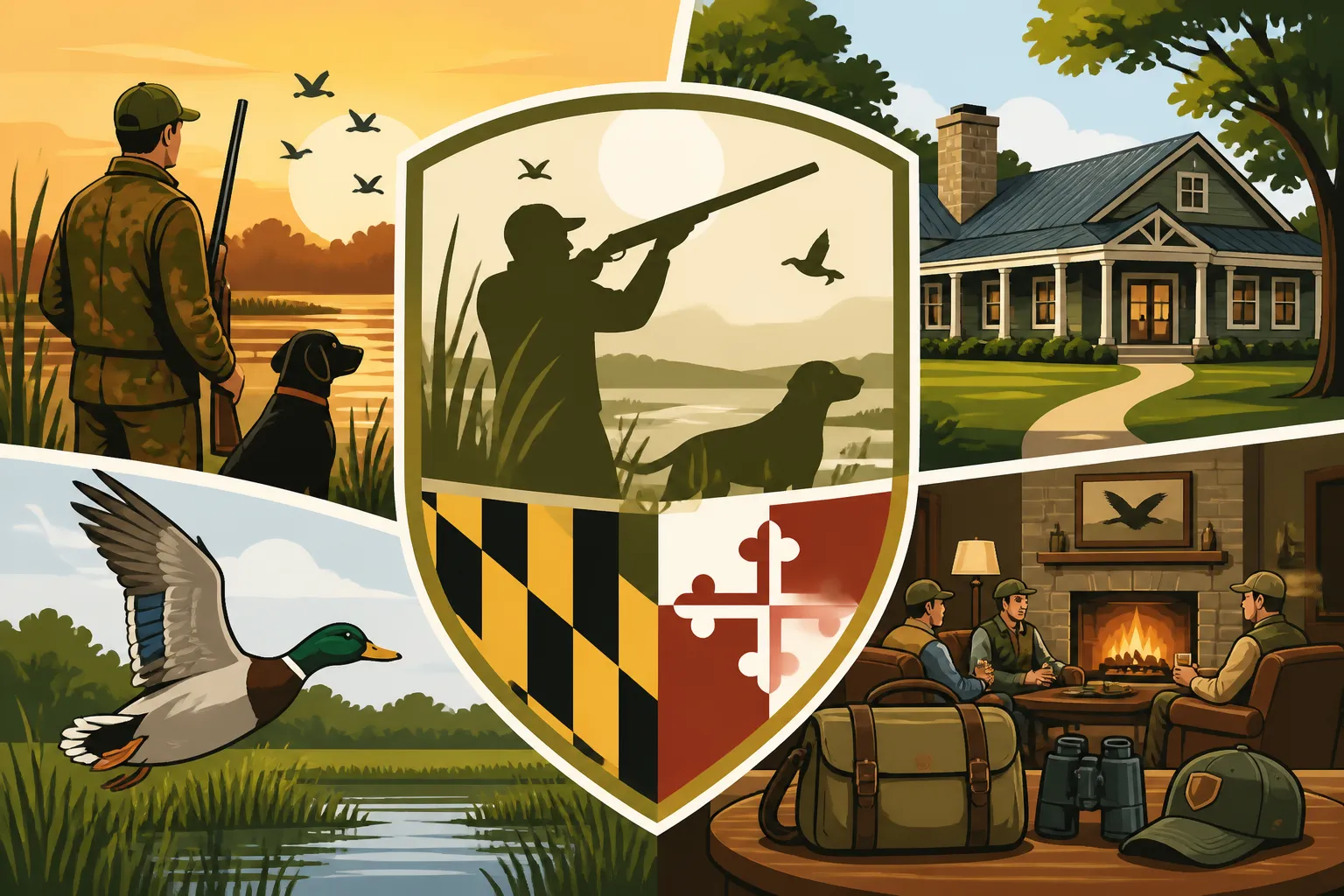
What a Maryland Club Membership Buys You
For many hunters in Maryland, securing consistent, quality ground to pursue deer, turkeys, or small game feels like an uphill battle. You’ve likely spent countless hours knocking on doors, only to be politely turned away, or trudged through crowded public lands, wondering if you’re always just a step behind someone else. This guide is all about shedding light on an alternative that many Maryland hunters consider: joining a hunting club, and what exactly that membership can provide you beyond just a place to hang your stand.
The Allure of a Hunting Club in Maryland
The dream for many hunters isn't just about bagging an animal, but about having a consistent place to connect with nature, to scout, and to truly learn a piece of land over time. In Maryland, where private property dominates much of the prime habitat, and public lands can often feel like a rush-hour traffic jam on opening day, a hunting club presents a compelling solution. It's about easing the constant pressure of finding a spot and shifting your focus back to the hunt itself.
Imagine the frustration of carefully scouting an area on public land, only to arrive pre-dawn on opening day and find three other trucks already parked there. Or the awkwardness of trying to gain access to a promising private parcel, feeling like you're imposing on a landowner who's already been asked by ten other hunters. These scenarios are all too common for Maryland hunters, highlighting the very real challenges of securing consistent, unpressured hunting opportunities. A club membership seeks to alleviate these headaches by providing a collective solution to individual access problems.
For those who hunt alone or primarily rely on public ground, the process can feel like a perpetual scramble. You might spend precious vacation days just trying to locate a deer sign that hasn't been trampled by dozens of other boots. This constant search can detract from the joy of hunting, turning it into a logistical puzzle rather than a peaceful pursuit. A club aims to streamline this by centralizing resources and access, allowing you to invest your time and energy more effectively into actual hunting and habitat improvement.
Guaranteed Access to Quality Ground
Perhaps the most immediate and tangible benefit of joining a Maryland hunting club is the guaranteed, consistent access to private land. Instead of scouring maps or trying to sweet-talk landowners, you become a shareholder, in a sense, in a specific tract or multiple tracts of land. This means no more worries about permission being revoked unexpectedly, or showing up only to find another hunter has beaten you to your carefully scouted spot.
These lands are often leased specifically for hunting, meaning they're managed with game in mind. Clubs will often seek out properties that offer a mix of habitat – timber, agricultural fields, marshland – to provide diverse hunting opportunities throughout the season. For example, a club might lease a large farm on the Eastern Shore with extensive woodlots bordering corn and soybean fields, offering prime habitat for whitetails and often Sika Deer Hunting in Maryland's Tidal Marshes. Or perhaps a club in Western Maryland secures a mountain property with mature hardwoods and thick clear-cuts, ideal for deer and wild turkeys.
This guaranteed access dramatically changes your hunting strategy. You can invest time and effort into learning the property, identifying deer travel corridors, establishing permanent stand locations, and even managing small food plots without fear of losing access next season. This long-term relationship with a piece of land fosters a deeper understanding of game movement and behavior, leading to more consistent success and a richer hunting experience. It’s a far cry from the transient nature of many public land hunts, where patterns shift with pressure.
Shared Costs, Shared Responsibilities
Let's be real, leasing quality hunting land in Maryland on your own can be incredibly expensive. From the actual lease payments to liability insurance, property taxes (if applicable), and habitat improvements, the financial burden can be prohibitive for an individual. This is where a hunting club truly shines by spreading these significant costs among multiple members. This collective approach makes otherwise inaccessible prime hunting ground attainable for the average hunter.
Beyond just the financial aspect, clubs also distribute the workload. Habitat management, which is crucial for improving hunting opportunities, requires a lot of sweat equity. Think about Planting a Fall Food Plot on Maryland Ground, maintaining trails, building or repairing deer stands, or managing invasive species. In a club setting, these tasks are typically divided among members, often through workdays, turning what would be an overwhelming solo project into a communal effort.
Consider a scenario where you want to put in a half-acre clover plot on a property. Doing that alone means sourcing seed, renting or buying equipment, tilling, planting, and fencing – a massive undertaking. In a club, these efforts become shared. One member might have a tractor, another might handle seed procurement, and everyone pitches in on planting day. This not only eases the physical burden but also builds camaraderie, fostering a sense of ownership and collective investment in the club's success. It’s a way to leverage diverse skills and resources that no single hunter could easily manage alone.
What You Typically Get with a Club Membership
When you join a Maryland hunting club, you're not just buying access; you're often investing in a package of benefits that enhances the entire hunting experience. From dedicated infrastructure to structured rules that promote fair chase and safety, clubs aim to create a well-managed environment for their members. The specifics, of course, vary wildly from club to club, but there are common threads that define most memberships.
It's important to differentiate this from merely finding a Maryland Hunting Lease Costs where you're just paying for land. A club often comes with a level of organization and pre-existing amenities that a raw lease might not. This structure is designed to maximize opportunities for all members while minimizing conflicts, a common issue when multiple hunters share private ground without clear guidelines.
Before committing, it’s always wise to ask detailed questions and visit the property, if possible. You might find a listing for a club membership through an online platform, but don't just go by the description. Understanding the rules, the culture, and the amenities on offer will help you determine if it's the right fit for your hunting style and expectations. Sometimes you can learn a lot about a club by seeing how they manage their property during the off-season, which might require Booking a Maryland Hunt Off-Season to coordinate a visit.
Amenities and Infrastructure
Many Maryland hunting clubs go above and beyond simply leasing land by providing significant infrastructure and amenities to their members. This can range from basic necessities to creature comforts that make long weekends at camp far more enjoyable. These additions are often what truly elevate a club experience beyond just open ground.
Common amenities often include established deer stands or ground blinds. These aren't just random setups; many clubs strategically place and maintain stands in prime locations, offering safe and effective hunting opportunities. You might find sturdy ladder stands overlooking food plots, comfortable box blinds situated on field edges, or well-concealed ground blinds along creek bottoms. Some clubs even allow members to set up their own stands within designated areas, giving hunters flexibility while still maintaining overall property management. Access roads and trails, often maintained with ATVs or tractors, make getting to these stands much easier, especially on larger properties or in rugged terrain.
Beyond the immediate hunting infrastructure, many clubs offer common facilities. This could be a modest hunting cabin or a full-fledged lodge with bunk beds, a kitchen, and a living area, providing a place for members to stay overnight, share meals, and relax after a hunt. Imagine waking up in a cozy cabin, grabbing a quick breakfast with fellow hunters, and then heading out to your pre-assigned stand, all within minutes of leaving the lodge. Some even have game processing areas, complete with skinning poles and refrigeration, which is incredibly helpful, especially during Maryland's warmer early archery season or during the peak of the rut in November when you need to quickly Field Dressing a Deer in Warm September Weather and get the meat cooled.
Rules and Regulations
To ensure fair chase, safety, and a positive experience for all members, every hunting club operates under a set of rules and regulations. These guidelines are crucial for managing hunting pressure, allocating resources, and preventing conflicts among hunters who are sharing the same limited resource. Understanding these rules before you join is paramount, as they directly impact how and when you can hunt.
Typical rules often cover aspects like hunter safety, including strict requirements for Maryland Blaze Orange Requirements during firearms season and clear firearm safety protocols. Many clubs have designated hunting zones or stand rotation schedules to prevent overcrowding and to ensure that all members have equal access to prime areas. This might involve a sign-up sheet for specific stand locations or a first-come, first-served policy for certain areas on hunting days. Bag limits within the club often mirror or are even more conservative than state regulations, particularly for antlered deer, to promote quality deer management and allow younger bucks to mature. For example, a club might enforce a rule that only bucks meeting or exceeding Maryland's Three-Point Antler Restriction can be harvested, or even stricter.
| Rule Category | Common Examples | Why It Matters |
|---|---|---|
| Access & Scheduling | Sign-up for stands, designated zones, arrival/departure times | Prevents overcrowding, ensures fair opportunity, reduces conflict |
| Harvest Limits | Club-specific antler point restrictions, antlerless quotas | Promotes quality deer management, sustains herd health |
| Safety | Blaze orange rules, firearm handling, stand safety checks | Paramount for preventing accidents, protects all members |
| Behavior | Respect for property, game retrieval protocols, cleanliness | Maintains positive club atmosphere, ensures ethical hunting |
| Guest Policy | Limits on guests, guest fees, supervision requirements | Manages pressure, ensures only authorized individuals are present |
| Work Obligations | Required workdays, maintenance tasks | Shares responsibility for property upkeep, fosters collective ownership |
These rules are not meant to restrict enjoyment but rather to create a harmonious hunting environment. They help manage game populations sustainably and ensure that every member feels they have a fair shake at success. For example, if a club is serious about White-Tailed Deer in Maryland management, they might have stringent rules on antlerless deer harvests to balance the herd, or specific areas where only bowhunting is permitted to reduce pressure during the peak of the season, a common practice in clubs near Bowhunting Maryland Suburbs Where Rifles Are Banned.
The Social and Strategic Benefits of Club Membership
While the tangible benefits of land access and amenities are obvious, joining a Maryland hunting club offers a wealth of less obvious, but equally valuable, social and strategic advantages. Hunting is often a deeply personal pursuit, but it can also be a communal one, and clubs foster this sense of community in powerful ways. It’s about more than just pulling a trigger; it’s about growing as a hunter and building lasting relationships.
Think about the sheer amount of collective knowledge and experience within a group of seasoned hunters. This kind of wisdom is hard to come by on your own, and it can be invaluable for new hunters or those looking to expand their skills. Beyond personal growth, clubs can also implement sophisticated hunting strategies and habitat improvements that are simply not feasible for an individual or a small group on public land.
The social aspect often gets overlooked when people consider a club, but it’s a huge part of the experience. Many lifelong friendships are forged in hunting camps, around fire pits, or during shared workdays. This camaraderie adds another layer of enjoyment to hunting, transforming it from a solitary activity into a shared passion. It’s about having a network of like-minded individuals who understand and support your love for the outdoors.
Mentorship and Community
For new hunters, or those looking to expand into new species or hunting methods, a club membership can be an incredible resource for mentorship. Experienced members are often more than willing to share their knowledge, tips, and techniques, whether it's about tracking a wounded deer, learning to call turkeys, or even just understanding local game patterns. This informal apprenticeship can accelerate a hunter's learning curve dramatically.
Imagine being a relatively new bowhunter on your first season. In a club, you might have seasoned veterans who can advise you on Hanging a Stand on a Maryland Farm Edge, help you decipher rub lines, or offer advice on shot placement and blood trailing. This kind of hands-on, real-world guidance is invaluable and simply can't be replicated by watching YouTube videos or reading articles. This community aspect is especially beneficial for youth hunters, providing them with a safe and supportive environment to learn from multiple mentors. Taking a Youth Out on Junior Turkey Day or Hunting Maryland's Youth Waterfowl Days become even richer experiences when shared with a knowledgeable and supportive club member.
Beyond direct mentorship, the sense of community itself is a powerful draw. Shared experiences, whether it’s celebrating a successful hunt or commiserating over a missed shot, build bonds. Club meetings, workdays, and informal gatherings create opportunities for social interaction and friendship that extend beyond the hunting season. This network can be a great resource not just for hunting, but for life in general, offering a group of people who share your passions and values.
Strategic Hunting Advantages
One of the most significant advantages of a hunting club is the ability to implement collective and strategic hunting practices across a larger, managed property. This goes far beyond what an individual hunter can achieve on their own and can dramatically improve success rates for all members. It's about working smarter, not just harder, as a collective unit.
Clubs can implement sophisticated habitat management plans. This might include planting various food plots specifically timed to provide forage during different parts of the season, creating bedding areas by hinge-cutting timber, or enhancing natural cover. This active management makes the property more attractive to game and concentrates animals, which translates directly into better hunting opportunities. For example, a club might manage its timber to create clear-cuts that offer both browse and thick cover, improving the deer habitat in the long term. This kind of Habitat Work on Maryland Wildlife Management Areas is often replicated on a smaller scale by successful clubs.
Furthermore, clubs can develop coordinated hunting strategies. This could involve tracking game movement across the entire property, sharing scouting camera photos, or even organizing controlled deer drives during firearms season to push deer towards waiting hunters, especially on larger tracts. This level of coordination helps manage pressure and can be particularly effective during challenging times like the late season when deer are pressured and food sources are scarce. You might find a club using tools like GoHunt to analyze aerial maps of their leased land, planning strategic stand placements based on known bedding areas and food sources, or identifying natural funnels and pinch points. For hunters looking to optimize their efforts, having access to this kind of collective insight and planning is a game-changer compared to solo efforts.
Weighing the Downsides and Considerations
While joining a Maryland hunting club offers many compelling benefits, it’s not always a perfect fit for everyone. Like any significant commitment, there are potential downsides and important considerations that prospective members should thoroughly evaluate. It’s crucial to go in with your eyes wide open, understanding that a club membership is a shared venture, which inherently involves compromise and cooperation.
Some hunters prefer absolute solitude and complete control over their hunting environment, a preference that might clash with the communal nature of a club. Others might find the financial or time commitment too demanding. Before you sign up, take a realistic look at your hunting style, your budget, and your availability. This self-assessment will help you determine if the structure and demands of a club align with your personal hunting philosophy.
It's also worth noting that not all clubs are created equal. The quality of the land, the culture of the membership, and the effectiveness of the management can vary dramatically. Doing your due diligence is essential to find a club that truly resonates with your expectations and values. You wouldn't buy a car without a test drive, and you shouldn't join a club without careful consideration and perhaps a visit.
Understanding the Commitment
A club membership is more than just an annual fee; it's an investment of time, money, and personal engagement. The financial aspect can be substantial, often involving an annual membership fee, initiation fees, and sometimes additional costs for specific amenities or shared expenses. While these costs are typically less than leasing prime ground alone, they are still a recurring expense that needs to fit comfortably within your hunting budget.
Beyond the monetary investment, there’s a significant time commitment. Most clubs expect members to participate in workdays to maintain food plots, repair stands, clear trails, or perform other necessary tasks. If you’re someone with a demanding work schedule or family obligations, finding the time for these mandatory workdays can be a challenge. Failing to participate might lead to strained relationships with other members or even impact your standing within the club. This is a far cry from simply showing up to hunt on public ground, where your only obligation is to yourself.
Furthermore, you are committing to a shared set of rules and a specific culture. This means respecting the decisions of the club leadership, adhering to harvest quotas, and managing your hunting schedule around other members. If you're someone who prefers complete autonomy and doesn't want to compromise on hunting dates or locations, a club environment might feel restrictive. It's a balance of individual freedom versus collective benefit, and understanding where you fall on that spectrum is important.
Finding the Right Fit
The vast array of hunting clubs available means there's likely a club for almost every preference, but it also means you need to be selective to find the right fit. Not all clubs prioritize the same things, and their internal dynamics can greatly influence your experience. Just because a club has available spots doesn't mean it's the right one for you.
Consider the club's primary focus. Is it a social club where camaraderie and shared experiences are paramount, with hunting almost secondary? Or is it a hardcore, trophy-oriented club with strict rules on what can be harvested? Some clubs focus on specific species, like a waterfowl club near the Chesapeake Bay, while others offer diverse opportunities for White-Tailed Deer in Maryland, turkey, and small game. Your personal hunting goals should align with the club's mission. You might also want to think about whether you want to participate in highly managed hunts on private land, or if you prefer the challenge and solitude of Hunting Maryland's Western Mountain Forests.
It’s also crucial to assess the personality and demographics of the existing members. Do they share your values and hunting ethics? Will you feel comfortable spending time with them, both in the field and at the lodge? Ask to meet some current members, attend a club meeting, or even join a workday to get a feel for the group dynamic. Sometimes, you can find listings for clubs that might be a good fit on platforms that list hunting opportunities, though some specialized platforms like BookYourHunt are typically for guided hunts rather than club memberships. However, a general search using terms you might use on GoHunt for property research can sometimes lead to club websites or forums where memberships are advertised. Don't be afraid to ask for references from current members, and inquire about member turnover – high turnover can be a red flag. The goal is to find a club where you feel at home, where you can grow as a hunter, and where you genuinely enjoy the company of your fellow members.
Disclaimer
This article is for general informational purposes only and does not constitute professional advice. Laws, prices and regulations vary by location and change over time. Consult a qualified professional for guidance on your specific situation.