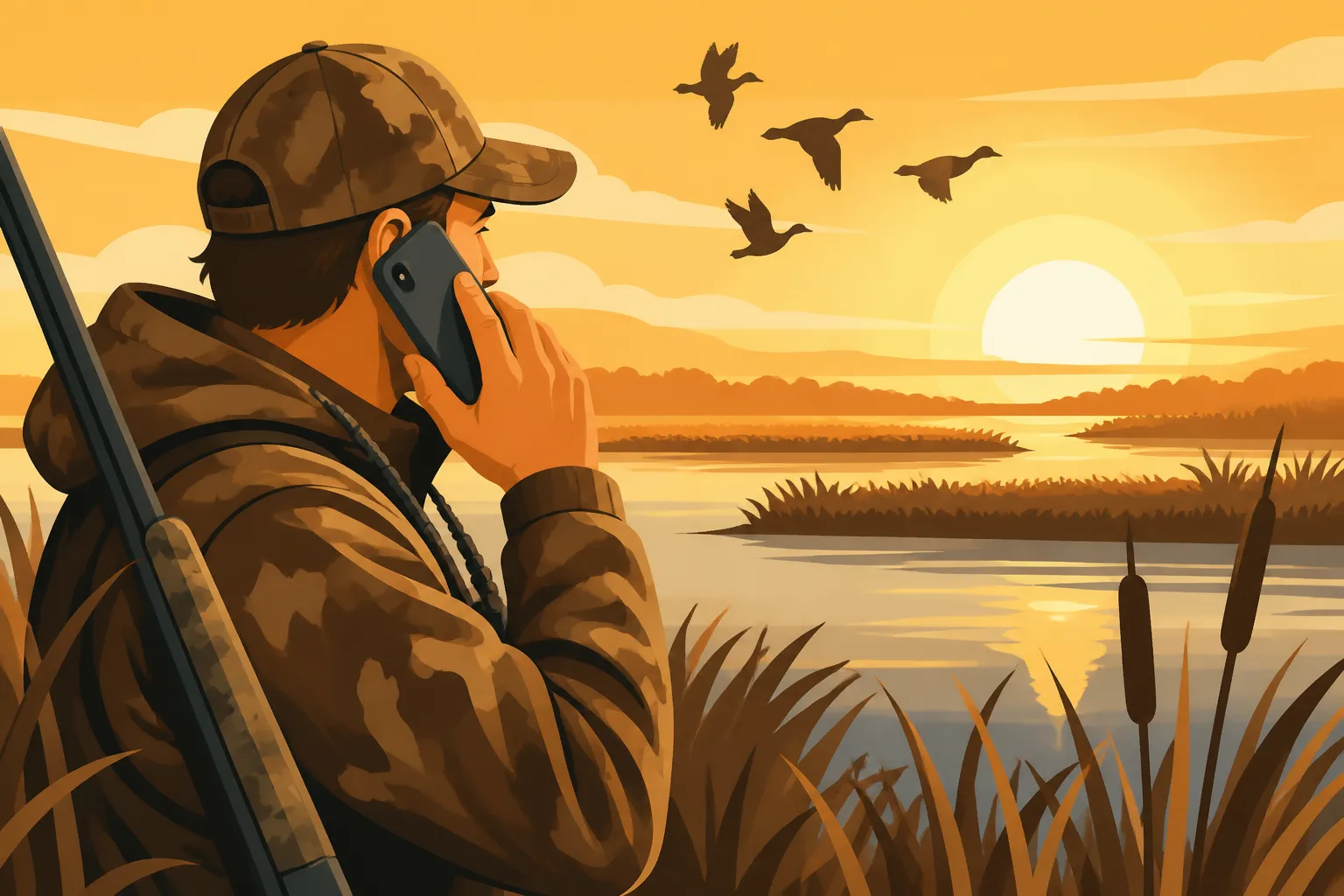
Cell Service and Communication in the Marsh
There's nothing quite like the solitude of a Maryland marsh, the whisper of the wind through the phragmites, the distant cry of a sika deer. It's an escape, a chance to truly disconnect. But that "disconnect" can turn from serene to downright scary when you realize your cell phone has become little more than a paperweight, leaving you utterly cut off. This guide is all about navigating the notorious dead zones of Maryland's marshes, understanding why your phone goes silent, and equipping yourself with the knowledge and tools to stay connected or, more importantly, stay safe when communication is critical.
The Harsh Reality of Marsh Connectivity
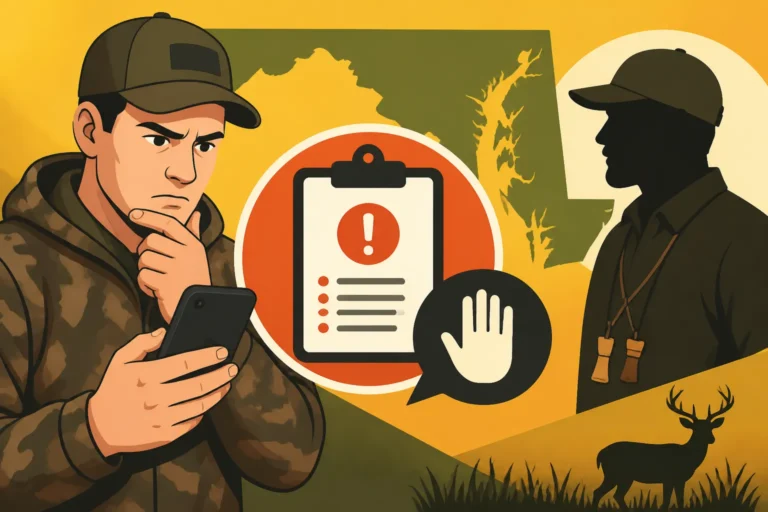
You've planned your hunt, checked the tides, and packed your gear, but one thing many hunters overlook until it's too late is the unpredictable nature of cell service in vast, low-lying marsh environments. It's a frustrating reality that can quickly turn a peaceful outing into a stressful situation.
Why Marshes Are Dead Zones
Maryland's tidal marshes, particularly those stretching across the Eastern Shore in places like Dorchester and Somerset counties, are unique ecosystems that inherently challenge modern cellular technology. Think about it: miles of flat, often dense vegetation, interspersed with winding guts and open water. There are few tall structures for cell towers to broadcast from, and the very landscape works against signal propagation.
Firstly, water itself can absorb and scatter radio waves, meaning signals struggle to travel across open expanses of the Chesapeake Bay or even large tidal ponds. Then you have the dense vegetation – tall stands of phragmites, spartina grass, and loblolly pine islands. These natural barriers can create a physical shield, blocking signals from reaching your device. It’s not uncommon to be just a few hundred yards from a spot where you had service, only to step into a depression or behind a thick stand of reeds and watch your bars vanish entirely. It’s a frustrating dance of "now you see it, now you don't" that can leave you feeling incredibly isolated.
Spotty Coverage on the Edge
Even when you're on the fringes of a marsh, near a main road or a more developed area, cell service often remains frustratingly unreliable. You might see one bar, maybe two, teasing you with the promise of a connection, only for it to drop as soon as you try to make a call or load a map. This intermittent service is almost more frustrating than no service at all because it gives you a false sense of security. You might assume you're covered, only to find yourself in a bind when you truly need to reach someone.
I've been there myself, trying to coordinate a boat pick-up after a long day hunting sika, only to stand on a ditch bank waving my phone around like a lunatic, desperately seeking that elusive signal. It’s not just about making a call; it's about sharing your location, checking updated weather, or confirming plans with hunting partners. Relying on a single, shaky bar of service is a recipe for anxiety and potential trouble, especially when you're Wading Into a Dorchester Marsh Before Daylight or navigating unfamiliar channels.
Strategies for Staying Connected
While you can't magically conjure a cell tower in the middle of Blackwater Refuge, there are proactive steps you can take to maximize your chances of getting a signal or at least preparing for its absence. A little planning goes a long way in these remote settings.
Pre-Hunt Reconnaissance
Before you even leave your driveway, do some digital legwork. Many mapping applications now include "cell coverage" layers that can give you a rough idea of signal strength in specific areas. While these aren't always 100% accurate, they offer a starting point. For instance, if you're planning on Hunting Deal Island's Tidal Marsh, you might find that while the main access points have some service, deeper into the marsh it's a complete void.
Beyond apps, talk to locals or, better yet, a seasoned guide. They’ve spent countless hours navigating these areas and know the reliable spots and the notorious dead zones like the back of their hand. When you're looking for a guide, sites like BookYourHunt can be a great resource, not just for booking, but also for finding guides you can speak with directly about area conditions, including cell service. Don't be shy about asking specific questions like, "What's the cell service typically like where we'll be hunting?" or "What's your communication plan if my phone dies?" Their answers can be incredibly insightful and help you prepare.
Boosting Your Signal
Believe it or not, there are gadgets designed to help pull in those faint signals. Portable cell signal boosters, often referred to as repeaters or amplifiers, can make a significant difference, especially if you're on the cusp of a service area. These devices typically involve an external antenna, which you might mount on your boat or even a tall pole on shore, that captures weak signals and amplifies them for your phone. They're not magic, and won't create a signal where none exists, but they can turn a one-bar trickle into a usable connection.
Another simple, yet often overlooked, trick is to understand your phone's antenna. Typically, the antenna is located at the top or bottom of the device. Holding your phone horizontally, pointing it towards known cell towers (if you have an idea of their location), or even just raising it a few feet higher can sometimes snag that elusive signal. It might feel silly, but those extra few feet can sometimes be the difference between a dropped call and a successful one. If you're using a mapping tool like GoHunt, pay attention to terrain features; sometimes just getting to a slightly higher piece of ground, like a small hummock or a levee, can improve your chances.
Optimizing Phone Settings for Longevity
Even if you manage to grab a signal, the constant struggle to find one can drain your phone battery faster than a leaky duck boat. To conserve power and extend your phone's life, especially when service is spotty, employ some smart settings adjustments. First and foremost, turn off features you don't need: Bluetooth, Wi-Fi, and background app refresh. These are all constantly searching and draining power.
When you're actively in a dead zone, switching your phone to "airplane mode" can be a game-changer. It stops your phone from constantly searching for a non-existent signal, which is a major battery drain. You can then periodically switch it off airplane mode for a few minutes to see if a signal has miraculously appeared. Another trick is to lower your screen brightness and set a shorter screen timeout. Remember, even if your phone isn't connecting, it still holds valuable maps (if downloaded offline) or emergency contact information that you might need in a pinch. Consider bringing a portable power bank, fully charged, as a crucial backup.
Essential Communication Tools Beyond Your Phone
Relying solely on your cell phone in the marsh is akin to only bringing one shell for your shotgun – it's a risky gamble. When connectivity is unreliable, having alternative communication methods isn't just a convenience; it's a critical safety measure.
Satellite Messengers and Devices
For serious marsh hunters venturing deep into truly remote areas, a satellite messenger is almost non-negotiable. Devices like the Garmin inReach or Zoleo offer two-way text messaging and SOS capabilities, even when far beyond cell service. They operate on satellite networks, meaning as long as you have a clear view of the sky, you can send and receive messages and, most critically, trigger an emergency beacon that sends your exact GPS location to a 24/7 monitoring center. This is invaluable when you're dealing with challenging situations like a bogged-down boat, a twisted ankle while Tracking a Sika Stag Into Thick Marsh Grass, or unexpected severe weather when Boat Safety on the Chesapeake in December becomes paramount.
These devices aren't cheap, and they require a subscription, but the peace of mind they offer is truly priceless. They allow you to check in with loved ones, update hunting partners, or even get non-emergency assistance without needing a cell signal. Many also include basic navigation features, which can be a lifesaver if your primary GPS fails or gets lost.
Two-Way Radios
For communication within your hunting party, especially if you're spread out but still within a few miles of each other, two-way radios are an excellent, low-tech solution. Family Radio Service (FRS) and General Mobile Radio Service (GMRS) radios are common choices. They're relatively inexpensive, require no subscription, and are simple to operate. While their range can be impacted by dense vegetation and terrain, they often work better than cell phones for short-distance, line-of-sight communication in marshy environments.
Imagine you're trying to coordinate a push for deer in a thick pine island, or simply confirm everyone made it back to the truck after Hunting a Chesapeake Bay Blind at First Light. Radios allow for instant communication without the uncertainty of cell service. For longer ranges, especially on open water, a handheld VHF marine radio (which requires a license for some features) can be invaluable for communicating with other boats or even the Coast Guard in an emergency. These are standard gear for anyone Boating Into a Sika Marsh at Low Tide.
Old-School Methods and Signals
Don't underestimate the power of basic, non-electronic communication methods, especially for short-range signaling or attracting attention in an emergency. A good, loud whistle is indispensable. Three short blasts are a universal distress signal. Carry a signal mirror, especially if you anticipate clear, sunny skies. A small, compact mirror can reflect sunlight for miles, attracting the attention of aircraft or boats in the distance.
Even something as simple as a bright orange or blaze pink cap or vest, or a small signaling flag, can make you more visible if you become separated from your group or need to be spotted by a search party. When all else fails, and your high-tech gadgets are silent, these tried-and-true methods can still save your life. Think of them as the last line of defense in your communication arsenal.
Emergency Preparedness and Safety Protocols
Having a plan for when communication fails is just as important as having the right tools. The best gear in the world won't help if you don't know how to use it or what steps to take when things go sideways.
Creating a Float Plan
Whenever you venture into the marsh, especially alone, always tell someone your detailed plans. This is commonly known as a "float plan" in boating circles, but it applies equally to any remote hunting trip. Share your exact hunting location, your intended route, when you expect to return, and who to call if you don't check in. Be as specific as possible: "I'll be hunting the north end of Fishing Bay WMA, launching my kayak from the public ramp at X, and will be back by dark. If you haven't heard from me by 8 PM, call Game Warden Smith and give him my location."
Leave this information with a trusted friend or family member who understands the gravity of the situation. This simple act drastically reduces search time if something goes wrong. If you're on a guided hunt, your outfitter should have their own robust safety protocols, but it never hurts to understand them and have your own personal backup. Reputable outfitters, often found via resources like GoHunt, prioritize safety and will always have a communication plan in place.
What to Do When Lost or Stranded
It's a hunter's worst nightmare: you're disoriented, the tide is coming in, and your phone is dead. The first rule is to stay calm. Panic only makes things worse. If you're lost, try to retrace your steps. Look for familiar landmarks you noted when Reading a Marsh Trail for Sika Sign. If that's not possible, evaluate your resources: do you have water? Extra layers? A way to make a fire?
If you're stranded by a rising tide or a boat issue, prioritize finding high ground if possible and signaling for help. Use your whistle, signal mirror, or a bright piece of clothing. Conserve your energy. If you have a satellite messenger, activate the SOS function immediately. If you told someone your float plan, help will eventually be on its way, but knowing how to make yourself visible and comfortable for an extended period is crucial.
Essential Gear for Communication Failure
Beyond the electronic gadgets, there's a host of basic gear that becomes critically important when you can't communicate. This is part of the broader concept of What to Pack for a Maryland Marsh Hunt. Always carry a physical map of the area (waterproof is best) and a compass, and know how to use them. These are immune to battery drain and signal loss. A good headlamp with spare batteries is vital for navigating after dark or signaling.
A basic survival kit with fire starters, a small first-aid kit, a knife, and emergency food/water is also a smart addition. Even a brightly colored trash bag can serve multiple purposes: a makeshift poncho, a ground cover, or a signal flag. These items might seem trivial when your phone is working, but when it's not, they become your lifeline, helping you manage unexpected challenges and stay safe until you can re-establish contact or help arrives.
Communication Methods Comparison
| Method | Pros | Cons | Best Use Case |
|---|---|---|---|
| Cell Phone | Ubiquitous, multi-functional (calls, texts, GPS, apps) | Highly unreliable in remote marshes, battery dependent, needs signal | Quick calls on the fringe, downloaded offline maps |
| Satellite Messenger | Global coverage, two-way text, SOS button, reliable | Requires subscription, initial cost, battery dependent, can be slower than text | Deep marsh, emergencies, regular check-ins |
| Two-Way Radio (FRS/GMRS) | No subscription, instant group communication, durable, good battery life | Limited range (line-of-sight), not for emergency services, can be bulky | Group coordination, short-distance communication |
| VHF Marine Radio | Dedicated emergency channel (16), weather alerts, good range on water | Requires license for some uses, needs line-of-sight, bulky, specific to marine environment | Waterfowl hunting from boats, offshore communication |
| Whistle/Signal Mirror | No power needed, inexpensive, simple, universal distress signals | Short-range, requires line-of-sight for mirror, only for signaling, no two-way communication | Emergency signaling, attracting attention |
| Physical Map/Compass | No power needed, rugged, reliable | Requires skill to use, no real-time updates, can be cumbersome | Backup navigation, understanding terrain |
Disclaimer
This article is for general informational purposes only and does not constitute professional advice. Laws, prices and regulations vary by location and change over time. Consult a qualified professional for guidance on your specific situation.