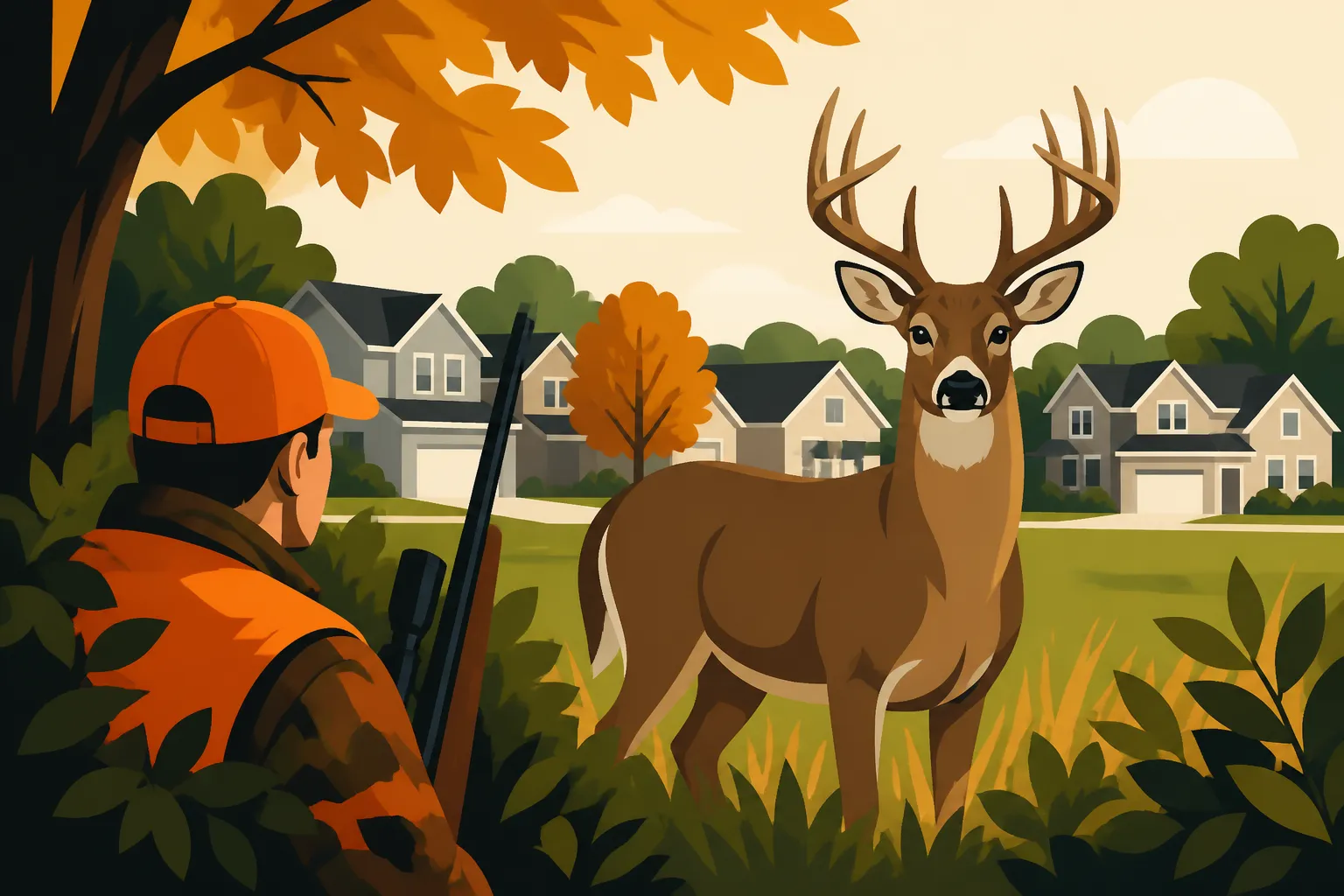
Hunting Maryland’s Suburban Deer Management Hunts
It can feel incredibly daunting, even a bit confusing, trying to figure out how to navigate deer hunting opportunities in Maryland's more developed areas. The rules can seem different, the terrain is certainly unlike vast wilderness, and let's be honest, the thought of hunting near someone's backyard can bring a lot of questions. This guide is here to break down everything you need to know about successfully and responsibly participating in Maryland's suburban deer management hunts, helping you understand the unique challenges and how to overcome them.
Understanding Maryland's Suburban Deer Challenge
For many Marylanders, especially those living in the more densely populated corridors around Baltimore and Washington D.C., deer aren't just a picturesque part of nature – they're a very real and sometimes frustrating problem. An unchecked deer population in suburban and exurban areas leads to a host of issues, from devastating garden damage to a significant increase in vehicle collisions. This is precisely why Maryland's Department of Natural Resources (DNR) developed specific deer management programs designed to help control these populations where traditional hunting methods often aren't feasible or safe.
Why Suburban Hunts Are Necessary
The core reason these specialized hunts exist is simple: too many deer in places not built to sustain them. In many suburban settings, natural predators like wolves and bears are long gone, and the typical hunter, looking for wide-open spaces, might overlook these pockets of prime deer habitat. But these areas, with their manicured lawns, abundant ornamental plantings, and fragmented woodlots, actually provide an incredible buffet for deer. They thrive in this environment, reproduce rapidly, and soon their numbers exceed what the local ecosystem can handle.
The consequences are far-reaching. Imagine waking up to find your prize hydrangeas completely browsed to stubs overnight, or worse, seeing news reports about another serious deer-vehicle collision on your daily commute. These are the frustrations that residents and local governments face, making these targeted deer management hunts a critical tool. They offer a controlled, ethical way to reduce deer numbers in areas where conventional hunting seasons might not apply due to safety concerns or local ordinances. These hunts bridge the gap, allowing sportsmen and women to contribute to wildlife management right in their local communities, often without having to travel hours to more remote hunting grounds.
The Unique Environment of Suburban Hunting
Hunting in a suburban environment is a world away from stalking through the deep woods of Western Maryland. Forget vast, unbroken tracts of timber; here, you're looking at fragmented woodlots, powerline cuts, stream corridors, and patches of thick cover nestled right alongside residential developments, roads, and even schools. The deer themselves often behave differently too, accustomed to human presence, traffic noise, and artificial light. They might bed down in surprisingly close proximity to homes, only moving during the quietest hours or when forced by pressure.
This landscape demands a different approach. You can't just hike for miles; you're often dealing with smaller parcels of land, sometimes just a few acres. Property boundaries are critical, and understanding local ordinances is paramount. The deer's escape routes might lead directly into a neighbor's fenced yard or across a busy road. This means that hunters need to be hyper-aware of their surroundings, not just for safety but to understand deer movement patterns within these constrained spaces. It's an exercise in precision, patience, and often, diplomacy, as you're operating within a community, not just a forest. It really makes you appreciate the adaptability of both the deer and the hunters who pursue them in these unique settings.
Navigating the Rules and Regulations for Suburban Hunts
Hunting in Maryland, especially in suburban settings, comes with its own specific set of rules and regulations. It’s not just about having a general hunting license; you need to understand the nuances that apply to these special management hunts. This often includes specific permits, weapon restrictions, and strict guidelines about where and when you can hunt. Failing to understand these can lead to serious consequences, so paying close attention to the details is paramount.
Specific Permits and Program Details
Maryland's suburban deer management hunts aren't simply "open season" everywhere. They usually operate under special permits or through specific programs managed by local governments or the Maryland Department of Natural Resources (DNR). These programs are often tailored to address localized deer issues in specific areas where general hunting regulations don't quite fit. For example, some counties might partner with private landowners to allow controlled hunts on larger tracts of undeveloped land within suburban zones.
To participate, you'll typically need to apply for a specific permit or be selected to join an authorized hunting program. These are often separate from your standard Maryland Hunting Licenses and What They Cost. It's crucial to check with the local DNR office or the county's parks and recreation department for details on available programs in areas like Montgomery County or Anne Arundel County. Some common programs include:
- Managed Hunts on Public Lands: Certain county parks or state-owned properties within developed areas may host managed hunts with specific dates and hunter quotas.
- Deer Cooperator Programs: These involve landowners granting permission for hunters to harvest deer on their property, often to mitigate agricultural damage or property browsing.
- Community Deer Management Programs: Whole communities might apply for specific permits to reduce deer numbers within their collective boundaries, often involving bowhunting.
Each program will have its own application process, eligibility requirements, and strict deadlines. You can't just show up; you usually need to be vetted, often attend an orientation, and sometimes pass a proficiency test with your chosen weapon. This meticulous approach ensures safety and maintains public trust in these sensitive areas.
Weapon Restrictions and Safety Zones
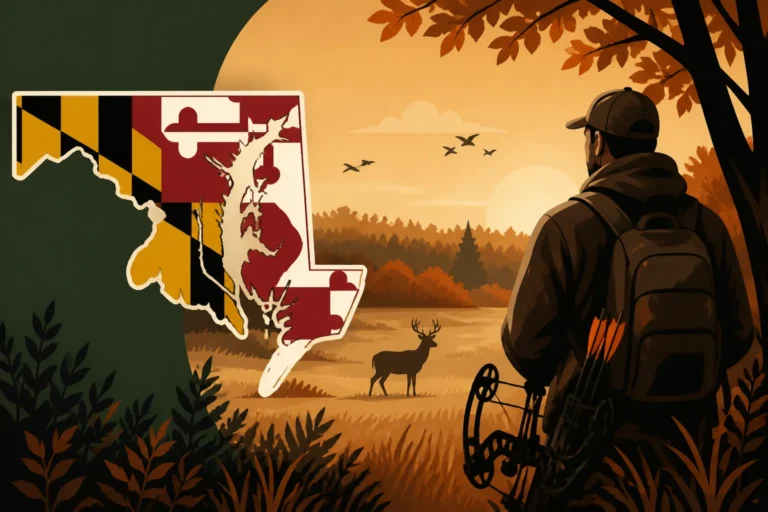
One of the most significant differences in suburban deer hunting is the strict weapon restrictions, primarily due to safety concerns in densely populated areas. While traditional firearms might be common in rural parts of Maryland, they are often prohibited or severely restricted in suburban hunts. For many of these hunts, archery equipment (compound bows, recurve bows, and crossbows) is the primary, if not sole, legal weapon. This is why understanding Bowhunting Maryland Suburbs Where Rifles Are Banned is absolutely essential.
Even with archery equipment, there are often specific rules regarding minimum draw weights, broadhead types, and shot angles to ensure quick, humane kills and minimize risk. Furthermore, Maryland has strict "safety zone" laws. Generally, it's illegal to hunt or discharge a weapon within 150 yards of an occupied dwelling, residence, or building without permission from the occupant. In suburban settings, where houses are often much closer together, this 150-yard buffer can significantly limit shooting lanes and stand locations.
Here's a quick look at common weapon allowances in Maryland for deer:
| Weapon Type | General Rule (Region B) | Common Suburban Hunt Rule | Specific Restrictions |
|---|---|---|---|
| Archery | Legal Statewide | Often Primary/Sole Weapon | Minimum draw weight, broadhead types, no mechanical broadheads over 2" |
| Crossbow | Legal Statewide | Often Primary/Sole Weapon | Same as archery broadheads, specific cocking mechanisms |
| Shotgun (Slug) | Legal Statewide | Restricted in many areas | Generally only in rural/less dense areas |
| Shotgun (Buckshot) | Legal in specific counties | Highly restricted/Prohibited | Only legal in certain counties with specific population densities |
| Rifle | Legal only in Region A | Prohibited in most suburbs | Limited to Western MD counties (Region A) |
| Airgun | Legal Statewide | Restricted/Specific Permits | Specific caliber requirements for deer |
(Note: Always verify current regulations with the Maryland DNR, as rules can change annually and vary by specific hunt program and county. Refer to Maryland's Legal Weapons by County for more detailed county-specific information.)
Beyond safety zones, hunters must also be acutely aware of public perception. Shooting lanes need to be carefully chosen to have a safe backdrop, ensuring that an arrow or projectile can never travel beyond the intended target or impact an unsafe area. This often means hunting from elevated stands or choosing areas with dense cover to absorb any missed shots. It’s about being an ambassador for hunting, not just a hunter.
Scouting and Strategy in a Suburban Landscape
Hunting in Maryland's suburban areas demands a whole new set of scouting and strategy skills. You can't rely on the same approaches you'd use in vast wilderness tracts. Instead, you need to become a master of micro-terrain, understanding how deer move within fragmented habitats and adapting your tactics to the unique pressures of a developed environment. It’s less about covering miles and more about understanding subtle patterns.
Identifying Key Deer Movements and Patterns
Deer in suburban environments might be accustomed to human presence, but they are still wild animals driven by food, water, and cover. Your scouting efforts should focus intently on finding these three elements and, more importantly, understanding the pathways deer use to travel between them. Look for the "hidden highways" – those discreet trails through thickets, along stream banks, or even behind industrial parks that offer cover and minimal human disturbance.
Start by utilizing online mapping tools like GoHunt or similar platforms that provide aerial imagery. These tools are invaluable for identifying small woodlots, creek bottoms, and thick transition zones that might hold deer. Look for pinch points where deer are funneled, such as narrow strips of woods between fields, culverts under roads, or natural funnels created by fences or bodies of water. Even in urban areas, deer need secure bedding areas. These might be surprisingly close to homes, in dense multiflora rose thickets, overgrown fencerows, or even small patches of dense evergreens.
Once you have some potential areas, shift to on-the-ground scouting. Look for actual deer sign: tracks, droppings, rubs on small saplings, and most importantly, browsing on ornamental plants or native vegetation. Deer in these areas often feed heavily on landscape plantings like hostas, azaleas, and various shrubs, which can be an easy indicator of their presence. Pay close attention to transition times – dawn and dusk. Deer movement will often be highest during these periods as they move from bedding cover to feeding areas. They also use the cover of darkness more extensively in heavily pressured zones. If you're Hunting a Suburban Woodlot in Montgomery County, for instance, you'll find deer are often experts at staying out of sight during daylight hours.
Adapting Hunting Tactics for Smaller Parcels
Traditional hunting tactics often need a serious overhaul when you're dealing with smaller, more confined parcels of land. Forget about long tracking expeditions or wide-ranging drives. Here, precision and stealth are your best friends. Still-hunting, where you move slowly and deliberately, might be effective in larger tracts of suburban woodland, but often, stand hunting is the most productive and safest method.
Tree stands or ground blinds are ideal for maximizing your hunting time in a small area and getting above a deer's line of sight or breaking up your silhouette. When choosing a stand location, consider not only deer sign but also your entry and exit routes. You want to be able to get in and out undetected, ideally using routes that don't pass directly through known deer bedding or feeding areas. This is especially crucial if you're Hunting Deer Behind a Maryland Housing Development. The last thing you want to do is spook deer on your walk in, making them nocturnal or pushing them off the property entirely.
Using trail cameras can be incredibly effective for patterning suburban deer without disturbing them. Place cameras on well-used trails, near known feeding areas, or at pinch points. This will help you understand their precise travel times and identify specific animals. Remember, these deer are often hyper-aware of human scent and movement, so scent control and quiet movement are even more critical than usual. Many hunters find that light pressure, consistent scent control, and careful stand placement are far more successful than aggressive tactics in these sensitive environments.
Special Considerations for Success and Safety
Hunting in Maryland's suburban areas is a unique endeavor that requires an even higher degree of responsibility, attention to detail, and community awareness. Beyond the standard hunting ethics, you'll be operating in environments where non-hunters are often close by, and public perception can make or break the future of these valuable management programs.
Public Perception and Ethical Behavior
This is arguably the most critical aspect of suburban hunting. You are not just a hunter; you are an ambassador for all hunters. The actions you take, the way you present yourself, and your adherence to rules will directly influence how the non-hunting public views these programs and the sport as a whole. One negative interaction or perceived unethical act can jeopardize an entire hunt program for everyone.
Always maintain a low profile. Dress appropriately for the hunt, but avoid overly aggressive or paramilitary aesthetics, especially when entering or exiting the hunting area. Be polite and respectful to any curious residents or passersby you encounter. If someone asks what you're doing, calmly explain that you are participating in a regulated deer management program to help control overpopulation, which benefits both the deer herd and the community by reducing deer-vehicle collisions and property damage. Do not argue or become defensive. Your goal is to educate and assure them of your responsible actions.
It's also essential to be mindful of shot placement and recovery. In a suburban setting, a wounded deer can quickly cross property lines or end up in an area inaccessible or sensitive to retrieve. This means taking only high-percentage shots and passing on anything questionable. If you do wound a deer, exhaust every ethical means to recover it. This might involve carefully tracking it across property lines (with permission, of course, understanding Maryland Trespass and Permission Law), and even engaging with the homeowner to explain the situation respectfully. Quick, clean kills and diligent recovery are not just ethical responsibilities; they are public relations imperatives in these environments.
Safety Protocols and Retrieval Challenges
Safety is paramount in any hunting scenario, but in suburban areas, the margin for error is significantly smaller. Every shot you take must be absolutely confident and within your effective range, with a clear understanding of what's beyond your target. This typically means hunting from an elevated stand whenever possible, ensuring your arrow or slug impacts the ground quickly after passing through the deer, or is stopped by a solid backdrop of earth or dense cover.
Wearing appropriate blaze orange, even when not legally required for archery, can be a wise choice when moving through public lands or in areas with other users, though regulations on Maryland Blaze Orange Requirements might vary by season and weapon. Always assume there are other people in the vicinity, even if you don't see them.
Retrieving a deer in a suburban setting presents its own set of challenges. Unlike a clear-cut logging road, you might be dragging a deer through dense brush, across small streams, or even within sight of homes. Have a plan for extraction before you even take a shot. Consider bringing a deer cart or sled, even for small deer, to make the process easier and less visually jarring for non-hunters. If you're on a public land managed hunt, understand the designated retrieval points and rules. If on private land, ensure you have explicit permission for access across all necessary properties. It's not uncommon to field dress a deer immediately where it falls to lighten the load, but be discrete and consider public visibility. Knowing about Recovering a Deer From a Tidal Marsh might sound extreme for suburbia, but the principles of discreet and efficient retrieval remain the same.
Minimizing Disturbance and Maintaining Discretion
To ensure the longevity of suburban hunting programs, minimizing disturbance to residents and wildlife is key. This means being as quiet as possible when entering and exiting your hunting area, especially during early morning or late evening hours. Avoid slamming car doors, loud conversations, or excessive noise. Park your vehicle discreetly, ideally where it's not blocking driveways or causing a nuisance.
Consider the visual impact of your presence. Avoid leaving equipment or trash behind. If you use trail cameras, ensure they are securely mounted and not visible to casual passersby. When setting up a stand, try to choose a location that is naturally screened from view by homes or roads. The goal is to be effective and responsible while being as inconspicuous as possible. Think like a ghost in the woods, doing your job without drawing undue attention. This discretion helps maintain positive relations with the community and reinforces the responsible nature of these vital wildlife management efforts.
Equipment and Gear for Suburban Deer Hunts
Hunting in Maryland's suburban landscapes often calls for a more specialized approach to gear and equipment than a typical big woods hunt. While the core principles remain, the proximity to residential areas, reduced visibility, and often thicker cover necessitate specific choices to maximize effectiveness, safety, and discretion. Having the right tools for the job can make a significant difference in your success and overall experience.
Archery Gear for Close Quarters
Since archery is often the primary weapon allowed in suburban management hunts, your archery setup needs to be dialed in for accuracy and efficiency at close to moderate ranges. Many suburban shots will be under 30 yards, sometimes much closer due to thick brush and smaller shooting lanes.
- Bow/Crossbow: A well-tuned compound bow, recurve, or crossbow is essential. Focus on accuracy over speed for these close-quarter situations. Ensure your equipment is regularly maintained and that you practice frequently, especially from elevated positions if you plan to hunt from a tree stand. For Maryland's specific regulations, it's always good to review topics like Crossbow Season Eligibility and Age Rules to confirm your equipment and licensing are in order.
- Arrows/Bolts: Use high-quality, straight-flying arrows or bolts matched to your bow's draw weight. Broadheads should be razor-sharp and designed for quick, humane kills. Fixed-blade broadheads are often favored by many for their reliability, but mechanical broadheads are also popular, just be sure they meet any local regulations regarding cutting diameter.
- Scent Control: This cannot be emphasized enough. Suburban deer are often much more attuned to human scent due to constant exposure. Invest in scent-eliminating sprays, activated carbon clothing, and meticulous hygiene. Store your hunting clothes in airtight containers or bags to prevent contamination.
- Rangefinder: A good rangefinder is invaluable. In dense cover, judging distances accurately can be tricky, and even a few yards off can mean a missed shot or a poor hit.
Remember, the goal is a quick, ethical harvest. Practice, practice, practice at the exact distances you expect to shoot in the field.
Essential Tools for Discreet Movement and Retrieval
Beyond your primary weapon, several other pieces of gear become crucial for navigating the unique challenges of suburban hunting.
- Mapping Apps: Apps like GoHunt are incredibly useful for identifying property lines, public land boundaries, and potential deer travel corridors in fragmented landscapes. Download offline maps since cell service can sometimes be spotty in dense pockets of timber. Knowing exactly where you are in relation to property lines is non-negotiable.
- Portable Tree Stands/Ground Blinds: Lightweight, quiet, and easy-to-deploy stands or blinds are ideal. Ladder stands or hang-on stands with climbing sticks offer good elevation. If hunting from the ground, a pop-up blind can provide excellent concealment and scent containment, but ensure it blends in with the natural surroundings. When using a stand on public land, remember to check rules regarding Treestand Rules on Maryland Public Land or Ground Blind Rules on Maryland WMAs for placement and duration.
- Deer Cart/Sled: As mentioned earlier, extracting a deer discreetly and efficiently is vital. A sturdy deer cart or sled will save your back and allow for quieter transport, especially if you need to move the animal a fair distance or over uneven terrain.
- Headlamp/Flashlight: With discretion being key, much of your movement might happen in low light conditions. A reliable headlamp with a red-light option (to preserve night vision and be less obtrusive) is essential for safe navigation and blood trailing after dark.
- Field Dressing Kit: A sharp knife, game bags (to protect the meat and keep things clean), and gloves are a must. Consider bringing a small tarp or plastic sheet to work on if you need to field dress the animal in a visible spot, to maintain cleanliness and prevent an unsightly scene.
- Communication Device: A fully charged cell phone is important for safety and for reporting your harvest via the COMPASS system. If you're hunting in an area with poor cell service, consider a walkie-talkie or satellite communicator, especially if hunting with a partner.
- Water and Snacks: Even on shorter hunts, staying hydrated and energized is important.
- Hunter Orange: Even when not strictly required, wearing a minimum amount of blaze orange, like a vest or hat, when moving to and from your stand, especially during firearms season, can enhance safety, as covered in How Much Blaze Orange Maryland Requires.
Selecting the right gear for a suburban hunt isn't just about comfort or efficiency; it's about making choices that align with the specific demands of hunting in close proximity to communities. Every piece of equipment should contribute to a safe, ethical, and discreet hunting experience.
Disclaimer
Please remember that hunting regulations in Maryland can change. It is always your responsibility to consult the current Maryland Department of Natural Resources (DNR) hunting guide and local ordinances before engaging in any hunting activity. This guide is for informational purposes only and should not be considered a substitute for official regulations.