Recovering a Deer From a Tidal Marsh
There's almost nothing more gut-wrenching for a hunter than making a good shot on a deer, only for that animal to disappear into the dense, unforgiving labyrinth of a Maryland tidal marsh. The unique terrain, the rapidly changing tides, and the sheer difficulty of movement can turn what should be a triumphant recovery into a desperate, often heartbreaking, ordeal. This guide is here to walk you through the realities, the necessary preparations, and the step-by-step strategies to maximize your chances of recovering a deer from this challenging environment.
Understanding the Unique Challenges of Marsh Recoveries
Hunting the marshes of Maryland, particularly for sika deer, offers an unparalleled experience, but it comes with a distinct set of challenges, especially when it's time to recover your game. This isn't like tracking a deer in a hardwood forest; the marsh plays by its own rules, and you need to be prepared to face them head-on.
The Landscape Against You
Imagine wading into thick, chest-high phragmites, the invasive grass that forms impenetrable walls, making visibility near zero. Beneath your feet, the ground shifts from soft, silty mud that can suck the boots right off you, to unexpected deep guts, to areas with surprisingly firm footing. Then there are the infamous "quicksand" spots – areas of extremely fine, watery mud where a wrong step can mean sinking up to your waist, or worse, losing essential gear.
The water itself is a constant factor. At high tide, areas you walked across just hours before might be waist-deep or more, completely submerging any blood trail or tracks. At low tide, while access might be easier, the exposed mud flats can be incredibly slippery and difficult to traverse. It's a constantly evolving landscape, and every minute counts. Beyond the physical dangers, the sheer density of the vegetation makes it incredibly tough to spot a downed animal, even when you're just a few yards away. The biting insects, especially during the earlier archery season, can also be a significant distraction and discomfort, adding another layer of misery to an already difficult situation.
Time Sensitivity in a Tidal Environment
The clock is always ticking in a tidal marsh. Unlike dry ground, where a deer can lie for hours, or even overnight in cold weather, without being too impacted by the elements, a deer in a marsh faces immediate threats. The most obvious is the tide itself. A deer that expires near a tidal gut or on a low-lying flat can be quickly submerged or even carried away by an incoming tide. I've known hunters who've seen their hard-earned sika float off into the Chesapeake Bay, lost forever, simply because they couldn't reach it in time.
Beyond the tides, spoilage is a major concern, especially if you're out hunting during the warmer months of the early archery season. High humidity and warm temperatures can accelerate decomposition, ruining the meat quickly. You've got to act fast to field dress and cool the animal. And let's not forget the legal requirements; Maryland mandates that you register your deer within 24 hours of harvest. A delayed recovery due to marsh conditions can easily push you past this deadline, creating further complications. It's a stressful race against nature, and preparation is your best defense.
Essential Gear and Preparations for Marsh Tracking
Successfully recovering a deer from a tidal marsh isn't just about grit and determination; it's about having the right tools and knowing how to use them. This is not the place to skimp on gear or overlook safety.
Personal Safety and Navigation Equipment
First and foremost, your personal safety in the marsh environment is paramount. You need to dress for the conditions, and that usually means a tough choice between chest waders and hip boots. While hip boots offer more mobility and are lighter, chest waders provide superior protection against deeper water and mud. For a deeper dive into this, you might find this guide helpful: Hip Boots Versus Chest Waders in Sika Country. Whichever you choose, ensure they are in excellent condition – a leak in the marsh is a miserable experience. If you anticipate crossing any significant water bodies or using a boat, a personal flotation device (PFD) or life vest is non-negotiable. The marsh can be unpredictable, and even experienced watermen can find themselves in trouble.
Navigation is another critical component. A reliable GPS device or a smartphone with a robust mapping application like GoHunt or OnX Hunt is absolutely essential. These apps allow you to mark your starting point, the shot location, the last known position of the deer, and any blood trail you find. This creates a digital breadcrumb trail that can be a lifesaver when trying to retrace your steps in thick cover or after dark. Always carry a fully charged phone, and ideally, a portable power bank. A powerful headlamp or flashlight with extra batteries is also a must, as recoveries often extend into the evening, and navigating a marsh after dark without light is incredibly dangerous. Pack a basic first-aid kit for cuts, scrapes, and insect bites, and always inform someone of your hunting plans and expected return time. A good, sharp knife and a small saw can also prove invaluable.
Tracking and Recovery Tools
Once you've ensured your personal safety, focus on the tools that will aid in the actual tracking and recovery. One of the most effective, albeit not always available, tools is a trained tracking dog. Where legal, a good blood-trailing dog can cut through the confusion of a washed-out blood trail or a deer that has circled back into dense cover. Services for tracking dogs are available in Maryland, and it's worth knowing who to call before you need them.
For the physical recovery, don't underestimate the power of a strong, long rope. This can be used to pull a deer out of deep mud, drag it through dense phragmites, or secure it to a boat. Floating ropes are a bonus for water recoveries. Traditional game carts are often useless in the marsh, but specialized sleds designed for snow or rough terrain can sometimes be adapted, providing a smoother way to drag a deer over mud and vegetation. If you're hunting larger marshes with significant water, a small, stable boat or kayak can be a game-changer for accessing remote areas or extracting a deer without having to drag it miles through mud. Finally, surveyor's tape or reflective pins are incredibly useful for marking the blood trail, especially if you need to back out and return with more help or better light. And if you're hunting in warmer weather, a cooler packed with ice and some game bags are crucial for preserving the meat once you've recovered your animal.
Step-by-Step Tracking and Recovery Strategy
Okay, you've made the shot, and the deer has vanished into the marsh. Don't panic. Take a deep breath. A systematic approach will significantly improve your odds.
Initial Assessment and Marking the Shot Site
The moments immediately after the shot are critical. Resist the urge to crash in after the deer. Instead, take a few minutes to compose yourself, observe, and listen. Did you hear the deer crash? Did you hear it splashing in water, or did it just silently disappear? Note exactly where the deer was standing when you shot, and where you last saw it or heard it. This "last seen point" is often more valuable than the shot site, as it provides a direction of travel.
Once you're ready to move, approach the shot location cautiously and mark it precisely. Use your GPS or mapping app like GoHunt to drop a waypoint. This is your anchor point. Now, start searching for initial sign: blood, hair, bone fragments, or disturbed vegetation. Pay attention to the wind direction and the current tide stage. Knowing if the tide is incoming or outgoing will tell you whether you have more time or if you need to rush. Consider the time of day too; if it's getting late, you might need to make quick decisions about continuing or returning with more resources in daylight.
Following the Trail: Blood, Tracks, and Broken Phragmites
This is where the real work begins. Move slowly, deliberately, and methodically. Your eyes need to scan every inch of ground and vegetation. In the marsh, a blood trail can be sporadic, diluted by water, or completely absent. Look for subtle clues. The color and consistency of blood can tell you a lot about the shot placement – bright red and frothy often indicates a lung hit, while darker blood might suggest a liver or muscle hit.
Beyond blood, look for tracks in the soft mud. Even if the mud is soupy, you might see subtle depressions or displaced soil. The phragmites itself can be a fantastic tracker. Look for broken stalks, bent over leaves, or areas where the vegetation has been pushed aside. Deer, especially when injured, will often take the path of least resistance or try to bed down in the thickest cover available. As you find signs, mark them with your surveyor's tape or drop a waypoint on your GoHunt app. This creates a visual and digital trail that helps you stay oriented and avoids circling. Remember to always look ahead of your last confirmed sign, rather than just down at your feet, to catch distant clues. For more specific insights into marsh tracking, take a look at Reading a Marsh Trail for Sika Sign.
Dealing with Water and Tides
The constant presence of water and the ebb and flow of the tides are arguably the biggest challenges in marsh recoveries. Before you even head out to hunt, make sure you understand the local tide charts (a good resource for this is Reading Tide Charts Before a Marsh Hunt). Knowing when high and low tide occur can dictate your entire strategy. It's often best to search for a deer at low tide, as this exposes more ground and potentially a clearer trail. However, if the deer was lost on an incoming tide, time is of the essence.
Water can wash away blood trails completely, leaving you with only physical tracks or broken vegetation to follow. If the deer entered a significant body of water, it might be difficult to determine its direction. Look for where it might have exited on the opposite bank. If a gut or tidal creek is too deep to wade, you might need to circle around or use a small boat or kayak to cross. Never attempt to swim across strong currents, especially if you're wearing waders, as they can quickly fill with water and become dangerous. If the deer is found in water, retrieving it can be tricky. Use ropes to secure it and prevent it from floating away. When you are moving through the marsh at low tide, pay attention to the bottom. You can find surprisingly good footing near ditch banks, which is often where you might find sika moving. A great way to understand this terrain better is by reviewing articles like Wading Into a Dorchester Marsh Before Daylight and Hunting a Marsh Ditch Bank at Sunrise.
When to Call for Backup
There comes a point in many marsh recoveries when you have to acknowledge that you can't do it alone. If the blood trail has vanished, if the terrain becomes too dangerous, or if darkness is approaching, it's time to call for help. Don't be too proud to ask friends, family, or fellow hunters to join the search. More eyes and more hands significantly increase your chances.
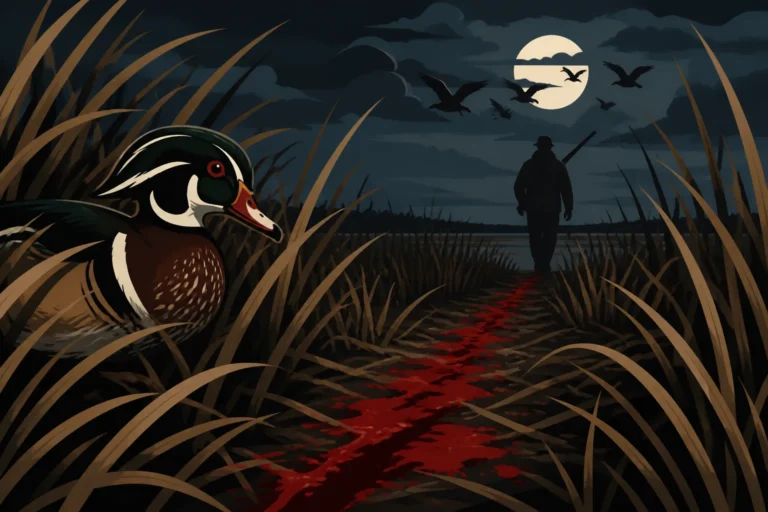
If the trail is truly cold and you've exhausted your resources, consider contacting a professional tracking dog handler. These individuals and their dogs are specifically trained for these difficult scenarios and can often pick up a scent where human eyes fail. While Maryland DNR generally doesn't assist with game recovery, they are an emergency resource if you encounter a truly dangerous situation or if the deer ends up in an inaccessible public water body where you need guidance. If you find yourself blood trailing into the evening, remember that Blood Trailing in Marsh Grass After Dark provides some vital tips for safety and effectiveness.
Extraction and Post-Recovery Procedures
Finding your deer in a Maryland tidal marsh is only half the battle. Now comes the often-exhausting task of getting it out. This phase is usually the most physically demanding and requires careful planning and execution.
Safe Extraction from the Marsh
Once you've located your deer, take a moment to assess the situation. Is it in deep water, thick mud, or dense vegetation? If you have a team with you, great – this is definitely a job for multiple people. If you're alone, you might need to get creative. Start by securing the deer to prevent it from moving further or floating away if it's in water. A stout rope tied around the antlers or neck can be invaluable for pulling.
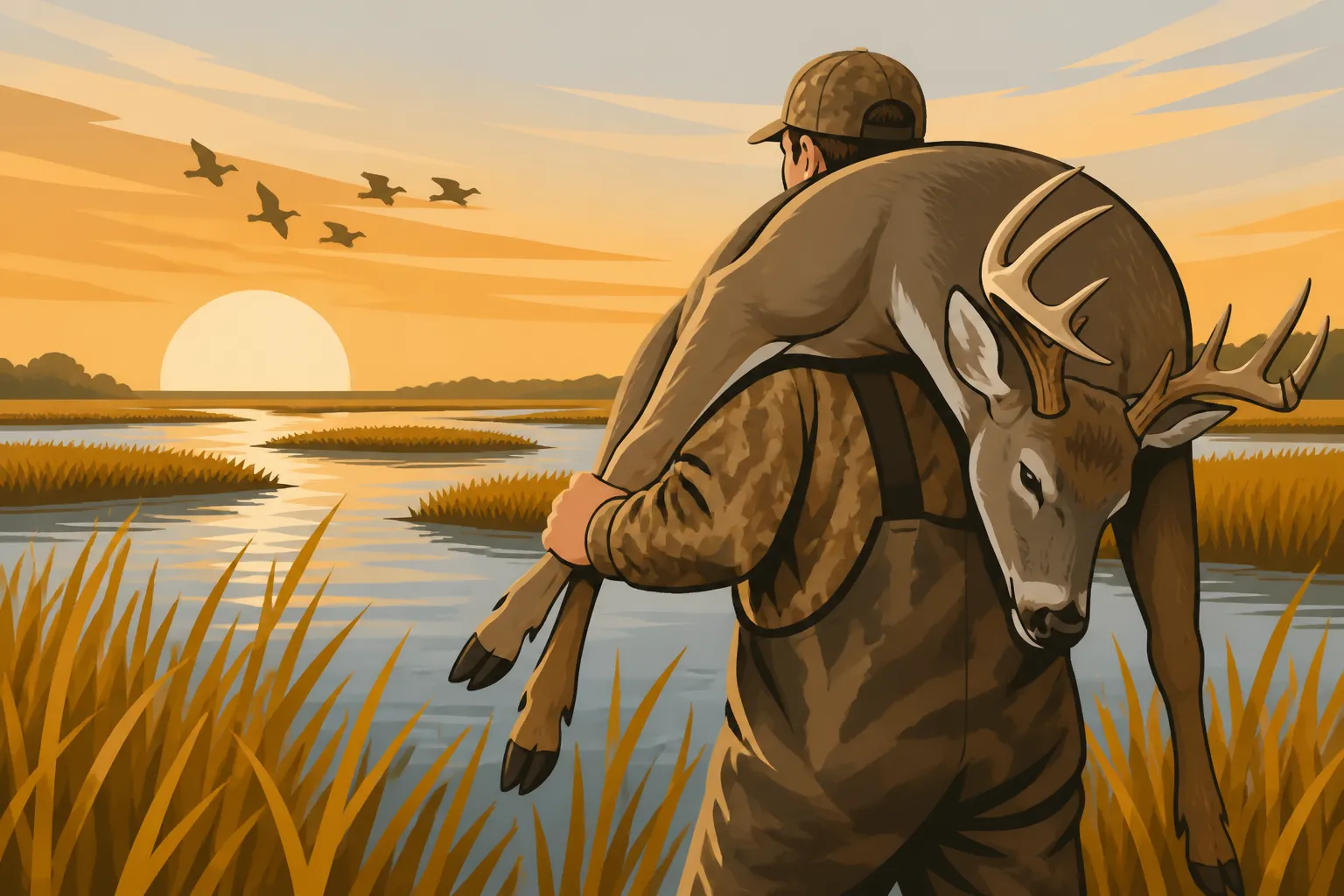
Dragging a deer, especially a large whitetail or a mature sika stag, through the marsh is brutal work. The soft mud creates suction, and the phragmites snag at every turn. If you have a sled, now is the time to deploy it. It can distribute the weight and glide over some of the softer terrain. If you're near a significant gut or creek and have a small boat or kayak, you might be able to load the deer and float it out. Be extremely careful when loading a heavy, dead animal into a small watercraft; ensure the boat remains stable and doesn't capsize. Remember, for those hunting in specific sika country, articles like Boating Into a Sika Marsh at Low Tide can offer localized advice on marsh navigation and extraction.
Field Dressing and Transport Challenges
Field dressing in the marsh is rarely clean or pleasant, but it's often a necessary evil, especially in warmer temperatures. Removing the internal organs immediately will help cool the carcass and prevent spoilage. Be prepared for mud, water, and insects. Having a good game bag can help keep flies off the meat once it's dressed.
After field dressing, the real transport challenge begins. If you're lucky enough to be close to solid ground or a boat launch, your job is easier. Otherwise, you'll be dragging the deer through the same challenging terrain you just navigated to find it. This is where your chosen method for getting the deer out, whether it's a sled, a boat, or just sheer brute force with ropes, will be put to the ultimate test. Consider the weight and bulk of the deer, the distance, and the changing tide conditions. If you're dealing with a particularly warm day, refer to Field Dressing a Deer in Warm September Weather for critical advice on preserving your harvest.
Registering Your Harvest
After all the blood, sweat, and tears of a marsh recovery, don't let the crucial final step slip your mind: registering your deer. In Maryland, all harvested deer must be registered within 24 hours of kill. This is a non-negotiable legal requirement. You can register your deer online through the Maryland DNR COMPASS portal or by using their mobile app. The process is straightforward, requiring information about the date, location (county and Deer Management Region), sex, and antler points of your deer. If you've never done it before, this guide will help: Registering a Deer Through the COMPASS Portal.
Failing to register your deer, even after a monumental recovery effort, can lead to fines and legal trouble. Make sure you keep your confirmation number handy once the registration is complete. This digital record is your proof of legal harvest. The struggle of a marsh recovery often leaves hunters exhausted, but ensuring compliance with Maryland's regulations is the final, essential step in a successful hunt. Always make it a priority to meet the registration deadline, as detailed in The Maryland Deer Registration Deadline After a Kill.
| Recovery Tool/Method | Pros | Cons | Best Use Case in Marsh |
|---|---|---|---|
| Chest Waders | Keeps you dry in deep water/mud; provides buoyancy | Less agile, can fill with water if punctured/overtopped | Searching in deeper guts, crossing tidal creeks |
| Hip Boots | More agile, lighter, easier to move in thick brush | Limited depth protection | Shallower marshes, firm-bottomed areas |
| GPS/Mapping App (e.g., GoHunt) | Crucial for navigation, marking trail, avoiding getting lost | Requires battery power, can be obscured by thick canopy | All tracking, marking shot/last seen/blood |
| Tracking Dog | Superior scenting ability, can find cold trails quickly | Requires professional handler, not always available/legal | Lost trails, dense cover, difficult conditions |
| Rope (Long, Strong) | Essential for dragging, securing, pulling from mud/water | Can snag on vegetation, requires physical strength | Extraction from deep mud, pulling across water |
| Sled/Specialized Game Carrier | Distributes weight, can glide over mud/vegetation | Can be cumbersome in very thick phragmites | Dragging deer over relatively open mud flats |
| Small Boat/Kayak | Access to remote areas, floats deer out with less effort | Requires boat launch/transport, can be unstable with heavy load | Large marshes, significant water bodies, distant recoveries |
| Headlamp/Flashlight | Critical for night tracking/recovery, hands-free options | Requires batteries, limited range of vision | All recoveries that extend into low light or darkness |
Disclaimer
Hunting is an inherently dangerous activity. The information provided in this guide is for informational purposes only and should not be considered a substitute for personal judgment, experience, or professional guidance. Always prioritize safety, understand and follow all Maryland hunting laws and regulations, and be prepared for emergencies when hunting, especially in challenging environments like tidal marshes.