Fall Turkey Hunting Maryland’s Western Counties
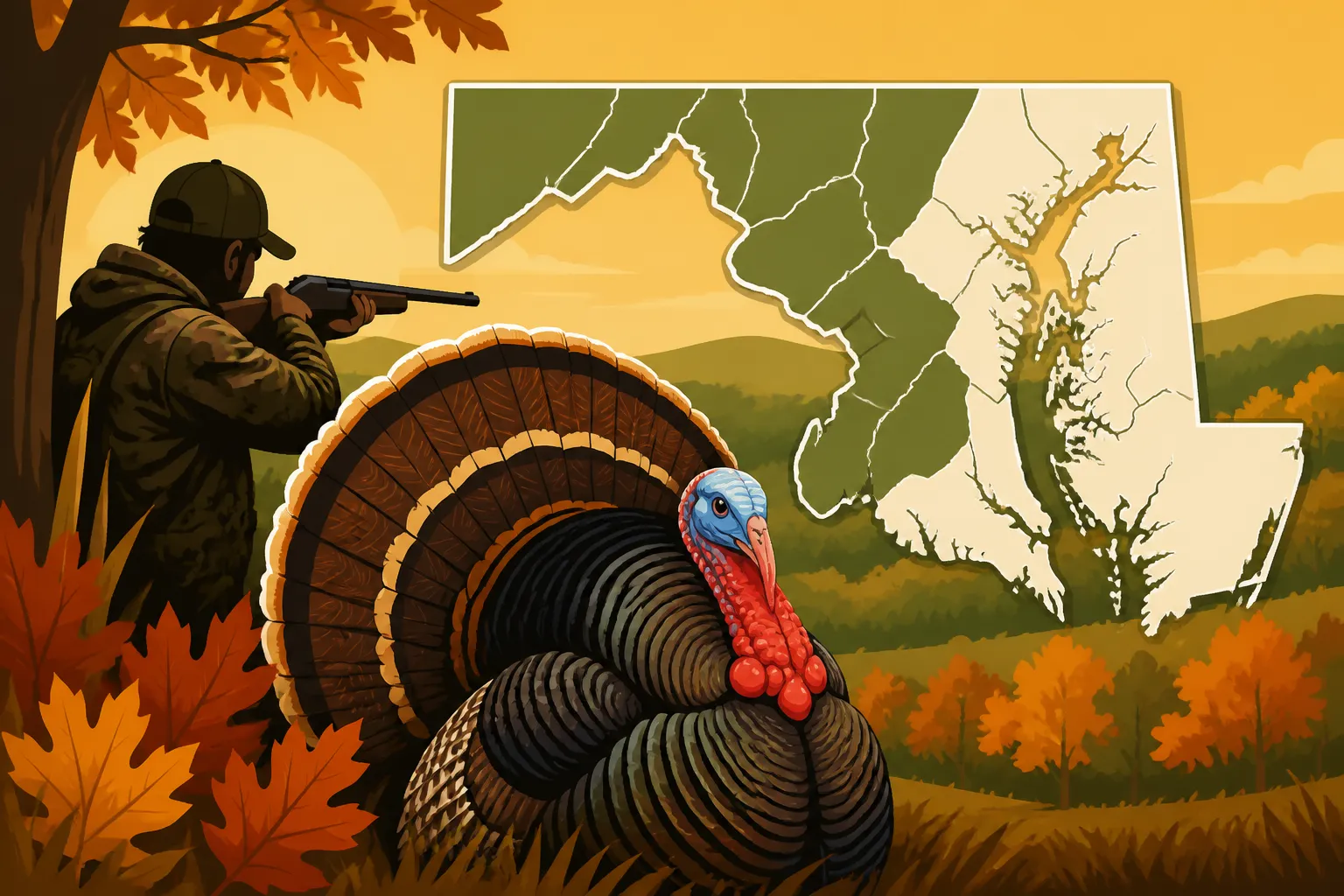
Fall turkey hunting in Maryland's western counties can feel like a completely different ballgame than the high-strung gobbler pursuit of spring. You're no longer just calling to lovesick longbeards; instead, you're trying to locate scattered flocks that are much more focused on feeding, survival, and staying together. This guide is here to help you navigate the unique challenges and rewarding experiences of chasing fall turkeys across the rugged timber of Western Maryland, offering insights into their behavior, effective strategies, and crucial preparations.
Understanding Fall Turkey Behavior in Western Maryland
The transition from late summer to the crisp air of autumn brings about a significant shift in turkey behavior, especially in the mountainous terrain of Western Maryland. Gone are the days of predictable gobbling from the roost; fall turkeys operate on an entirely different rhythm, dictated primarily by food sources, flock dynamics, and survival instincts.
The Dynamics of Fall Flocks
In the fall, wild turkeys typically regroup into larger, more cohesive flocks. These flocks often consist of hens and their poults from the spring, sometimes joined by other adult hens or even small groups of jakes. Adult gobblers, on the other hand, tend to form their own separate bachelor groups. Understanding these social structures is key. A flock of hens and poults will be much more responsive to distress calls or yelps that mimic a lost member, while gobbler groups might be more curious or, frankly, harder to call in during the fall. Their main goal is to forage efficiently and stay safe, relying on numbers for protection. This means they're often on the move, covering significant ground daily as they search for food.
Seasonal Food Sources and Movement Patterns
Western Maryland's landscape offers a bounty of fall food sources, and turkeys will key into whatever is most abundant. Early fall might see them still working agricultural fields for waste grain, particularly in the valleys or flatter sections. As the season progresses, their focus shifts heavily to acorns, beechnuts, and other hard mast in the oak and beech forests. When you're scouting for Maryland's Turkey Harvest by Region, remember that these mast crops aren't uniform across the mountains. Some ridges might be loaded with acorns, while others are barren, leading turkeys to concentrate their efforts where the food is plentiful. Look for scratchings under oak trees, especially on south-facing slopes that get more sun and might drop acorns earlier. The turkeys will systematically work these areas, moving in a pattern dictated by the availability of food and water. They also need reliable water sources, so creek bottoms and springheads are always worth checking.
Roosting Habits and Daily Routine
Unlike spring, when gobblers might roost consistently in the same towering tree, fall turkey roosts can be a bit more unpredictable. Flocks will often choose mature, tall trees offering good visibility and protection from predators, usually along ridge lines or over deep hollows. The entire flock will congregate to roost together, making for a loud spectacle at dusk and dawn if you're close enough to hear them. Their daily routine typically involves flying down from the roost around first light, spending the morning foraging, often taking a mid-day dust bath or loafing period in dense cover, then feeding again in the late afternoon before flying back up to roost. Recognizing these patterns and identifying potential roosting areas is a huge advantage for setting up an ambush or locating a starting point for your hunt.
Key Hunting Strategies for Fall Turkeys
Hunting fall turkeys demands a more proactive and often more physically demanding approach than spring hunting. It's less about sweet-talking a single bird and more about locating, scattering, and then re-calling a dispersed flock.
Locating Scattered Flocks
Finding fall turkeys starts long before you ever step into the woods with your gun. Scouting is paramount. Use preseason scouting trips to identify active feeding areas, fresh scratchings, tracks, and droppings. Listen for yelps and clucks at dawn and dusk, which can give away roost locations. Topographic maps, especially those found on apps like GoHunt, are invaluable for identifying potential travel corridors, ridge lines, and dense cover where turkeys might loaf or escape pressure. Pay close attention to areas with good mast crops; if the acorns are falling, the turkeys will be there. Consider Scouting Maryland Public Land Before Season to give yourself a leg up, marking waypoints for promising areas. Another effective tactic is "running and gunning" – moving through the woods, stopping periodically to call, and listening intently for a response. This covers more ground and increases your chances of bumping into a flock.
The Art of the Bust
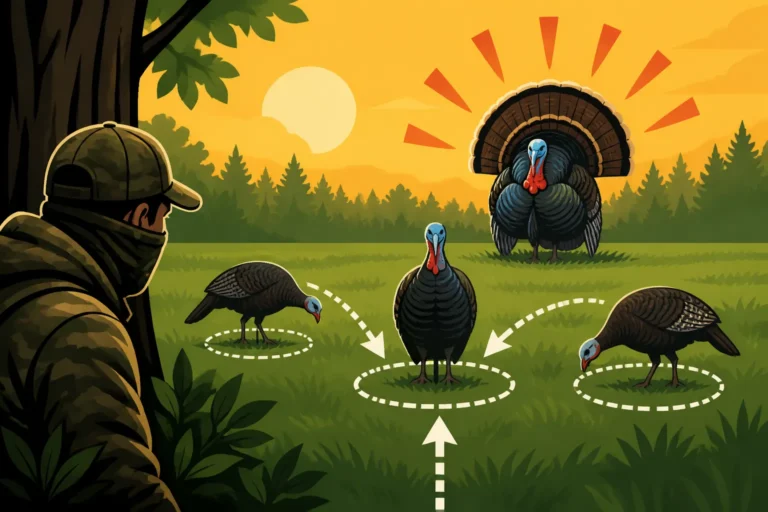
Once you locate a flock, one of the most effective fall turkey tactics is the "bust." The goal is to intentionally run into the flock, causing them to scatter in all directions. It sounds counterintuitive, but a scattered flock of turkeys is a vulnerable flock. When turkeys are scattered, especially young birds, they immediately want to regroup for safety. This instinct is what you'll exploit. As soon as you break up a flock, mark the point of the bust and mentally note the general direction each bird or group of birds flew. Wait at least 20-30 minutes for things to settle down, then set up in a central location, preferably with your back against a wide tree for concealment and a clear shooting lane.
Strategic Calling and Setup
After a successful bust, your calling strategy shifts from typical spring yelps to "assembly calls." These are soft, subtle yelps, clucks, and kee-kees that mimic a lost bird trying to find its flock. A kee-kee run, which sounds like a high-pitched whistle followed by yelps, is particularly effective for young birds and hens. Start with soft calls and listen carefully for responses. Turkeys often circle back to the point of the bust or a familiar feeding area, so patience is crucial. If you get a response, resist the urge to call too aggressively. Let the turkeys work their way back to you. They are naturally wary, and over-calling can spook them. Sometimes, just a few soft yelps every 10-15 minutes is all it takes. For groups of gobblers, soft clucks and purrs might entice them, but they're generally less vocal and harder to call in during fall than hens and jakes.
Still-Hunting and Ambush Tactics
If busting a flock isn't an option, or if you prefer a quieter approach, still-hunting can be highly effective in Western Maryland's timber. This involves moving slowly and deliberately through the woods, taking a few steps, then pausing for several minutes to scan for movement and listen. Focus on areas with good mast crops, natural funnels, or along ridge lines that turkeys use for travel. Use binoculars to scan ahead, looking for the tell-tale black blobs of turkey bodies against the fall foliage. When still-hunting, move into the wind or with a crosswind to keep your scent from drifting ahead of you. Another excellent method, especially if you've done your Reading Sign in Maryland Mountain Timber homework, is setting up an ambush. Find a pinch point, a major trail, or a prime feeding area and get into a blind (natural or pop-up) before daylight, waiting for turkeys to move through. This is particularly effective if you can identify a consistent travel route between a roost and a feeding area.
Essential Gear and Preparation
Being properly equipped for Western Maryland's rugged terrain and variable fall weather is critical for a successful and enjoyable turkey hunt. Preparation extends beyond just your gun; it includes clothing, navigation, and emergency supplies.
Clothing for Mountainous Terrain
Layering is key for fall hunting in the mountains. Mornings can be chilly, sometimes even frosty, while mid-day temperatures can rise significantly, especially when hiking steep hills. Start with a moisture-wicking base layer, add an insulating mid-layer (fleece or synthetic down), and top it with a waterproof and windproof outer shell. Camouflage patterns that blend with the fall hardwoods are ideal. Don't forget durable, comfortable, and waterproof boots with good ankle support – you'll be covering a lot of ground over uneven terrain. Good quality gloves and a warm hat or facemask are also essential for those frosty starts or when sitting still for long periods. Remember, you're not just dealing with the cold, but also potential rain or even early snow in the higher elevations.
Navigation and Communication
Western Maryland's vast public lands, like Savage River State Forest or Green Ridge State Forest, can be challenging to navigate, even for experienced hunters. A reliable GPS unit or a smartphone with a robust hunting app like GoHunt is indispensable. Download offline maps before you go, as cell service can be spotty or nonexistent in many areas. Carry a compass and a paper map as a backup – always know how to use them. Consider a small, lightweight personal locator beacon (PLB) or satellite messenger for emergencies, especially if hunting alone in remote areas. Communication is vital, especially if you're hunting with a partner; pre-arranged signals or radios can be helpful in dense cover. For Still-Hunting Western Maryland Mountain Timber, knowing your precise location and egress routes is non-negotiable.
| Category | Spring Turkey Hunt | Fall Turkey Hunt |
|---|---|---|
| Primary Goal | Call in a gobbler to breeding calls | Locate, scatter, and re-call a flock |
| Key Target | Adult gobbler | Hens, jakes, or gobblers (either sex often legal) |
| Calling Focus | Loud, assertive hen yelps, gobbler yelps, cutting | Soft clucks, purrs, kee-kees, assembly yelps, distress |
| Movement | Often static, wait for birds to come to you | Highly mobile, "run and gun," actively seek flocks |
| Food Influence | Less critical; focus on strut zones and fly-down areas | Paramount; focus on hard mast, waste grain, soft mast |
| Flock Behavior | Gobblers solitary or in small bachelor groups, hens with poults | Larger, mixed-sex flocks (hens/poults), gobblers separate |
| Calling Response | Gobblers keen to breeding calls, often aggressive | Hens/poults respond to assembly/distress, gobblers wary |
| Physical Demands | Moderate (sitting, short stalks) | High (extensive walking, steep terrain, chasing) |
Firearms, Ammunition, and Other Essentials
Maryland's fall turkey season allows for shotguns, crossbows, and certain air guns. For shotgun hunters, a 12 or 20 gauge is common, loaded with heavy turkey loads (e.g., #4, #5, or #6 shot) for dense patterns. Ensure your shotgun is patterned with your chosen load before the season. For crossbow users, broadheads are required. Beyond your weapon, carry a good pair of binoculars to scan distant hillsides and pick apart cover. A comfortable seat cushion or small stool can make long sits much more bearable. Don't forget a sharp knife for field dressing, game bags for the meat, and rope or a game cart if you expect to be packing a bird out of steep terrain. Always have a headlamp with extra batteries, a small first-aid kit, and enough water and snacks for a full day afield. Knowing Maryland's Legal Weapons by County is also crucial, as some regulations can vary.
Navigating Regulations and Seasons
Before you even load your gear, having a firm grasp of Maryland's hunting regulations for fall turkeys is non-negotiable. These rules are in place for safety and to manage the wild turkey population sustainably.
Maryland's Fall Turkey Season Dates
The fall turkey season dates in Maryland are specific and can vary by region. Generally, Western Maryland counties (Region A) tend to have a longer and more open season compared to the rest of the state. Always consult the current Maryland Guide to Hunting & Trapping for the exact dates. Knowing When Maryland's Fall Turkey Season Runs is your starting point. Typically, the season will open in October and may run through early November, sometimes with additional late-season opportunities. These dates are crucial for planning your hunts, especially if you're traveling from out of state or balancing it with other hunting seasons like deer or small game.
Bag Limits and Either-Sex Hunting
One of the significant differences between spring and fall turkey hunting in Maryland is the bag limit and the "either-sex" rule. In the fall, hunters are generally permitted to harvest one turkey of either sex per season. This means you're not restricted to only gobblers, which opens up more opportunities when you encounter those large hen and poult flocks. However, verifying the exact Fall Turkey Bag Limit and Either-Sex Rules for the current year is essential, as regulations can change. Be absolutely sure of your target before you shoot – quick identification is part of ethical hunting.
Licensing and Permitting Requirements
To hunt fall turkeys in Maryland, you'll need a valid Maryland hunting license and the appropriate turkey stamp or permit. Residents and non-residents have different license requirements and costs, so ensure you purchase the correct one. You can typically buy these online through the Maryland Department of Natural Resources (DNR) COMPASS system or from a licensed agent. Make sure you understand all the requirements for Maryland Turkey Seasons and Permits well in advance of your hunt. Carrying proof of your license and permits while afield is mandatory. Also, remember that blaze orange requirements differ for turkey hunting compared to deer hunting, so check those specifics too to stay safe and legal.
Public Land Access and Regulations
Western Maryland boasts significant public hunting opportunities in its state forests and wildlife management areas. Popular spots include Green Ridge State Forest, Savage River State Forest, and Meadow Mountain Wildlife Management Area. However, each public land area may have specific regulations beyond statewide rules, such as special parking permits, access restrictions, or even designated hunting zones. Always check with the specific land management agency (e.g., DNR) for the latest rules for your chosen hunting area. Some areas might have mandatory sign-in/out procedures or specific dates when certain activities are allowed. Using mapping tools like GoHunt can help clarify boundaries and potential access points, but always defer to official signage and regulations on the ground. Be mindful of other users of public land, including hikers, bikers, and other hunters, and practice good sportsmanship.
Disclaimer
All information provided in this guide is for informational purposes only and is subject to change. Hunters are solely responsible for understanding and complying with all current Maryland hunting laws, regulations, and season dates. Always consult the official Maryland Guide to Hunting & Trapping or the Maryland Department of Natural Resources website for the most accurate and up-to-date information before planning any hunt.