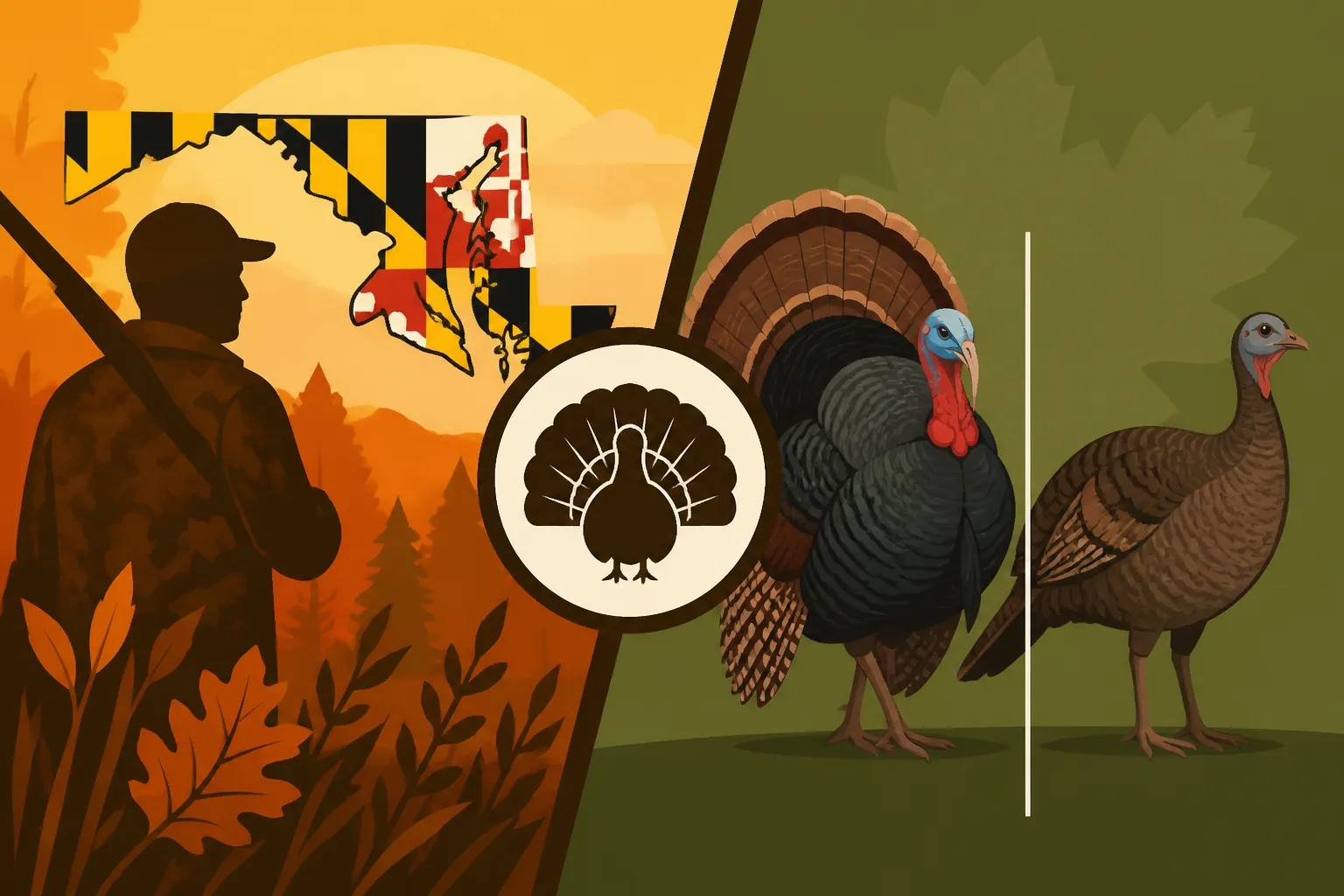
Fall Turkey Bag Limit and Either-Sex Rules
Trying to figure out all the nuances of Maryland's fall turkey hunting regulations, especially when it comes to bag limits and whether you can shoot a hen or a gobbler, can feel like you're trying to solve a complicated puzzle. It's enough to make you second-guess every decision in the woods. This comprehensive guide is here to untangle those specific rules, ensuring you step into the autumn woods confident and compliant, ready to enjoy the unique challenge of fall turkey hunting.
Understanding Maryland's Fall Turkey Seasons
Maryland's fall turkey hunting opportunities aren't just a simple, single season. They're spread across several different weapon types, each with its own specific set of dates and regulations. This can be particularly confusing for hunters new to the state or those who primarily focus on deer hunting and are looking to add turkey to their autumn pursuits. Knowing these different season structures is the first step to understanding when and how you can pursue a fall bird.
Archery and Muzzleloader Seasons
The fall turkey season typically kicks off with archery and muzzleloader opportunities, often running concurrently with parts of the deer seasons for those weapon types. For bowhunters, this means the chance to pursue turkeys with the same gear they might be using for deer, adding an exciting dimension to their time in the woods. The archery season generally opens in September, offering a long window that often stretches well into November. Imagine sitting in your deer stand, watching a flock of turkeys come by, and knowing you have the option to fill a turkey tag if the opportunity arises. It’s a fantastic bonus!
Muzzleloader hunters also get their dedicated time in the fall, which is a big draw for those who love the tradition and challenge of black powder. The muzzleloader turkey season usually aligns with the state's popular October Muzzleloader Week for deer. This overlap means hunters can potentially pursue both deer and turkeys during the same outing, provided they have the correct licenses and stamps, and are aware of the specific weapon requirements. For example, while a centerfire rifle might be legal for deer during firearms season in some areas, it’s not for fall turkey. Always double-check the current year's dates, as they can shift slightly. You can always refer to the official Maryland DNR website or use a hunting app like GoHunt to keep track of these dates.
Firearms Fall Turkey Dates
Beyond the archery and muzzleloader windows, Maryland also offers a firearms season specifically for fall turkeys. This is often a shorter, more concentrated period, usually taking place in November. This season typically coincides with the first part of the state's firearms deer season, allowing for another potential overlap for hunters. However, it’s crucial to understand that even during the general firearms deer season, specific rules apply to turkey hunting. For instance, while high-powered rifles are legal for deer in many parts of Maryland during this time, they are not for turkeys. Shotguns are the primary legal firearm for fall turkey hunting.
It's a common misconception that if deer firearms season is open, all other game can be hunted with any legal deer firearm. This is absolutely not the case for fall turkeys. You’ll need a shotgun with approved shot sizes, typically number 4, 5, or 6 shot. This restriction is in place for safety and to ensure clean kills on turkeys. The focus here is on calling birds into shotgun range, a very different challenge than rifle hunting for deer. Don't let the excitement of a combined season lead you to make a mistake in the field. Always be sure you know what weapon is legal for the game you intend to pursue that day. These distinctions are critical for staying within the law and ensuring ethical hunting practices.
Maryland's Fall Turkey Bag Limit
When it comes to fall turkey hunting in Maryland, understanding the bag limit is just as important as knowing the season dates. It's not a simple "one and done" scenario, and there are specific rules that govern how many birds you can harvest across the entire hunting year and during each individual season. Many hunters get confused, thinking a general turkey stamp means they can take any number of birds, but that’s rarely the case.
The Statewide Annual Limit for Turkeys
Maryland employs a statewide annual bag limit for wild turkeys, which means there’s a total number of birds you can harvest across all turkey seasons within a single license year. For most of Maryland, the annual limit is two turkeys. This includes both the spring and fall seasons combined. So, if you were fortunate enough to bag two gobblers during the spring season, your fall turkey hunting opportunities would be limited or even exhausted for that license year, depending on the specific county rules. This is a critical point that many new hunters overlook. You can't just restart your count when fall rolls around; it's a running tally.
This annual limit is in place to manage the turkey population responsibly, ensuring healthy numbers for future generations. While the overall limit is two, hunters must also be aware of how those two tags can be filled across the different seasons. For instance, in some specific counties, the fall season might offer the chance to take up to two birds, but that would mean you couldn't take any in the spring, or vice-versa. Always check the current year's regulations for "Maryland Turkey Seasons and Permits" to confirm the specifics for your hunting area. Keeping track of your harvest is made easier with tools like the Maryland DNR app, where you register your kills and see your remaining tags.
Daily Bag Limits and Possession
Beyond the annual limit, Maryland also has daily bag limits for fall turkeys. Generally, you can harvest one turkey per day during the fall season. This means that even if you have multiple tags left, you can only register one bird per 24-hour period. It's designed to spread out the harvest pressure and encourage hunters to spend more time in the woods. While the general state limit is often one bird per day, it's always wise to double-check the current regulations, especially if you're hunting in a county that might have unique management rules.
When it comes to possession, the rules are fairly straightforward: you can't possess more than your annual bag limit. So, if the annual limit is two, you shouldn't have more than two untagged turkeys in your possession. Once a bird is harvested, it must be immediately tagged with your valid turkey tag, and then registered within 24 hours. The registration process is vital, not just for legal compliance but also for providing the state with crucial data on turkey populations. This information helps wildlife biologists make informed decisions about future season structures and bag limits. Whether you’re registering via phone, online, or through the mobile app, completing this step promptly after harvest is non-negotiable.
Navigating Either-Sex Rules in the Fall
One of the biggest distinctions between spring and fall turkey hunting in Maryland revolves around the "either-sex" rule. In the spring, hunters are almost exclusively targeting gobblers (male turkeys), with very specific and limited exceptions for hens on youth days. Fall, however, is a different ballgame. The ability to harvest "either-sex" fundamentally changes hunting strategies and the dynamics of the season.
What "Either-Sex" Truly Means for Fall Turkey Hunters
For Maryland fall turkey hunters, "either-sex" means precisely what it sounds like: you are legally permitted to harvest either a male turkey (gobbler/tom) or a female turkey (hen). This significantly broadens the opportunities in the field compared to the spring season. In the fall, turkeys are often in larger, mixed-sex flocks, and separating a gobbler from a hen can be challenging, especially in dense cover. The either-sex rule simplifies this, allowing hunters to target any legal turkey they encounter, as long as it meets the general size and maturity requirements (i.e., not a poult).
This rule is a reflection of different management strategies for fall seasons. In the spring, the goal is to allow gobblers to breed before being harvested, while protecting hens for reproduction. In the fall, after the breeding season is over and poults have matured, some hen harvest is generally sustainable and can help manage local populations, especially in areas where turkey numbers are strong. It also allows hunters to be less selective when a flock comes in, focusing more on a clean shot opportunity rather than trying to identify subtle physical characteristics under pressure. It's a pragmatic approach that makes fall hunting more accessible and often more successful for many participants.
Hens vs. Gobblers: Identifying Your Target in Fall
While the "either-sex" rule means you don't have to differentiate between a hen and a gobbler, many hunters still enjoy the challenge of targeting a fall gobbler, or simply want to be able to identify what they're seeing. Distinguishing between a hen and a gobbler in the fall can be tougher than in the spring. In spring, gobblers are strutting, fanning, and vocalizing aggressively, often displaying prominent beards and spurs. In the fall, they tend to be much less conspicuous.
Here's how to tell the difference:
- Size: Adult gobblers are generally larger than adult hens, with a more robust body and longer legs. However, a large hen can sometimes be mistaken for a smaller gobbler, and vice-versa with a juvenile gobbler (Jake) and an adult hen.
- Head Color: While less vibrant than in spring, fall gobblers often show more distinct red, white, and blue coloration on their heads, which can change intensity with excitement. Hens typically have duller, bluish-gray heads.
- Beard: A beard (a coarse tuft of bristle-like feathers) is the most definitive sign of a gobbler. While some hens can grow beards (about 10-15% do), it's uncommon, and hen beards are typically much thinner and shorter. Always look carefully for this feature.
- Spurs: Gobblers have sharp, bony spurs on the backs of their legs, which grow with age. Hens do not have spurs. This is often hard to see in the field, but if you get a good look, it’s a clear indicator.
- Behavior: Fall gobblers might still make some softer gobbling sounds, but they generally move and feed within flocks, often acting quite similar to hens. Observing their behavior and social hierarchy within the flock can sometimes offer clues, but it's much more subtle than in spring.
It’s easy to get confused, especially when a mixed flock of adult hens, Jakes, and adult gobblers are all together. Take your time, use your binoculars, and be sure of your target before you decide to take a shot, even with either-sex rules in play.
Important Considerations for Fall Turkey Hunting
Beyond the explicit bag limits and either-sex rules, there are several other critical factors that fall turkey hunters in Maryland need to keep in mind. Overlooking these details can lead to disappointment, or worse, a violation of hunting regulations. Maryland's diverse landscape means rules can shift depending on where you're hunting, and adhering to strict registration procedures is paramount.
County-Specific Rules and Exceptions
While Maryland has statewide regulations for fall turkey hunting, it's absolutely crucial to remember that certain rules, particularly those related to season dates, bag limits, or even legal weapon usage, can have county-specific exceptions. For instance, some western Maryland counties, known for higher turkey populations, might have slightly different season lengths or specific management zone regulations compared to counties on the Eastern Shore or in Southern Maryland. These variations are often implemented by the Maryland Department of Natural Resources (DNR) to address local population dynamics, habitat availability, and hunting pressure.
Before you plan your hunt, always consult the most current Maryland Hunting & Trapping Guide and pay close attention to the county tables. This guide is your ultimate source for specific details that supersede any general advice. For example, some counties might have longer or shorter archery seasons for turkeys, or the firearms season might open or close differently. It’s a good practice to use a reliable mapping app like GoHunt which often incorporates these county-level regulations. A quick check of "Maryland's Turkey Harvest by Region" might even give you a clue as to which counties typically have stronger turkey numbers and thus potentially more liberal seasons or specific rules. Don't assume that a rule in Frederick County applies equally to Dorchester County – that could be a costly mistake!
Registering Your Fall Turkey
Just like with deer and spring turkeys, registering your fall turkey harvest is a mandatory step in Maryland. This isn't just a bureaucratic hurdle; it's a vital part of wildlife management. The data collected from hunter registrations helps the DNR monitor population trends, assess harvest rates, and make informed decisions about future hunting seasons. Failure to register your bird within the specified timeframe (usually 24 hours of harvest) can result in fines and penalties, so it's not something to take lightly.
The process for registering your fall turkey is straightforward and typically offers several options:
- Online via COMPASS: The Maryland DNR's online licensing and registration system, COMPASS, allows you to report your harvest from any internet-connected device.
- Mobile App: The Maryland DNR's mobile app is incredibly convenient for in-the-field registration. It’s user-friendly and ensures you can register your bird even before you leave the woods, provided you have cell service.
- Phone: You can also call a dedicated toll-free number to register your harvest. This is a good backup if you don't have internet access.
When registering, you’ll need information such as the date of kill, county of kill, weapon used, and whether the turkey was a gobbler or hen (even though it's an either-sex season, this data is still valuable for wildlife biologists). You’ll receive a confirmation number once the registration is complete, which you should keep with the carcass until it reaches its final destination. This confirmation number is your proof of legal harvest and is just as important as the physical tag. You can find detailed instructions on "Turkey Registration Requirements After the Kill" in the official regulations.
Overlapping Seasons and Safety
Fall turkey hunting often overlaps with other popular hunting seasons, most notably deer. This presents unique opportunities but also demands heightened awareness for safety. When hunting in areas where deer firearms season is open, remember that many deer hunters will be in the woods, and some may be using rifles. For fall turkey hunters, this means adhering to blaze orange requirements, even if you’re using archery tackle during a period that doesn’t strictly require it for turkey alone.
Maryland law generally requires hunters to wear a minimum of 250 square inches of blaze orange or blaze pink on the head, chest, and back when hunting during any firearms deer season. This applies even if you are hunting only turkeys during that period. Always check the specific "Maryland Blaze Orange Requirements" for the most current rules. The goal is to maximize your visibility to other hunters and minimize the risk of accidents. It’s also wise to clearly identify your target as a turkey before taking a shot, especially if you hear other shots in the distance. The woods can be a busy place in the fall, and safety should always be your top priority. Being mindful of legal shooting hours for deer also helps avoid confusion.
Maximizing Your Fall Turkey Hunting Success
Fall turkey hunting is a beast all its own. It's vastly different from the high-pitched drama and gobbling contests of spring. Instead, fall often requires a more patient, strategic approach, focusing on flock dynamics and food sources rather than breeding rituals. Understanding these differences and adapting your techniques is key to punching that fall tag.
Scouting and Habitat for Fall Turkeys
Successful fall turkey hunting starts long before you ever step foot in the woods with your gun or bow. It begins with thorough scouting, focusing on identifying key food sources and habitat types where turkeys will congregate. In the fall, turkeys are often grouped into larger, often mixed-sex flocks, and their primary driver is food. They are constantly on the move, foraging. Hardwood ridges laden with acorns, agricultural fields (especially corn or soybean stubble fields), and areas with wild berries or mast are prime locations. Use tools like GoHunt or other mapping apps to identify potential food sources and terrain features that turkeys might use. Look for signs such as droppings, tracks, scratch marks in the leaf litter, and dusting bowls.
When scouting, focus on transition areas – the edges where different habitat types meet. Turkeys often travel along old logging roads, creek bottoms, or field edges to move between feeding and roosting sites. Finding their roost trees, usually large mature hardwoods overlooking a valley or creek, can be a game-changer. Observe their patterns in the evenings, watching them fly up to roost, and in the mornings, noting where they fly down and head to feed. Remember that these patterns can change rapidly as food sources are depleted or as hunting pressure increases. Checking "Late Season Food Sources for Maryland Deer" might even give you clues about what turkeys are eating if they share similar diets.
Calling Strategies for Fall Flocks
Fall turkey calling is an entirely different art form compared to spring. In the spring, you're usually trying to sound like a lonesome hen trying to attract a gobbler. In the fall, your goal is often to imitate a lost or separated bird, or to simulate a flock breaking up and trying to regroup. The most effective fall strategy is often the "flock breakup" call. This involves locating a flock, then attempting to scatter them. Once they've dispersed, you set up and begin making excited hen yelps, kee-kees (a soft, pleading whistle of a lost young turkey), and assembly calls to draw individual birds back to your position.
The kee-kee run is particularly potent in the fall, mimicking a young bird that has lost its flock. Start with a soft, plaintive kee-kee, then add a few soft yelps as if the bird is getting more anxious. Another effective fall call is the assembly yelp, which is a loud, rapid series of yelps that hens use to gather their scattered flock. Don't be afraid to mix in some soft clucks and purrs to make your setup sound natural and inviting. Unlike spring, where aggressive gobbling can work, fall calling is often more about empathy and mimicking the social needs of the flock. Patience is paramount; a scattered flock may take an hour or more to start filtering back together, so settle in and be ready.
Disclaimer
Please remember that hunting regulations, season dates, and bag limits are subject to change. Always consult the most current Maryland Department of Natural Resources (DNR) Hunting & Trapping Guide or visit their official website before heading into the field. This article provides general information and should not be considered a substitute for official state regulations. It is every hunter's responsibility to know and follow all applicable laws.