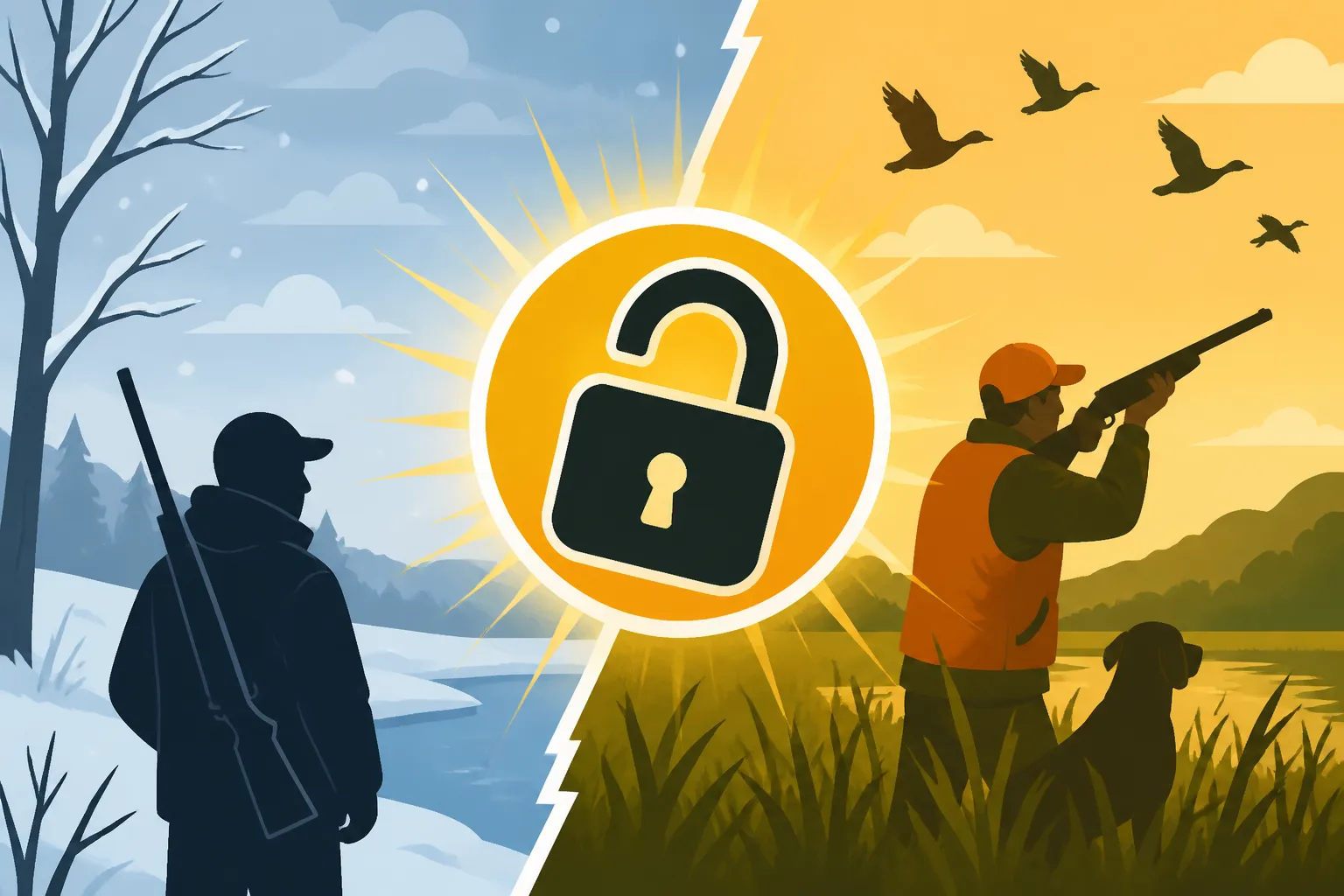
When the January Firearms Days Reopen
As the holidays wind down and the new year rolls in, many Maryland deer hunters feel that familiar pang of the season coming to an end. It's easy to pack away the gear, thinking the best opportunities have passed. But if you’re one of those dedicated souls still looking for another chance to fill a tag or just enjoy the peaceful solitude of the winter woods, don't despair! Maryland offers a fantastic, often overlooked opportunity: the late January firearms deer season reopening. This comprehensive guide will walk you through everything you need to know to make the most of those final days in the deer woods.
Understanding Maryland's January Firearms Deer Season
After the main firearms season closes, and the muzzleloader and archery seasons continue, it can be a bit confusing to keep track of when and where you can still carry a rifle or shotgun for deer. The January firearms reopening is a valuable, albeit brief, window that many hunters either forget about or simply don't utilize effectively.
The 'Why' Behind the Late Season Reopening
The decision to reopen firearms season in January isn't just a random act of generosity from the Maryland Department of Natural Resources (DNR). It's a strategic move designed to help manage the state's deer population, particularly antlerless deer, which are crucial for population control. By extending the opportunity to use more efficient firearms, the DNR encourages hunters to harvest more does, especially in areas with higher deer densities. This late season also provides a critical opportunity for hunters who might have missed out on earlier chances due to work, family commitments, or simply bad luck during the main rifle hunts. It's a chance to put venison in the freezer when other seasons are winding down.
This reopening helps achieve population management goals without significantly impacting the breeding season, as most does have already been bred by January. For the hunter, it means a chance to experience deer hunting in a different, often more challenging, environment. The landscape has changed, food sources are scarcer, and deer patterns shift dramatically. It's a test of adaptability and persistence, offering unique rewards for those willing to brave the cold.
Key Dates and Regional Differences
The January firearms season isn't statewide for the entire month; it's a specific, short window that primarily targets antlerless deer in most areas. Generally, this season runs for a few days in early to mid-January, often coinciding with a weekend to maximize participation. It's absolutely critical to consult the most current Maryland hunting regulations guide, as dates can shift slightly year to year.
Maryland is divided into two deer management regions: Region A and Region B. Region A encompasses the more mountainous, western counties like Garrett and Allegany, while Region B covers the rest of the state, including the heavily populated central areas and the Eastern Shore. The January firearms season often has different rules and dates for each region, particularly regarding antlered deer harvest. Generally, Region B will have a longer and more liberal antlerless season during this time, reflecting its higher deer populations and the need for more aggressive management. For example, while Region B might allow for antlerless deer harvest with a firearm for several days, Region A might have stricter limitations or not open for firearms at all, focusing instead on archery or muzzleloader opportunities. Understanding these nuances is key, so make sure you check the specific regulations for your hunting county. You can find more detailed information on Region A and Region B Deer Rules in the official regulations.
| Feature | Region A (Western Maryland) | Region B (Rest of State) |
|---|---|---|
| January Season Dates | Typically more restrictive, often limited to specific dates or not open for firearms. Check current DNR guide. | Generally a few days in early to mid-January. Check current DNR guide for exact dates. |
| Antlered Deer Limit | Often restricted, sometimes only one antlered deer statewide for the entire season. Consult regulations. | One antlered deer may be harvested if you have an unused antlered deer tag (Regular or Bonus). Check antler point rules. |
| Antlerless Deer Limit | More conservative. | More liberal, often multiple antlerless deer allowed. Consult How Many Antlerless Deer Region B Allows. |
| Primary Focus | Generally, deer harvest is lower due to habitat. | Population control, especially antlerless deer, is a primary focus. |
Always refer to the official Maryland DNR hunting guide for the most accurate and up-to-date information on season dates and bag limits.
Legal Weapons and Ammunition for January
Just like during the regular firearms season, Maryland has specific rules about what you can legally use to hunt deer, and these rules often vary by county. During the January firearms reopening, these same regulations apply. For most of Region B, hunters typically utilize shotguns loaded with slugs, straight-walled cartridge rifles, or muzzleloaders if the specific dates overlap. Some counties in Western Maryland and certain parts of Region B may permit the use of centerfire rifles, but this is not universal. It's not uncommon to see a dedicated hunter using their trusted shotgun with sabot slugs, especially in the more suburban or densely populated areas where traditional rifles are restricted.
Before you head out, double-check your county’s specific regulations on legal weapons. You can learn more about Maryland Legal Deer Rifles by County to ensure you're in compliance. For instance, in counties like Anne Arundel or Prince George's, you'll likely be limited to shotguns, muzzleloaders, or archery equipment, even during a firearms reopening. In contrast, counties in Region A might have broader allowance for centerfire rifles. It’s also crucial to be aware of ammunition restrictions, such as the prohibition of certain types of expanding bullets in some areas. Familiarity with your chosen weapon and its capabilities is paramount, especially when hunting in cold weather, which can affect accuracy and bullet performance. Always ensure your firearm is sighted in and functioning properly.
Strategic Approaches for January Deer Hunting
January hunting isn't like the early archery season or the peak of the rut. The deer have been pressured for months, natural food sources are dwindling, and the weather can be brutal. This means your tactics need to shift dramatically to find success.
Locating Late-Season Food Sources
By January, the lush green fields of early fall are long gone, and most acorns have been consumed or buried. Deer are now solely focused on survival, and that means finding calories. Their primary goal is to conserve energy and find whatever palatable food remains. This often leads them to specific, predictable locations. Agricultural fields, especially those with standing corn or soybeans, become absolute magnets. Even if the fields have been picked, deer will comb through them, digging for dropped kernels or beans. Farmers might leave a section of corn standing for various reasons, creating a late-season buffet that deer can’t resist. Similarly, winter wheat or clover food plots planted for deer can be incredibly attractive.
Beyond agriculture, natural browse becomes critical. Look for areas with young saplings, briar thickets, or honeysuckle. Deer will also target specific evergreens like greenbrier, holly, or even some pine needles when other options are scarce. Thermal cover, such as dense conifer stands or thickets that block the wind and retain warmth, often have residual browse underneath that deer will utilize. You'll want to focus your scouting on these areas, paying close attention to fresh tracks, droppings, and browse lines. Using a tool like GoHunt can help you pinpoint potential agricultural fields or dense thermal cover on aerial maps, saving you valuable time in the frigid conditions. For more insights, check out our guide on Late Season Food Sources for Maryland Deer.
Adapting to Cold Weather and Deer Behavior
January in Maryland can be brutally cold, with temperatures often dipping into the teens or single digits. Deer respond to this extreme cold by altering their behavior significantly. They become less active during daylight hours, preferring to bed down in thick cover to conserve energy. When they do move, it's typically during the warmest parts of the day, often mid-morning to mid-afternoon, to feed quickly before returning to shelter. You'll rarely see the frenetic rutting activity of November.
Hunters need to adapt both their attire and their mindset. Layering is key for staying warm, starting with a good base layer and adding insulating layers like fleece or down, topped with a windproof and waterproof outer shell. Warm boots, gloves, and a hat are non-negotiable. Hunting from a comfortable, well-insulated ground blind or an enclosed tree stand can make a huge difference in your ability to sit for extended periods. When the mercury drops, patience becomes your greatest asset. Expect deer movement to be slower and more deliberate. Focus on entry and exit routes between heavy cover and prime food sources. Don't be afraid to sit through a slow morning, as the deer might just be waiting for the sun to warm things up a bit before venturing out.
Leveraging Hunting Pressure and Cover
By January, deer have experienced months of hunting pressure across Maryland, from both public and private lands. This pressure makes them incredibly wary and pushes them into the densest, most inaccessible cover they can find. Think thick briar patches, steep ravines, deep swamps, and dense conifer stands that offer both thermal cover and security. These "sanctuaries" are where deer will spend the majority of their time, only venturing out to feed under the cover of darkness or during limited daylight hours in less exposed areas.
Your strategy should revolve around understanding where these pressure points are and where the deer will seek refuge. On public lands, this often means venturing farther off the beaten path than most hunters are willing to go. Look for areas with difficult terrain or thick vegetation that deter casual hunters. If hunting private land, identify those untouched pockets of cover on aerial maps and focus your efforts there. Drive hunts can also be effective in January, but require careful planning and enough participants to push deer out of thickets towards waiting standers. The key is to exploit the deer's need for security, positioning yourself strategically near their bedding areas or along their travel corridors between cover and food. Our guide on Hunting Pressure on Maryland Public Land offers more insights into managing this challenge.
Gear, Safety, and Regulations for the January Hunt
A successful and safe January hunt depends heavily on your preparation, understanding the rules, and having the right equipment for the challenging conditions.
Essential Cold Weather Gear and Preparation
Hunting in January means battling the elements, and being unprepared for the cold can quickly turn a hopeful hunt into a miserable, even dangerous, experience. Proper layering is paramount. Start with a moisture-wicking base layer to draw sweat away from your body, preventing chills. Follow this with insulating layers like fleece, down, or synthetic puff jackets to trap warmth. Your outer layer should be windproof and waterproof to protect against biting winds and unexpected precipitation. Brands like Sitka, Kuiu, or even more budget-friendly options from Cabela's or Bass Pro Shops offer excellent cold-weather hunting apparel.
Don't forget your extremities. A warm hat that covers your ears is essential, as a significant amount of body heat is lost through the head. Insulated, waterproof gloves or mittens are a must, perhaps with a thinner glove liner for dexterity. Your feet are particularly vulnerable to cold; invest in high-quality, insulated, waterproof boots, and pair them with thick, wool-blend socks. Hand warmers and toe warmers can be a game-changer, providing localized heat for hours. A reliable thermos filled with hot coffee, tea, or soup can also offer a much-needed morale boost and internal warmth. Finally, carry a small first-aid kit, a headlamp with fresh batteries, and a way to communicate, especially if hunting alone in remote areas.
Blaze Orange Requirements and Other Safety Considerations
Safety is always the top priority, and during the firearms season, blaze orange visibility is non-negotiable in Maryland. Regardless of whether you’re on public or private land, during the January firearms deer season, hunters must wear at least 250 square inches of solid fluorescent blaze orange or blaze pink material above the waist. This includes a hat. This requirement ensures you are highly visible to other hunters, significantly reducing the risk of accidental shootings. Even if you're hunting private land, adhering to this rule is smart practice. For a full breakdown of requirements, see Maryland Blaze Orange Requirements.
Beyond blaze orange, other safety measures are crucial. Always treat every firearm as if it's loaded. Be absolutely certain of your target and what lies beyond it before taking a shot, especially when visibility might be reduced by winter foliage or fog. Use a sturdy safety harness if hunting from a tree stand. Inform someone of your hunting location and expected return time. Be mindful of frozen ground, which can be slippery, and water bodies, which may have thin ice. Hunting alone in extreme cold carries inherent risks, so consider a hunting buddy if possible.
Tagging and Registration Rules for January Deer
Once you've successfully harvested a deer during the January firearms season, the regulations for tagging and registration are the same as any other deer taken in Maryland. You must immediately attach your valid deer tag to the deer before moving it from the place of kill. This tag must be securely fastened and clearly visible. Make sure the tag corresponds to the appropriate weapon and deer type (antlered or antlerless).
After tagging, the next crucial step is registering your harvest. Maryland requires all deer to be registered within 24 hours of kill. This can typically be done online through the DNR's COMPASS portal, over the phone, or via the GoHunt Maryland app, if available. When registering, you'll need information from your tag, the deer's sex, and the county where it was harvested. Upon successful registration, you'll receive a confirmation number. This number serves as proof of legal harvest and must remain with the deer until it is processed. Losing or forgetting to register your deer can result in fines and penalties, so don't let the excitement of the hunt overshadow this vital step. Our guide on The Maryland Deer Registration Deadline After a Kill has more details.
Maximizing Your Chances: Tips and Tactics
The late season presents a unique set of challenges and opportunities. To fill your tag in January, you need to be smart, patient, and adaptable.
Scouting Fresh Sign and Winter Patterns
By January, the deer patterns established during the early season and rut have largely vanished. Deer are now driven by a simple equation: food and cover. This means fresh scouting is essential. Don't rely on intel from October or November. Bundle up and hit the woods. Look for fresh tracks in the snow or mud, especially leading to and from known food sources. Pay attention to browse lines—where deer have been nipping at branches and leaves—and fresh droppings, which indicate recent feeding activity.
Focus your scouting on identifying travel corridors between dense bedding cover and late-season food sources. These corridors might be pinch points, fencelines, drainage ditches, or brushy draws that offer concealment. Use aerial photos and topographical maps, perhaps through a platform like GoHunt, to identify potential thermal cover (dense pines, south-facing slopes, thick swamp edges) and connect them to fields or natural browse. Deer activity might be concentrated in very specific areas, so finding those pockets of activity is key. Consider hanging a few trail cameras on these routes, using long-lasting lithium batteries to withstand the cold. Even in January, deer will still leave rubs and scrapes, though less frequently, so fresh sign can be a significant indicator. Our guide on Scouting Maryland Public Land With Aerial Photos offers excellent tips.
Stand Placement for January Deer
Effective stand placement in January revolves around intercepting deer as they move between bedding and feeding areas, often during the middle of the day. Unlike the rut, when deer might be cruising widely, late-season deer movements are more direct and purposeful. Positioning your stand downwind of these travel corridors is critical, as cold air tends to settle in low-lying areas, making thermals tricky. During the cold, deer rely heavily on their sense of smell.
Consider setting up on the edge of a standing cornfield, especially one bordered by thick timber or a swamp. A stand overlooking a winter wheat field or a remaining clover plot can also be highly productive. If hunting timber, look for saddles or benches on south-facing slopes, which catch more sunlight and can be a preferred bedding area. Funnels created by natural topography or thickets are always prime locations. Since deer movement might be short and quick, try to position yourself for a relatively close shot. A pop-up ground blind can be particularly effective in January, offering warmth, concealment, and the ability to move it if needed to adapt to changing deer patterns. For a practical approach, consider Sitting a Field Edge in Maryland's January Firearms Days.
Understanding Your County's Specific Rules
Maryland's hunting regulations can be incredibly nuanced, with rules varying not just by region, but by individual county, especially when it comes to Sunday hunting and legal weapons. While the general state regulations provide a framework, it's crucial to delve into the specifics for the county you plan to hunt in. For example, some counties might allow Sunday hunting during the January firearms season, while others may not, or may have restrictions on hours or specific species. These variations are often due to local ordinances and historical precedents.
Additionally, weapon restrictions can be very precise. Some counties might only allow shotguns with slugs, while others in more rural areas permit rifles. Straight-walled cartridge rifles have become more common and are allowed in many counties where traditional bottlenecked rifle cartridges are prohibited. Always check the DNR hunting guide or the COMPASS website for the absolute latest and most accurate information pertaining to your specific hunting location. Ignorance of the law is never an excuse, and a quick check can prevent a legal headache and ensure you have a safe and compliant hunt. This is particularly important for non-residents or those hunting a new county for the first time.
Disclaimer
Please note that hunting regulations, season dates, and bag limits are subject to change by the Maryland Department of Natural Resources (DNR). Always consult the official Maryland DNR hunting guide for the current year before planning any hunt. This article is for informational purposes only and does not supersede official regulations.