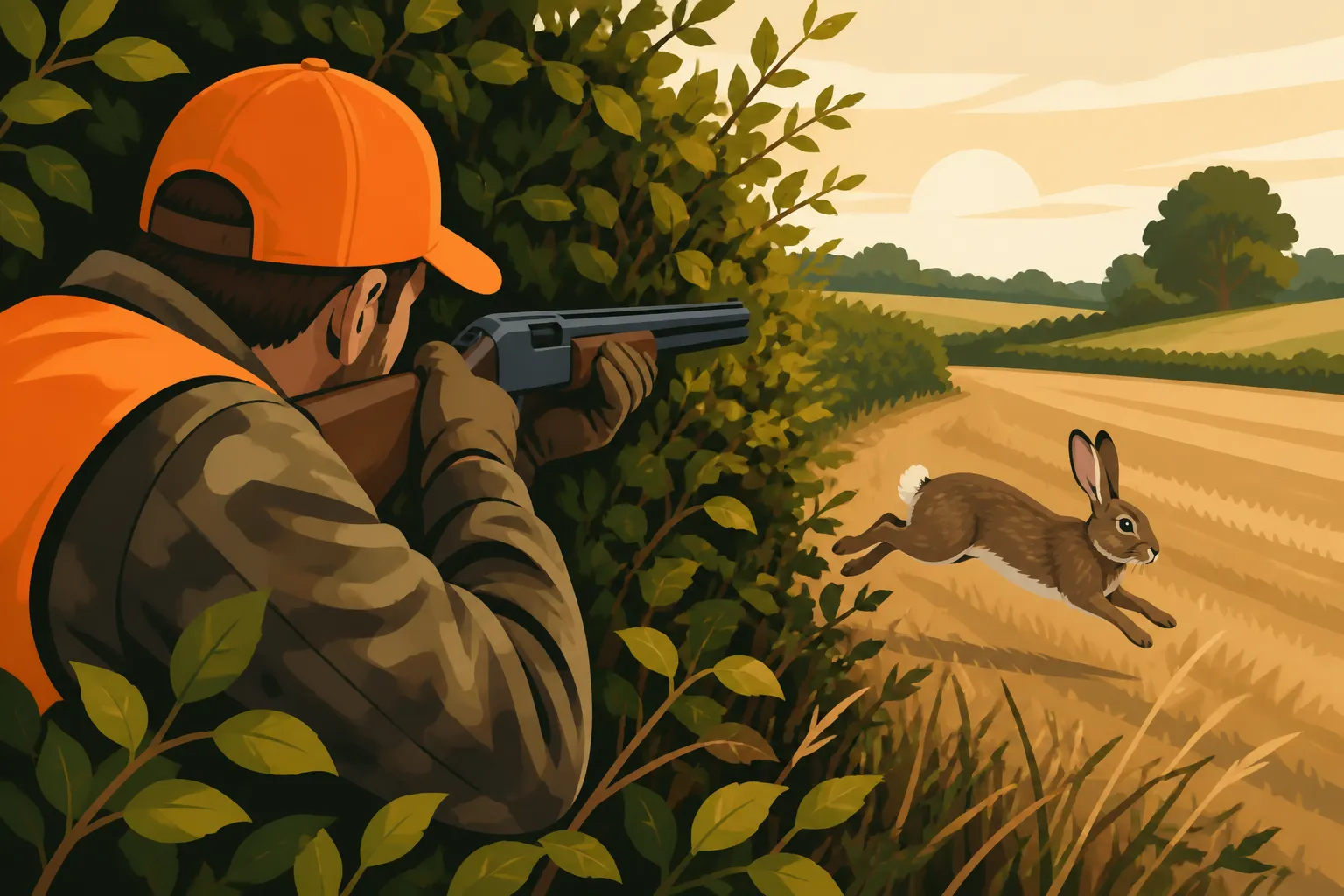
Hunting a Maryland Hedgerow for Rabbits
The crisp air of a Maryland autumn or winter morning often brings with it the undeniable urge to get out into the fields, but for many hunters, the thought of tracking down small game without a pack of beagles can feel daunting. If you've ever found yourself staring at a promising farm field, wondering where to even begin looking for rabbits without a dog, you're not alone. This guide is designed to demystify hunting cottontail rabbits in Maryland's abundant hedgerows, providing actionable strategies and tips to find success on foot, even if you're a solo hunter.
Understanding Maryland Hedgerows and Rabbit Behavior
Maryland's landscape, particularly on the Eastern Shore and across its numerous agricultural regions, is crisscrossed with features that are absolute magnets for small game: hedgerows. For a rabbit hunter, understanding what these linear patches of cover offer and how rabbits utilize them is the first step to a successful day afield.
What Exactly is a Hedgerow?
When we talk about hedgerows in Maryland, we're not just referring to a neatly trimmed garden hedge. Here, a hedgerow is typically a strip of trees, shrubs, and dense undergrowth that forms a natural or man-made boundary, often separating farm fields, pastures, or woodlots. These can range from a narrow line of multiflora rose and honeysuckle along a fenceline to a wide, mature strip of mixed hardwoods, evergreens, and thick briar patches, sometimes 20 to 30 yards wide. They're essentially linear mini-forests or super-sized brush piles, acting as critical wildlife corridors and prime habitat.
These strips often follow old fencelines, property boundaries, or drainage ditches, evolving over decades as various species of plants take root. You'll commonly find a mix of blackberry brambles, greenbrier, sumac, cedar, persimmon, and often a few larger trees like oaks or maples that provide a canopy, creating a dense, multi-layered environment. It's this complexity and density that makes them so valuable to wildlife, especially rabbits.
Why Rabbits Love Hedgerows
Rabbits, particularly the common Eastern Cottontail found throughout Maryland, are creatures of edge habitat. They thrive where different types of cover meet, and hedgerows perfectly fit this bill, providing everything a rabbit needs to survive and flourish.
First and foremost, hedgerows offer incredible escape cover from predators. The dense tangle of thorns, thick branches, and low-lying vegetation makes it difficult for hawks, owls, foxes, and coyotes to penetrate or pursue a rabbit. When a rabbit feels threatened, its first instinct is often to dive into the nearest thicket, and a hedgerow is a continuous, readily available network of such havens. They don't just use them for escape; rabbits often create shallow depressions, known as "forms," within these thickets to rest during the day, hidden from above and from the sides. You can find more detail on this in our guide to Maryland Cottontail Rabbits and Their Cover.
Beyond protection, hedgerows are also a fantastic source of food. They're often adjacent to agricultural fields (corn, soybeans, wheat, hay) which provide abundant forage. The hedgerow itself also contains a smorgasbord of berries, shoots, bark, and seeds, especially during the colder months when other food sources become scarce. A well-established hedgerow with a mix of woody and herbaceous plants can sustain a surprising number of rabbits. Lastly, they act as highways, allowing rabbits to travel safely between feeding areas, watering holes, and larger patches of timber without exposing themselves in open fields.
Common Rabbit Species in Maryland Hedgerows
While Maryland is home to a couple of rabbit and hare species, when you're targeting hedgerows for hunting, you're almost exclusively looking for the Eastern Cottontail (Sylvilagus floridanus). These are the familiar small, brownish-gray rabbits with the fluffy white tail you see in fields and suburban yards. They are abundant throughout the state and are the primary quarry for most rabbit hunters.
Snowshoe hares, while present in Maryland, are typically found in the higher elevations and denser, conifer-dominated forests of Western Maryland, not usually in the agricultural hedgerows of the central and eastern parts of the state. Marsh rabbits are also found in specific coastal marsh habitats, especially around areas like Dorchester County, but again, they are not typically found in the upland hedgerows we're discussing for general rabbit hunting. So, for all intents and purposes, when you're hunting a Maryland hedgerow for rabbits, you're after the ubiquitous and delicious Eastern Cottontail.
Essential Gear and Tactics for Hedgerow Rabbit Hunting
Hunting hedgerows without a dog requires a different approach than traditional beagle-driven hunts. You'll need to rely on stealth, persistence, and a keen eye for rabbit sign. But before you even step foot in the brush, having the right gear is paramount for comfort, safety, and success.
Footwear and Clothing for Thicket Busting
Forget your quiet deer hunting clothes for this endeavor; rabbit hunting in hedgerows is a physical, brush-busting affair. Your clothing needs to be durable, thorn-resistant, and provide excellent protection.
Footwear: This is arguably the most critical piece of gear. You'll be walking through wet fields, crossing ditches, and pushing through dense, thorny cover. Invest in a pair of sturdy, waterproof boots with good ankle support. Rubber boots, like those from Muck Boot Company or LaCrosse, are excellent for keeping your feet dry in damp conditions and offer some protection from thorns. Leather hiking boots treated for waterproofing can also work, but ensure they're tough enough to withstand briars.
Clothing: Think layers, but prioritize durability.
- Pants: Heavy-duty brush pants, often made from canvas, ripstop nylon, or even chaps worn over regular pants, are a must. Briar patches are unforgiving, and regular denim will quickly get shredded or leave your legs scratched and sore. Brands like Filson, Orvis, or even cheaper alternatives from Cabela's or Bass Pro Shops make excellent brush pants designed for this exact purpose.
- Jacket/Coat: A durable, briar-proof jacket or vest is equally important. Again, canvas or tightly woven synthetics are your friends. Look for reinforced elbows and shoulders. Pockets are handy for carrying extra shells, a water bottle, or harvested rabbits.
- Gloves: A good pair of leather or synthetic thorn-resistant gloves will save your hands from countless scrapes and punctures when pushing through thorny bushes.
- Headwear: A blaze orange hat is non-negotiable for safety. A brimmed hat also helps keep twigs and briars out of your face.
- Blaze Orange: Speaking of safety, Maryland has specific Maryland Blaze Orange Requirements for small game hunting. During the firearms deer season, you generally need to wear a minimum of 250 square inches of blaze orange on your head, chest, and back. Even outside of deer season, it's wise to wear some blaze orange for visibility, especially if other hunters might be in the area.
Shotgun and Ammunition Choices
For rabbit hunting, a shotgun is king. The fast-flushing nature of rabbits in thick cover makes a scattergun the ideal tool.
Shotgun:
- Gauge: A 12-gauge or 20-gauge shotgun is perfect. The 12-gauge offers a bit more payload and pattern density, but a 20-gauge is lighter to carry all day and still plenty effective. Some hunters even prefer a .410 for a challenge, but its limited range and smaller pattern make it less forgiving for new hunters.
- Action: Pump-action or semi-automatic shotguns are popular, allowing for quick follow-up shots if you miss or if multiple rabbits flush. A double-barrel (side-by-side or over/under) is also a classic choice, offering two quick shots.
- Choke: An Improved Cylinder or Modified choke is generally ideal. These chokes provide a good balance of pattern spread for close-range shots in thick cover, but still enough density for slightly longer shots if a rabbit breaks out into a field. Full chokes are usually too tight for the close-quarters action of hedgerow hunting.
- Barrel Length: Shorter barrels (24-26 inches) are easier to maneuver through dense brush than longer barrels.
Ammunition:
- Shot Size: For cottontail rabbits, #6 or #7.5 lead shot is standard. #6 shot offers a bit more penetration for a cleaner kill, while #7.5 provides a denser pattern. Both are effective.
- Shell Type: Standard field loads are perfectly sufficient. You don't need heavy waterfowl loads. Look for shells with a shot weight of 1 to 1 1/8 ounces for 12-gauge, or 7/8 to 1 ounce for 20-gauge.
- Non-toxic Shot: While lead shot is perfectly legal for small game like rabbits, if you happen to be hunting areas that require non-toxic shot (e.g., some federal refuges or specific state-managed areas), be sure to check regulations. However, for most private land and state land open to small game, lead is fine.
Hunting Without Dogs: The "Stomp and Shoot" Method
This is where the rubber meets the road for solo or dog-less hunters. The "stomp and shoot" method is all about actively pushing rabbits out of their cover. It's physically demanding but incredibly rewarding.
The Strategy:
- Work into the Wind: Whenever possible, try to hunt into the wind. This carries your scent away from the rabbits, giving you a better chance to get close before they flush. It also helps you hear flushes more clearly.
- Slow and Deliberate: Don't just walk through the hedgerow. Move slowly, taking one or two steps, then pause. Look ahead, scan the ground, and listen. Rabbits will often hold tight, relying on their camouflage.
- Kick and Prod: Use your boots to kick brush piles, stomp heavy clumps of grass, and prod dense tangles with the barrel of your unloaded shotgun (pointed safely, of course) or a sturdy stick. This is how you convince a rabbit that its hiding spot is no longer safe. Focus on the densest cover; that's where they'll be hiding.
- Expect the Flush: Rabbits will often burst out unexpectedly, usually just a few yards in front of you. Be ready! Your gun should be mounted, safety off, and you should be prepared to swing quickly. They'll often run along the base of the hedgerow or dart into the adjacent field.
- Hunt Both Sides: If the hedgerow is narrow enough, zigzag through it, kicking and stomping from side to side. If it's wider, you might need to make passes down one side, then come back up the other. Also, remember to look behind you occasionally; sometimes a rabbit will circle back or hold until you pass.
- Patience and Persistence: This isn't a race. You'll cover less ground than a dog hunter, but you'll be more thorough in the areas you do cover. Don't get discouraged by empty stretches. A small, overlooked thicket can hold multiple rabbits.
This method is highly effective, but it demands constant vigilance and physical effort. It's a great way to truly immerse yourself in the habitat and learn the nuances of rabbit behavior.
Hunting Strategies for Different Hedgerow Types
Not all hedgerows are created equal, and adapting your hunting strategy to the specific type of cover you encounter can significantly increase your success. Maryland's agricultural landscape offers a variety of linear habitats, each requiring a slightly different approach.
Hunting Narrow Fenceline Hedgerows
These are perhaps the most common type of hedgerow you'll encounter on Maryland farms: a single line of brush, often no more than a few yards wide, running along a fence or property line. While seemingly simple, they can hold a surprising number of rabbits.
Strategy:
- Walk the Edge: Instead of walking directly in the narrow hedgerow, which can be difficult and noisy, walk parallel to it, about 5-10 yards out in the adjacent field. This allows you to observe the entire length of the hedgerow more easily.
- Target the Densest Spots: Even in a narrow hedgerow, there will be thicker patches. Focus your attention and stomping efforts on these areas. Look for old fence posts with tangled briars, fallen logs, or dense clumps of evergreens like cedar or pine.
- Push Towards Obstacles: Rabbits, when flushed from a narrow hedgerow, often don't want to break entirely into the open field. If you can, try to push them towards a larger woodlot, a brush pile, or even a thicker section of the hedgerow itself. This can sometimes keep them from bolting straight away, offering a better shot opportunity.
- Hunt with a Partner (if possible): If you can convince a friend to join, one person can walk on one side of the hedgerow, and the other on the opposite side. This creates a "pincer" movement, pushing rabbits in front of one hunter or forcing them to break cover more decisively. Remember to always maintain clear shooting lanes and communicate constantly when hunting with a partner, especially regarding safety and target identification.
Working Wide, Brushy Hedgerows
Some hedgerows are much more substantial, almost small linear woodlots themselves, ranging from 15 to 50 yards or more in width. These offer even better cover and can be rabbit factories, but they require a more systematic approach.
Strategy:
- Grid Search: For wider hedgerows, a simple "walk the edge" approach isn't enough. You'll need to grid-search or zigzag through the cover. Start on one side, push through about 10-15 yards, then turn and walk back parallel to your first line, about 10-15 yards over. Repeat this process until you've covered the entire width.
- Focus on the Interior: The densest, briar-choked interior of a wide hedgerow is often where rabbits feel most secure. Don't be afraid to get in there and bust brush. This is where your tough clothing and gloves will really earn their keep.
- Look for Micro-Habitat: Within wide hedgerows, pay close attention to subtle changes. Are there old farm equipment left to rust, creating artificial brush piles? Are there deadfalls or blowdowns creating new pockets of cover? Rabbits will gravitate towards these features.
- Check the Edges and Transitions: Even in wide hedgerows, the "edge" effect is crucial. Where the dense brush meets the open field, or where a different type of vegetation begins, can be hotspots. As you push through, always be aware of the "front" of the hedgerow where it transitions to the field. Many rabbits will try to dart out there. An app like GoHunt can be invaluable here for visualizing these transitions and planning your routes, especially on unfamiliar land. You can mark areas of dense cover or likely rabbit forms.
Hunting Hedgerow Intersections and Edges
Just like with deer hunting, understanding how game moves and concentrates is key. Hedgerow intersections, where two or more hedgerows meet, and points where hedgerows connect to larger woodlots or dense swamps, are often prime rabbit real estate.
Strategy:
- Funnel Points: Intersections act as natural funnels. Rabbits traveling along one hedgerow that encounter another will often pause, or if flushed, might dart down the connecting cover. Approach these areas slowly and be ready for action from multiple directions. Our article on Hunting a Funnel Between Two Grain Fields can give you some useful insights into this concept, even if it's primarily deer-focused. The principles of funnels apply broadly across species.
- Connection to Larger Cover: Where a hedgerow spills into a larger patch of woods or a thick marsh, this transition zone is golden. Rabbits will often move between these habitats. Position yourself or a partner (if you have one) at these connection points to intercept rabbits being pushed from the hedgerow.
- Field Edges: Hedgerows often border productive fields. After you've worked the hedgerow itself, consider walking the first 10-20 yards of the adjacent field, especially if it has standing corn stubble, tall grasses, or other low cover. Rabbits will sometimes use this shallow cover for feeding or quick dashes between hedgerows. Referencing tips for Setting Up on a Maryland Grain Field Edge for deer can provide a different perspective on how animals use these field boundaries.
- Scouting is Key: Before you even hunt, take some time to walk around the property (with permission!) and identify these key intersection and transition points. Look for rabbit droppings, clipped vegetation, and small trails leading into the densest parts of the hedgerow. GoHunt's satellite imagery can help you identify these features from above, allowing you to pre-plan your attack routes.
| Hedgerow Type | Key Characteristics | Hunting Strategy Focus |
|---|---|---|
| Narrow Fenceline | 1-5 yards wide, often sparse but with dense pockets | Walk parallel outside, focus on thick clumps, push towards heavier cover. |
| Wide, Brushy | 15-50+ yards wide, dense interior, varied vegetation | Grid search or zigzag through, target interior thickets, look for micro-habitat like deadfalls. |
| Intersections/Edges | Where hedgerows meet, or connect to woods/swamps | Approach slowly, expect flushes from multiple directions, position to intercept funneling rabbits. |
Safety, Regulations, and Ethical Considerations
Hunting rabbits in Maryland is a fantastic way to enjoy the outdoors and put some delicious meat on the table. However, like all hunting activities, it comes with responsibilities regarding safety, understanding the law, and upholding ethical practices.
Maryland Rabbit Seasons and Limits
Before you even load a shell, you need to be familiar with Maryland's specific regulations for small game. The Maryland Department of Natural Resources (DNR) publishes a yearly hunting guide that outlines all season dates and bag limits.
- Season Dates: Rabbit season in Maryland typically opens in early November and runs through late February. However, specific dates can vary slightly year to year, and sometimes there are split seasons. Always check the current year's Maryland Guide to Hunting & Trapping. Our post on Rabbit Season Dates and Daily Limit will provide you with the most up-to-date information for the current hunting year.
- Daily Bag Limit: The daily bag limit for rabbits is usually 4 per day. Again, this is subject to change, so verify with the DNR guide.
- Shooting Hours: General shooting hours for small game are typically one-half hour before sunrise to one-half hour after sunset. It's important to adhere to these rules, not just for legal reasons, but for safety as well. Hunting in legal light ensures you can properly identify your target and your surroundings.
Always carry your valid Maryland hunting license and any required stamps (like the Resident Hunting License) with you while afield. You can purchase these easily through the Maryland DNR's COMPASS system online.
Hunter Orange and Safe Shooting Lanes
Safety is paramount, especially when hunting in dense cover where visibility can be limited, or when hunting with others.
- Blaze Orange: As mentioned earlier, wearing blaze orange is a critical safety measure. During certain periods, like the firearms deer season, specific amounts of blaze orange are legally required for small game hunters. Even when not legally mandated, wearing a blaze orange hat and vest ensures you are visible to other hunters, reducing the risk of accidental shootings. Always assume there are other hunters in the woods, even if you don't see them. Our guide on Maryland Blaze Orange Requirements details all the specifics.
- Safe Shooting Lanes: In hedgerows, rabbits can flush in any direction. Always be aware of what is beyond your target.
- Backstop: Ensure you have a safe backstop (like a rise in the terrain, a thick stand of trees, or open sky where no one could be) before taking a shot.
- Identify Your Target: Confirm it's a rabbit, not a domestic animal or another hunter.
- Know Your Zone of Fire: If hunting with a partner, establish clear zones of fire and stick to them. Never swing your gun barrel across another person.
- Obstructions: Be mindful of twigs and branches that can deflect your shot. A pattern that looks good at 20 yards on paper can be completely disrupted by a small branch 5 yards in front of your barrel, sending pellets wildly off target.
- Fencelines: Be cautious when shooting along fencelines, as pellets can ricochet off metal posts or wires.
Respecting Private Property and Landowner Relations
Most prime rabbit hedgerows are found on private agricultural land in Maryland. Gaining permission from landowners is not just a courtesy; it's a legal requirement and absolutely essential for maintaining a positive image of hunters.
- Always Ask Permission: Never assume you have permission to hunt private land. Knock on doors, introduce yourself, and respectfully ask if you can hunt rabbits. Be polite, offer to share your harvest, and leave your contact information. Our article on Knocking on Doors in Maryland Farm Country offers comprehensive advice on how to approach landowners effectively.
- Written Permission: While not always legally required for small game in Maryland, having written permission is always a good idea, especially if you're hunting multiple times or if the landowner is unfamiliar with you. It protects both you and the landowner. Learn more about this in Do You Need Written Permission in Maryland?.
- Know Property Lines: Use a GPS app like GoHunt to clearly identify property lines. This is crucial for hedgerow hunting, as these often run right along boundaries. Accidentally trespassing can quickly sour relations with landowners and lead to legal trouble. Being able to pinpoint your exact location and confirm you're on land you have permission to hunt demonstrates respect and professionalism. Read up on Finding Maryland Property Lines Before You Hunt for practical tips.
- Leave No Trace: Always pack out everything you pack in. Pick up spent shotgun shells, any trash, and leave the property cleaner than you found it. Close gates, don't damage fences, and avoid driving on wet fields.
- Report Your Harvest: Maryland requires hunters to register deer, turkeys, and bears, but not small game like rabbits. However, keeping personal records of your success is a good practice for tracking your progress and understanding game populations.
By following these guidelines, you not only ensure a safer and more successful hunt but also help preserve the future of hunting access in Maryland. Hunting small game, especially rabbits, is a fantastic entry point into the hunting tradition, offering plenty of action and delicious table fare. Enjoy your time in Maryland's hedgerows!
Disclaimer
Hunting is an inherently dangerous activity. Always prioritize safety, follow all local, state, and federal laws and regulations, and seek proper training, such as a certified hunter education course, before participating. This guide is for informational purposes only and does not supersede official hunting regulations.